

Coffee, NS as to type
Common food
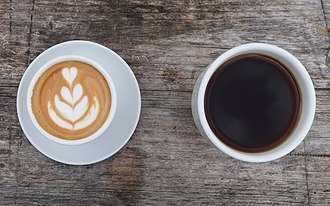
Photo: Wikipedia
Coffee is a brewed beverage made from roasted coffee beans, delivering a potent, aromatic punch with a complex flavor profile that can range from bright and acidic to deep and earthy. Its near-zero calorie count makes it a virtually calorie-free indulgence, providing a significant caffeine boost without adding to your daily energy intake. The drink's rich, dark liquor and stimulating effects are its defining characteristics.
Calorie split: 73% protein · 0% carbs · 27% fat
↓ Full nutrition💚 Why it's loved
People love coffee for its ritualistic comfort and the powerful, customizable jolt of energy it provides. Its vast flavor spectrum—from fruity single-origins to robust espressos—and its role as a social catalyst make it a beloved daily staple.
⚠️ Watch-outs & how to enjoy it better
The high caffeine content can cause jitters, anxiety, or disrupted sleep in sensitive individuals. To mitigate, opt for decaf, limit afternoon consumption, or pair with a small snack to slow absorption. Black coffee's acidity may also aggravate acid reflux for some.
Key benefits
- Rich source of antioxidants like chlorogenic acid
- Enhances mental alertness and focus via caffeine
- May support metabolic rate and physical performance
- Associated with reduced risk of certain neurodegenerative diseases
- Contains essential minerals like magnesium and potassium
🍽️ Popular dishes


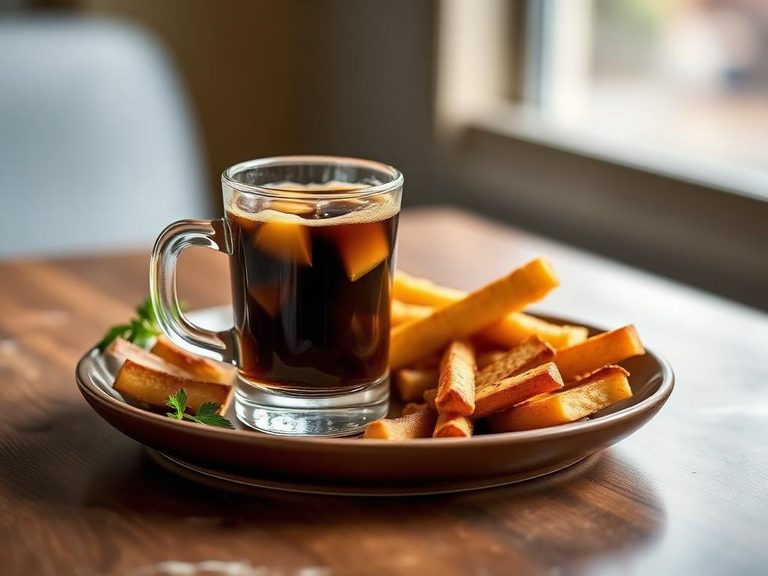

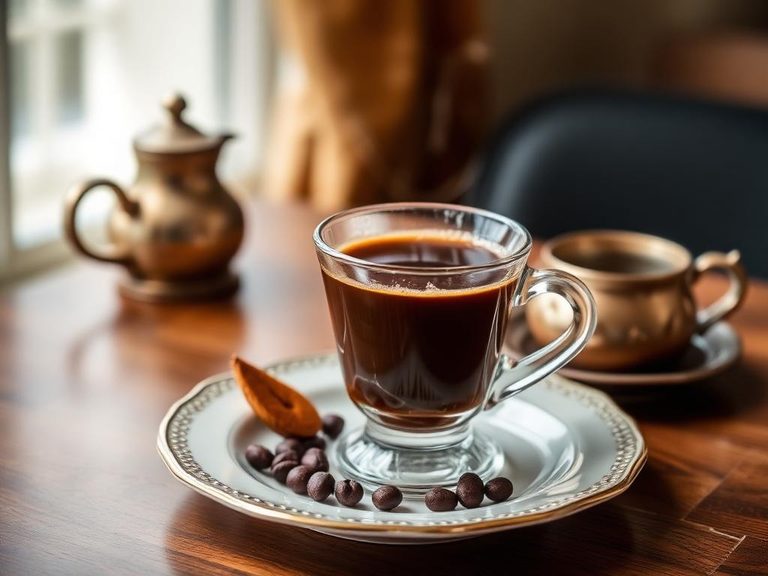

🌍 Where it's eaten
💡 Did you know?
The world's most expensive coffee, Kopi Luwak, is produced from beans that have been eaten and defecated by the Asian palm civet, a process that supposedly alters the beans' flavor profile.
Full nutrition (USDA data · scales with serving)
| Water | 99.4 g |
| Energy | 1.0 kcal |
| Protein | 0.12 g |
| Total lipid (fat) | 0.02 g |
| Carbohydrate, by difference | 0.00 g |
| Fiber, total dietary | 0.00 g |
| Total Sugars | 0.00 g |
| Calcium, Ca | 2.0 mg |
| Iron, Fe | 0.01 mg |
| Magnesium, Mg | 3.0 mg |
| Phosphorus, P | 3.0 mg |
| Potassium, K | 49.0 mg |
| Sodium, Na | 2.0 mg |
| Zinc, Zn | 0.02 mg |
| Copper, Cu | 0.00 mg |
| Selenium, Se | 0.00 ug |
| Vitamin C, total ascorbic acid | 0.00 mg |
| Thiamin | 0.01 mg |
| Riboflavin | 0.08 mg |
| Niacin | 0.19 mg |
| Vitamin B-6 | 0.00 mg |
| Folate, total | 2.0 ug |
| Folic acid | 0.00 ug |
| Folate, food | 2.0 ug |
| Folate, DFE | 2.0 ug |
| Choline, total | 2.6 mg |
| Vitamin B-12 | 0.00 ug |
| Vitamin B-12, added | 0.00 ug |
| Vitamin A, RAE | 0.00 ug |
| Retinol | 0.00 ug |
| Carotene, beta | 0.00 ug |
| Carotene, alpha | 0.00 ug |
| Cryptoxanthin, beta | 0.00 ug |
| Lycopene | 0.00 ug |
| Lutein + zeaxanthin | 0.00 ug |
| Vitamin E (alpha-tocopherol) | 0.01 mg |
| Vitamin E, added | 0.00 mg |
| Vitamin D (D2 + D3) | 0.00 ug |
| Vitamin K (phylloquinone) | 0.10 ug |
| Alcohol, ethyl | 0.00 g |
| Caffeine | 40.0 mg |
| Theobromine | 0.00 mg |
Fat & fatty acid profile (per 100g)
| Fatty acids, total saturated | 0.00 g |
| SFA 4:0 | 0.00 g |
| SFA 6:0 | 0.00 g |
| SFA 8:0 | 0.00 g |
| SFA 10:0 | 0.00 g |
| SFA 12:0 | 0.00 g |
| SFA 14:0 | 0.00 g |
| SFA 16:0 | 0.00 g |
| SFA 18:0 | 0.00 g |
| Fatty acids, total monounsaturated | 0.01 g |
| MUFA 16:1 | 0.00 g |
| MUFA 18:1 | 0.00 g |
| MUFA 20:1 | 0.00 g |
| MUFA 22:1 | 0.00 g |
| Fatty acids, total polyunsaturated | 0.00 g |
| PUFA 18:2 | 0.00 g |
| PUFA 18:3 | 0.00 g |
| PUFA 18:4 | 0.00 g |
| PUFA 20:4 | 0.00 g |
| PUFA 20:5 n-3 (EPA) | 0.00 g |
| PUFA 22:5 n-3 (DPA) | 0.00 g |
| PUFA 22:6 n-3 (DHA) | 0.00 g |
| Cholesterol | 0.00 mg |
Amino acid profile (per 100g)
Estimated from Cream, fluid, light (coffee cream or table cream) — USDA does not publish this profile for Coffee.
| Tryptophan | 0.07 g |
| Threonine | 0.13 g |
| Isoleucine | 0.15 g |
| Leucine | 0.24 g |
| Lysine | 0.13 g |
| Methionine | 0.07 g |
| Cystine | 0.01 g |
| Phenylalanine | 0.14 g |
| Tyrosine | 0.14 g |
| Valine | 0.18 g |
| Arginine | 0.07 g |
| Histidine | 0.07 g |
| Alanine | 0.09 g |
| Aspartic acid | 0.22 g |
| Glutamic acid | 0.59 g |
| Glycine | 0.07 g |
| Proline | 0.31 g |
| Serine | 0.10 g |
FAQ
Is coffee dehydrating?
No. While caffeine has a mild diuretic effect, the water in a cup of coffee more than offsets this, making it hydrating overall.
How much caffeine is in a typical cup?
An 8-oz (240ml) cup of brewed coffee contains about 80-100 mg of caffeine, though this varies by bean type and preparation method.
Is it okay to drink coffee on an empty stomach?
For some, the acidity and stimulant effects may cause digestive discomfort or jitters. Having it with or after a meal can be gentler.
Nutrient density (calculated · NRF9.3)
Nutrient Rich Foods index: beneficial nutrients (protein, fiber, vitamins, minerals) minus saturated fat, added sugar & sodium, per 100 kcal.
NRF9.3 index — Fulgoni, Keast & Drewnowski, 2009. Computed from USDA nutrients.
Weight-loss friendliness (composite index)
Energy density 0.01 kcal/g · 48% calories from protein · 0.0 g fiber · 0.0 g sugar per 100 g.
Composite of energy density (Rolls et al., 1999), protein & fiber satiety, minus sugar. A calculated heuristic — ranks satiety-per-calorie, not a clinical measure.
Dietary load (calculated from USDA values)
Potential renal acid load. Positive = acid-forming, negative = alkaline-forming.
Sodium-to-potassium ratio: 0.04 (lower is better — aim for ≤ 1)
Sodium:potassium per WHO potassium guidance. Computed from USDA nutrients.