

Coffee cake, yeast type
Common food
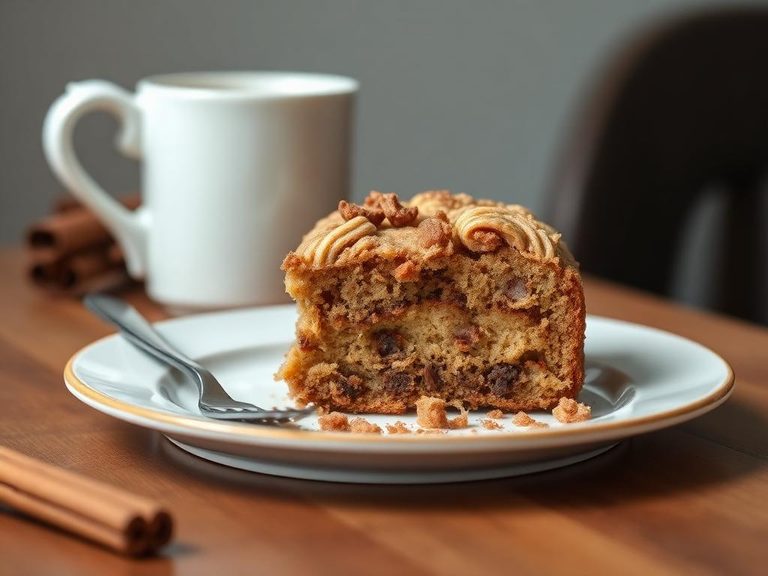
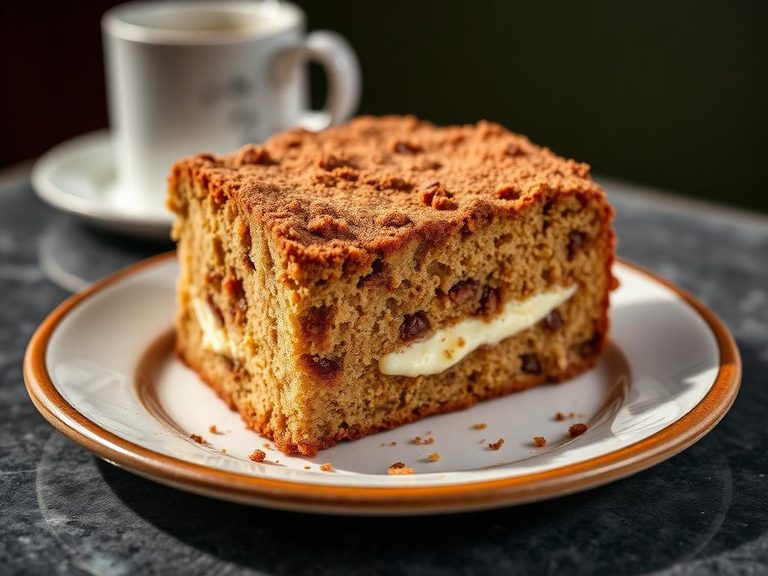
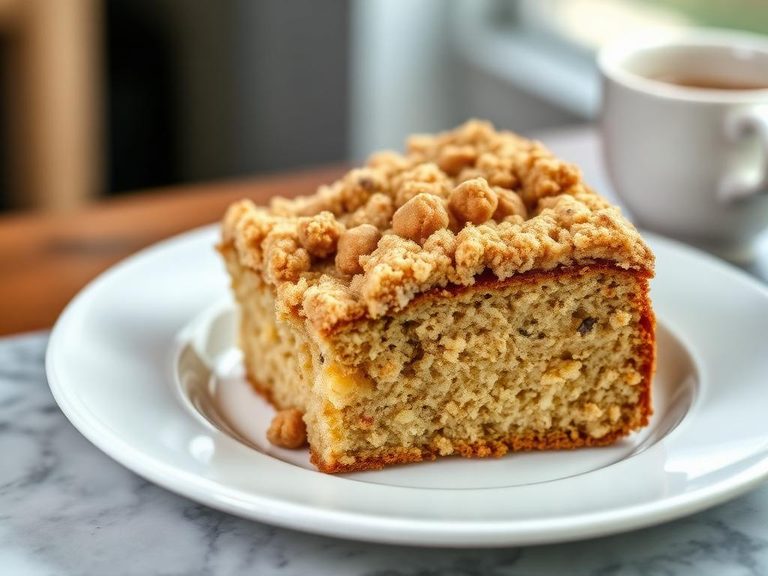
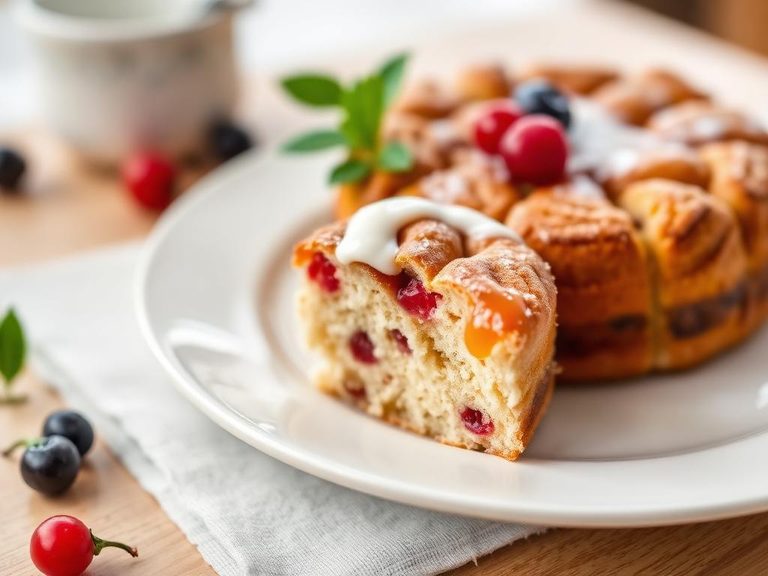
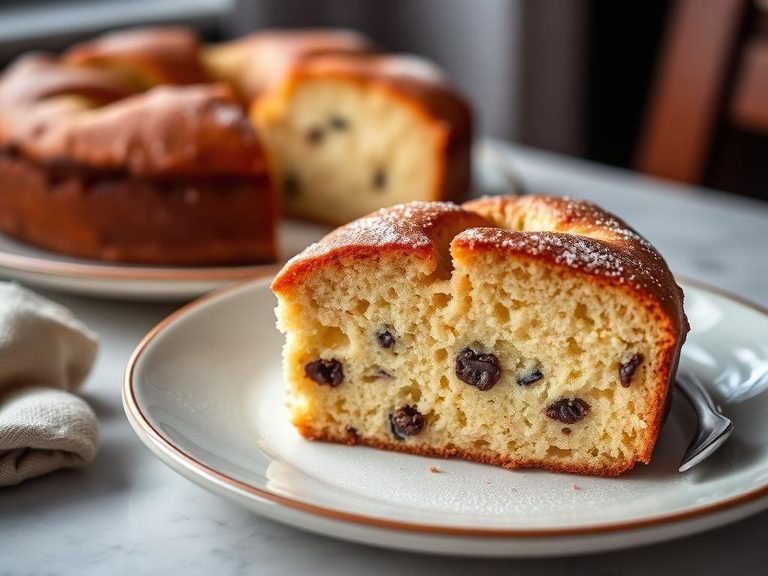
Coffee cake, yeast type, is a tender, buttery cake leavened with yeast, giving it a slightly bready, airy crumb distinct from its baking-powder counterparts. It is typically topped with a sweet, crumbly streusel of butter, sugar, and cinnamon, offering a delightful contrast of textures. While not a low-calorie food, its moderate protein content from flour and eggs provides some satiety alongside its indulgent sweetness.
Calorie split: 7% protein · 54% carbs · 39% fat
↓ Full nutrition💚 Why it's loved
People love it for its comforting, nostalgic flavor profile, often associated with breakfast or afternoon coffee breaks. Its versatility allows for countless variations, from classic cinnamon-streusel to fruit or nut-topped versions, making it a beloved staple in many cultures.
⚠️ Watch-outs & how to enjoy it better
Its high sugar and refined carbohydrate content can lead to blood-sugar spikes, and it's often high in saturated fat from butter. To mitigate this, pair a small slice with a source of protein (like Greek yogurt or nuts) or healthy fat (like avocado) to slow sugar absorption, and practice portion control. Those with gluten or dairy sensitivities should also be cautious.
Key benefits
- Provides quick energy from carbohydrates
- Contains some B vitamins from enriched flour
- The yeast can contribute to a more digestible texture
- Can be a comforting, mood-boosting treat
- Offers a source of dietary iron from fortified flour
🍽️ Popular dishes
🌍 Where it's eaten
💡 Did you know?
Despite its name, traditional coffee cake contains no coffee; the name comes from its intended pairing with coffee as a companion beverage, not as an ingredient.
Full nutrition (USDA data · scales with serving)
| Water | 24.8 g |
| Energy | 372 kcal |
| Protein | 6.2 g |
| Total lipid (fat) | 16.4 g |
| Carbohydrate, by difference | 50.9 g |
| Fiber, total dietary | 2.4 g |
| Total Sugars | 31.7 g |
| Calcium, Ca | 72.0 mg |
| Iron, Fe | 1.6 mg |
| Magnesium, Mg | 17.0 mg |
| Phosphorus, P | 76.0 mg |
| Potassium, K | 111 mg |
| Sodium, Na | 304 mg |
| Zinc, Zn | 0.59 mg |
| Copper, Cu | 0.09 mg |
| Selenium, Se | 17.0 ug |
| Vitamin C, total ascorbic acid | 2.0 mg |
| Thiamin | 0.32 mg |
| Riboflavin | 0.27 mg |
| Niacin | 2.4 mg |
| Vitamin B-6 | 0.11 mg |
| Folate, total | 72.0 ug |
| Folic acid | 48.0 ug |
| Folate, food | 24.0 ug |
| Folate, DFE | 106 ug |
| Choline, total | 41.3 mg |
| Vitamin B-12 | 0.14 ug |
| Vitamin B-12, added | 0.00 ug |
| Vitamin A, RAE | 62.0 ug |
| Retinol | 61.0 ug |
| Carotene, beta | 5.0 ug |
| Carotene, alpha | 1.0 ug |
| Cryptoxanthin, beta | 2.0 ug |
| Lycopene | 0.00 ug |
| Lutein + zeaxanthin | 70.0 ug |
| Vitamin E (alpha-tocopherol) | 2.0 mg |
| Vitamin E, added | 0.00 mg |
| Vitamin D (D2 + D3) | 0.00 ug |
| Vitamin K (phylloquinone) | 4.4 ug |
| Alcohol, ethyl | 0.00 g |
| Caffeine | 0.00 mg |
| Theobromine | 0.00 mg |
Fat & fatty acid profile (per 100g)
| Fatty acids, total saturated | 3.1 g |
| SFA 4:0 | 0.00 g |
| SFA 6:0 | 0.00 g |
| SFA 8:0 | 0.00 g |
| SFA 10:0 | 0.00 g |
| SFA 12:0 | 0.00 g |
| SFA 14:0 | 0.05 g |
| SFA 16:0 | 2.4 g |
| SFA 18:0 | 0.63 g |
| Fatty acids, total monounsaturated | 4.8 g |
| MUFA 16:1 | 0.07 g |
| MUFA 18:1 | 4.7 g |
| MUFA 20:1 | 0.00 g |
| MUFA 22:1 | 0.00 g |
| Fatty acids, total polyunsaturated | 7.5 g |
| PUFA 18:2 | 7.0 g |
| PUFA 18:3 | 0.43 g |
| PUFA 18:4 | 0.00 g |
| PUFA 20:4 | 0.01 g |
| PUFA 20:5 n-3 (EPA) | 0.00 g |
| PUFA 22:5 n-3 (DPA) | 0.00 g |
| PUFA 22:6 n-3 (DHA) | 0.00 g |
| Cholesterol | 66.0 mg |
Amino acid profile (per 100g)
Estimated from Cake, coffeecake, cheese — USDA does not publish this profile for Coffee cake.
| Tryptophan | 0.08 g |
| Threonine | 0.26 g |
| Isoleucine | 0.33 g |
| Leucine | 0.57 g |
| Lysine | 0.40 g |
| Methionine | 0.14 g |
| Cystine | 0.11 g |
| Phenylalanine | 0.35 g |
| Tyrosine | 0.26 g |
| Valine | 0.36 g |
| Arginine | 0.30 g |
| Histidine | 0.19 g |
| Alanine | 0.26 g |
| Aspartic acid | 0.47 g |
| Glutamic acid | 1.8 g |
| Glycine | 0.21 g |
| Proline | 0.63 g |
| Serine | 0.37 g |
FAQ
What makes yeast coffee cake different from regular cake?
Yeast coffee cake uses yeast as a leavening agent, resulting in a lighter, slightly bread-like texture and a more complex, yeasty flavor compared to cakes leavened with baking powder or soda.
Is coffee cake considered a breakfast food or a dessert?
It's often served at breakfast or brunch, especially in North America, but its sweet, cake-like nature also makes it a popular dessert or snack. Its role is more about the occasion (like a coffee break) than a strict meal category.
How can I make coffee cake healthier?
You can reduce the sugar and butter, use whole-wheat flour for added fiber, add nuts or seeds for healthy fats and protein, and top with fresh fruit instead of a heavy streusel. Pairing it with protein-rich foods can also help balance its glycemic impact.
Nutrient density (calculated · NRF9.3)
Nutrient Rich Foods index: beneficial nutrients (protein, fiber, vitamins, minerals) minus saturated fat, added sugar & sodium, per 100 kcal.
NRF9.3 index — Fulgoni, Keast & Drewnowski, 2009. Computed from USDA nutrients.
Weight-loss friendliness (composite index)
Energy density 3.72 kcal/g · 7% calories from protein · 2.4 g fiber · 31.7 g sugar per 100 g.
Composite of energy density (Rolls et al., 1999), protein & fiber satiety, minus sugar. A calculated heuristic — ranks satiety-per-calorie, not a clinical measure.
Dietary load (calculated from USDA values)
Potential renal acid load. Positive = acid-forming, negative = alkaline-forming.
Sodium-to-potassium ratio: 2.74 (lower is better — aim for ≤ 1)
Sodium:potassium per WHO potassium guidance. Computed from USDA nutrients.