

Coffee, Iced Latte, decaffeinated, flavored
Common food

Photo: Wikipedia
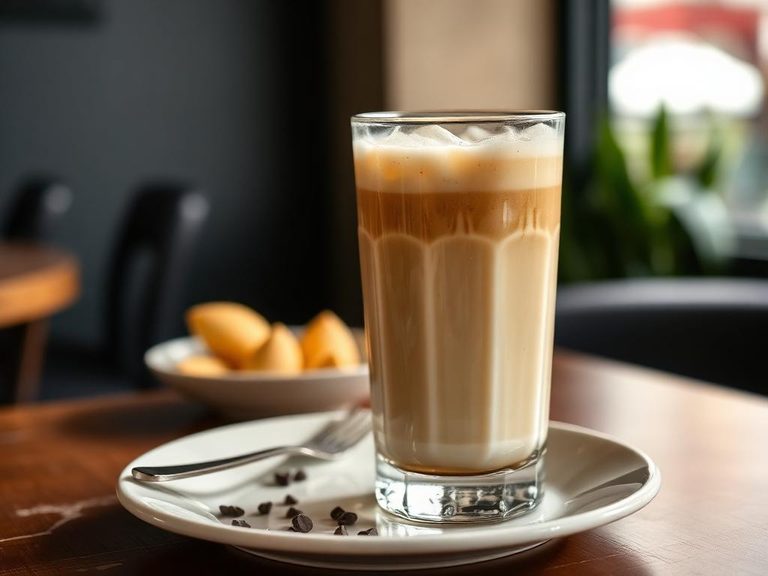
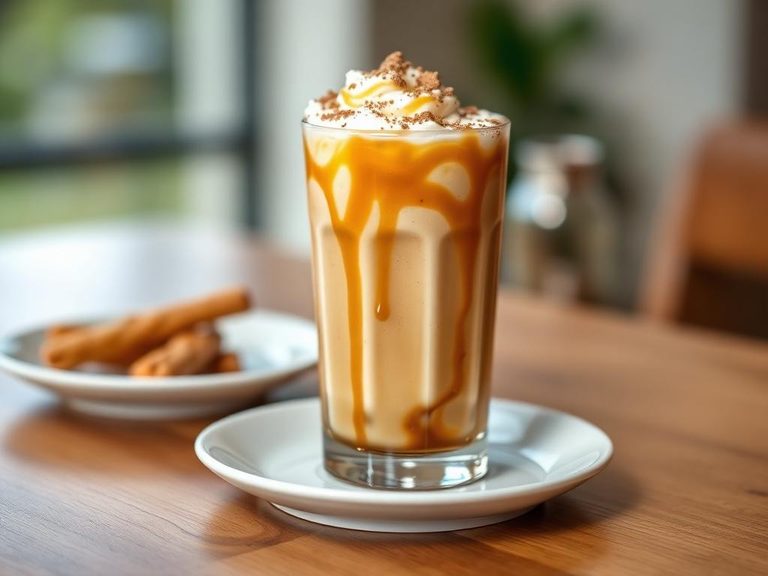
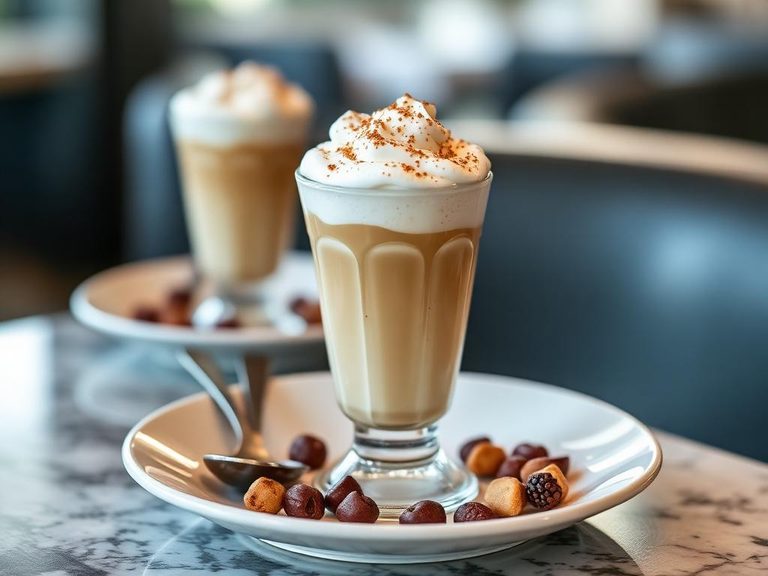
This is a chilled, milky coffee beverage made with decaffeinated espresso and a sweet flavoring, like vanilla or caramel. It offers a smooth, creamy texture with a gentle coffee taste and a noticeable sweetness. Nutritionally, it's a light treat, providing a modest 40 calories per 100g, mostly from carbohydrates.
Calorie split: 17% protein · 61% carbs · 22% fat
↓ Full nutrition💚 Why it's loved
People love it for delivering the comforting ritual and flavor of a flavored latte without the caffeine jitters. Its versatility makes it a customizable, refreshing pick-me-up that fits into a relaxed café culture.
⚠️ Watch-outs & how to enjoy it better
The primary concern is the added sugar, which can contribute to blood-sugar spikes, especially for those monitoring their intake. To counteract this, pair it with a source of protein or healthy fat (like a handful of nuts) to slow sugar absorption, or opt for a smaller portion size.
Key benefits
- Provides a caffeine-free coffee experience
- Offers a quick source of energy from carbohydrates
- Low in fat and a source of some protein from milk
- Can be a refreshing, low-calorie treat compared to many desserts
- Suitable for evening consumption without disrupting sleep
🍽️ Popular dishes
🌍 Where it's eaten
💡 Did you know?
The decaffeination process typically removes 94-98% of the caffeine, but the beans are often treated with water, organic solvents, or carbon dioxide first, meaning the 'decaf' in your iced latte has been through a precise chemical journey.
Full nutrition (USDA data · scales with serving)
| Water | 90.8 g |
| Energy | 40.0 kcal |
| Protein | 1.7 g |
| Total lipid (fat) | 0.99 g |
| Carbohydrate, by difference | 6.1 g |
| Fiber, total dietary | 0.00 g |
| Total Sugars | 5.8 g |
| Calcium, Ca | 64.0 mg |
| Iron, Fe | 0.02 mg |
| Magnesium, Mg | 19.0 mg |
| Phosphorus, P | 53.0 mg |
| Potassium, K | 99.0 mg |
| Sodium, Na | 23.0 mg |
| Zinc, Zn | 0.22 mg |
| Copper, Cu | 0.01 mg |
| Selenium, Se | 0.90 ug |
| Vitamin C, total ascorbic acid | 0.10 mg |
| Thiamin | 0.03 mg |
| Riboflavin | 0.10 mg |
| Niacin | 0.91 mg |
| Vitamin B-6 | 0.03 mg |
| Folate, total | 1.0 ug |
| Folic acid | 0.00 ug |
| Folate, food | 1.0 ug |
| Folate, DFE | 1.0 ug |
| Choline, total | 9.3 mg |
| Vitamin B-12 | 0.28 ug |
| Vitamin B-12, added | 0.00 ug |
| Vitamin A, RAE | 41.0 ug |
| Retinol | 41.0 ug |
| Carotene, beta | 1.0 ug |
| Carotene, alpha | 0.00 ug |
| Cryptoxanthin, beta | 0.00 ug |
| Lycopene | 0.00 ug |
| Lutein + zeaxanthin | 0.00 ug |
| Vitamin E (alpha-tocopherol) | 0.02 mg |
| Vitamin E, added | 0.00 mg |
| Vitamin D (D2 + D3) | 0.50 ug |
| Vitamin K (phylloquinone) | 0.10 ug |
| Alcohol, ethyl | 0.00 g |
| Caffeine | 0.00 mg |
| Theobromine | 0.00 mg |
Fat & fatty acid profile (per 100g)
| Fatty acids, total saturated | 0.57 g |
| SFA 4:0 | 0.02 g |
| SFA 6:0 | 0.02 g |
| SFA 8:0 | 0.01 g |
| SFA 10:0 | 0.02 g |
| SFA 12:0 | 0.03 g |
| SFA 14:0 | 0.09 g |
| SFA 16:0 | 0.26 g |
| SFA 18:0 | 0.09 g |
| Fatty acids, total monounsaturated | 0.20 g |
| MUFA 16:1 | 0.01 g |
| MUFA 18:1 | 0.20 g |
| MUFA 20:1 | 0.00 g |
| MUFA 22:1 | 0.00 g |
| Fatty acids, total polyunsaturated | 0.04 g |
| PUFA 18:2 | 0.05 g |
| PUFA 18:3 | 0.00 g |
| PUFA 18:4 | 0.00 g |
| PUFA 20:4 | 0.00 g |
| PUFA 20:5 n-3 (EPA) | 0.00 g |
| PUFA 22:5 n-3 (DPA) | 0.00 g |
| PUFA 22:6 n-3 (DHA) | 0.00 g |
| Cholesterol | 4.0 mg |
Amino acid profile (per 100g)
Estimated from Cream, fluid, light (coffee cream or table cream) — USDA does not publish this profile for Coffee.
| Tryptophan | 0.07 g |
| Threonine | 0.13 g |
| Isoleucine | 0.15 g |
| Leucine | 0.24 g |
| Lysine | 0.13 g |
| Methionine | 0.07 g |
| Cystine | 0.01 g |
| Phenylalanine | 0.14 g |
| Tyrosine | 0.14 g |
| Valine | 0.18 g |
| Arginine | 0.07 g |
| Histidine | 0.07 g |
| Alanine | 0.09 g |
| Aspartic acid | 0.22 g |
| Glutamic acid | 0.59 g |
| Glycine | 0.07 g |
| Proline | 0.31 g |
| Serine | 0.10 g |
FAQ
How does the sugar content compare to a regular flavored latte?
A decaf flavored iced latte often has a similar sugar content to its caffeinated counterpart, as the sweetness comes from added syrups or flavorings, not the coffee itself. Always check the specific recipe or cafe's nutrition info.
Is this a good pre-workout drink?
It can provide quick energy from carbs, but the lack of caffeine means it won't offer the performance boost associated with pre-workout coffee. Its low calorie count makes it a light option if consumed well before exercise.
Can I make this at home with less sugar?
Absolutely. Use sugar-free flavored syrups, a dash of vanilla extract, or a sprinkle of cinnamon. You can also control the sweetness by using unsweetened milk alternatives and a small amount of a natural sweetener like stevia.
Nutrient density (calculated · NRF9.3)
Nutrient Rich Foods index: beneficial nutrients (protein, fiber, vitamins, minerals) minus saturated fat, added sugar & sodium, per 100 kcal.
NRF9.3 index — Fulgoni, Keast & Drewnowski, 2009. Computed from USDA nutrients.
Weight-loss friendliness (composite index)
Energy density 0.40 kcal/g · 17% calories from protein · 0.0 g fiber · 5.8 g sugar per 100 g.
Composite of energy density (Rolls et al., 1999), protein & fiber satiety, minus sugar. A calculated heuristic — ranks satiety-per-calorie, not a clinical measure.
Dietary load (calculated from USDA values)
Potential renal acid load. Positive = acid-forming, negative = alkaline-forming.
Sodium-to-potassium ratio: 0.23 (lower is better — aim for ≤ 1)
Sodium:potassium per WHO potassium guidance. Computed from USDA nutrients.