

Coffee, Iced Cafe Mocha, decaffeinated, nonfat
Common food

Photo: Wikipedia
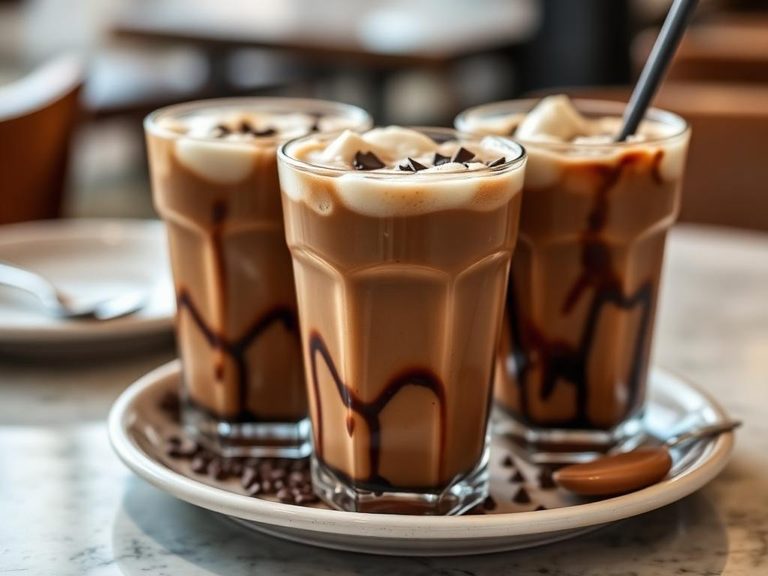
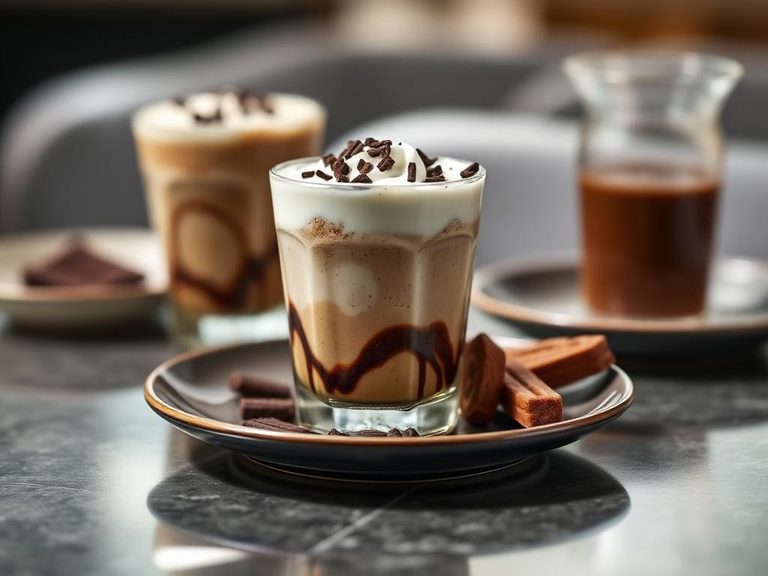
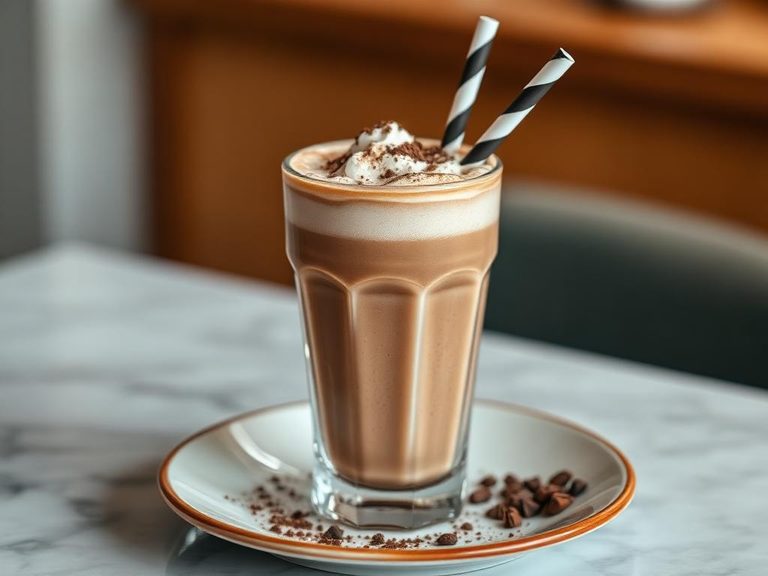
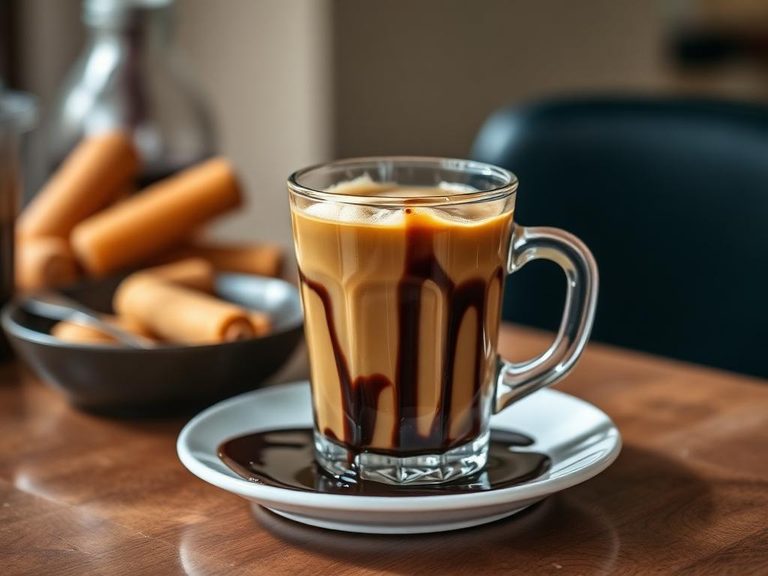
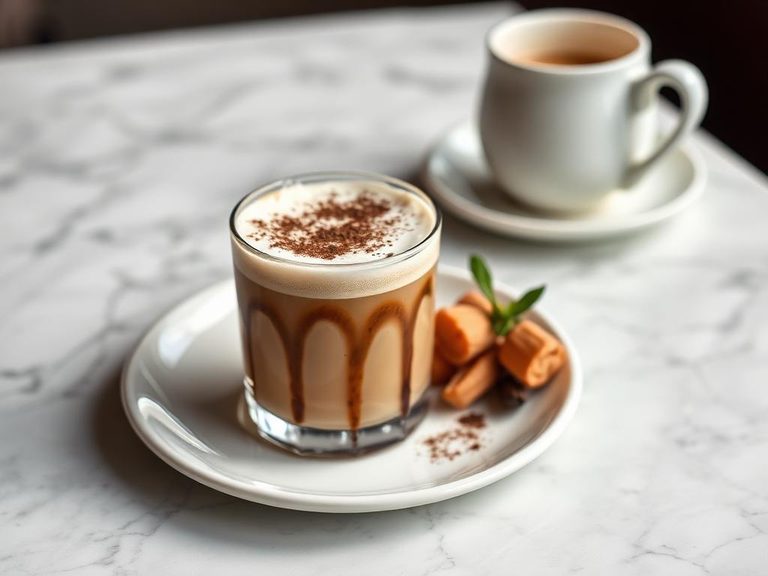
This is a chilled, coffee-based beverage blending espresso, chocolate, and milk, specifically crafted with decaffeinated coffee and nonfat milk for a lighter profile. It offers a smooth, creamy texture with a balanced sweet-chocolatey flavor and a mild coffee finish. Nutritionally, it is a low-calorie, low-fat option that provides a quick energy boost from carbohydrates, primarily from sugar.
Calorie split: 15% protein · 84% carbs · 1% fat
↓ Full nutrition💚 Why it's loved
People love it for the indulgent combination of chocolate and coffee without the caffeine jitters, making it a comforting treat any time of day. Its versatility allows it to be enjoyed as a dessert-like beverage or a refreshing pick-me-up, fitting well into modern café culture.
⚠️ Watch-outs & how to enjoy it better
The high sugar content (8.11g per 100g) can lead to blood-sugar spikes, which may be a concern for those monitoring glucose levels. To mitigate this, pair it with a source of protein or healthy fat (like nuts) to slow sugar absorption, or opt for a smaller portion size. Additionally, some may experience digestive discomfort from the lactose in milk, though nonfat milk is lower in fat; choosing a lactose-free alternative or adding a probiotic can help.
Key benefits
- Low in calories (43 kcal per 100g)
- Very low in fat (0.06g per 100g)
- Good source of quick energy from carbohydrates
- Caffeine-free, suitable for evening consumption
- Provides a small amount of protein (1.62g per 100g)
🍽️ Popular dishes
🌍 Where it's eaten
💡 Did you know?
The 'mocha' in cafe mocha refers to the Mocha port in Yemen, a historic coffee trading hub known for its beans with natural chocolate notes, which inspired the chocolate-coffee pairing in this drink.
Full nutrition (USDA data · scales with serving)
| Water | 88.8 g |
| Energy | 43.0 kcal |
| Protein | 1.6 g |
| Total lipid (fat) | 0.06 g |
| Carbohydrate, by difference | 9.0 g |
| Fiber, total dietary | 0.00 g |
| Total Sugars | 8.1 g |
| Calcium, Ca | 63.0 mg |
| Iron, Fe | 0.02 mg |
| Magnesium, Mg | 22.0 mg |
| Phosphorus, P | 57.0 mg |
| Potassium, K | 108 mg |
| Sodium, Na | 37.0 mg |
| Zinc, Zn | 0.27 mg |
| Copper, Cu | 0.04 mg |
| Selenium, Se | 1.1 ug |
| Vitamin C, total ascorbic acid | 0.00 mg |
| Thiamin | 0.03 mg |
| Riboflavin | 0.09 mg |
| Niacin | 0.87 mg |
| Vitamin B-6 | 0.03 mg |
| Folate, total | 1.0 ug |
| Folic acid | 0.00 ug |
| Folate, food | 1.0 ug |
| Folate, DFE | 1.0 ug |
| Choline, total | 8.7 mg |
| Vitamin B-12 | 0.27 ug |
| Vitamin B-12, added | 0.00 ug |
| Vitamin A, RAE | 30.0 ug |
| Retinol | 30.0 ug |
| Carotene, beta | 1.0 ug |
| Carotene, alpha | 0.00 ug |
| Cryptoxanthin, beta | 0.00 ug |
| Lycopene | 0.00 ug |
| Lutein + zeaxanthin | 0.00 ug |
| Vitamin E (alpha-tocopherol) | 0.00 mg |
| Vitamin E, added | 0.00 mg |
| Vitamin D (D2 + D3) | 0.50 ug |
| Vitamin K (phylloquinone) | 0.00 ug |
| Alcohol, ethyl | 0.00 g |
| Caffeine | 2.0 mg |
| Theobromine | 16.0 mg |
Fat & fatty acid profile (per 100g)
| Fatty acids, total saturated | 0.04 g |
| SFA 4:0 | 0.00 g |
| SFA 6:0 | 0.00 g |
| SFA 8:0 | 0.00 g |
| SFA 10:0 | 0.00 g |
| SFA 12:0 | 0.00 g |
| SFA 14:0 | 0.00 g |
| SFA 16:0 | 0.02 g |
| SFA 18:0 | 0.00 g |
| Fatty acids, total monounsaturated | 0.01 g |
| MUFA 16:1 | 0.00 g |
| MUFA 18:1 | 0.01 g |
| MUFA 20:1 | 0.00 g |
| MUFA 22:1 | 0.00 g |
| Fatty acids, total polyunsaturated | 0.02 g |
| PUFA 18:2 | 0.02 g |
| PUFA 18:3 | 0.00 g |
| PUFA 18:4 | 0.00 g |
| PUFA 20:4 | 0.00 g |
| PUFA 20:5 n-3 (EPA) | 0.00 g |
| PUFA 22:5 n-3 (DPA) | 0.00 g |
| PUFA 22:6 n-3 (DHA) | 0.00 g |
| Cholesterol | 1.0 mg |
Amino acid profile (per 100g)
Estimated from Cream, fluid, light (coffee cream or table cream) — USDA does not publish this profile for Coffee.
| Tryptophan | 0.07 g |
| Threonine | 0.13 g |
| Isoleucine | 0.15 g |
| Leucine | 0.24 g |
| Lysine | 0.13 g |
| Methionine | 0.07 g |
| Cystine | 0.01 g |
| Phenylalanine | 0.14 g |
| Tyrosine | 0.14 g |
| Valine | 0.18 g |
| Arginine | 0.07 g |
| Histidine | 0.07 g |
| Alanine | 0.09 g |
| Aspartic acid | 0.22 g |
| Glutamic acid | 0.59 g |
| Glycine | 0.07 g |
| Proline | 0.31 g |
| Serine | 0.10 g |
FAQ
Is decaffeinated iced cafe mocha completely caffeine-free?
No, decaffeinated coffee still contains a small amount of caffeine (typically 2-15 mg per cup), but it's significantly less than regular coffee (95-200 mg).
Can I make this at home with non-dairy milk?
Yes, you can substitute nonfat milk with almond, soy, or oat milk to make it dairy-free, though the nutritional profile will vary slightly.
How does the sugar content affect this drink?
The 8.11g of sugar per 100g comes from added chocolate and sweeteners, which can contribute to energy spikes; balancing with protein or fiber is recommended for sustained energy.
Nutrient density (calculated · NRF9.3)
Nutrient Rich Foods index: beneficial nutrients (protein, fiber, vitamins, minerals) minus saturated fat, added sugar & sodium, per 100 kcal.
NRF9.3 index — Fulgoni, Keast & Drewnowski, 2009. Computed from USDA nutrients.
Weight-loss friendliness (composite index)
Energy density 0.43 kcal/g · 15% calories from protein · 0.0 g fiber · 8.1 g sugar per 100 g.
Composite of energy density (Rolls et al., 1999), protein & fiber satiety, minus sugar. A calculated heuristic — ranks satiety-per-calorie, not a clinical measure.
Dietary load (calculated from USDA values)
Potential renal acid load. Positive = acid-forming, negative = alkaline-forming.
Sodium-to-potassium ratio: 0.34 (lower is better — aim for ≤ 1)
Sodium:potassium per WHO potassium guidance. Computed from USDA nutrients.