

Coffee, Iced Cafe Mocha, decaffeinated
Common food

Photo: Wikipedia
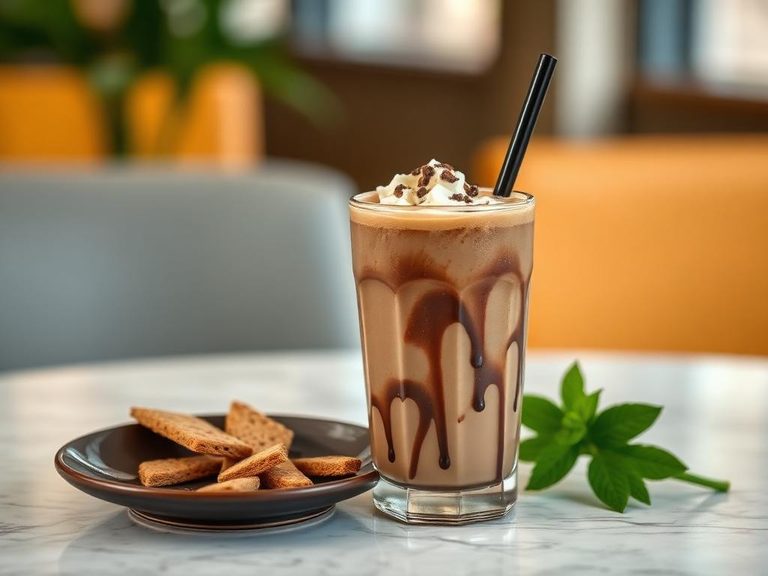
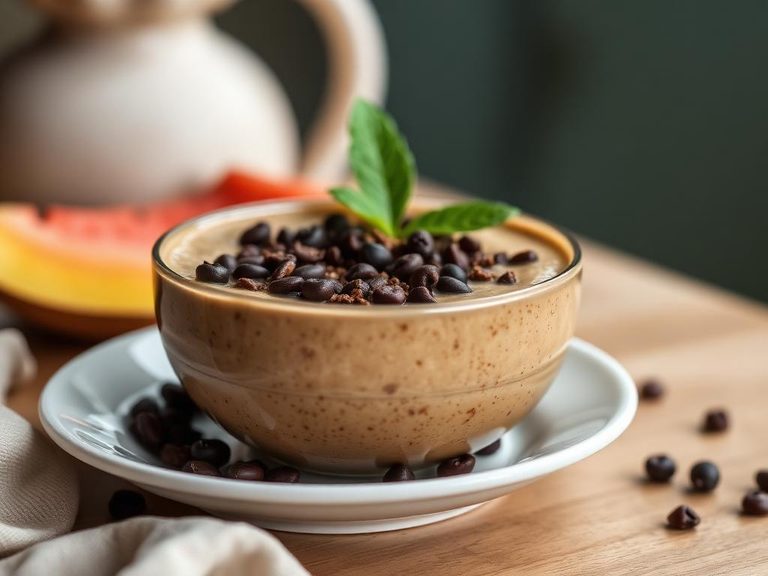
A chilled, decaffeinated coffee beverage blending rich chocolate with creamy milk, offering a sweet, indulgent treat without the caffeine buzz. Its smooth, velvety texture comes from the emulsified cocoa and dairy, making it a dessert-like drink. At just 51 kcal per 100g, it provides a lighter alternative to full-sugar, caffeinated coffee shop mochas.
Calorie split: 13% protein · 71% carbs · 16% fat
↓ Full nutrition💚 Why it's loved
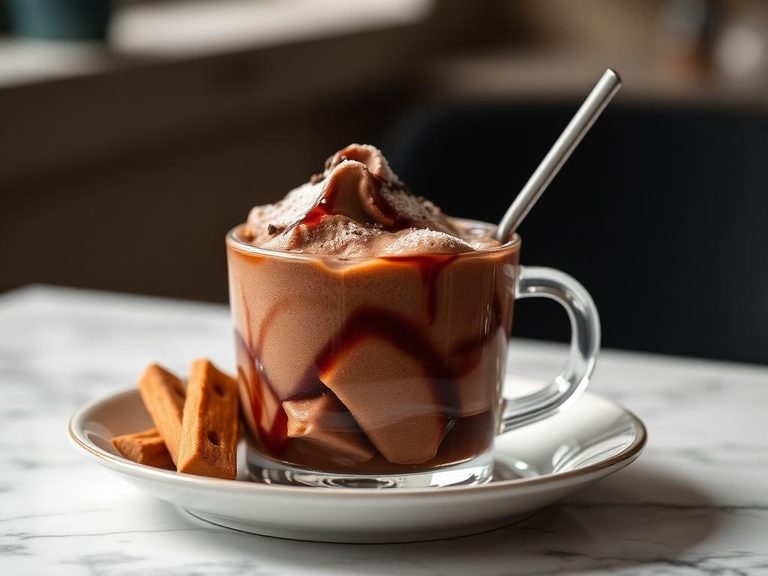
People adore it for the harmonious marriage of deep coffee notes and sweet chocolate, creating a comforting, dessert-like experience in a glass. It's a versatile treat enjoyed year-round, often customized with whipped cream or flavored syrups.
⚠️ Watch-outs & how to enjoy it better
The 8.03g of sugar per 100g can contribute to blood-sugar spikes, especially for those monitoring glucose levels. To mitigate this, pair it with a source of protein or healthy fat (like a handful of nuts) to slow sugar absorption. Those sensitive to dairy should check for lactose or opt for plant-based milk alternatives.
Key benefits
- Low-calorie indulgence at 51 kcal per 100g
- Provides a small protein boost from milk content
- Offers a quick energy lift from natural sugars
- Caffeine-free, suitable for evening consumption
- Contains antioxidants from cocoa
🍽️ Popular dishes
🌍 Where it's eaten
💡 Did you know?
The 'mocha' in cafe mocha refers not to a coffee bean, but to the historic Yemeni port city of Mocha (Al Mokha), which was a major coffee trading hub in the 15th-17th centuries.
Full nutrition (USDA data · scales with serving)
| Water | 88.0 g |
| Energy | 51.0 kcal |
| Protein | 1.6 g |
| Total lipid (fat) | 0.92 g |
| Carbohydrate, by difference | 9.0 g |
| Fiber, total dietary | 0.00 g |
| Total Sugars | 8.0 g |
| Calcium, Ca | 60.0 mg |
| Iron, Fe | 0.02 mg |
| Magnesium, Mg | 22.0 mg |
| Phosphorus, P | 55.0 mg |
| Potassium, K | 104 mg |
| Sodium, Na | 36.0 mg |
| Zinc, Zn | 0.26 mg |
| Copper, Cu | 0.04 mg |
| Selenium, Se | 1.0 ug |
| Vitamin C, total ascorbic acid | 0.10 mg |
| Thiamin | 0.03 mg |
| Riboflavin | 0.09 mg |
| Niacin | 0.87 mg |
| Vitamin B-6 | 0.03 mg |
| Folate, total | 1.0 ug |
| Folic acid | 0.00 ug |
| Folate, food | 1.0 ug |
| Folate, DFE | 1.0 ug |
| Choline, total | 8.7 mg |
| Vitamin B-12 | 0.26 ug |
| Vitamin B-12, added | 0.00 ug |
| Vitamin A, RAE | 39.0 ug |
| Retinol | 39.0 ug |
| Carotene, beta | 1.0 ug |
| Carotene, alpha | 0.00 ug |
| Cryptoxanthin, beta | 0.00 ug |
| Lycopene | 0.00 ug |
| Lutein + zeaxanthin | 0.00 ug |
| Vitamin E (alpha-tocopherol) | 0.02 mg |
| Vitamin E, added | 0.00 mg |
| Vitamin D (D2 + D3) | 0.50 ug |
| Vitamin K (phylloquinone) | 0.10 ug |
| Alcohol, ethyl | 0.00 g |
| Caffeine | 2.0 mg |
| Theobromine | 16.0 mg |
Fat & fatty acid profile (per 100g)
| Fatty acids, total saturated | 0.53 g |
| SFA 4:0 | 0.02 g |
| SFA 6:0 | 0.01 g |
| SFA 8:0 | 0.01 g |
| SFA 10:0 | 0.02 g |
| SFA 12:0 | 0.03 g |
| SFA 14:0 | 0.09 g |
| SFA 16:0 | 0.25 g |
| SFA 18:0 | 0.09 g |
| Fatty acids, total monounsaturated | 0.19 g |
| MUFA 16:1 | 0.01 g |
| MUFA 18:1 | 0.19 g |
| MUFA 20:1 | 0.00 g |
| MUFA 22:1 | 0.00 g |
| Fatty acids, total polyunsaturated | 0.04 g |
| PUFA 18:2 | 0.04 g |
| PUFA 18:3 | 0.00 g |
| PUFA 18:4 | 0.00 g |
| PUFA 20:4 | 0.00 g |
| PUFA 20:5 n-3 (EPA) | 0.00 g |
| PUFA 22:5 n-3 (DPA) | 0.00 g |
| PUFA 22:6 n-3 (DHA) | 0.00 g |
| Cholesterol | 4.0 mg |
Amino acid profile (per 100g)
Estimated from Cream, fluid, light (coffee cream or table cream) — USDA does not publish this profile for Coffee.
| Tryptophan | 0.07 g |
| Threonine | 0.13 g |
| Isoleucine | 0.15 g |
| Leucine | 0.24 g |
| Lysine | 0.13 g |
| Methionine | 0.07 g |
| Cystine | 0.01 g |
| Phenylalanine | 0.14 g |
| Tyrosine | 0.14 g |
| Valine | 0.18 g |
| Arginine | 0.07 g |
| Histidine | 0.07 g |
| Alanine | 0.09 g |
| Aspartic acid | 0.22 g |
| Glutamic acid | 0.59 g |
| Glycine | 0.07 g |
| Proline | 0.31 g |
| Serine | 0.10 g |
FAQ
Is decaf iced mocha completely caffeine-free?
No. Decaffeination removes 97-99% of caffeine, but a small amount (typically 2-15 mg per cup) remains. It's much lower than regular coffee but not zero.
How does the nutrition compare to a regular iced mocha?
A decaf version is often slightly lower in calories and may have less sugar if made with the same recipe, as the primary difference is the caffeine content, not the base ingredients.
Can I make a healthier version at home?
Absolutely. Use unsweetened cocoa powder, a sugar substitute or less sugar, and choose low-fat or plant-based milk. You can also add a scoop of protein powder for a more balanced drink.
Nutrient density (calculated · NRF9.3)
Nutrient Rich Foods index: beneficial nutrients (protein, fiber, vitamins, minerals) minus saturated fat, added sugar & sodium, per 100 kcal.
NRF9.3 index — Fulgoni, Keast & Drewnowski, 2009. Computed from USDA nutrients.
Weight-loss friendliness (composite index)
Energy density 0.51 kcal/g · 12% calories from protein · 0.0 g fiber · 8.0 g sugar per 100 g.
Composite of energy density (Rolls et al., 1999), protein & fiber satiety, minus sugar. A calculated heuristic — ranks satiety-per-calorie, not a clinical measure.
Dietary load (calculated from USDA values)
Potential renal acid load. Positive = acid-forming, negative = alkaline-forming.
Sodium-to-potassium ratio: 0.35 (lower is better — aim for ≤ 1)
Sodium:potassium per WHO potassium guidance. Computed from USDA nutrients.