

Coffee, Iced Cafe Mocha, nonfat
Common food

Photo: Wikipedia
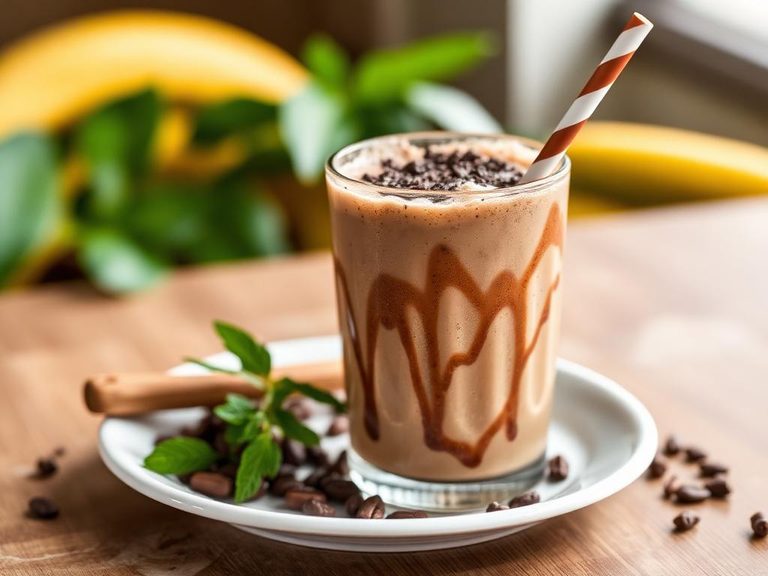
A chilled, sweetened espresso-based drink blended with chocolate syrup and nonfat milk, offering a light, creamy texture without the richness of whole milk. It delivers a quick energy boost with a moderate 43 kcal per 100g, primarily from 8.07g of sugar and 8.96g of carbohydrates. The flavor profile balances the bold bitterness of coffee with the smooth, sweet notes of cocoa.
Calorie split: 15% protein · 84% carbs · 1% fat
↓ Full nutrition💚 Why it's loved
People love it for the indulgent, dessert-like flavor of chocolate and coffee combined in a refreshing, cold format that feels like a treat. It's a popular, versatile pick-me-up that fits easily into a busy day or a casual social outing.
⚠️ Watch-outs & how to enjoy it better
The high sugar content (8.07g per 100g) can lead to blood-sugar spikes and a subsequent energy crash, making it less ideal for those managing diabetes or seeking sustained energy. To counteract this, pair it with a source of protein or healthy fat (like a handful of nuts or a protein bar) to slow sugar absorption, or opt for a smaller portion size.
Key benefits
- Low in fat (0.07g per 100g)
- Provides a quick energy boost from carbohydrates
- Contains a small amount of protein (1.61g per 100g)
- Refreshing and hydrating when iced
- Lower calorie option compared to whole milk or cream-based mochas
🍽️ Popular dishes
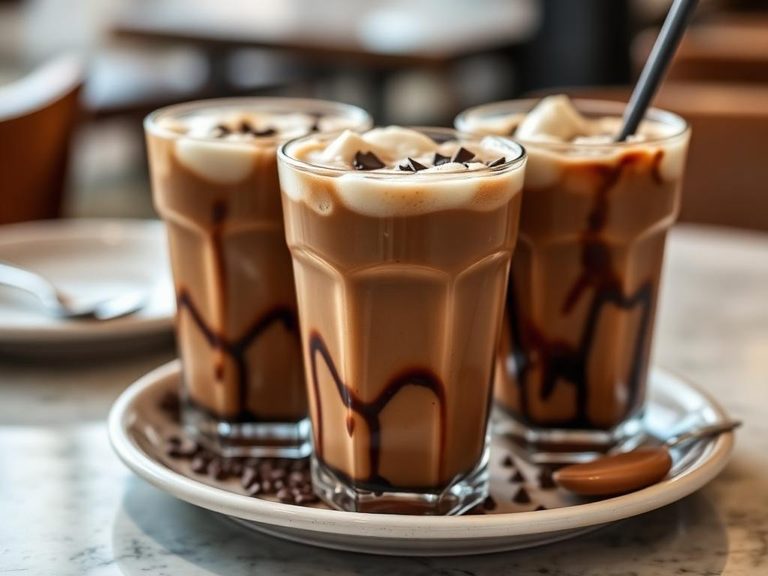
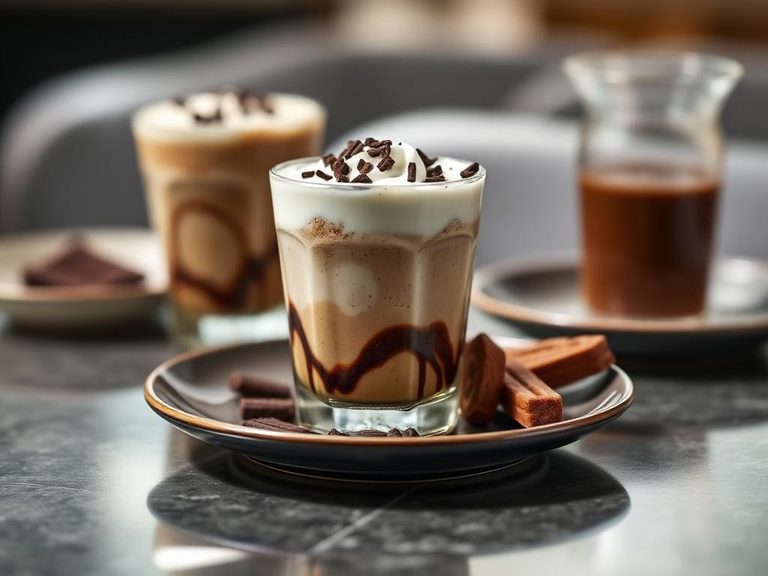
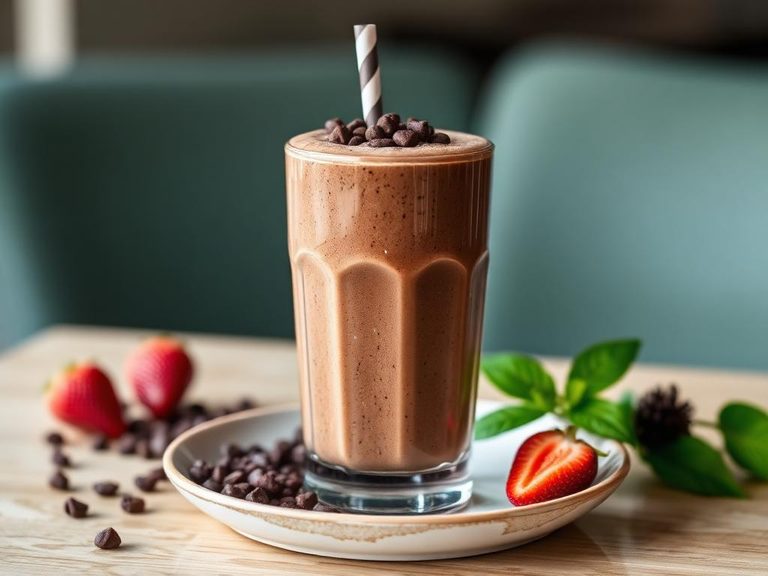
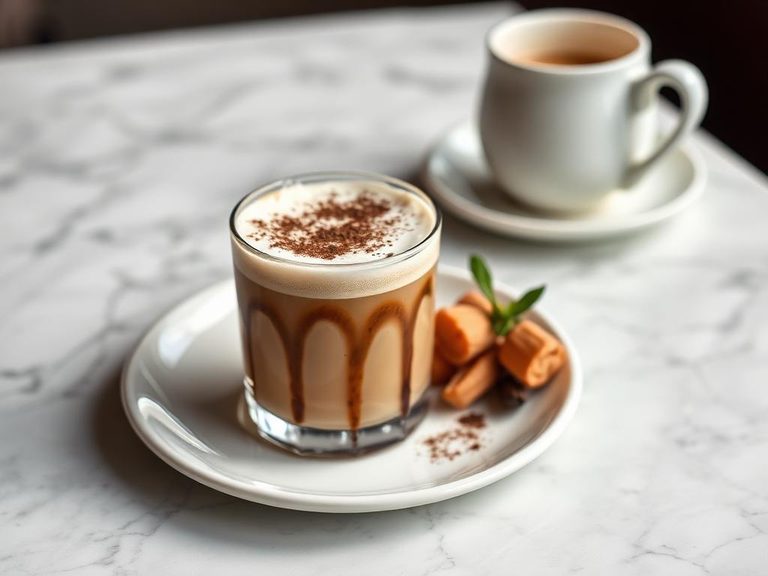
🌍 Where it's eaten
💡 Did you know?
The term 'mocha' originally referred to a specific type of coffee bean from the port city of Mocha (Al Mokha) in Yemen, known for its chocolatey undertones, which inspired the modern drink's flavor profile.
Full nutrition (USDA data · scales with serving)
| Water | 88.9 g |
| Energy | 43.0 kcal |
| Protein | 1.6 g |
| Total lipid (fat) | 0.07 g |
| Carbohydrate, by difference | 9.0 g |
| Fiber, total dietary | 0.00 g |
| Total Sugars | 8.1 g |
| Calcium, Ca | 63.0 mg |
| Iron, Fe | 0.02 mg |
| Magnesium, Mg | 22.0 mg |
| Phosphorus, P | 56.0 mg |
| Potassium, K | 108 mg |
| Sodium, Na | 36.0 mg |
| Zinc, Zn | 0.27 mg |
| Copper, Cu | 0.04 mg |
| Selenium, Se | 1.1 ug |
| Vitamin C, total ascorbic acid | 0.00 mg |
| Thiamin | 0.03 mg |
| Riboflavin | 0.09 mg |
| Niacin | 0.89 mg |
| Vitamin B-6 | 0.03 mg |
| Folate, total | 1.0 ug |
| Folic acid | 0.00 ug |
| Folate, food | 1.0 ug |
| Folate, DFE | 1.0 ug |
| Choline, total | 9.0 mg |
| Vitamin B-12 | 0.27 ug |
| Vitamin B-12, added | 0.00 ug |
| Vitamin A, RAE | 30.0 ug |
| Retinol | 30.0 ug |
| Carotene, beta | 1.0 ug |
| Carotene, alpha | 0.00 ug |
| Cryptoxanthin, beta | 0.00 ug |
| Lycopene | 0.00 ug |
| Lutein + zeaxanthin | 0.00 ug |
| Vitamin E (alpha-tocopherol) | 0.00 mg |
| Vitamin E, added | 0.00 mg |
| Vitamin D (D2 + D3) | 0.50 ug |
| Vitamin K (phylloquinone) | 0.00 ug |
| Alcohol, ethyl | 0.00 g |
| Caffeine | 35.0 mg |
| Theobromine | 16.0 mg |
Fat & fatty acid profile (per 100g)
| Fatty acids, total saturated | 0.04 g |
| SFA 4:0 | 0.00 g |
| SFA 6:0 | 0.00 g |
| SFA 8:0 | 0.00 g |
| SFA 10:0 | 0.00 g |
| SFA 12:0 | 0.00 g |
| SFA 14:0 | 0.00 g |
| SFA 16:0 | 0.02 g |
| SFA 18:0 | 0.00 g |
| Fatty acids, total monounsaturated | 0.01 g |
| MUFA 16:1 | 0.00 g |
| MUFA 18:1 | 0.01 g |
| MUFA 20:1 | 0.00 g |
| MUFA 22:1 | 0.00 g |
| Fatty acids, total polyunsaturated | 0.02 g |
| PUFA 18:2 | 0.02 g |
| PUFA 18:3 | 0.00 g |
| PUFA 18:4 | 0.00 g |
| PUFA 20:4 | 0.00 g |
| PUFA 20:5 n-3 (EPA) | 0.00 g |
| PUFA 22:5 n-3 (DPA) | 0.00 g |
| PUFA 22:6 n-3 (DHA) | 0.00 g |
| Cholesterol | 1.0 mg |
Amino acid profile (per 100g)
Estimated from Cream, fluid, light (coffee cream or table cream) — USDA does not publish this profile for Coffee.
| Tryptophan | 0.07 g |
| Threonine | 0.13 g |
| Isoleucine | 0.15 g |
| Leucine | 0.24 g |
| Lysine | 0.13 g |
| Methionine | 0.07 g |
| Cystine | 0.01 g |
| Phenylalanine | 0.14 g |
| Tyrosine | 0.14 g |
| Valine | 0.18 g |
| Arginine | 0.07 g |
| Histidine | 0.07 g |
| Alanine | 0.09 g |
| Aspartic acid | 0.22 g |
| Glutamic acid | 0.59 g |
| Glycine | 0.07 g |
| Proline | 0.31 g |
| Serine | 0.10 g |
FAQ
How does nonfat milk affect the taste compared to whole milk?
Nonfat milk results in a lighter, less creamy texture and a slightly sharper, more acidic coffee flavor, as it lacks the fat that normally mellows and rounds out the taste.
Is this drink suitable for a low-sugar diet?
With over 8g of sugar per 100g, it is relatively high in sugar. Those on a low-sugar diet should consume it in moderation or consider unsweetened versions with sugar-free syrup.
Can I make this at home to control ingredients?
Yes, you can brew strong coffee or espresso, mix it with chocolate syrup or cocoa powder, and add nonfat milk over ice. This allows you to control the sugar and portion size.
Nutrient density (calculated · NRF9.3)
Nutrient Rich Foods index: beneficial nutrients (protein, fiber, vitamins, minerals) minus saturated fat, added sugar & sodium, per 100 kcal.
NRF9.3 index — Fulgoni, Keast & Drewnowski, 2009. Computed from USDA nutrients.
Weight-loss friendliness (composite index)
Energy density 0.43 kcal/g · 15% calories from protein · 0.0 g fiber · 8.1 g sugar per 100 g.
Composite of energy density (Rolls et al., 1999), protein & fiber satiety, minus sugar. A calculated heuristic — ranks satiety-per-calorie, not a clinical measure.
Dietary load (calculated from USDA values)
Potential renal acid load. Positive = acid-forming, negative = alkaline-forming.
Sodium-to-potassium ratio: 0.33 (lower is better — aim for ≤ 1)
Sodium:potassium per WHO potassium guidance. Computed from USDA nutrients.