

Coffee, Cuban
Common food

Photo: Wikipedia
Cuban coffee, or 'café cubano,' is a potent, syrupy shot of espresso sweetened during the brewing process with demerara sugar, creating a distinctive, caramelized 'espumita' foam. It delivers a bold, bittersweet flavor with a rich, almost chocolatey depth and a velvety texture from the emulsified sugar. Nutritionally, it's very low in calories and fat, with nearly all its energy coming from the added sugar.
Calorie split: 1% protein · 94% carbs · 5% fat
↓ Full nutrition💚 Why it's loved
People love Cuban coffee for its powerful, sweet-bitter flavor profile and the communal ritual of sharing a small 'tacita' from a 'cafetera.' It's a cornerstone of Cuban and broader Latin American culture, symbolizing hospitality and a moment of pause.
⚠️ Watch-outs & how to enjoy it better
The significant added sugar can cause rapid blood-sugar spikes, making it less suitable for those managing diabetes or insulin resistance. To counteract this, pair it with a source of protein or healthy fat (like a piece of cheese or nuts) to slow sugar absorption, or opt for a smaller portion.
Key benefits
- Provides a quick, intense caffeine boost for alertness
- Contains antioxidants from roasted coffee beans
- The ritual of preparation fosters social connection
- Low in calories and fat per serving
🍽️ Popular dishes
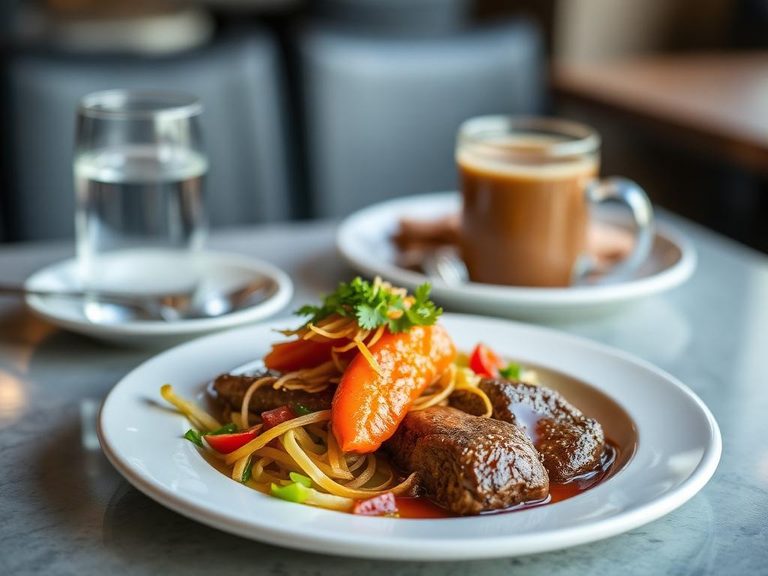
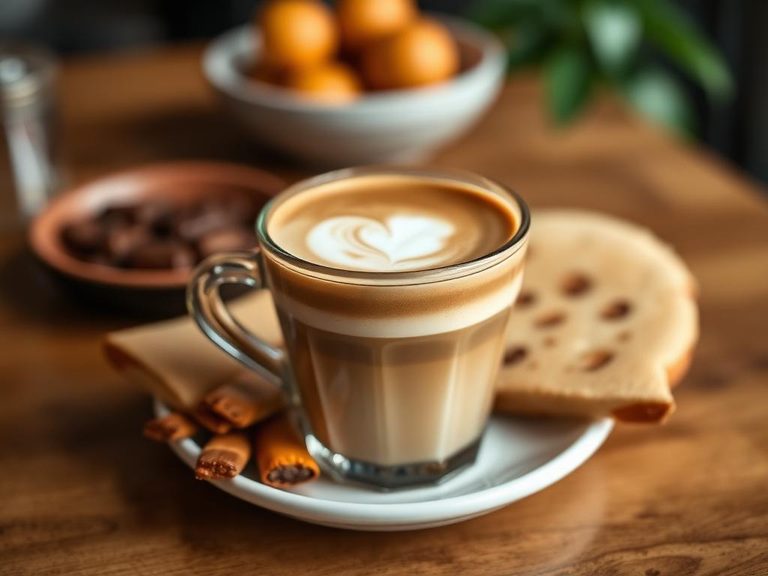
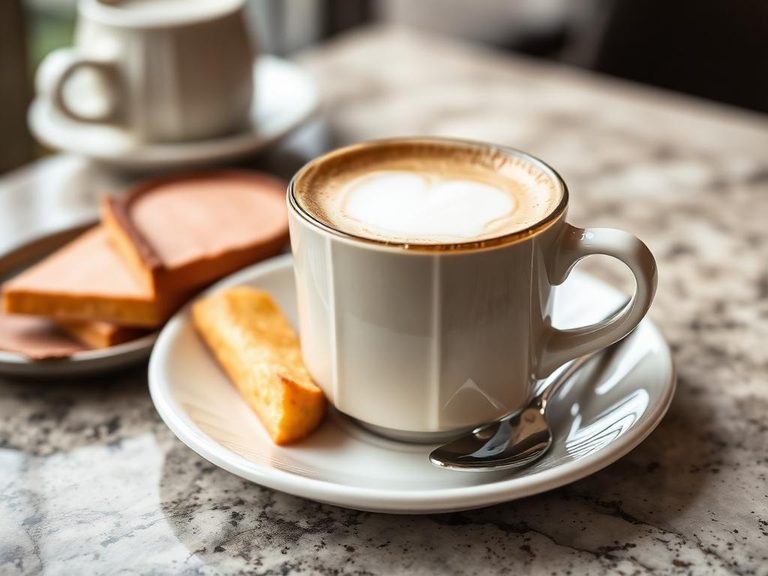
🌍 Where it's eaten
💡 Did you know?
The signature foam, 'espumita,' isn't just for show; it's created by vigorously whipping demerara sugar with the first few drops of hot espresso, a technique that caramelizes the sugar and creates a stable, sweet crema.
Full nutrition (USDA data · scales with serving)
| Water | 91.6 g |
| Energy | 34.0 kcal |
| Protein | 0.11 g |
| Total lipid (fat) | 0.19 g |
| Carbohydrate, by difference | 7.8 g |
| Fiber, total dietary | 0.00 g |
| Total Sugars | 6.3 g |
| Calcium, Ca | 2.0 mg |
| Iron, Fe | 0.12 mg |
| Magnesium, Mg | 75.0 mg |
| Phosphorus, P | 7.0 mg |
| Potassium, K | 108 mg |
| Sodium, Na | 13.0 mg |
| Zinc, Zn | 0.05 mg |
| Copper, Cu | 0.05 mg |
| Selenium, Se | 0.00 ug |
| Vitamin C, total ascorbic acid | 0.20 mg |
| Thiamin | 0.00 mg |
| Riboflavin | 0.17 mg |
| Niacin | 4.9 mg |
| Vitamin B-6 | 0.00 mg |
| Folate, total | 1.0 ug |
| Folic acid | 0.00 ug |
| Folate, food | 1.0 ug |
| Folate, DFE | 1.0 ug |
| Choline, total | 2.4 mg |
| Vitamin B-12 | 0.00 ug |
| Vitamin B-12, added | 0.00 ug |
| Vitamin A, RAE | 0.00 ug |
| Retinol | 0.00 ug |
| Carotene, beta | 0.00 ug |
| Carotene, alpha | 0.00 ug |
| Cryptoxanthin, beta | 0.00 ug |
| Lycopene | 0.00 ug |
| Lutein + zeaxanthin | 0.00 ug |
| Vitamin E (alpha-tocopherol) | 0.01 mg |
| Vitamin E, added | 0.00 mg |
| Vitamin D (D2 + D3) | 0.00 ug |
| Vitamin K (phylloquinone) | 0.10 ug |
| Alcohol, ethyl | 0.00 g |
| Caffeine | 199 mg |
| Theobromine | 0.00 mg |
Fat & fatty acid profile (per 100g)
| Fatty acids, total saturated | 0.09 g |
| SFA 4:0 | 0.00 g |
| SFA 6:0 | 0.00 g |
| SFA 8:0 | 0.00 g |
| SFA 10:0 | 0.00 g |
| SFA 12:0 | 0.00 g |
| SFA 14:0 | 0.00 g |
| SFA 16:0 | 0.04 g |
| SFA 18:0 | 0.00 g |
| Fatty acids, total monounsaturated | 0.00 g |
| MUFA 16:1 | 0.00 g |
| MUFA 18:1 | 0.00 g |
| MUFA 20:1 | 0.00 g |
| MUFA 22:1 | 0.00 g |
| Fatty acids, total polyunsaturated | 0.09 g |
| PUFA 18:2 | 0.09 g |
| PUFA 18:3 | 0.00 g |
| PUFA 18:4 | 0.00 g |
| PUFA 20:4 | 0.00 g |
| PUFA 20:5 n-3 (EPA) | 0.00 g |
| PUFA 22:5 n-3 (DPA) | 0.00 g |
| PUFA 22:6 n-3 (DHA) | 0.00 g |
| Cholesterol | 0.00 mg |
Amino acid profile (per 100g)
Estimated from Cream, fluid, light (coffee cream or table cream) — USDA does not publish this profile for Coffee.
| Tryptophan | 0.07 g |
| Threonine | 0.13 g |
| Isoleucine | 0.15 g |
| Leucine | 0.24 g |
| Lysine | 0.13 g |
| Methionine | 0.07 g |
| Cystine | 0.01 g |
| Phenylalanine | 0.14 g |
| Tyrosine | 0.14 g |
| Valine | 0.18 g |
| Arginine | 0.07 g |
| Histidine | 0.07 g |
| Alanine | 0.09 g |
| Aspartic acid | 0.22 g |
| Glutamic acid | 0.59 g |
| Glycine | 0.07 g |
| Proline | 0.31 g |
| Serine | 0.10 g |
FAQ
What makes Cuban coffee different from regular espresso?
The key difference is the preparation: demerara sugar is whipped with the initial espresso grounds to create a sweet foam ('espumita') before the rest of the coffee is brewed, integrating the sweetness throughout.
Is Cuban coffee stronger than regular coffee?
Yes, in terms of concentration and caffeine per ounce. It's a small, highly concentrated shot of espresso, so it delivers a potent caffeine jolt despite its small volume.
Can I make it without all the sugar?
The traditional recipe is inherently sweet, but you can reduce the sugar amount. However, this will significantly alter the classic flavor and prevent the formation of the signature 'espumita' foam.
Nutrient density (calculated · NRF9.3)
Nutrient Rich Foods index: beneficial nutrients (protein, fiber, vitamins, minerals) minus saturated fat, added sugar & sodium, per 100 kcal.
NRF9.3 index — Fulgoni, Keast & Drewnowski, 2009. Computed from USDA nutrients.
Weight-loss friendliness (composite index)
Energy density 0.34 kcal/g · 1% calories from protein · 0.0 g fiber · 6.3 g sugar per 100 g.
Composite of energy density (Rolls et al., 1999), protein & fiber satiety, minus sugar. A calculated heuristic — ranks satiety-per-calorie, not a clinical measure.
Dietary load (calculated from USDA values)
Potential renal acid load. Positive = acid-forming, negative = alkaline-forming.
Sodium-to-potassium ratio: 0.12 (lower is better — aim for ≤ 1)
Sodium:potassium per WHO potassium guidance. Computed from USDA nutrients.