

Bread, Cuban
Common food

Photo: Wikipedia
Cuban bread is a crusty, airy white loaf with a thin, crackling crust and a soft, chewy interior, traditionally baked with a distinctive palmetto leaf or lard for flavor. Its mild, slightly sweet taste and sturdy texture make it the perfect vehicle for soaking up savory juices and holding hearty fillings. Nutritionally, it provides a quick energy source with a high carbohydrate content and moderate protein, though it is relatively low in fiber.
Calorie split: 16% protein · 76% carbs · 8% fat
↓ Full nutrition💚 Why it's loved
People love Cuban bread for its satisfying crunch and soft crumb, which perfectly complements the rich, savory flavors of Cuban cuisine. Its cultural significance and role in iconic dishes like the Cuban sandwich make it a beloved staple.
⚠️ Watch-outs & how to enjoy it better
As a refined white bread, it can cause blood-sugar spikes and is low in fiber, which may not suit those managing diabetes or seeking sustained energy. To counteract this, pair it with protein (like roasted pork) and healthy fats (like avocado or cheese) to slow digestion, and opt for smaller portions or whole-grain variations when available.
Key benefits
- Provides quick energy from complex carbohydrates
- Contains moderate protein for muscle maintenance
- Low in fat, making it a lighter bread option
- Sturdy texture ideal for sandwiches and dipping
- Mild flavor pairs well with a wide range of foods
🍽️ Popular dishes
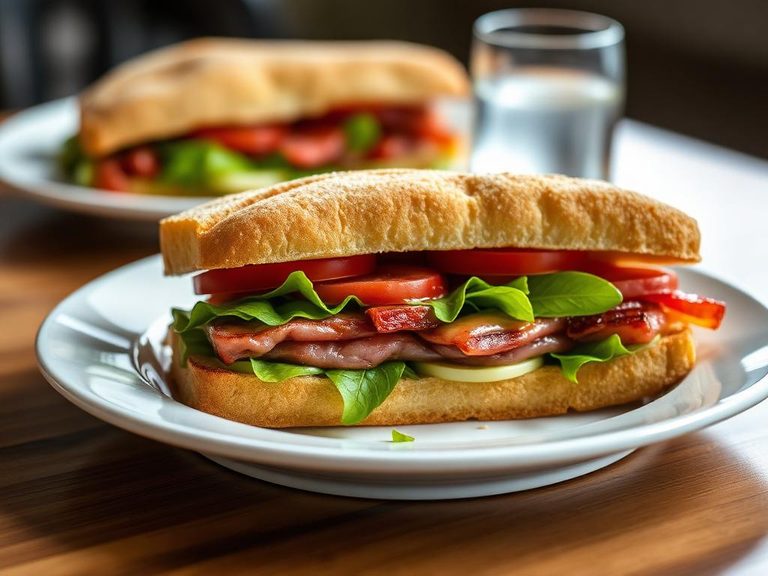
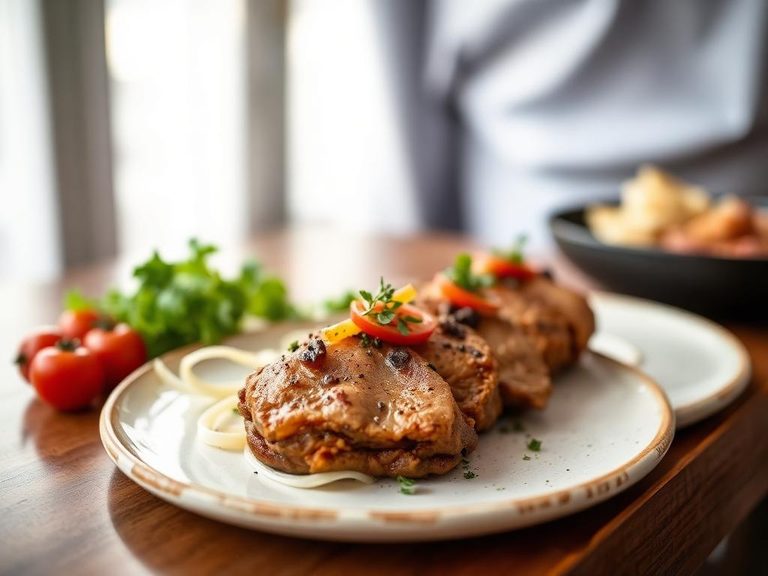
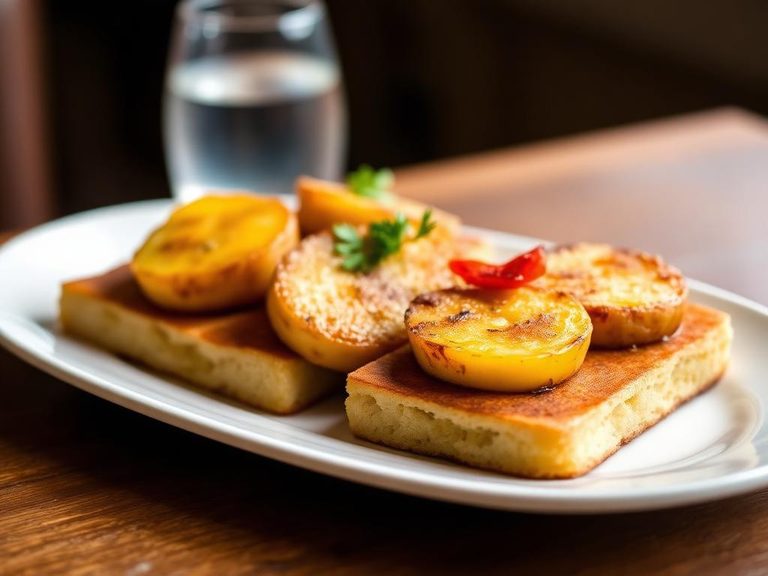
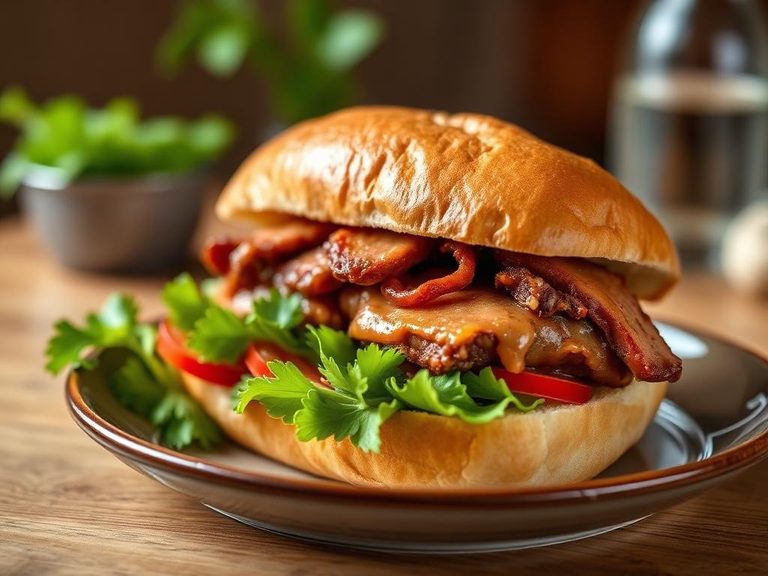
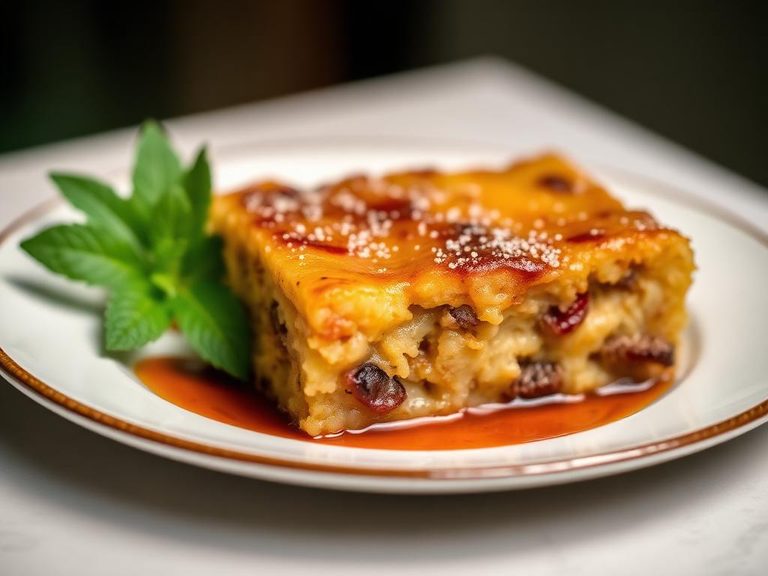
🌍 Where it's eaten
💡 Did you know?
Traditional Cuban bread is often baked with a palmetto leaf laid across the top, which leaves a distinctive crack on the crust and imparts a subtle, earthy aroma.
Full nutrition (USDA data · scales with serving)
| Water | 33.0 g |
| Energy | 272 kcal |
| Protein | 10.8 g |
| Total lipid (fat) | 2.4 g |
| Carbohydrate, by difference | 51.9 g |
| Fiber, total dietary | 2.2 g |
| Total Sugars | 4.6 g |
| Calcium, Ca | 52.0 mg |
| Iron, Fe | 3.9 mg |
| Magnesium, Mg | 32.0 mg |
| Phosphorus, P | 105 mg |
| Potassium, K | 117 mg |
| Sodium, Na | 602 mg |
| Zinc, Zn | 1.0 mg |
| Copper, Cu | 0.15 mg |
| Selenium, Se | 28.6 ug |
| Vitamin C, total ascorbic acid | 0.00 mg |
| Thiamin | 0.71 mg |
| Riboflavin | 0.43 mg |
| Niacin | 4.8 mg |
| Vitamin B-6 | 0.11 mg |
| Folate, total | 123 ug |
| Folic acid | 95.0 ug |
| Folate, food | 28.0 ug |
| Folate, DFE | 189 ug |
| Choline, total | 8.0 mg |
| Vitamin B-12 | 0.00 ug |
| Vitamin B-12, added | 0.00 ug |
| Vitamin A, RAE | 0.00 ug |
| Retinol | 0.00 ug |
| Carotene, beta | 0.00 ug |
| Carotene, alpha | 0.00 ug |
| Cryptoxanthin, beta | 0.00 ug |
| Lycopene | 0.00 ug |
| Lutein + zeaxanthin | 45.0 ug |
| Vitamin E (alpha-tocopherol) | 0.21 mg |
| Vitamin E, added | 0.00 mg |
| Vitamin D (D2 + D3) | 0.00 ug |
| Vitamin K (phylloquinone) | 0.70 ug |
| Alcohol, ethyl | 0.00 g |
| Caffeine | 0.00 mg |
| Theobromine | 0.00 mg |
Fat & fatty acid profile (per 100g)
| Fatty acids, total saturated | 0.53 g |
| SFA 4:0 | 0.00 g |
| SFA 6:0 | 0.00 g |
| SFA 8:0 | 0.00 g |
| SFA 10:0 | 0.00 g |
| SFA 12:0 | 0.00 g |
| SFA 14:0 | 0.01 g |
| SFA 16:0 | 0.36 g |
| SFA 18:0 | 0.14 g |
| Fatty acids, total monounsaturated | 0.36 g |
| MUFA 16:1 | 0.01 g |
| MUFA 18:1 | 0.34 g |
| MUFA 20:1 | 0.01 g |
| MUFA 22:1 | 0.00 g |
| Fatty acids, total polyunsaturated | 0.85 g |
| PUFA 18:2 | 0.79 g |
| PUFA 18:3 | 0.06 g |
| PUFA 18:4 | 0.00 g |
| PUFA 20:4 | 0.00 g |
| PUFA 20:5 n-3 (EPA) | 0.00 g |
| PUFA 22:5 n-3 (DPA) | 0.00 g |
| PUFA 22:6 n-3 (DHA) | 0.00 g |
| Cholesterol | 0.00 mg |
Amino acid profile (per 100g)
Estimated from Bread, salvadoran sweet cheese (quesadilla salvadorena) — USDA does not publish this profile for Bread.
| Tryptophan | 0.07 g |
| Threonine | 0.21 g |
| Isoleucine | 0.30 g |
| Leucine | 0.65 g |
| Lysine | 0.50 g |
| Methionine | 0.28 g |
| Cystine | 0.06 g |
| Phenylalanine | 0.37 g |
| Tyrosine | 0.23 g |
| Valine | 0.43 g |
| Arginine | 0.25 g |
| Histidine | 0.15 g |
| Alanine | 0.36 g |
| Aspartic acid | 0.59 g |
| Glutamic acid | 1.3 g |
| Glycine | 0.20 g |
| Proline | 0.83 g |
| Serine | 0.45 g |
| Hydroxyproline | 0.00 g |
FAQ
What makes Cuban bread different from other white breads?
Cuban bread is distinguished by its thin, crackling crust, soft chewy interior, and often includes lard or a palmetto leaf for flavor and texture, giving it a unique character.
Is Cuban bread gluten-free?
No, Cuban bread is made from wheat flour and contains gluten, making it unsuitable for those with celiac disease or gluten sensitivity.
How should I store Cuban bread to keep it fresh?
Store Cuban bread in a paper bag at room temperature for up to 2 days to maintain its crusty texture; for longer storage, freeze it and reheat in an oven to restore crispness.
Nutrient density (calculated · NRF9.3)
Nutrient Rich Foods index: beneficial nutrients (protein, fiber, vitamins, minerals) minus saturated fat, added sugar & sodium, per 100 kcal.
NRF9.3 index — Fulgoni, Keast & Drewnowski, 2009. Computed from USDA nutrients.
Weight-loss friendliness (composite index)
Energy density 2.72 kcal/g · 16% calories from protein · 2.2 g fiber · 4.6 g sugar per 100 g.
Composite of energy density (Rolls et al., 1999), protein & fiber satiety, minus sugar. A calculated heuristic — ranks satiety-per-calorie, not a clinical measure.
Dietary load (calculated from USDA values)
Potential renal acid load. Positive = acid-forming, negative = alkaline-forming.
Sodium-to-potassium ratio: 5.15 (lower is better — aim for ≤ 1)
Sodium:potassium per WHO potassium guidance. Computed from USDA nutrients.