

Chickpeas, from dried, no added fat
Common food

Photo: Wikipedia
Chickpeas are the nutty, buttery legume that forms the creamy heart of hummus and the satisfying bite in countless stews. From their humble dried form, they transform into a tender, earthy staple with a satisfyingly firm yet creamy texture. Nutritionally, they are a powerhouse, offering a substantial 8.81g of plant-based protein and 7.6g of fiber per 100g for just 163 calories.
Calorie split: 21% protein · 65% carbs · 14% fat
↓ Full nutrition💚 Why it's loved
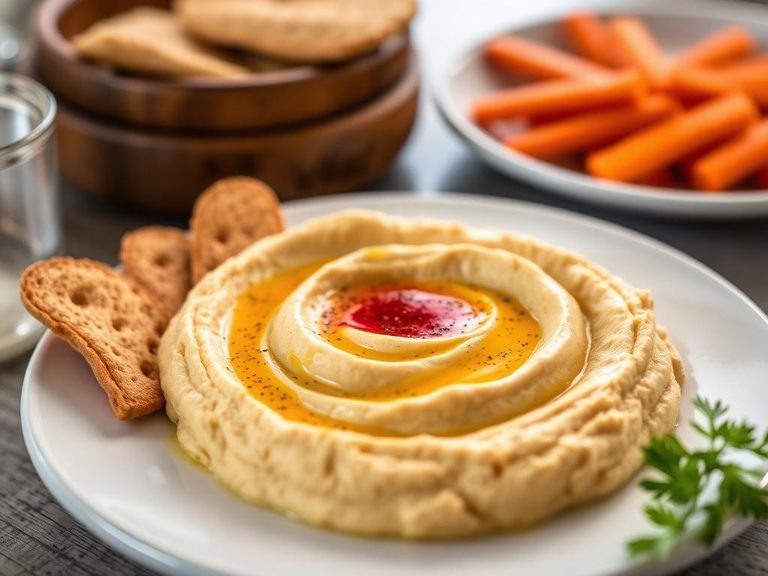
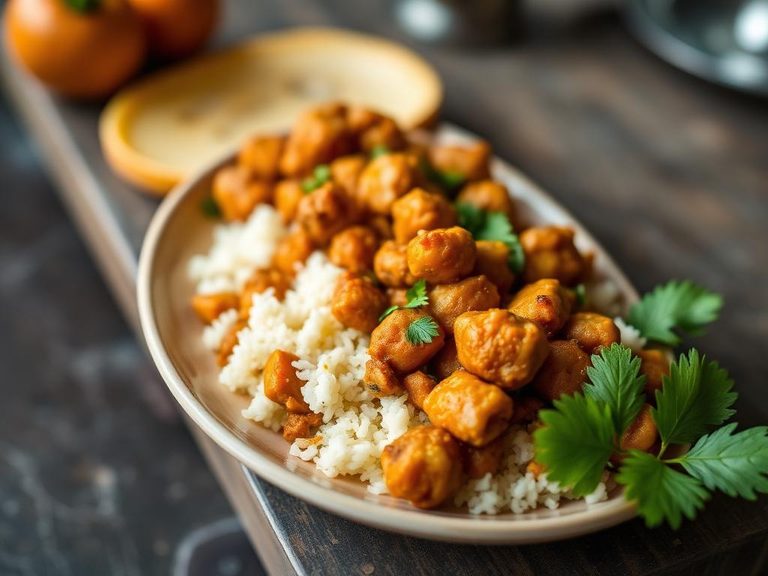
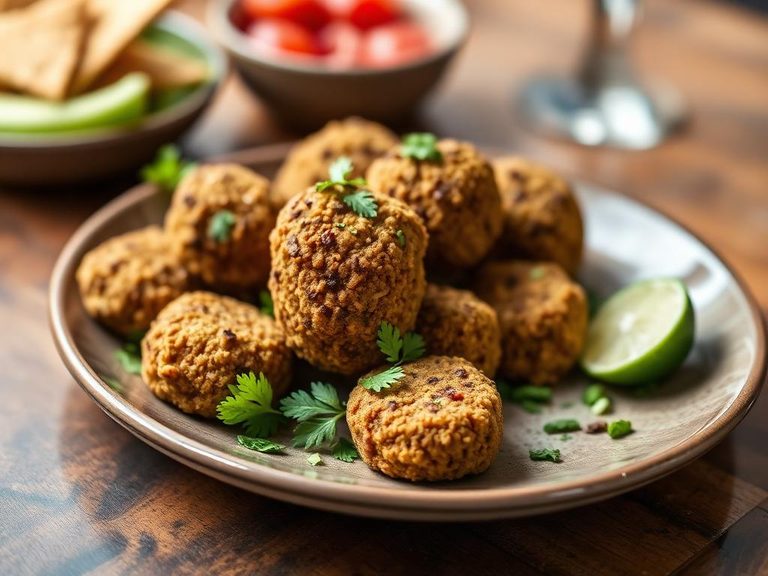
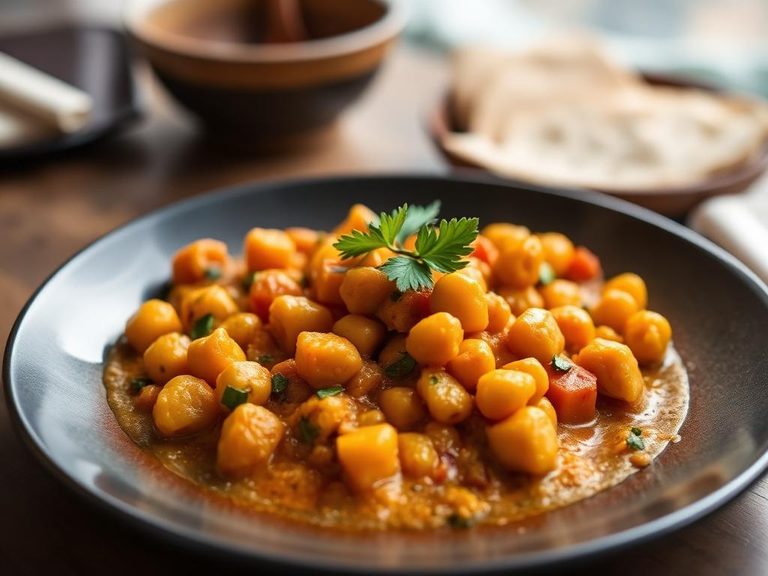
People cherish chickpeas for their incredible versatility—they soak up spices, turn creamy when blended, and hold their shape in salads. They are the foundational ingredient in iconic dishes across cultures, from Middle Eastern hummus to Indian chana masala, offering a deeply satisfying, protein-rich meal.
⚠️ Watch-outs & how to enjoy it better
As a legume, chickpeas contain oligosaccharides that can cause gas and bloating in some individuals, especially when introduced to the diet. To counteract this, start with smaller portions, ensure they are thoroughly cooked, and consider soaking dried chickpeas for 12+ hours, changing the water, to reduce these compounds. They also contain moderate levels of oxalates, so those prone to kidney stones should consult a doctor.
Key benefits
- Excellent source of plant-based protein for muscle maintenance
- High in dietary fiber to promote digestive health and satiety
- Rich in folate, iron, and phosphorus for cellular function
- Low in fat, making them a heart-healthy protein alternative
- Contains resistant starch, which may benefit gut health
🍽️ Popular dishes

🌍 Where it's eaten
💡 Did you know?
Archaeological evidence suggests chickpeas were one of the earliest cultivated legumes, with remains found in the Middle East dating back over 10,000 years.
Full nutrition (USDA data · scales with serving)
| Water | 59.9 g |
| Energy | 163 kcal |
| Protein | 8.8 g |
| Total lipid (fat) | 2.6 g |
| Carbohydrate, by difference | 27.3 g |
| Fiber, total dietary | 7.6 g |
| Total Sugars | 4.8 g |
| Calcium, Ca | 49.0 mg |
| Iron, Fe | 2.9 mg |
| Magnesium, Mg | 48.0 mg |
| Phosphorus, P | 167 mg |
| Potassium, K | 289 mg |
| Sodium, Na | 238 mg |
| Zinc, Zn | 1.5 mg |
| Copper, Cu | 0.35 mg |
| Selenium, Se | 3.7 ug |
| Vitamin C, total ascorbic acid | 1.2 mg |
| Thiamin | 0.11 mg |
| Riboflavin | 0.06 mg |
| Niacin | 0.50 mg |
| Vitamin B-6 | 0.13 mg |
| Folate, total | 162 ug |
| Folic acid | 0.00 ug |
| Folate, food | 162 ug |
| Folate, DFE | 162 ug |
| Choline, total | 42.5 mg |
| Vitamin B-12 | 0.00 ug |
| Vitamin B-12, added | 0.00 ug |
| Vitamin A, RAE | 1.0 ug |
| Retinol | 0.00 ug |
| Carotene, beta | 16.0 ug |
| Carotene, alpha | 0.00 ug |
| Cryptoxanthin, beta | 0.00 ug |
| Lycopene | 0.00 ug |
| Lutein + zeaxanthin | 0.00 ug |
| Vitamin E (alpha-tocopherol) | 0.35 mg |
| Vitamin E, added | 0.00 mg |
| Vitamin D (D2 + D3) | 0.00 ug |
| Vitamin K (phylloquinone) | 4.0 ug |
| Alcohol, ethyl | 0.00 g |
| Caffeine | 0.00 mg |
| Theobromine | 0.00 mg |
Fat & fatty acid profile (per 100g)
| Fatty acids, total saturated | 0.27 g |
| SFA 4:0 | 0.00 g |
| SFA 6:0 | 0.00 g |
| SFA 8:0 | 0.00 g |
| SFA 10:0 | 0.00 g |
| SFA 12:0 | 0.00 g |
| SFA 14:0 | 0.00 g |
| SFA 16:0 | 0.21 g |
| SFA 18:0 | 0.04 g |
| Fatty acids, total monounsaturated | 0.58 g |
| MUFA 16:1 | 0.01 g |
| MUFA 18:1 | 0.57 g |
| MUFA 20:1 | 0.00 g |
| MUFA 22:1 | 0.00 g |
| Fatty acids, total polyunsaturated | 1.1 g |
| PUFA 18:2 | 1.1 g |
| PUFA 18:3 | 0.04 g |
| PUFA 18:4 | 0.00 g |
| PUFA 20:4 | 0.00 g |
| PUFA 20:5 n-3 (EPA) | 0.00 g |
| PUFA 22:5 n-3 (DPA) | 0.00 g |
| PUFA 22:6 n-3 (DHA) | 0.00 g |
| Cholesterol | 0.00 mg |
Amino acid profile (per 100g)
Estimated from Chickpeas (garbanzo beans, bengal gram), mature seeds, raw — USDA does not publish this profile for Chickpeas.
| Tryptophan | 0.20 g |
| Threonine | 0.77 g |
| Isoleucine | 0.88 g |
| Leucine | 1.5 g |
| Lysine | 1.4 g |
| Methionine | 0.27 g |
| Cystine | 0.28 g |
| Phenylalanine | 1.1 g |
| Tyrosine | 0.51 g |
| Valine | 0.86 g |
| Arginine | 1.9 g |
| Histidine | 0.57 g |
| Alanine | 0.88 g |
| Aspartic acid | 2.4 g |
| Glutamic acid | 3.6 g |
| Glycine | 0.86 g |
| Proline | 0.85 g |
| Serine | 1.0 g |
FAQ
Are canned chickpeas as nutritious as dried?
Yes, canned chickpeas retain most of their nutrients. They are simply pre-cooked. Rinsing them can reduce sodium content by up to 40%.
How can I make chickpeas easier to digest?
Soaking dried chickpeas for 8-12 hours (changing the water) and cooking them thoroughly breaks down gas-producing compounds. Adding a piece of kombu seaweed or a pinch of baking soda to the cooking water can also help.
What's the best way to store cooked chickpeas?
Store cooked chickpeas in their cooking liquid in an airtight container in the refrigerator for up to 5 days, or freeze them for up to 6 months. The liquid (aquafaba) can be used as an egg substitute in baking.
Nutrient density (calculated · NRF9.3)
Nutrient Rich Foods index: beneficial nutrients (protein, fiber, vitamins, minerals) minus saturated fat, added sugar & sodium, per 100 kcal.
NRF9.3 index — Fulgoni, Keast & Drewnowski, 2009. Computed from USDA nutrients.
Weight-loss friendliness (composite index)
Energy density 1.63 kcal/g · 22% calories from protein · 7.6 g fiber · 4.8 g sugar per 100 g.
Composite of energy density (Rolls et al., 1999), protein & fiber satiety, minus sugar. A calculated heuristic — ranks satiety-per-calorie, not a clinical measure.
Dietary load (calculated from USDA values)
Potential renal acid load. Positive = acid-forming, negative = alkaline-forming.
Sodium-to-potassium ratio: 0.82 (lower is better — aim for ≤ 1)
Sodium:potassium per WHO potassium guidance. Computed from USDA nutrients.