

Chickpeas, from dried, fat added
Common food

Photo: Wikipedia
Chickpeas, cooked with a touch of added fat, are hearty, nutty legumes with a satisfyingly creamy-yet-firm bite. Their golden hue and earthy flavor make them a staple in global cuisines. Nutritionally, they offer a balanced trio of plant protein, complex carbs, and healthy fats, with a notable fiber content.
Calorie split: 15% protein · 47% carbs · 37% fat
↓ Full nutrition💚 Why it's loved
People adore chickpeas for their incredible versatility—they can be roasted for a crunchy snack, blended into creamy hummus, or simmered into hearty stews. Their mild, nutty flavor acts as a perfect canvas for a world of spices.
⚠️ Watch-outs & how to enjoy it better
As a legume, they contain oligosaccharides that can cause gas and bloating in some individuals. Soaking dried chickpeas for 12+ hours and discarding the water, or using canned varieties (rinsed well), can significantly reduce this effect. They also have a moderate glycemic impact; pairing them with non-starchy vegetables or a little acid (like lemon juice) can help moderate blood sugar response.
Key benefits
- Excellent source of plant-based protein for muscle maintenance.
- High in dietary fiber, promoting digestive health and satiety.
- Provides a good balance of complex carbohydrates for sustained energy.
- Rich in essential minerals like folate, iron, and phosphorus.
🍽️ Popular dishes
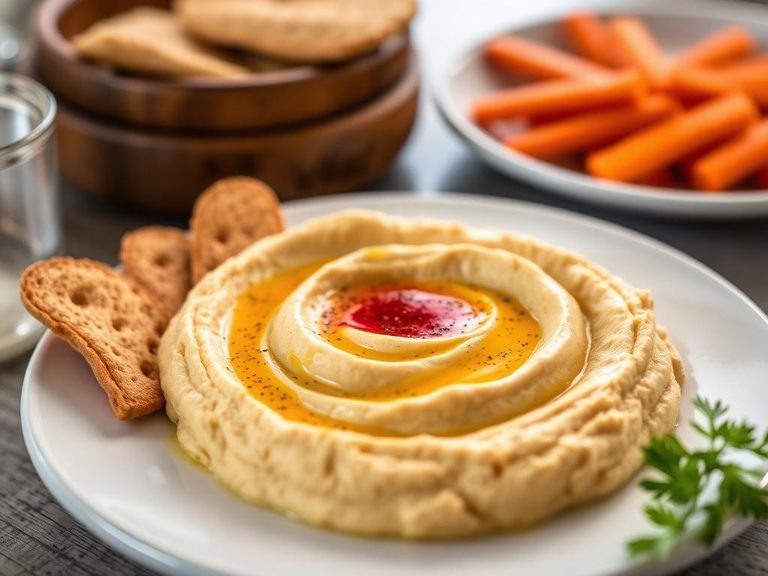
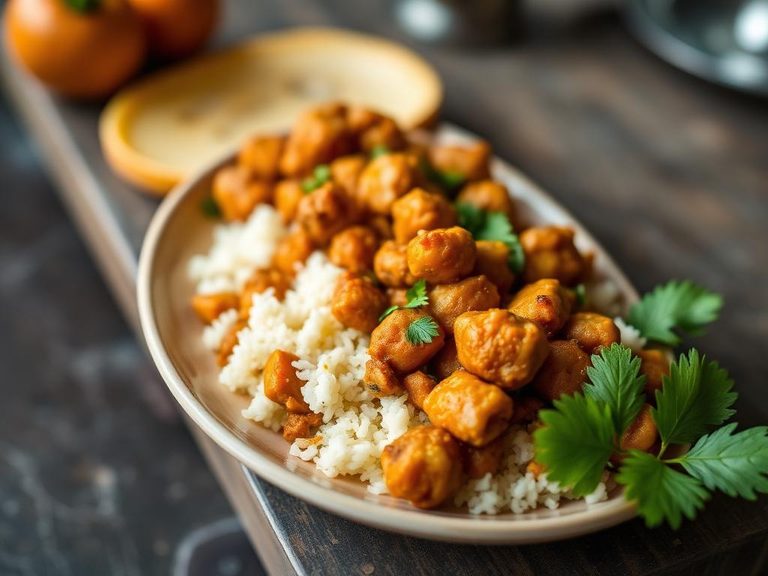
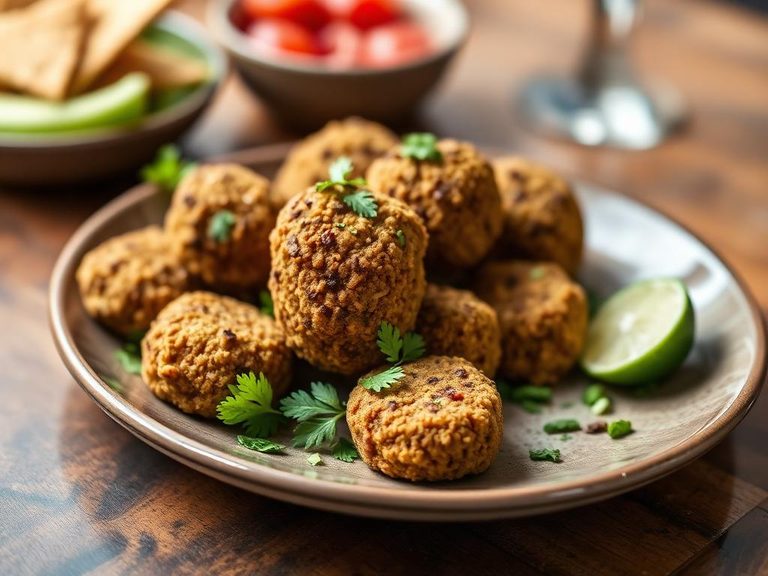


🌍 Where it's eaten
💡 Did you know?
The aquafaba—the liquid from a can of chickpeas—is a remarkable vegan egg white substitute, capable of being whipped into stiff peaks for meringues.
Full nutrition (USDA data · scales with serving)
| Water | 56.0 g |
| Energy | 211 kcal |
| Protein | 8.2 g |
| Total lipid (fat) | 8.9 g |
| Carbohydrate, by difference | 25.5 g |
| Fiber, total dietary | 7.1 g |
| Total Sugars | 4.5 g |
| Calcium, Ca | 46.0 mg |
| Iron, Fe | 2.7 mg |
| Magnesium, Mg | 45.0 mg |
| Phosphorus, P | 156 mg |
| Potassium, K | 270 mg |
| Sodium, Na | 222 mg |
| Zinc, Zn | 1.4 mg |
| Copper, Cu | 0.33 mg |
| Selenium, Se | 3.4 ug |
| Vitamin C, total ascorbic acid | 1.1 mg |
| Thiamin | 0.10 mg |
| Riboflavin | 0.06 mg |
| Niacin | 0.46 mg |
| Vitamin B-6 | 0.12 mg |
| Folate, total | 152 ug |
| Folic acid | 0.00 ug |
| Folate, food | 152 ug |
| Folate, DFE | 152 ug |
| Choline, total | 39.8 mg |
| Vitamin B-12 | 0.00 ug |
| Vitamin B-12, added | 0.00 ug |
| Vitamin A, RAE | 1.0 ug |
| Retinol | 0.00 ug |
| Carotene, beta | 15.0 ug |
| Carotene, alpha | 0.00 ug |
| Cryptoxanthin, beta | 0.00 ug |
| Lycopene | 0.00 ug |
| Lutein + zeaxanthin | 0.00 ug |
| Vitamin E (alpha-tocopherol) | 1.6 mg |
| Vitamin E, added | 0.00 mg |
| Vitamin D (D2 + D3) | 0.00 ug |
| Vitamin K (phylloquinone) | 10.3 ug |
| Alcohol, ethyl | 0.00 g |
| Caffeine | 0.00 mg |
| Theobromine | 0.00 mg |
Fat & fatty acid profile (per 100g)
| Fatty acids, total saturated | 1.1 g |
| SFA 4:0 | 0.00 g |
| SFA 6:0 | 0.00 g |
| SFA 8:0 | 0.00 g |
| SFA 10:0 | 0.00 g |
| SFA 12:0 | 0.00 g |
| SFA 14:0 | 0.01 g |
| SFA 16:0 | 0.82 g |
| SFA 18:0 | 0.22 g |
| Fatty acids, total monounsaturated | 3.3 g |
| MUFA 16:1 | 0.03 g |
| MUFA 18:1 | 3.2 g |
| MUFA 20:1 | 0.04 g |
| MUFA 22:1 | 0.00 g |
| Fatty acids, total polyunsaturated | 3.6 g |
| PUFA 18:2 | 3.2 g |
| PUFA 18:3 | 0.32 g |
| PUFA 18:4 | 0.00 g |
| PUFA 20:4 | 0.00 g |
| PUFA 20:5 n-3 (EPA) | 0.00 g |
| PUFA 22:5 n-3 (DPA) | 0.00 g |
| PUFA 22:6 n-3 (DHA) | 0.00 g |
| Cholesterol | 0.00 mg |
Amino acid profile (per 100g)
Estimated from Chickpeas (garbanzo beans, bengal gram), mature seeds, raw — USDA does not publish this profile for Chickpeas.
| Tryptophan | 0.20 g |
| Threonine | 0.77 g |
| Isoleucine | 0.88 g |
| Leucine | 1.5 g |
| Lysine | 1.4 g |
| Methionine | 0.27 g |
| Cystine | 0.28 g |
| Phenylalanine | 1.1 g |
| Tyrosine | 0.51 g |
| Valine | 0.86 g |
| Arginine | 1.9 g |
| Histidine | 0.57 g |
| Alanine | 0.88 g |
| Aspartic acid | 2.4 g |
| Glutamic acid | 3.6 g |
| Glycine | 0.86 g |
| Proline | 0.85 g |
| Serine | 1.0 g |
FAQ
Are canned chickpeas as nutritious as dried?
Yes, canned chickpeas retain most of their nutrients. The primary difference is sodium content; choosing low-sodium or rinsing them thoroughly removes excess salt.
How can I make chickpeas easier to digest?
Soaking dried chickpeas overnight and discarding the soaking water helps break down gas-causing compounds. Cooking them thoroughly until very tender also aids digestion.
Can I eat chickpeas if I'm watching my carbs?
While nutritious, chickpeas are a starchy legume. Their high fiber content helps moderate blood sugar impact, but portion control (e.g., ½ cup per serving) is key for low-carb diets.
Nutrient density (calculated · NRF9.3)
Nutrient Rich Foods index: beneficial nutrients (protein, fiber, vitamins, minerals) minus saturated fat, added sugar & sodium, per 100 kcal.
NRF9.3 index — Fulgoni, Keast & Drewnowski, 2009. Computed from USDA nutrients.
Weight-loss friendliness (composite index)
Energy density 2.11 kcal/g · 16% calories from protein · 7.1 g fiber · 4.5 g sugar per 100 g.
Composite of energy density (Rolls et al., 1999), protein & fiber satiety, minus sugar. A calculated heuristic — ranks satiety-per-calorie, not a clinical measure.
Dietary load (calculated from USDA values)
Potential renal acid load. Positive = acid-forming, negative = alkaline-forming.
Sodium-to-potassium ratio: 0.82 (lower is better — aim for ≤ 1)
Sodium:potassium per WHO potassium guidance. Computed from USDA nutrients.