

Chicken thigh, stewed, skin not eaten
Common food

Photo: Wikipedia
Stewed chicken thigh, with its skin removed, transforms into a tender, succulent morsel that practically melts off the bone. The slow-cooking process infuses the meat with deep, savory flavors from the braising liquid, resulting in a rich, umami-packed texture that's both juicy and satisfying. It's a protein powerhouse, delivering over 24 grams of high-quality protein per 100 grams with minimal fat.
Calorie split: 56% protein · 0% carbs · 44% fat
↓ Full nutrition💚 Why it's loved
People adore stewed chicken thigh for its incredible tenderness and ability to absorb complex flavors from herbs, spices, and sauces, making it a versatile canvas for countless cuisines. It's also a comforting, budget-friendly staple that evokes a sense of home cooking across many cultures.
⚠️ Watch-outs & how to enjoy it better
While nutritious, stewed chicken thigh can be high in sodium depending on the broth or seasoning used, which is a consideration for those managing blood pressure. To counteract this, use low-sodium broth, flavor with herbs and acids like lemon juice, and rinse the meat lightly if pre-salted. Also, ensure it's cooked to a safe internal temperature of 165°F (74°C) to avoid foodborne illness.
Key benefits
- Excellent source of complete protein for muscle maintenance and repair.
- Rich in B vitamins, especially niacin (B3) and B6, crucial for energy metabolism.
- Contains essential minerals like selenium and phosphorus.
- Skinless preparation significantly reduces saturated fat content.
- Collagen from slow cooking supports joint and skin health.
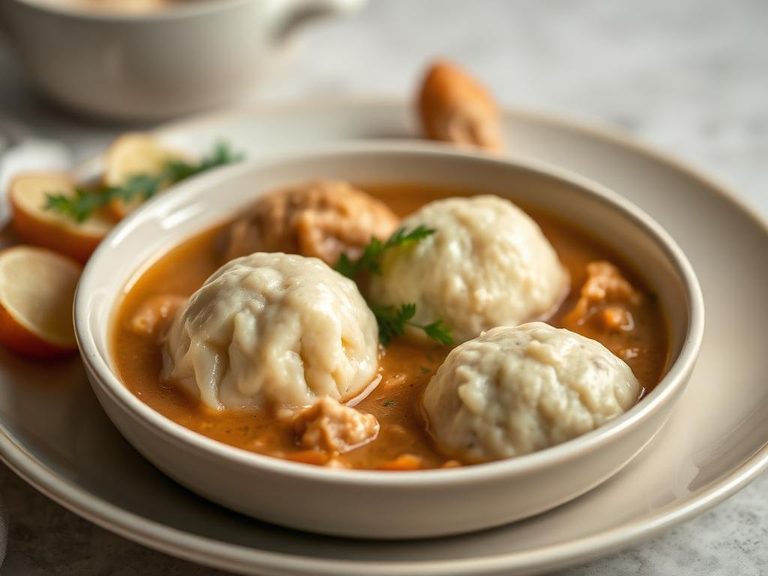
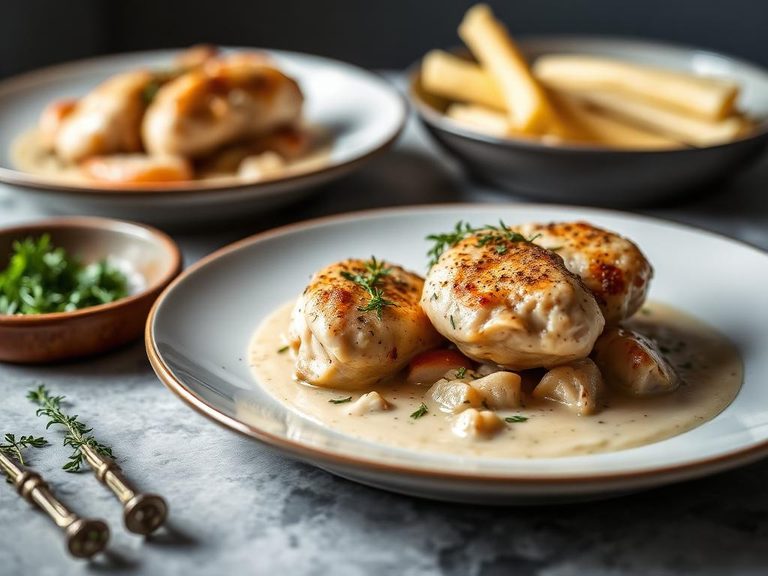
🍽️ Popular dishes
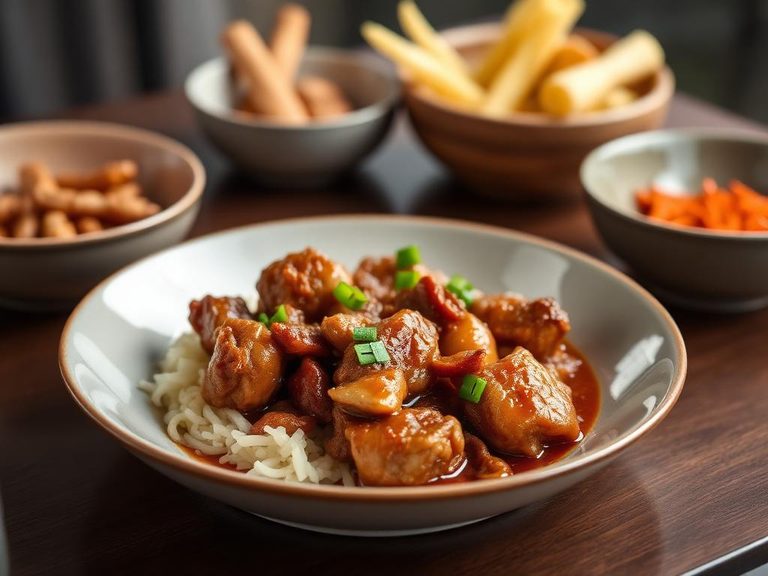
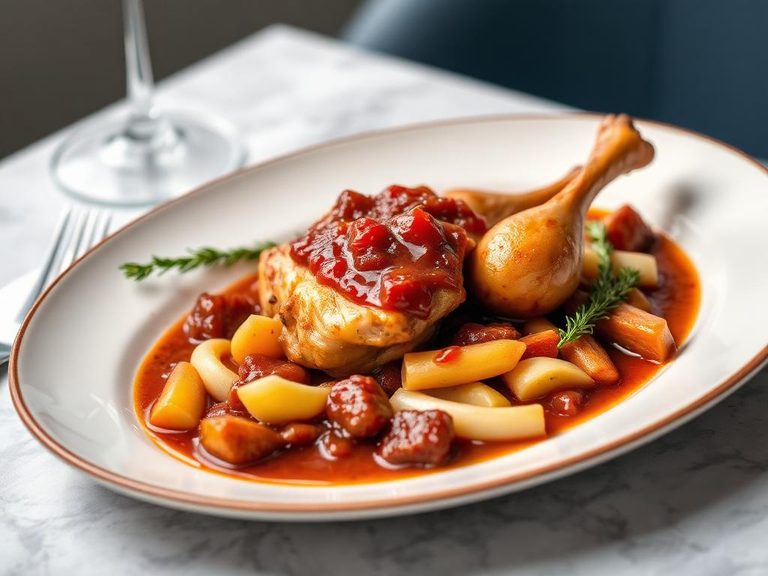
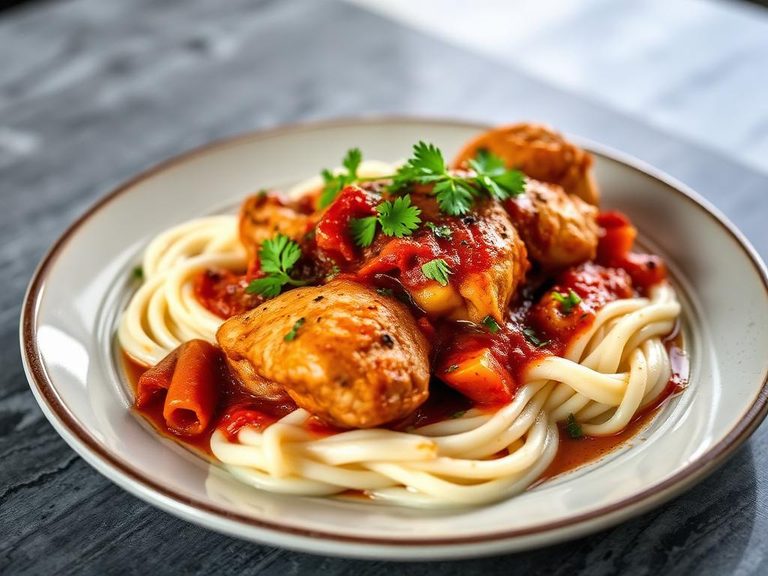
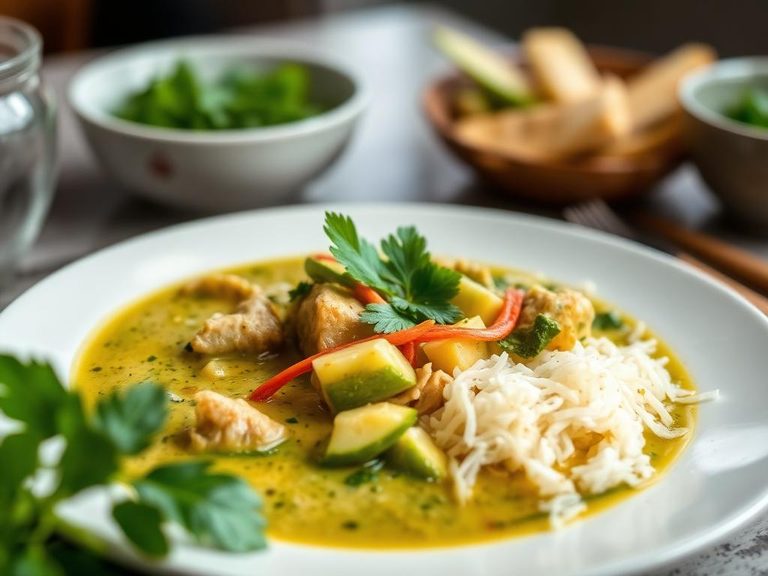
🌍 Where it's eaten
💡 Did you know?
The dark meat of chicken thigh contains about twice the iron and three times the zinc of breast meat, making it a more nutrient-dense choice for those needing these minerals.
Full nutrition (USDA data · scales with serving)
| Water | 66.3 g |
| Energy | 175 kcal |
| Protein | 24.4 g |
| Total lipid (fat) | 8.6 g |
| Carbohydrate, by difference | 0.00 g |
| Fiber, total dietary | 0.00 g |
| Total Sugars | 0.00 g |
| Calcium, Ca | 12.0 mg |
| Iron, Fe | 1.3 mg |
| Magnesium, Mg | 25.0 mg |
| Phosphorus, P | 199 mg |
| Potassium, K | 264 mg |
| Sodium, Na | 384 mg |
| Zinc, Zn | 1.9 mg |
| Copper, Cu | 0.05 mg |
| Selenium, Se | 29.0 ug |
| Vitamin C, total ascorbic acid | 0.00 mg |
| Thiamin | 0.09 mg |
| Riboflavin | 0.18 mg |
| Niacin | 5.7 mg |
| Vitamin B-6 | 0.43 mg |
| Folate, total | 5.0 ug |
| Folic acid | 0.00 ug |
| Folate, food | 5.0 ug |
| Folate, DFE | 5.0 ug |
| Choline, total | 67.8 mg |
| Vitamin B-12 | 0.42 ug |
| Vitamin B-12, added | 0.00 ug |
| Vitamin A, RAE | 8.0 ug |
| Retinol | 8.0 ug |
| Carotene, beta | 0.00 ug |
| Carotene, alpha | 0.00 ug |
| Cryptoxanthin, beta | 0.00 ug |
| Lycopene | 0.00 ug |
| Lutein + zeaxanthin | 0.00 ug |
| Vitamin E (alpha-tocopherol) | 0.17 mg |
| Vitamin E, added | 0.00 mg |
| Vitamin D (D2 + D3) | 0.30 ug |
| Vitamin K (phylloquinone) | 0.30 ug |
| Alcohol, ethyl | 0.00 g |
| Caffeine | 0.00 mg |
| Theobromine | 0.00 mg |
Fat & fatty acid profile (per 100g)
| Fatty acids, total saturated | 2.3 g |
| SFA 4:0 | 0.00 g |
| SFA 6:0 | 0.00 g |
| SFA 8:0 | 0.00 g |
| SFA 10:0 | 0.00 g |
| SFA 12:0 | 0.00 g |
| SFA 14:0 | 0.04 g |
| SFA 16:0 | 1.8 g |
| SFA 18:0 | 0.48 g |
| Fatty acids, total monounsaturated | 3.4 g |
| MUFA 16:1 | 0.50 g |
| MUFA 18:1 | 2.9 g |
| MUFA 20:1 | 0.03 g |
| MUFA 22:1 | 0.00 g |
| Fatty acids, total polyunsaturated | 1.5 g |
| PUFA 18:2 | 1.3 g |
| PUFA 18:3 | 0.06 g |
| PUFA 18:4 | 0.00 g |
| PUFA 20:4 | 0.08 g |
| PUFA 20:5 n-3 (EPA) | 0.01 g |
| PUFA 22:5 n-3 (DPA) | 0.01 g |
| PUFA 22:6 n-3 (DHA) | 0.00 g |
| Cholesterol | 140 mg |
Amino acid profile (per 100g)
Estimated from Chicken, broilers or fryers, dark meat, thigh, meat only, raw — USDA does not publish this profile for Chicken thigh.
| Tryptophan | 0.22 g |
| Threonine | 0.93 g |
| Isoleucine | 0.94 g |
| Leucine | 1.7 g |
| Lysine | 1.9 g |
| Methionine | 0.56 g |
| Cystine | 0.23 g |
| Phenylalanine | 0.79 g |
| Tyrosine | 0.74 g |
| Valine | 0.96 g |
| Arginine | 1.4 g |
| Histidine | 0.59 g |
| Alanine | 1.2 g |
| Aspartic acid | 1.9 g |
| Glutamic acid | 3.2 g |
| Glycine | 0.90 g |
| Proline | 0.79 g |
| Serine | 0.82 g |
FAQ
Is stewed chicken thigh healthy?
Yes, especially when skinless. It's a lean, high-protein food rich in B vitamins and minerals. The healthiness of the final dish depends on the cooking liquid and added sodium.
How do I prevent stewed chicken from getting rubbery?
Use a gentle simmer, not a rapid boil. Ensure the liquid covers the chicken, and cook just until the internal temperature reaches 165°F (74°C). Overcooking is the primary cause of toughness.
Can I use bone-in or boneless for stewing?
Both work well. Bone-in thighs add more flavor and collagen to the stew, resulting in a richer broth. Boneless thighs cook faster and are easier to eat.
Nutrient density (calculated · NRF9.3)
Nutrient Rich Foods index: beneficial nutrients (protein, fiber, vitamins, minerals) minus saturated fat, added sugar & sodium, per 100 kcal.
NRF9.3 index — Fulgoni, Keast & Drewnowski, 2009. Computed from USDA nutrients.
Weight-loss friendliness (composite index)
Energy density 1.75 kcal/g · 56% calories from protein · 0.0 g fiber · 0.0 g sugar per 100 g.
Composite of energy density (Rolls et al., 1999), protein & fiber satiety, minus sugar. A calculated heuristic — ranks satiety-per-calorie, not a clinical measure.
Dietary load (calculated from USDA values)
Potential renal acid load. Positive = acid-forming, negative = alkaline-forming.
Sodium-to-potassium ratio: 1.45 (lower is better — aim for ≤ 1)
Sodium:potassium per WHO potassium guidance. Computed from USDA nutrients.