

Chicken tenders or strips, breaded, from school lunch
Common food
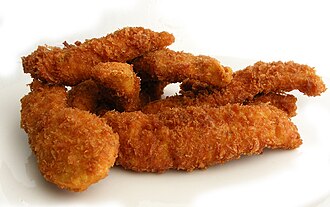
Photo: Wikipedia
These are tender strips of chicken breast, coated in a seasoned breadcrumb or batter mixture and fried until golden brown. The texture is a satisfying contrast between a crispy, savory exterior and a juicy, mild interior. Nutritionally, they provide a solid dose of protein but are also a significant source of refined carbohydrates and fat from the breading and frying process.
Calorie split: 23% protein · 34% carbs · 43% fat
↓ Full nutrition💚 Why it's loved
People love the universal appeal of the crispy, salty coating and the mild, tender chicken inside, making it a comfort food staple. Its versatility allows it to be dipped in everything from ketchup to honey mustard, fitting seamlessly into school cafeterias, fast-food menus, and home cooking.
⚠️ Watch-outs & how to enjoy it better
The breading can cause rapid blood-sugar spikes due to refined carbs, and the frying process adds significant saturated fat and calories. They are also often high in sodium and may contain common allergens like wheat (gluten) and eggs. To counteract this, pair them with a fiber-rich vegetable like steamed broccoli or a side salad, and opt for baked or air-fried versions at home to reduce fat intake.
Key benefits
- Good source of high-quality protein for muscle maintenance.
- Provides quick energy from carbohydrates.
- A familiar, palatable food that can encourage eating in picky eaters.
- Convenient and portable for packed lunches.
- Can be baked as a lower-fat alternative to frying.
🍽️ Popular dishes
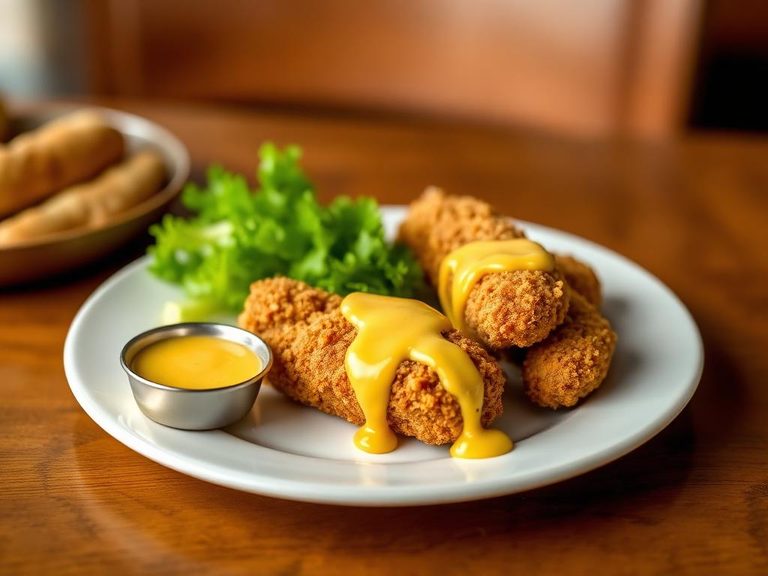

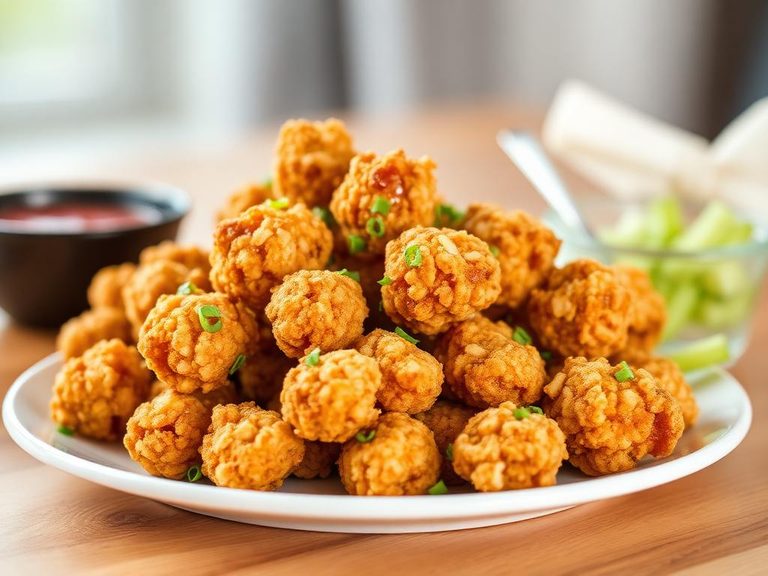

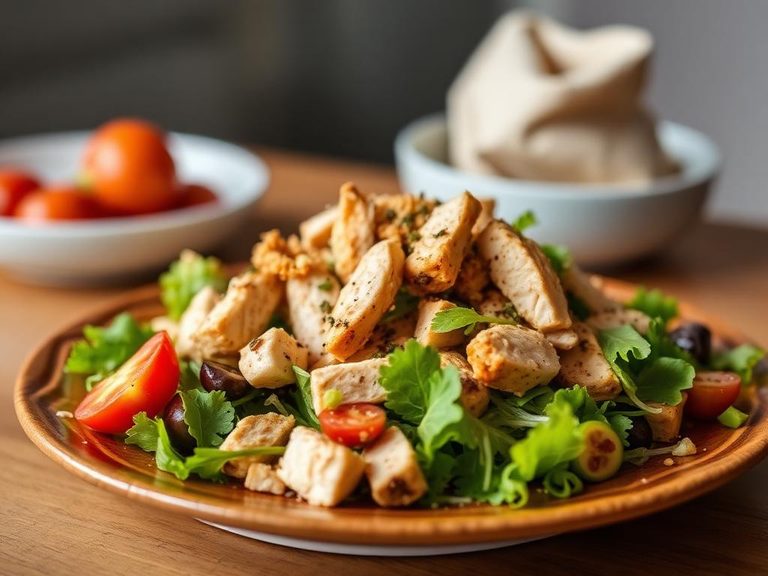
🌍 Where it's eaten
💡 Did you know?
The term 'chicken finger' is said to have originated in the 1970s at a New Hampshire restaurant, where the chef noted the strips resembled fingers.
Full nutrition (USDA data · scales with serving)
| Water | 46.5 g |
| Energy | 270 kcal |
| Protein | 15.7 g |
| Total lipid (fat) | 12.9 g |
| Carbohydrate, by difference | 22.9 g |
| Fiber, total dietary | 2.2 g |
| Total Sugars | 0.49 g |
| Calcium, Ca | 32.0 mg |
| Iron, Fe | 2.0 mg |
| Magnesium, Mg | 24.0 mg |
| Phosphorus, P | 183 mg |
| Potassium, K | 231 mg |
| Sodium, Na | 511 mg |
| Zinc, Zn | 0.71 mg |
| Copper, Cu | 0.07 mg |
| Selenium, Se | 17.7 ug |
| Vitamin C, total ascorbic acid | 0.60 mg |
| Thiamin | 0.09 mg |
| Riboflavin | 0.20 mg |
| Niacin | 6.0 mg |
| Vitamin B-6 | 0.31 mg |
| Folate, total | 11.0 ug |
| Folic acid | 5.0 ug |
| Folate, food | 6.0 ug |
| Folate, DFE | 15.0 ug |
| Choline, total | 44.9 mg |
| Vitamin B-12 | 0.24 ug |
| Vitamin B-12, added | 0.00 ug |
| Vitamin A, RAE | 16.0 ug |
| Retinol | 16.0 ug |
| Carotene, beta | 0.00 ug |
| Carotene, alpha | 0.00 ug |
| Cryptoxanthin, beta | 0.00 ug |
| Lycopene | 0.00 ug |
| Lutein + zeaxanthin | 0.00 ug |
| Vitamin E (alpha-tocopherol) | 1.2 mg |
| Vitamin E, added | 0.00 mg |
| Vitamin D (D2 + D3) | 0.30 ug |
| Vitamin K (phylloquinone) | 10.4 ug |
| Alcohol, ethyl | 0.00 g |
| Caffeine | 0.00 mg |
| Theobromine | 0.00 mg |
Fat & fatty acid profile (per 100g)
| Fatty acids, total saturated | 2.8 g |
| SFA 4:0 | 0.00 g |
| SFA 6:0 | 0.00 g |
| SFA 8:0 | 0.00 g |
| SFA 10:0 | 0.00 g |
| SFA 12:0 | 0.01 g |
| SFA 14:0 | 0.04 g |
| SFA 16:0 | 2.2 g |
| SFA 18:0 | 0.49 g |
| Fatty acids, total monounsaturated | 3.6 g |
| MUFA 16:1 | 0.27 g |
| MUFA 18:1 | 3.2 g |
| MUFA 20:1 | 0.05 g |
| MUFA 22:1 | 0.00 g |
| Fatty acids, total polyunsaturated | 4.2 g |
| PUFA 18:2 | 3.9 g |
| PUFA 18:3 | 0.27 g |
| PUFA 18:4 | 0.00 g |
| PUFA 20:4 | 0.03 g |
| PUFA 20:5 n-3 (EPA) | 0.00 g |
| PUFA 22:5 n-3 (DPA) | 0.00 g |
| PUFA 22:6 n-3 (DHA) | 0.00 g |
| Cholesterol | 50.0 mg |
Amino acid profile (per 100g)
Estimated from APPLEBEE'S, chicken tenders, from kids' menu — USDA does not publish this profile for Chicken tenders or strips.
| Tryptophan | 0.20 g |
| Threonine | 0.58 g |
| Isoleucine | 0.95 g |
| Leucine | 1.5 g |
| Lysine | 1.3 g |
| Methionine | 0.49 g |
| Cystine | 0.23 g |
| Phenylalanine | 0.76 g |
| Tyrosine | 0.51 g |
| Valine | 1.1 g |
| Arginine | 1.1 g |
| Histidine | 0.68 g |
| Alanine | 1.0 g |
| Aspartic acid | 1.7 g |
| Glutamic acid | 3.3 g |
| Glycine | 0.79 g |
| Proline | 1.2 g |
| Serine | 0.58 g |
| Hydroxyproline | 0.03 g |
FAQ
Are chicken tenders and chicken strips the same thing?
The terms are often used interchangeably. Technically, 'tenders' refer to the specific pectoralis minor muscle (a tender strip of meat attached to the underside of the breast), while 'strips' can be any chicken breast cut into strips before breading.
How can I make them healthier at home?
Use whole-grain breadcrumbs or crushed cornflakes for the coating, bake or air-fry instead of deep-frying, and season generously with herbs and spices to reduce the need for excess salt.
Why are they a common school lunch item?
They are cost-effective, easy to prepare in large batches, hold heat well in serving lines, and are highly accepted by children due to their mild flavor and familiar texture.
Nutrient density (calculated · NRF9.3)
Nutrient Rich Foods index: beneficial nutrients (protein, fiber, vitamins, minerals) minus saturated fat, added sugar & sodium, per 100 kcal.
NRF9.3 index — Fulgoni, Keast & Drewnowski, 2009. Computed from USDA nutrients.
Weight-loss friendliness (composite index)
Energy density 2.70 kcal/g · 23% calories from protein · 2.2 g fiber · 0.5 g sugar per 100 g.
Composite of energy density (Rolls et al., 1999), protein & fiber satiety, minus sugar. A calculated heuristic — ranks satiety-per-calorie, not a clinical measure.
Dietary load (calculated from USDA values)
Potential renal acid load. Positive = acid-forming, negative = alkaline-forming.
Sodium-to-potassium ratio: 2.21 (lower is better — aim for ≤ 1)
Sodium:potassium per WHO potassium guidance. Computed from USDA nutrients.