

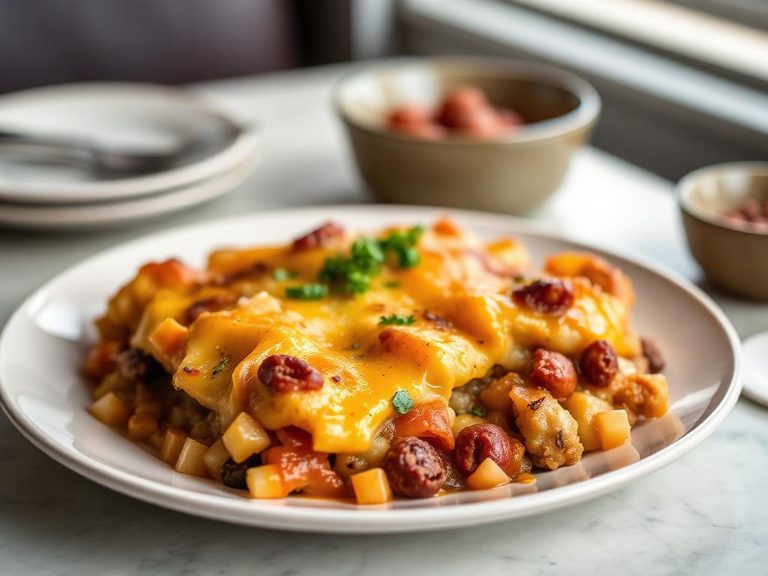
Chicken or turkey, potatoes, corn, and cheese, with gravy
Common food

Photo: Wikipedia
This is a hearty, savory comfort food casserole, often called a 'hotdish' or 'shepherd's pie' variant, featuring a base of ground poultry and potatoes topped with corn and a blanket of melted cheese. The texture is soft and cohesive, with the creamy potatoes and corn contrasting the savory meat and the rich, salty gravy that binds it all together. It's a calorie-dense, energy-rich meal, providing a balanced mix of protein, carbs, and fats in a single serving.
Calorie split: 14% protein · 42% carbs · 44% fat
↓ Full nutrition💚 Why it's loved
People adore this dish for its deep, savory umami flavor and the satisfying, cohesive texture that feels like a warm hug on a plate. It's a beloved comfort food staple, especially in American home cooking, valued for its simplicity, heartiness, and ability to please a crowd.
⚠️ Watch-outs & how to enjoy it better
The combination of gravy, cheese, and processed components can make this dish high in sodium, which may be a concern for those monitoring blood pressure. It's also a calorie-dense meal, so portion control is key for weight management. To counteract this, pair a smaller portion with a large, vinegar-dressed green salad to add volume and fiber, and use low-sodium broth for the gravy.
Key benefits
- Provides complete protein from poultry for muscle maintenance.
- Offers complex carbohydrates from potatoes and corn for sustained energy.
- Contains dietary fiber from corn and potatoes to support digestion.
- A good source of calcium and fat from the cheese topping.
- A comforting, all-in-one meal that's easy to portion and serve.
🍽️ Popular dishes
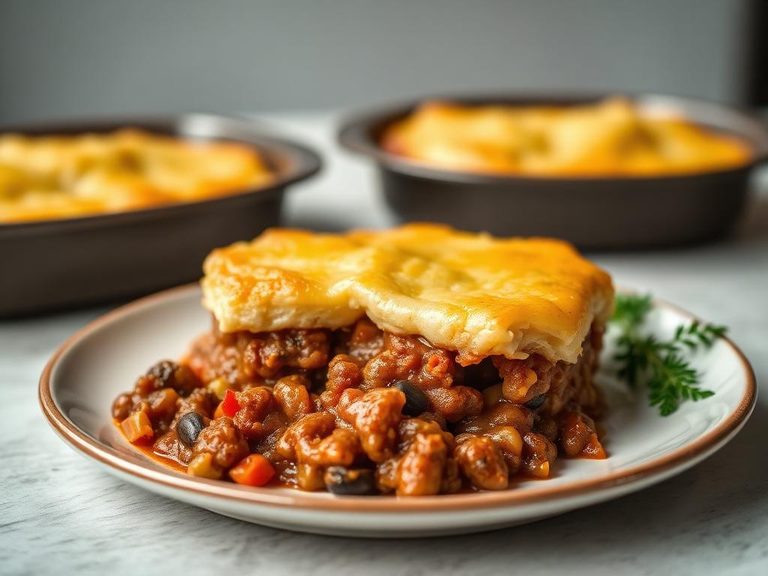
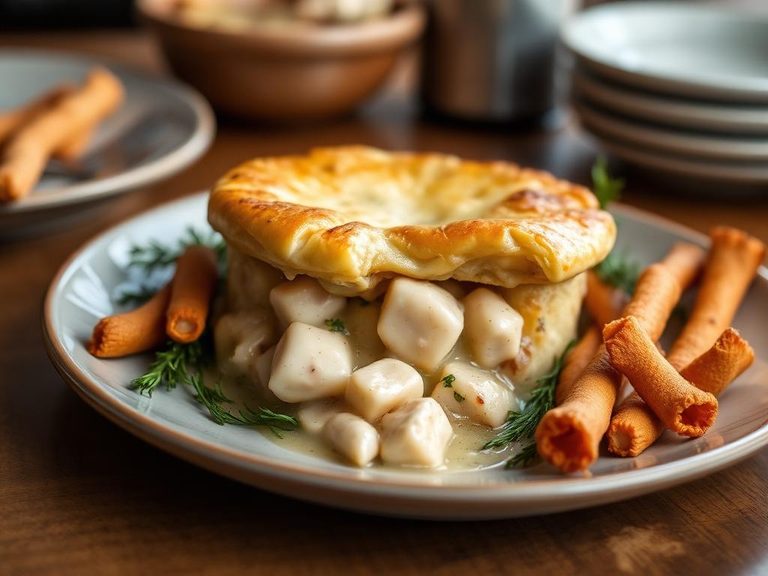
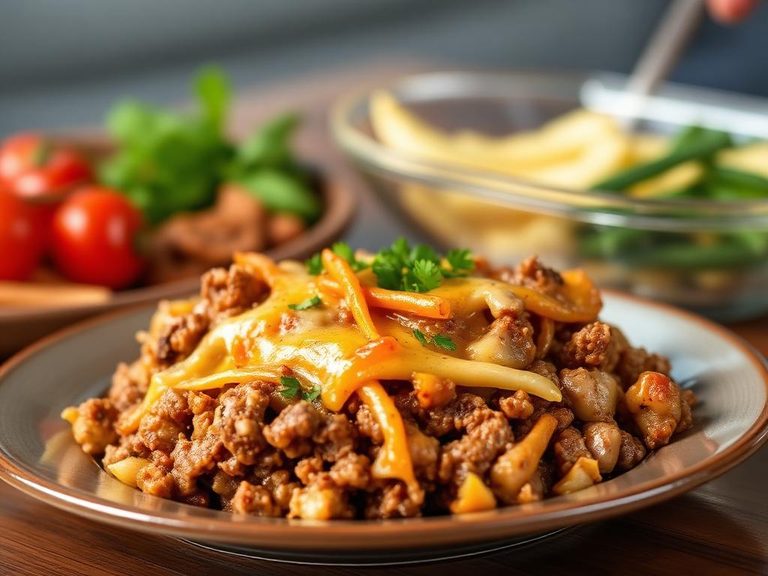
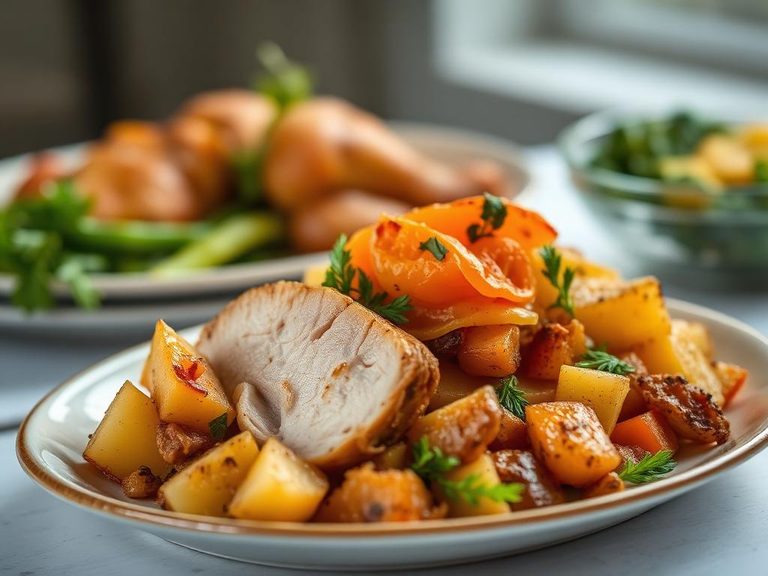
🌍 Where it's eaten
💡 Did you know?
The specific combination of ground meat, potato, corn, and cheese is a hallmark of the American Midwest's 'hotdish' tradition, a cultural culinary icon often served at community potlucks, funerals, and family gatherings.
Full nutrition (USDA data · scales with serving)
| Water | 74.7 g |
| Energy | 123 kcal |
| Protein | 4.5 g |
| Total lipid (fat) | 6.1 g |
| Carbohydrate, by difference | 13.3 g |
| Fiber, total dietary | 1.1 g |
| Total Sugars | 1.0 g |
| Calcium, Ca | 41.0 mg |
| Iron, Fe | 0.43 mg |
| Magnesium, Mg | 17.0 mg |
| Phosphorus, P | 99.0 mg |
| Potassium, K | 222 mg |
| Sodium, Na | 353 mg |
| Zinc, Zn | 0.49 mg |
| Copper, Cu | 0.04 mg |
| Selenium, Se | 5.4 ug |
| Vitamin C, total ascorbic acid | 0.70 mg |
| Thiamin | 0.03 mg |
| Riboflavin | 0.05 mg |
| Niacin | 1.6 mg |
| Vitamin B-6 | 0.11 mg |
| Folate, total | 13.0 ug |
| Folic acid | 0.00 ug |
| Folate, food | 13.0 ug |
| Folate, DFE | 13.0 ug |
| Choline, total | 17.5 mg |
| Vitamin B-12 | 0.12 ug |
| Vitamin B-12, added | 0.00 ug |
| Vitamin A, RAE | 26.0 ug |
| Retinol | 23.0 ug |
| Carotene, beta | 26.0 ug |
| Carotene, alpha | 3.0 ug |
| Cryptoxanthin, beta | 25.0 ug |
| Lycopene | 0.00 ug |
| Lutein + zeaxanthin | 143 ug |
| Vitamin E (alpha-tocopherol) | 0.46 mg |
| Vitamin E, added | 0.00 mg |
| Vitamin D (D2 + D3) | 0.20 ug |
| Vitamin K (phylloquinone) | 3.4 ug |
| Alcohol, ethyl | 0.00 g |
| Caffeine | 0.00 mg |
| Theobromine | 0.00 mg |
Fat & fatty acid profile (per 100g)
| Fatty acids, total saturated | 1.5 g |
| SFA 4:0 | 0.02 g |
| SFA 6:0 | 0.01 g |
| SFA 8:0 | 0.01 g |
| SFA 10:0 | 0.02 g |
| SFA 12:0 | 0.02 g |
| SFA 14:0 | 0.07 g |
| SFA 16:0 | 0.99 g |
| SFA 18:0 | 0.30 g |
| Fatty acids, total monounsaturated | 2.2 g |
| MUFA 16:1 | 0.16 g |
| MUFA 18:1 | 2.1 g |
| MUFA 20:1 | 0.01 g |
| MUFA 22:1 | 0.00 g |
| Fatty acids, total polyunsaturated | 1.6 g |
| PUFA 18:2 | 1.5 g |
| PUFA 18:3 | 0.10 g |
| PUFA 18:4 | 0.00 g |
| PUFA 20:4 | 0.00 g |
| PUFA 20:5 n-3 (EPA) | 0.00 g |
| PUFA 22:5 n-3 (DPA) | 0.00 g |
| PUFA 22:6 n-3 (DHA) | 0.00 g |
| Cholesterol | 11.0 mg |
Amino acid profile (per 100g)
Estimated from Turnover, chicken- or turkey-, and vegetable-filled, reduced fat, frozen — USDA does not publish this profile for Chicken or turkey.
| Tryptophan | 0.16 g |
| Threonine | 0.41 g |
| Isoleucine | 0.47 g |
| Leucine | 0.80 g |
| Lysine | 0.61 g |
| Methionine | 0.23 g |
| Cystine | 0.13 g |
| Phenylalanine | 0.47 g |
| Tyrosine | 0.37 g |
| Valine | 0.53 g |
| Arginine | 0.51 g |
| Histidine | 0.30 g |
| Alanine | 0.45 g |
| Aspartic acid | 0.80 g |
| Glutamic acid | 2.2 g |
| Glycine | 0.38 g |
| Proline | 0.87 g |
| Serine | 0.42 g |
| Hydroxyproline | 0.00 g |
FAQ
Is this dish the same as Shepherd's Pie?
Very closely related. Traditional Shepherd's Pie uses lamb, while Cottage Pie uses beef. This version uses chicken or turkey, making it a poultry-based variation of the classic concept.
Can I make it healthier?
Yes. Use lean ground turkey, reduce the cheese, swap some potatoes for cauliflower, use low-sodium gravy, and increase the corn or add peas and carrots for more vegetables.
Why is it called a 'hotdish'?
In the Upper Midwest of the U.S., particularly Minnesota, 'hotdish' is the regional term for a baked casserole, typically combining a starch, a protein, and a canned or frozen vegetable, bound with a creamy soup or sauce.
Nutrient density (calculated · NRF9.3)
Nutrient Rich Foods index: beneficial nutrients (protein, fiber, vitamins, minerals) minus saturated fat, added sugar & sodium, per 100 kcal.
NRF9.3 index — Fulgoni, Keast & Drewnowski, 2009. Computed from USDA nutrients.
Weight-loss friendliness (composite index)
Energy density 1.23 kcal/g · 15% calories from protein · 1.1 g fiber · 1.0 g sugar per 100 g.
Composite of energy density (Rolls et al., 1999), protein & fiber satiety, minus sugar. A calculated heuristic — ranks satiety-per-calorie, not a clinical measure.
Dietary load (calculated from USDA values)
Potential renal acid load. Positive = acid-forming, negative = alkaline-forming.
Sodium-to-potassium ratio: 1.59 (lower is better — aim for ≤ 1)
Sodium:potassium per WHO potassium guidance. Computed from USDA nutrients.