

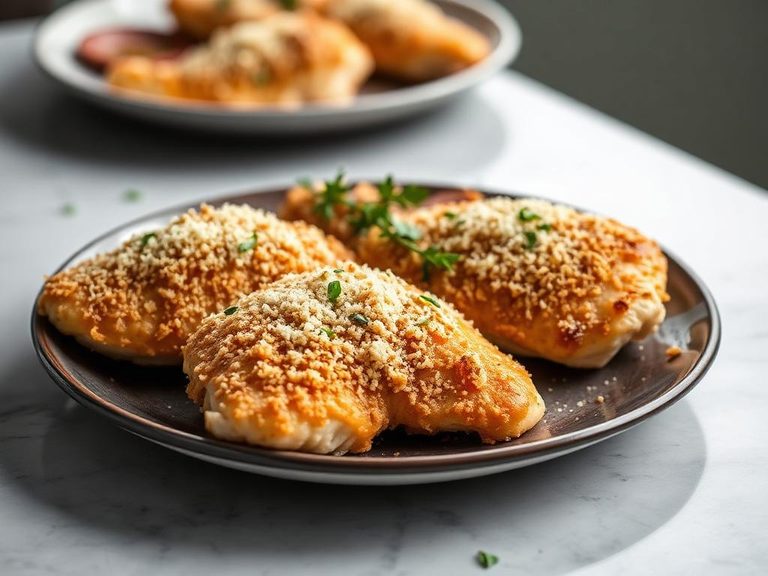
Chicken, NS as to part, baked, coated, skin / coating not eaten
Common food
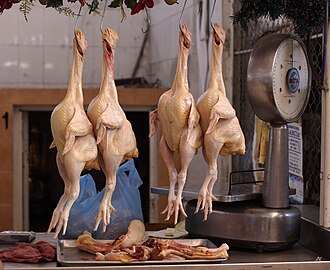
Photo: Wikipedia
This is lean, baked chicken breast or tenderloin, coated in a light breading or batter and then baked to a golden crisp without the skin. The texture is tender and juicy inside with a satisfying, slightly crunchy exterior. It's a high-protein, low-carb staple, delivering over 26 grams of protein per 100 grams with minimal fat and virtually no carbohydrates.
Calorie split: 64% protein · 0% carbs · 36% fat
↓ Full nutrition💚 Why it's loved
People love it for the satisfying contrast between the crispy coating and the moist, tender meat inside. It's a universally appealing comfort food that can be seasoned in countless ways, from simple herbs to bold spice blends, making it a reliable crowd-pleaser.
⚠️ Watch-outs & how to enjoy it better
The primary caution is for those monitoring sodium intake, as pre-made coatings or seasonings can be high in salt. Additionally, while the coating is light, it does add some refined carbohydrates. To counteract, choose low-sodium seasoning blends and pair this with a large portion of non-starchy vegetables to balance the meal and add fiber.
Key benefits
- Excellent source of complete, lean protein for muscle maintenance.
- Very low in carbohydrates, suitable for low-carb or ketogenic diets.
- Provides essential nutrients like niacin (vitamin B3) and selenium.
- Baking reduces added fat compared to deep-frying.
- Highly versatile for meal prep and portion control.
🍽️ Popular dishes
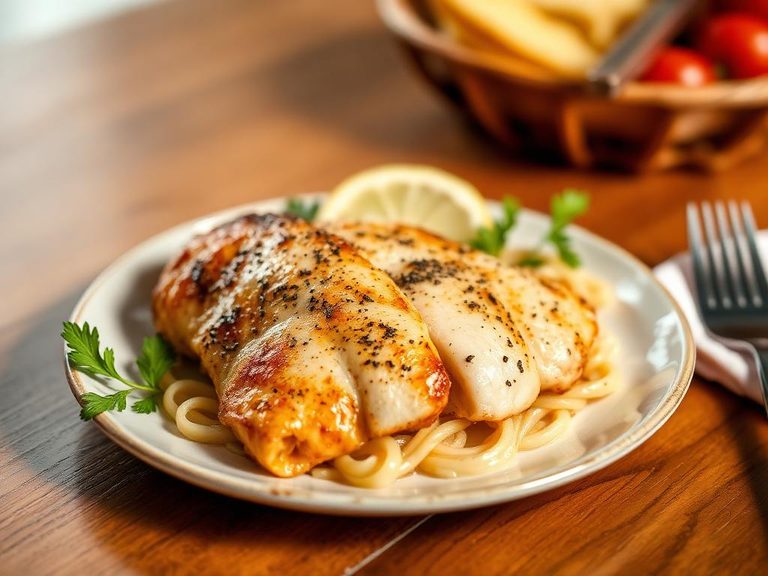
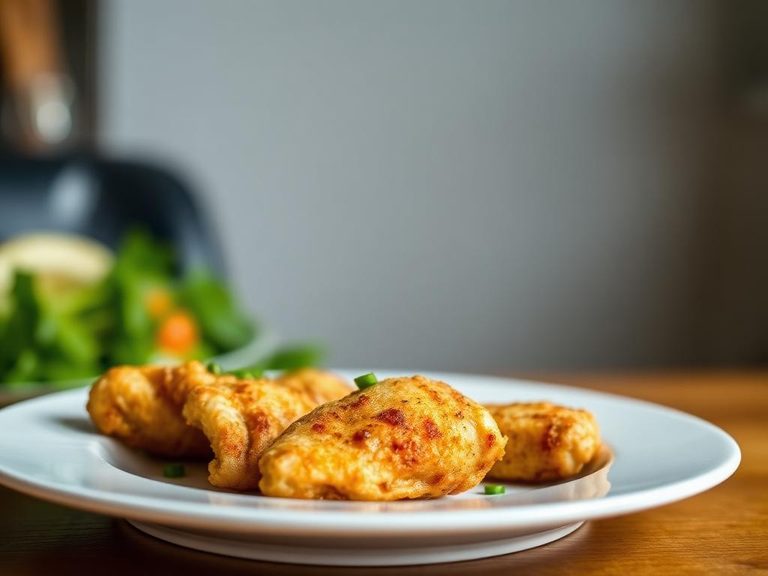
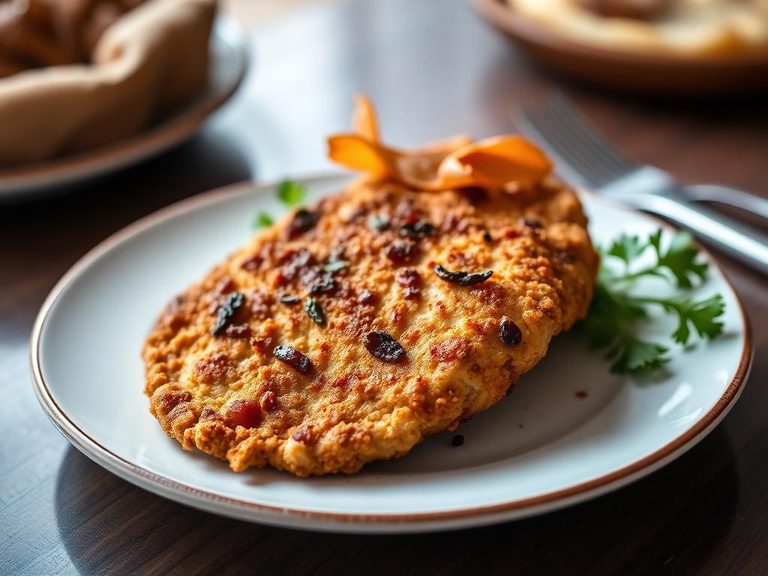
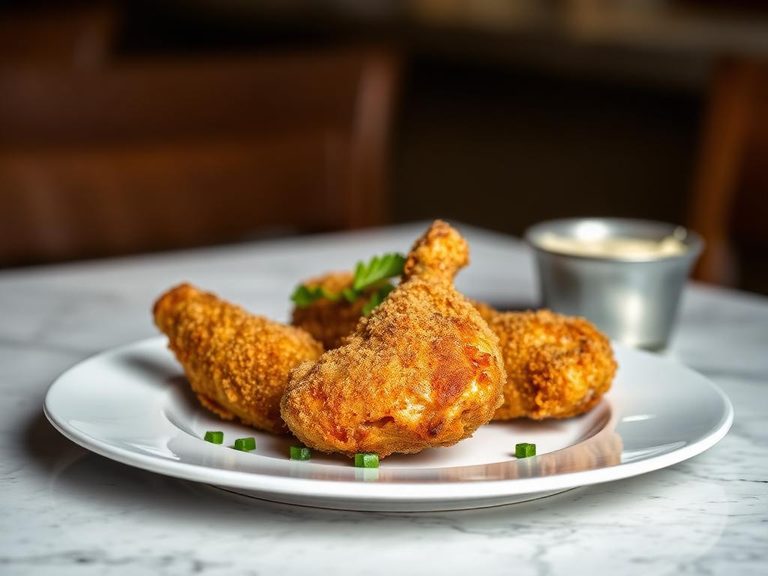
🌍 Where it's eaten
💡 Did you know?
The technique of coating meat in crumbs before cooking is believed to have been popularized in Europe in the 11th century by returning Crusaders who learned it from Middle Eastern cooks.
Full nutrition (USDA data · scales with serving)
| Water | 65.1 g |
| Energy | 164 kcal |
| Protein | 26.2 g |
| Total lipid (fat) | 6.6 g |
| Carbohydrate, by difference | 0.07 g |
| Fiber, total dietary | 0.00 g |
| Total Sugars | 0.00 g |
| Calcium, Ca | 22.0 mg |
| Iron, Fe | 0.75 mg |
| Magnesium, Mg | 25.0 mg |
| Phosphorus, P | 222 mg |
| Potassium, K | 286 mg |
| Sodium, Na | 528 mg |
| Zinc, Zn | 1.6 mg |
| Copper, Cu | 0.07 mg |
| Selenium, Se | 32.5 ug |
| Vitamin C, total ascorbic acid | 0.00 mg |
| Thiamin | 0.10 mg |
| Riboflavin | 0.28 mg |
| Niacin | 7.4 mg |
| Vitamin B-6 | 0.28 mg |
| Folate, total | 12.0 ug |
| Folic acid | 0.00 ug |
| Folate, food | 12.0 ug |
| Folate, DFE | 12.0 ug |
| Choline, total | 99.7 mg |
| Vitamin B-12 | 0.45 ug |
| Vitamin B-12, added | 0.00 ug |
| Vitamin A, RAE | 8.0 ug |
| Retinol | 8.0 ug |
| Carotene, beta | 0.00 ug |
| Carotene, alpha | 0.00 ug |
| Cryptoxanthin, beta | 0.00 ug |
| Lycopene | 0.00 ug |
| Lutein + zeaxanthin | 0.00 ug |
| Vitamin E (alpha-tocopherol) | 0.31 mg |
| Vitamin E, added | 0.00 mg |
| Vitamin D (D2 + D3) | 0.10 ug |
| Vitamin K (phylloquinone) | 0.00 ug |
| Alcohol, ethyl | 0.00 g |
| Caffeine | 0.00 mg |
| Theobromine | 0.00 mg |
Fat & fatty acid profile (per 100g)
| Fatty acids, total saturated | 1.7 g |
| SFA 4:0 | 0.00 g |
| SFA 6:0 | 0.00 g |
| SFA 8:0 | 0.00 g |
| SFA 10:0 | 0.01 g |
| SFA 12:0 | 0.00 g |
| SFA 14:0 | 0.04 g |
| SFA 16:0 | 1.2 g |
| SFA 18:0 | 0.42 g |
| Fatty acids, total monounsaturated | 2.8 g |
| MUFA 16:1 | 0.32 g |
| MUFA 18:1 | 2.3 g |
| MUFA 20:1 | 0.04 g |
| MUFA 22:1 | 0.00 g |
| Fatty acids, total polyunsaturated | 1.2 g |
| PUFA 18:2 | 0.97 g |
| PUFA 18:3 | 0.08 g |
| PUFA 18:4 | 0.00 g |
| PUFA 20:4 | 0.06 g |
| PUFA 20:5 n-3 (EPA) | 0.00 g |
| PUFA 22:5 n-3 (DPA) | 0.01 g |
| PUFA 22:6 n-3 (DHA) | 0.00 g |
| Cholesterol | 113 mg |
Amino acid profile (per 100g)
Estimated from Restaurant, Latino, chicken and rice, entree, prepared — USDA does not publish this profile for Chicken.
| Tryptophan | 0.16 g |
| Threonine | 0.50 g |
| Isoleucine | 0.55 g |
| Leucine | 0.93 g |
| Lysine | 0.93 g |
| Methionine | 0.31 g |
| Cystine | 0.15 g |
| Phenylalanine | 0.51 g |
| Tyrosine | 0.35 g |
| Valine | 0.62 g |
| Arginine | 0.80 g |
| Histidine | 0.40 g |
| Alanine | 0.68 g |
| Aspartic acid | 1.1 g |
| Glutamic acid | 1.9 g |
| Glycine | 0.58 g |
| Proline | 0.51 g |
| Serine | 0.47 g |
FAQ
Is baked coated chicken healthier than fried?
Generally, yes. Baking uses significantly less oil than deep-frying or pan-frying, which reduces the overall fat and calorie content while still achieving a crispy texture.
How can I keep the coating from getting soggy?
Ensure the chicken is patted dry before coating, use a preheated baking sheet or rack, and avoid covering the dish while baking to allow steam to escape.
What is the best internal temperature for safety?
The USDA recommends cooking chicken to a safe minimum internal temperature of 165°F (74°C), measured at the thickest part.
Nutrient density (calculated · NRF9.3)
Nutrient Rich Foods index: beneficial nutrients (protein, fiber, vitamins, minerals) minus saturated fat, added sugar & sodium, per 100 kcal.
NRF9.3 index — Fulgoni, Keast & Drewnowski, 2009. Computed from USDA nutrients.
Weight-loss friendliness (composite index)
Energy density 1.64 kcal/g · 64% calories from protein · 0.0 g fiber · 0.0 g sugar per 100 g.
Composite of energy density (Rolls et al., 1999), protein & fiber satiety, minus sugar. A calculated heuristic — ranks satiety-per-calorie, not a clinical measure.
Dietary load (calculated from USDA values)
Potential renal acid load. Positive = acid-forming, negative = alkaline-forming.
Sodium-to-potassium ratio: 1.85 (lower is better — aim for ≤ 1)
Sodium:potassium per WHO potassium guidance. Computed from USDA nutrients.