

Chicken, NS as to part, baked, coated, skin / coating eaten
Common food
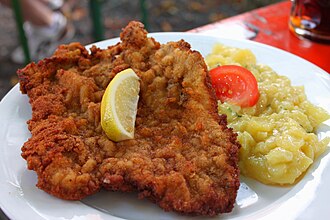
Photo: Wikipedia
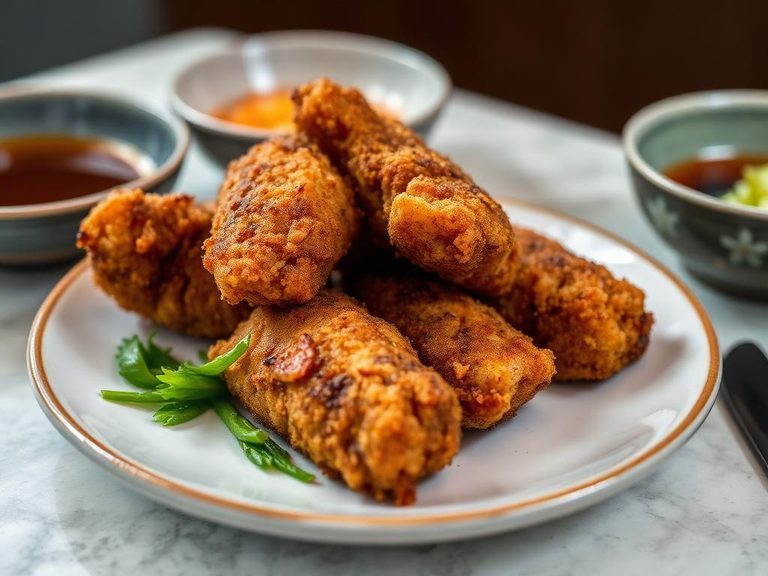
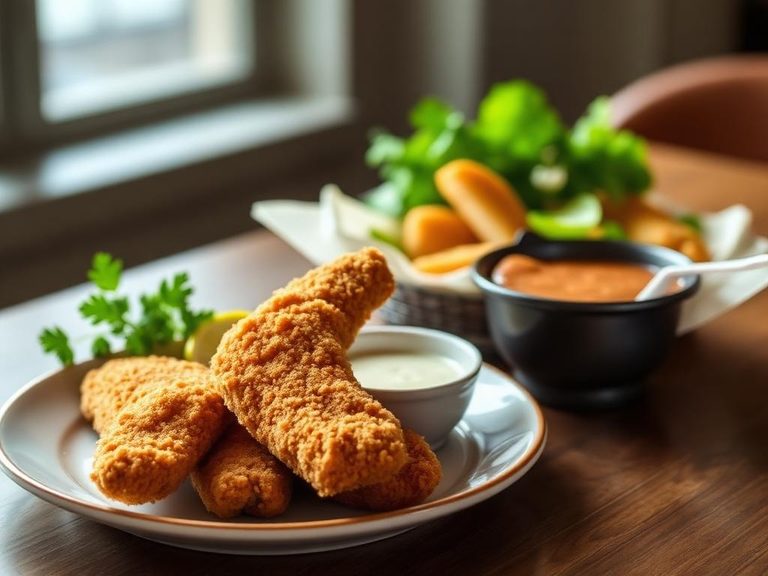
This is chicken that has been coated in a seasoned batter or breading and baked until golden and crisp. The coating provides a satisfying crunch that contrasts with the tender, juicy meat inside. Nutritionally, it offers a solid protein boost with a moderate amount of fat from the coating.
Calorie split: 35% protein · 11% carbs · 54% fat
↓ Full nutrition💚 Why it's loved
People love the universal appeal of crispy, savory chicken—it's comforting, familiar, and the crunchy coating is irresistible. It's a crowd-pleaser that works for weeknight dinners, parties, and is easily adapted to various spices and sauces.
⚠️ Watch-outs & how to enjoy it better
The coating can significantly increase sodium and refined carbohydrate content, which may be a concern for those monitoring blood pressure or blood sugar. To counteract this, pair it with a large portion of non-starchy vegetables (like steamed broccoli or a salad) to add fiber and balance the meal. Opting for homemade coatings with whole-grain breadcrumbs or almond flour can also improve the nutritional profile.
Key benefits
- Excellent source of lean protein for muscle maintenance
- Baking reduces added fat compared to deep-frying
- Provides essential minerals like selenium and phosphorus
- A versatile base for many flavor profiles
🍽️ Popular dishes
🌍 Where it's eaten
💡 Did you know?
The technique of coating meat before cooking is ancient; Roman cookbooks from the 1st century AD describe recipes for meat fried in a dough-like casing.
Full nutrition (USDA data · scales with serving)
| Water | 53.5 g |
| Energy | 251 kcal |
| Protein | 21.8 g |
| Total lipid (fat) | 15.0 g |
| Carbohydrate, by difference | 7.1 g |
| Fiber, total dietary | 0.20 g |
| Total Sugars | 0.00 g |
| Calcium, Ca | 44.0 mg |
| Iron, Fe | 0.86 mg |
| Magnesium, Mg | 24.0 mg |
| Phosphorus, P | 216 mg |
| Potassium, K | 264 mg |
| Sodium, Na | 671 mg |
| Zinc, Zn | 1.3 mg |
| Copper, Cu | 0.09 mg |
| Selenium, Se | 27.4 ug |
| Vitamin C, total ascorbic acid | 0.00 mg |
| Thiamin | 0.10 mg |
| Riboflavin | 0.25 mg |
| Niacin | 6.7 mg |
| Vitamin B-6 | 0.23 mg |
| Folate, total | 22.0 ug |
| Folic acid | 12.0 ug |
| Folate, food | 11.0 ug |
| Folate, DFE | 30.0 ug |
| Choline, total | 78.0 mg |
| Vitamin B-12 | 0.40 ug |
| Vitamin B-12, added | 0.00 ug |
| Vitamin A, RAE | 14.0 ug |
| Retinol | 14.0 ug |
| Carotene, beta | 0.00 ug |
| Carotene, alpha | 0.00 ug |
| Cryptoxanthin, beta | 0.00 ug |
| Lycopene | 0.00 ug |
| Lutein + zeaxanthin | 0.00 ug |
| Vitamin E (alpha-tocopherol) | 0.49 mg |
| Vitamin E, added | 0.00 mg |
| Vitamin D (D2 + D3) | 0.10 ug |
| Vitamin K (phylloquinone) | 0.00 ug |
| Alcohol, ethyl | 0.00 g |
| Caffeine | 0.00 mg |
| Theobromine | 0.00 mg |
Fat & fatty acid profile (per 100g)
| Fatty acids, total saturated | 4.0 g |
| SFA 4:0 | 0.00 g |
| SFA 6:0 | 0.00 g |
| SFA 8:0 | 0.00 g |
| SFA 10:0 | 0.01 g |
| SFA 12:0 | 0.01 g |
| SFA 14:0 | 0.13 g |
| SFA 16:0 | 2.7 g |
| SFA 18:0 | 1.0 g |
| Fatty acids, total monounsaturated | 6.8 g |
| MUFA 16:1 | 0.64 g |
| MUFA 18:1 | 5.9 g |
| MUFA 20:1 | 0.10 g |
| MUFA 22:1 | 0.01 g |
| Fatty acids, total polyunsaturated | 2.8 g |
| PUFA 18:2 | 2.4 g |
| PUFA 18:3 | 0.26 g |
| PUFA 18:4 | 0.00 g |
| PUFA 20:4 | 0.06 g |
| PUFA 20:5 n-3 (EPA) | 0.00 g |
| PUFA 22:5 n-3 (DPA) | 0.01 g |
| PUFA 22:6 n-3 (DHA) | 0.00 g |
| Cholesterol | 100 mg |
Amino acid profile (per 100g)
Estimated from Restaurant, Latino, chicken and rice, entree, prepared — USDA does not publish this profile for Chicken.
| Tryptophan | 0.16 g |
| Threonine | 0.50 g |
| Isoleucine | 0.55 g |
| Leucine | 0.93 g |
| Lysine | 0.93 g |
| Methionine | 0.31 g |
| Cystine | 0.15 g |
| Phenylalanine | 0.51 g |
| Tyrosine | 0.35 g |
| Valine | 0.62 g |
| Arginine | 0.80 g |
| Histidine | 0.40 g |
| Alanine | 0.68 g |
| Aspartic acid | 1.1 g |
| Glutamic acid | 1.9 g |
| Glycine | 0.58 g |
| Proline | 0.51 g |
| Serine | 0.47 g |
FAQ
How is this different from fried chicken?
The primary difference is the cooking method. This chicken is baked in an oven, which uses hot air to crisp the coating with minimal added oil. Traditional fried chicken is submerged in hot fat, resulting in a higher fat content and a different texture.
Can I make it healthier at home?
Absolutely. Use whole-wheat or panko breadcrumbs, season generously with herbs and spices instead of salt, and use a light spray of oil on the coating before baking. You can also use Greek yogurt or egg white as a binder to cut down on fat.
What's the best way to reheat it to keep it crispy?
Avoid the microwave, which makes the coating soggy. Reheat in a 375°F (190°C) oven or an air fryer for 10-15 minutes until heated through and the crust is re-crisped.
Nutrient density (calculated · NRF9.3)
Nutrient Rich Foods index: beneficial nutrients (protein, fiber, vitamins, minerals) minus saturated fat, added sugar & sodium, per 100 kcal.
NRF9.3 index — Fulgoni, Keast & Drewnowski, 2009. Computed from USDA nutrients.
Weight-loss friendliness (composite index)
Energy density 2.51 kcal/g · 35% calories from protein · 0.2 g fiber · 0.0 g sugar per 100 g.
Composite of energy density (Rolls et al., 1999), protein & fiber satiety, minus sugar. A calculated heuristic — ranks satiety-per-calorie, not a clinical measure.
Dietary load (calculated from USDA values)
Potential renal acid load. Positive = acid-forming, negative = alkaline-forming.
Sodium-to-potassium ratio: 2.54 (lower is better — aim for ≤ 1)
Sodium:potassium per WHO potassium guidance. Computed from USDA nutrients.