

Chicken leg, drumstick and thigh, baked or broiled, skin eaten
Common food

Photo: Wikipedia
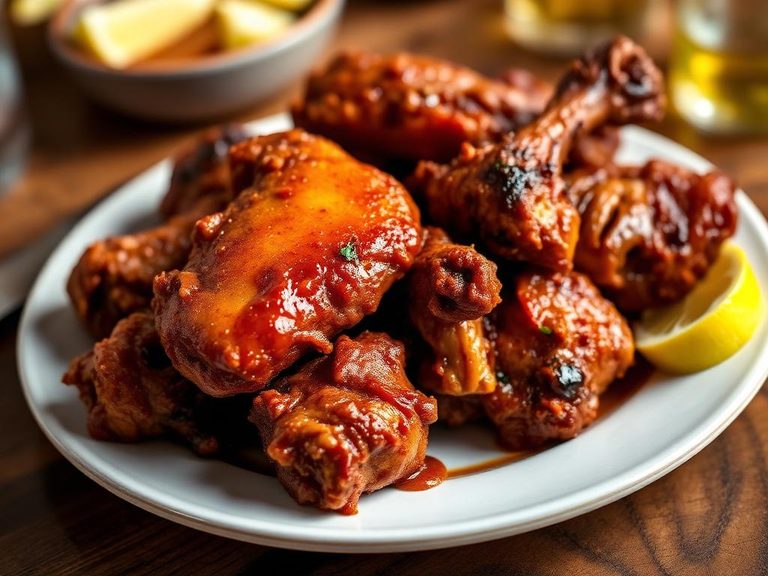
A baked or broiled chicken leg, including the drumstick and thigh with skin, delivers a deeply savory, juicy bite with a satisfying contrast between the tender, dark meat and the crisp, rendered skin. Its nutritional profile is a protein powerhouse, offering over 23 grams per 100 grams, with the fat content providing rich flavor and satiety, making it a staple for muscle maintenance and hearty meals.
Calorie split: 45% protein · 0% carbs · 55% fat
↓ Full nutrition💚 Why it's loved
People cherish it for the unparalleled flavor and moisture that dark meat provides, far surpassing leaner cuts. Its versatility allows it to be the star of countless global cuisines, from simple weeknight roasts to complex, slow-cooked stews, offering comfort and familiarity.
⚠️ Watch-outs & how to enjoy it better
The skin, while flavorful, significantly increases the calorie and saturated fat content, which may be a concern for those managing heart health or calorie intake. To counteract this, you can remove the skin before eating to reduce fat by about half, or opt for broiling on a rack to allow excess fat to drip away. Additionally, as a common poultry product, it can be a vehicle for high sodium if heavily seasoned or marinated; using herbs, spices, and citrus for flavor can mitigate this.
Key benefits
- Excellent source of complete, high-quality protein for muscle repair and growth.
- Rich in essential minerals like selenium and phosphorus for immune and bone health.
- Contains B vitamins, notably niacin and B6, crucial for energy metabolism.
- The skin provides dietary fat, which aids in the absorption of fat-soluble vitamins.
- A satiating, low-carb option that supports stable blood sugar levels.
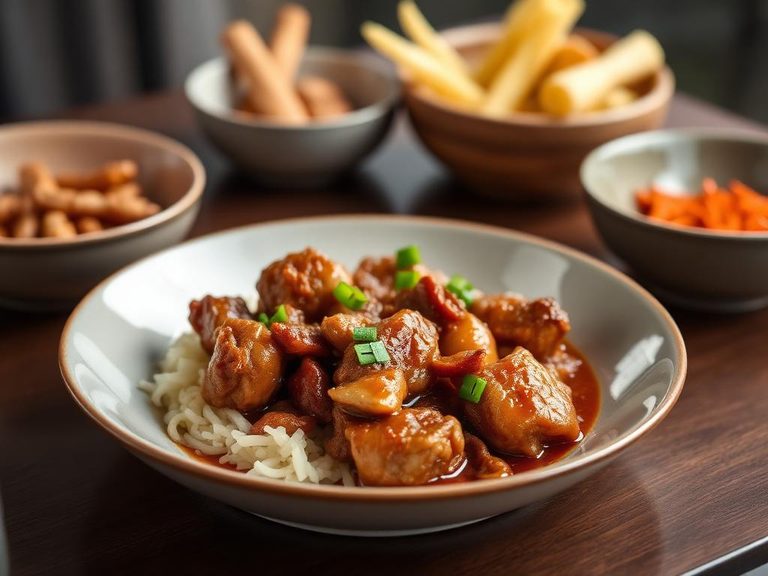
🍽️ Popular dishes




🌍 Where it's eaten
💡 Did you know?
A single chicken leg (drumstick and thigh) is anatomically equivalent to the human leg, containing the same basic bone structure: the femur (thigh) and the fused tibia/fibula (drumstick).
Full nutrition (USDA data · scales with serving)
| Water | 63.4 g |
| Energy | 214 kcal |
| Protein | 23.2 g |
| Total lipid (fat) | 12.8 g |
| Carbohydrate, by difference | 0.00 g |
| Fiber, total dietary | 0.00 g |
| Total Sugars | 0.00 g |
| Calcium, Ca | 10.0 mg |
| Iron, Fe | 1.1 mg |
| Magnesium, Mg | 22.0 mg |
| Phosphorus, P | 206 mg |
| Potassium, K | 249 mg |
| Sodium, Na | 341 mg |
| Zinc, Zn | 2.0 mg |
| Copper, Cu | 0.07 mg |
| Selenium, Se | 25.8 ug |
| Vitamin C, total ascorbic acid | 0.00 mg |
| Thiamin | 0.09 mg |
| Riboflavin | 0.19 mg |
| Niacin | 5.6 mg |
| Vitamin B-6 | 0.40 mg |
| Folate, total | 4.0 ug |
| Folic acid | 0.00 ug |
| Folate, food | 4.0 ug |
| Folate, DFE | 4.0 ug |
| Choline, total | 67.3 mg |
| Vitamin B-12 | 0.42 ug |
| Vitamin B-12, added | 0.00 ug |
| Vitamin A, RAE | 14.0 ug |
| Retinol | 14.0 ug |
| Carotene, beta | 0.00 ug |
| Carotene, alpha | 0.00 ug |
| Cryptoxanthin, beta | 0.00 ug |
| Lycopene | 0.00 ug |
| Lutein + zeaxanthin | 15.0 ug |
| Vitamin E (alpha-tocopherol) | 0.19 mg |
| Vitamin E, added | 0.00 mg |
| Vitamin D (D2 + D3) | 0.20 ug |
| Vitamin K (phylloquinone) | 3.2 ug |
| Alcohol, ethyl | 0.00 g |
| Caffeine | 0.00 mg |
| Theobromine | 0.00 mg |
Fat & fatty acid profile (per 100g)
| Fatty acids, total saturated | 3.5 g |
| SFA 4:0 | 0.00 g |
| SFA 6:0 | 0.00 g |
| SFA 8:0 | 0.00 g |
| SFA 10:0 | 0.00 g |
| SFA 12:0 | 0.01 g |
| SFA 14:0 | 0.07 g |
| SFA 16:0 | 2.7 g |
| SFA 18:0 | 0.68 g |
| Fatty acids, total monounsaturated | 5.4 g |
| MUFA 16:1 | 0.79 g |
| MUFA 18:1 | 4.5 g |
| MUFA 20:1 | 0.06 g |
| MUFA 22:1 | 0.00 g |
| Fatty acids, total polyunsaturated | 2.6 g |
| PUFA 18:2 | 2.3 g |
| PUFA 18:3 | 0.11 g |
| PUFA 18:4 | 0.00 g |
| PUFA 20:4 | 0.10 g |
| PUFA 20:5 n-3 (EPA) | 0.01 g |
| PUFA 22:5 n-3 (DPA) | 0.01 g |
| PUFA 22:6 n-3 (DHA) | 0.01 g |
| Cholesterol | 131 mg |
Amino acid profile (per 100g)
Estimated from Chicken, broilers or fryers, leg, meat only, cooked, fried — USDA does not publish this profile for Chicken leg.
| Tryptophan | 0.33 g |
| Threonine | 1.2 g |
| Isoleucine | 1.5 g |
| Leucine | 2.1 g |
| Lysine | 2.4 g |
| Methionine | 0.78 g |
| Cystine | 0.36 g |
| Phenylalanine | 1.1 g |
| Tyrosine | 0.96 g |
| Valine | 1.4 g |
| Arginine | 1.7 g |
| Histidine | 0.88 g |
| Alanine | 1.5 g |
| Aspartic acid | 2.5 g |
| Glutamic acid | 4.3 g |
| Glycine | 1.4 g |
| Proline | 1.2 g |
| Serine | 0.98 g |
FAQ
Is the skin the only source of fat in a chicken leg?
No. While the skin contains a significant portion of the fat, the dark meat itself (especially the thigh) has intramuscular fat that contributes to its juiciness and flavor, even after skin removal.
How does baking vs. broiling affect the nutrition?
Baking cooks the leg evenly and gently, retaining most juices. Broiling uses high, direct heat from above, which can crisp the skin faster and may cause more fat to render and drip away, potentially resulting in a slightly lower final fat content.
Why is dark meat chicken higher in fat than breast meat?
Dark meat comes from muscles used more frequently for movement (like walking), which require more energy. These muscles have more myoglobin (for oxygen transport) and a higher concentration of fat cells to provide sustained energy, making them richer and more flavorful.
Nutrient density (calculated · NRF9.3)
Nutrient Rich Foods index: beneficial nutrients (protein, fiber, vitamins, minerals) minus saturated fat, added sugar & sodium, per 100 kcal.
NRF9.3 index — Fulgoni, Keast & Drewnowski, 2009. Computed from USDA nutrients.
Weight-loss friendliness (composite index)
Energy density 2.14 kcal/g · 43% calories from protein · 0.0 g fiber · 0.0 g sugar per 100 g.
Composite of energy density (Rolls et al., 1999), protein & fiber satiety, minus sugar. A calculated heuristic — ranks satiety-per-calorie, not a clinical measure.
Dietary load (calculated from USDA values)
Potential renal acid load. Positive = acid-forming, negative = alkaline-forming.
Sodium-to-potassium ratio: 1.37 (lower is better — aim for ≤ 1)
Sodium:potassium per WHO potassium guidance. Computed from USDA nutrients.