

Chicken leg, drumstick and thigh, baked or broiled, skin not eaten
Common food

Photo: Wikipedia
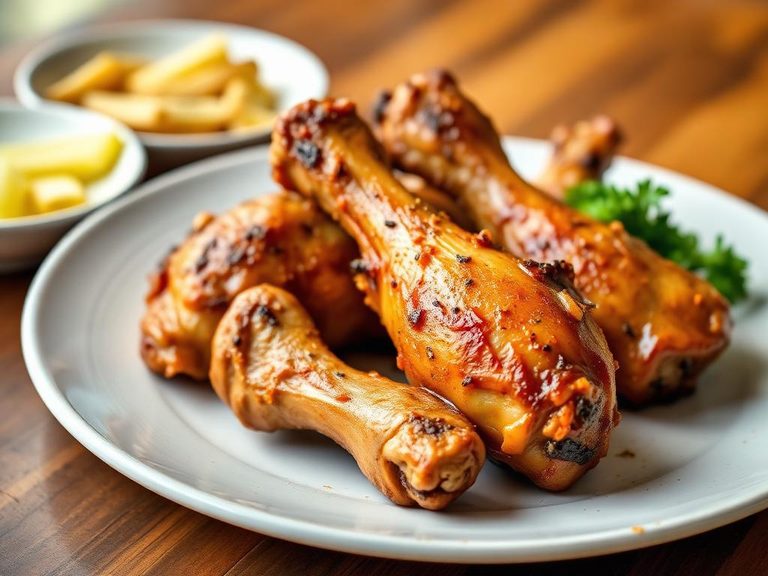
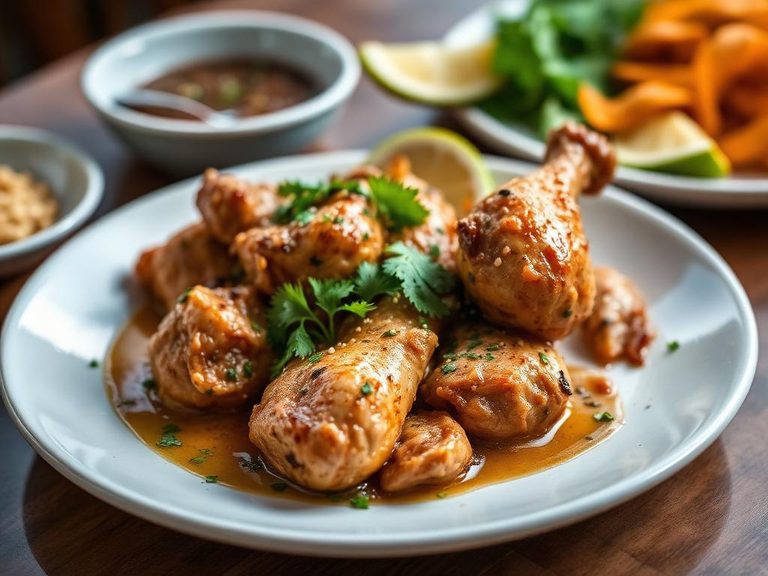
This is the lean, protein-packed core of the chicken leg—the drumstick and thigh—baked or broiled without its skin. The meat is tender, juicy, and deeply savory, with a slightly richer flavor than breast meat. With zero carbs and a high protein-to-calorie ratio, it's a powerhouse for muscle maintenance and satiety.
Calorie split: 60% protein · 0% carbs · 40% fat
↓ Full nutrition💚 Why it's loved
People adore it for its perfect balance of flavor and tenderness; the dark meat stays moist and succulent even when cooked thoroughly. Its versatility makes it a staple for everything from simple weeknight dinners to elaborate feasts across countless cuisines.
⚠️ Watch-outs & how to enjoy it better
Without the skin, it can be perceived as drier or less flavorful by some, requiring careful cooking or marinades. It is a common poultry allergen. To maximize juiciness, try marinating in acidic ingredients (like lemon or yogurt) or using a meat thermometer to avoid overcooking.
Key benefits
- Excellent source of complete, high-quality protein (24g per 100g).
- Very low in carbohydrates, making it ideal for low-carb and ketogenic diets.
- Naturally gluten-free and sugar-free.
- Provides essential nutrients like selenium, phosphorus, and B vitamins (especially niacin and B6).
🍽️ Popular dishes
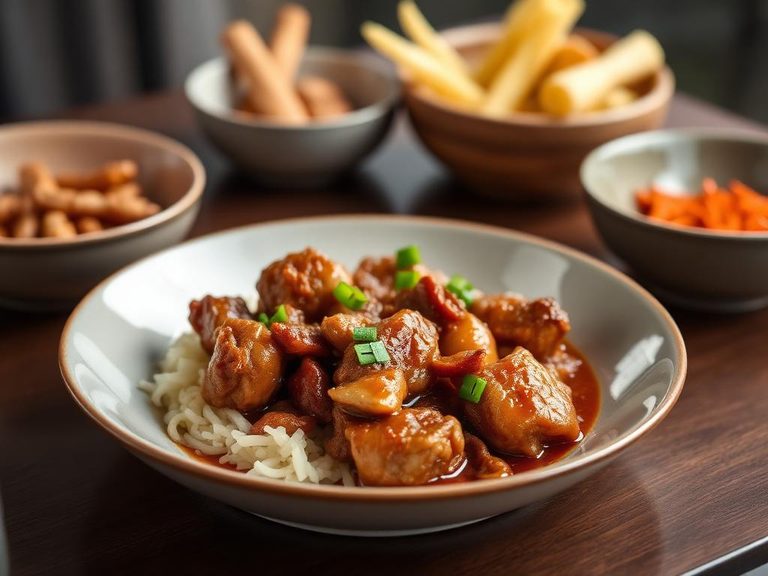

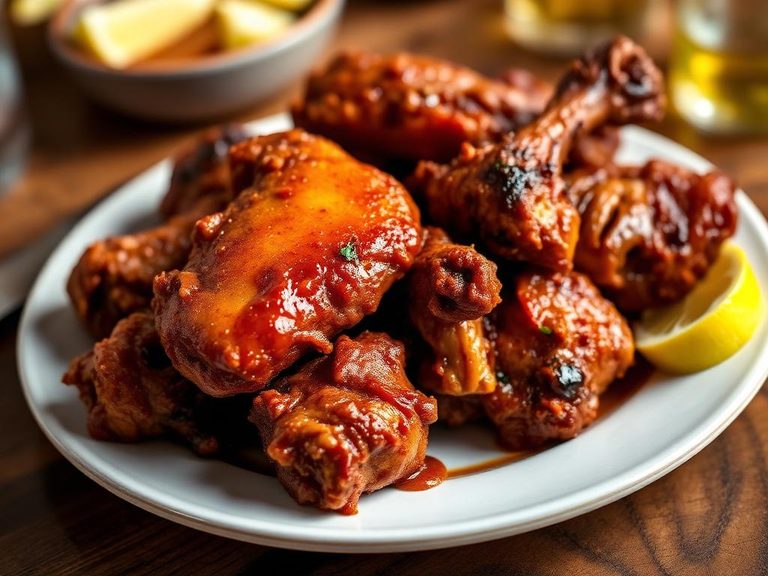
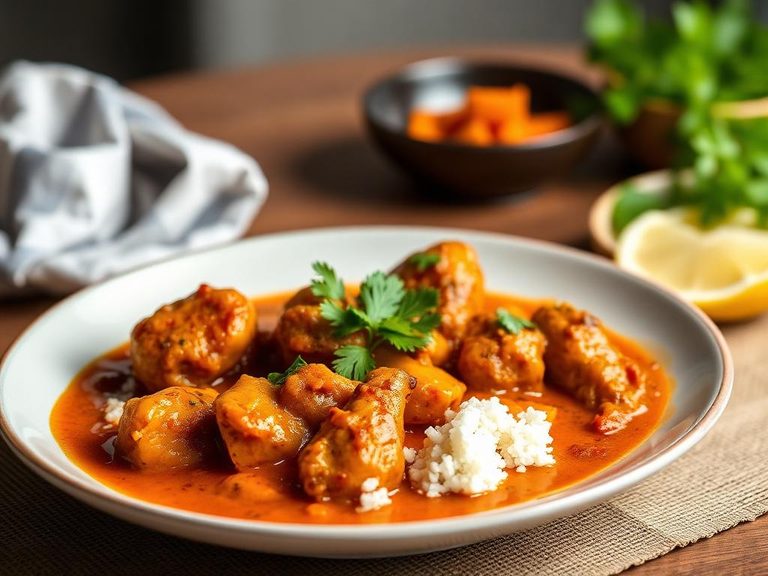
🌍 Where it's eaten
💡 Did you know?
The drumstick and thigh are anatomically the same limb; the 'drumstick' is the lower leg (tibia), and the 'thigh' is the upper leg (femur).
Full nutrition (USDA data · scales with serving)
| Water | 67.8 g |
| Energy | 168 kcal |
| Protein | 24.4 g |
| Total lipid (fat) | 7.1 g |
| Carbohydrate, by difference | 0.00 g |
| Fiber, total dietary | 0.00 g |
| Total Sugars | 0.00 g |
| Calcium, Ca | 10.0 mg |
| Iron, Fe | 1.1 mg |
| Magnesium, Mg | 23.0 mg |
| Phosphorus, P | 217 mg |
| Potassium, K | 262 mg |
| Sodium, Na | 345 mg |
| Zinc, Zn | 2.2 mg |
| Copper, Cu | 0.07 mg |
| Selenium, Se | 27.3 ug |
| Vitamin C, total ascorbic acid | 0.00 mg |
| Thiamin | 0.10 mg |
| Riboflavin | 0.22 mg |
| Niacin | 5.9 mg |
| Vitamin B-6 | 0.44 mg |
| Folate, total | 5.0 ug |
| Folic acid | 0.00 ug |
| Folate, food | 5.0 ug |
| Folate, DFE | 5.0 ug |
| Choline, total | 70.8 mg |
| Vitamin B-12 | 0.40 ug |
| Vitamin B-12, added | 0.00 ug |
| Vitamin A, RAE | 7.0 ug |
| Retinol | 7.0 ug |
| Carotene, beta | 0.00 ug |
| Carotene, alpha | 0.00 ug |
| Cryptoxanthin, beta | 0.00 ug |
| Lycopene | 0.00 ug |
| Lutein + zeaxanthin | 0.00 ug |
| Vitamin E (alpha-tocopherol) | 0.18 mg |
| Vitamin E, added | 0.00 mg |
| Vitamin D (D2 + D3) | 0.10 ug |
| Vitamin K (phylloquinone) | 3.7 ug |
| Alcohol, ethyl | 0.00 g |
| Caffeine | 0.00 mg |
| Theobromine | 0.00 mg |
Fat & fatty acid profile (per 100g)
| Fatty acids, total saturated | 2.0 g |
| SFA 4:0 | 0.00 g |
| SFA 6:0 | 0.00 g |
| SFA 8:0 | 0.00 g |
| SFA 10:0 | 0.00 g |
| SFA 12:0 | 0.00 g |
| SFA 14:0 | 0.04 g |
| SFA 16:0 | 1.5 g |
| SFA 18:0 | 0.42 g |
| Fatty acids, total monounsaturated | 2.9 g |
| MUFA 16:1 | 0.42 g |
| MUFA 18:1 | 2.4 g |
| MUFA 20:1 | 0.03 g |
| MUFA 22:1 | 0.00 g |
| Fatty acids, total polyunsaturated | 1.5 g |
| PUFA 18:2 | 1.3 g |
| PUFA 18:3 | 0.06 g |
| PUFA 18:4 | 0.00 g |
| PUFA 20:4 | 0.09 g |
| PUFA 20:5 n-3 (EPA) | 0.01 g |
| PUFA 22:5 n-3 (DPA) | 0.01 g |
| PUFA 22:6 n-3 (DHA) | 0.01 g |
| Cholesterol | 131 mg |
Amino acid profile (per 100g)
Estimated from Chicken, broilers or fryers, leg, meat only, cooked, fried — USDA does not publish this profile for Chicken leg.
| Tryptophan | 0.33 g |
| Threonine | 1.2 g |
| Isoleucine | 1.5 g |
| Leucine | 2.1 g |
| Lysine | 2.4 g |
| Methionine | 0.78 g |
| Cystine | 0.36 g |
| Phenylalanine | 1.1 g |
| Tyrosine | 0.96 g |
| Valine | 1.4 g |
| Arginine | 1.7 g |
| Histidine | 0.88 g |
| Alanine | 1.5 g |
| Aspartic acid | 2.5 g |
| Glutamic acid | 4.3 g |
| Glycine | 1.4 g |
| Proline | 1.2 g |
| Serine | 0.98 g |
FAQ
Is baked chicken leg meat healthier than fried?
Yes, baking or broiling without skin significantly reduces added fats and calories compared to frying. It preserves the lean protein while avoiding the extra oil absorbed during frying.
Why is dark meat higher in fat than breast meat?
Dark meat comes from muscles used more frequently for walking and standing, which require more energy and thus contain more fat and myoglobin (an oxygen-storing protein) for endurance.
How can I tell when it's fully cooked without overdoing it?
Use an instant-read thermometer; it's done when the thickest part of the thigh (not touching bone) reaches 165°F (74°C). Let it rest for 5 minutes after cooking for juicier results.
Nutrient density (calculated · NRF9.3)
Nutrient Rich Foods index: beneficial nutrients (protein, fiber, vitamins, minerals) minus saturated fat, added sugar & sodium, per 100 kcal.
NRF9.3 index — Fulgoni, Keast & Drewnowski, 2009. Computed from USDA nutrients.
Weight-loss friendliness (composite index)
Energy density 1.68 kcal/g · 58% calories from protein · 0.0 g fiber · 0.0 g sugar per 100 g.
Composite of energy density (Rolls et al., 1999), protein & fiber satiety, minus sugar. A calculated heuristic — ranks satiety-per-calorie, not a clinical measure.
Dietary load (calculated from USDA values)
Potential renal acid load. Positive = acid-forming, negative = alkaline-forming.
Sodium-to-potassium ratio: 1.32 (lower is better — aim for ≤ 1)
Sodium:potassium per WHO potassium guidance. Computed from USDA nutrients.