

Cheese, NFS
Common food
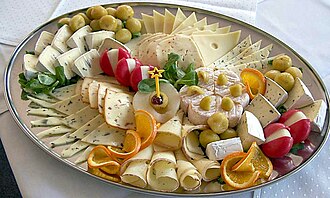
Photo: Wikipedia
Cheese, NFS (Not Further Specified) is a broad category encompassing countless varieties, from creamy Brie to sharp Cheddar. Its taste and texture range wildly—salty, tangy, nutty, or buttery, with textures from crumbly to melty and elastic. Nutritionally, it's a dense source of protein and fat, providing a significant calorie punch in a small serving.
Calorie split: 22% protein · 5% carbs · 74% fat
↓ Full nutrition💚 Why it's loved
People adore cheese for its unparalleled ability to add deep, savory umami flavor and rich texture to countless dishes. It's a cultural staple, central to everything from French wine pairings to American comfort food.
⚠️ Watch-outs & how to enjoy it better
Its high saturated fat and calorie density can be a concern for heart health and weight management if over-consumed. It is also a common dairy allergen and high in sodium, which can affect blood pressure. Tip: Opt for strongly flavored varieties (like Parmesan) so a small amount delivers big flavor, and pair with fiber-rich foods like whole-grain crackers or fruit.
Key benefits
- Excellent source of complete protein for muscle maintenance.
- Rich in calcium for bone and dental health.
- Provides conjugated linoleic acid (CLA), a fatty acid studied for health benefits.
- Contains fat-soluble vitamins like A, D, and K2.
🍽️ Popular dishes
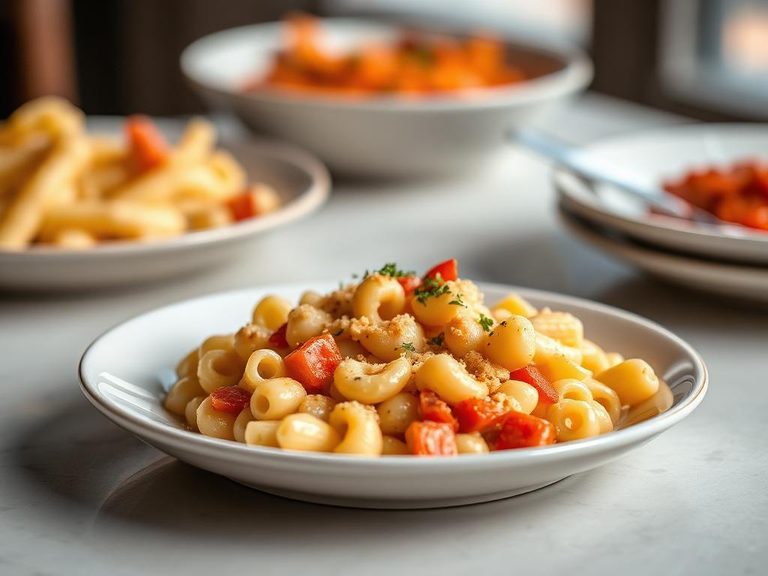
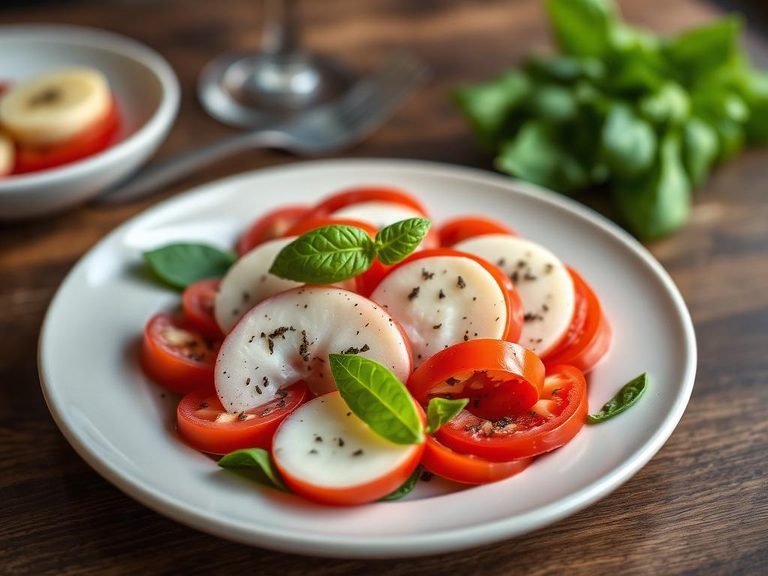
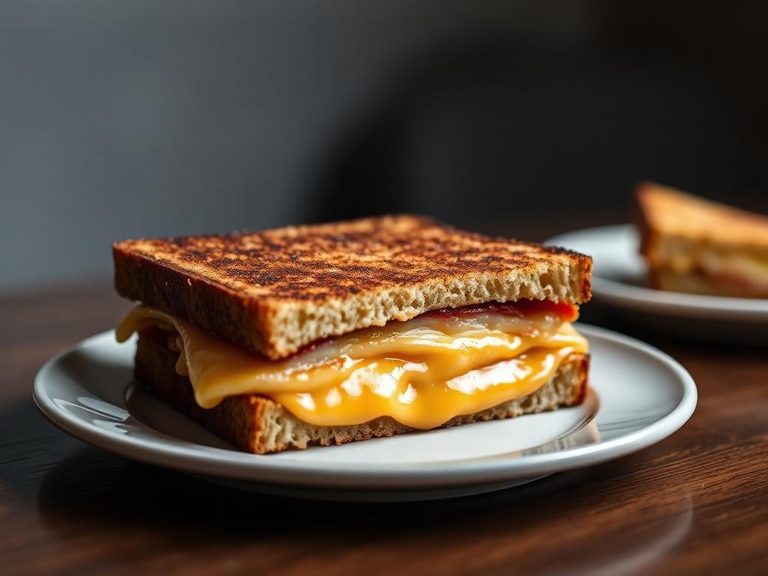



🌍 Where it's eaten
💡 Did you know?
The holes in Swiss cheese are caused by bacteria (Propionibacterium freudenreichii) releasing carbon dioxide gas during fermentation, forming bubbles that become the 'eyes.'
Full nutrition (USDA data · scales with serving)
| Water | 38.9 g |
| Energy | 381 kcal |
| Protein | 20.7 g |
| Total lipid (fat) | 31.3 g |
| Carbohydrate, by difference | 4.3 g |
| Fiber, total dietary | 0.00 g |
| Total Sugars | 2.1 g |
| Calcium, Ca | 849 mg |
| Iron, Fe | 0.39 mg |
| Magnesium, Mg | 28.0 mg |
| Phosphorus, P | 532 mg |
| Potassium, K | 129 mg |
| Sodium, Na | 964 mg |
| Zinc, Zn | 3.1 mg |
| Copper, Cu | 0.03 mg |
| Selenium, Se | 24.3 ug |
| Vitamin C, total ascorbic acid | 0.00 mg |
| Thiamin | 0.03 mg |
| Riboflavin | 0.40 mg |
| Niacin | 0.08 mg |
| Vitamin B-6 | 0.08 mg |
| Folate, total | 18.0 ug |
| Folic acid | 0.00 ug |
| Folate, food | 18.0 ug |
| Folate, DFE | 18.0 ug |
| Choline, total | 20.9 mg |
| Vitamin B-12 | 1.2 ug |
| Vitamin B-12, added | 0.00 ug |
| Vitamin A, RAE | 294 ug |
| Retinol | 289 ug |
| Carotene, beta | 55.0 ug |
| Carotene, alpha | 0.00 ug |
| Cryptoxanthin, beta | 5.0 ug |
| Lycopene | 0.00 ug |
| Lutein + zeaxanthin | 15.0 ug |
| Vitamin E (alpha-tocopherol) | 0.78 mg |
| Vitamin E, added | 0.00 mg |
| Vitamin D (D2 + D3) | 3.0 ug |
| Vitamin K (phylloquinone) | 2.7 ug |
| Alcohol, ethyl | 0.00 g |
| Caffeine | 0.00 mg |
| Theobromine | 0.00 mg |
Fat & fatty acid profile (per 100g)
| Fatty acids, total saturated | 17.8 g |
| SFA 4:0 | 0.61 g |
| SFA 6:0 | 0.50 g |
| SFA 8:0 | 0.32 g |
| SFA 10:0 | 0.78 g |
| SFA 12:0 | 0.89 g |
| SFA 14:0 | 2.9 g |
| SFA 16:0 | 8.2 g |
| SFA 18:0 | 3.1 g |
| Fatty acids, total monounsaturated | 6.9 g |
| MUFA 16:1 | 0.48 g |
| MUFA 18:1 | 6.8 g |
| MUFA 20:1 | 0.07 g |
| MUFA 22:1 | 0.00 g |
| Fatty acids, total polyunsaturated | 1.1 g |
| PUFA 18:2 | 1.1 g |
| PUFA 18:3 | 0.12 g |
| PUFA 18:4 | 0.00 g |
| PUFA 20:4 | 0.04 g |
| PUFA 20:5 n-3 (EPA) | 0.01 g |
| PUFA 22:5 n-3 (DPA) | 0.02 g |
| PUFA 22:6 n-3 (DHA) | 0.00 g |
| Cholesterol | 95.0 mg |
Amino acid profile (per 100g)
Estimated from Crackers, cheese, sandwich-type with cheese filling — USDA does not publish this profile for Cheese.
| Tryptophan | 0.11 g |
| Threonine | 0.33 g |
| Isoleucine | 0.36 g |
| Leucine | 0.64 g |
| Lysine | 0.39 g |
| Methionine | 0.15 g |
| Cystine | 0.15 g |
| Phenylalanine | 0.35 g |
| Tyrosine | 0.25 g |
| Valine | 0.38 g |
| Arginine | 0.29 g |
| Histidine | 0.17 g |
| Alanine | 0.30 g |
| Aspartic acid | 0.52 g |
| Glutamic acid | 2.2 g |
| Glycine | 0.24 g |
| Proline | 0.77 g |
| Serine | 0.40 g |
FAQ
What does 'NFS' mean on a nutrition label?
'NFS' stands for 'Not Further Specified.' It indicates the nutrition data is for a generic cheese, as the specific type (like Cheddar or Mozzarella) wasn't identified.
Is cheese a good source of protein?
Yes, cheese is a concentrated source of high-quality, complete protein. A typical serving provides 6-8 grams, making it a valuable protein contributor in meals.
Why is cheese so high in calories?
Cheese is calorie-dense because it is primarily composed of fat and protein, with very little water or carbohydrates. Fat provides 9 calories per gram, making even small servings energy-rich.
Nutrient density (calculated · NRF9.3)
Nutrient Rich Foods index: beneficial nutrients (protein, fiber, vitamins, minerals) minus saturated fat, added sugar & sodium, per 100 kcal.
NRF9.3 index — Fulgoni, Keast & Drewnowski, 2009. Computed from USDA nutrients.
Weight-loss friendliness (composite index)
Energy density 3.81 kcal/g · 22% calories from protein · 0.0 g fiber · 2.1 g sugar per 100 g.
Composite of energy density (Rolls et al., 1999), protein & fiber satiety, minus sugar. A calculated heuristic — ranks satiety-per-calorie, not a clinical measure.
Dietary load (calculated from USDA values)
Potential renal acid load. Positive = acid-forming, negative = alkaline-forming.
Sodium-to-potassium ratio: 7.47 (lower is better — aim for ≤ 1)
Sodium:potassium per WHO potassium guidance. Computed from USDA nutrients.