

Cheese, Gouda or Edam
Common food

Photo: Wikipedia
Gouda and Edam are semi-hard Dutch cheeses with a smooth, dense texture and a mild, slightly sweet, nutty flavor that deepens with age. Gouda is typically creamier and richer, while Edam is firmer and milder. Nutritionally, they are calorie-dense powerhouses, packing nearly 25 grams of high-quality protein and healthy fats per 100 grams, with virtually no carbohydrates.
Calorie split: 28% protein · 2% carbs · 69% fat
↓ Full nutrition💚 Why it's loved
People love these cheeses for their perfect balance of creamy texture and mild, crowd-pleasing flavor that melts beautifully and pairs well with everything from fruit to robust wines. Their iconic wax coatings (red for Edam, yellow or red for Gouda) make them visually appealing and long-lasting pantry staples.
⚠️ Watch-outs & how to enjoy it better
They are high in sodium and saturated fat, which requires mindful portioning for those monitoring blood pressure or heart health. As dairy products, they are a common allergen. To counteract, pair small portions with potassium-rich foods like apples or leafy greens, and use them as a flavorful accent in dishes rather than the main component.
Key benefits
- Excellent source of complete protein for muscle maintenance.
- Rich in calcium and phosphorus for bone health.
- Provides conjugated linoleic acid (CLA), a fatty acid linked to health benefits.
- Contains vitamin K2, important for calcium metabolism.
- Low in lactose, often tolerable for those with mild sensitivities.
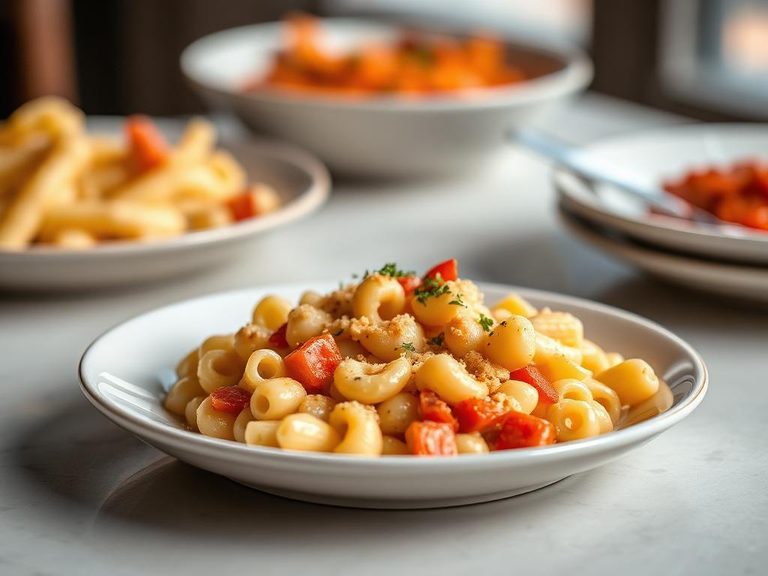
🍽️ Popular dishes





🌍 Where it's eaten
💡 Did you know?
The characteristic round shape and red wax coating of Edam cheese made it historically ideal for long sea voyages; it was so durable it was even used as ballast on ships.
Full nutrition (USDA data · scales with serving)
| Water | 41.5 g |
| Energy | 356 kcal |
| Protein | 24.9 g |
| Total lipid (fat) | 27.4 g |
| Carbohydrate, by difference | 2.2 g |
| Fiber, total dietary | 0.00 g |
| Total Sugars | 2.2 g |
| Calcium, Ca | 700 mg |
| Iron, Fe | 0.24 mg |
| Magnesium, Mg | 29.0 mg |
| Phosphorus, P | 546 mg |
| Potassium, K | 121 mg |
| Sodium, Na | 819 mg |
| Zinc, Zn | 3.9 mg |
| Copper, Cu | 0.04 mg |
| Selenium, Se | 14.5 ug |
| Vitamin C, total ascorbic acid | 0.00 mg |
| Thiamin | 0.03 mg |
| Riboflavin | 0.33 mg |
| Niacin | 0.06 mg |
| Vitamin B-6 | 0.08 mg |
| Folate, total | 21.0 ug |
| Folic acid | 0.00 ug |
| Folate, food | 21.0 ug |
| Folate, DFE | 21.0 ug |
| Choline, total | 15.4 mg |
| Vitamin B-12 | 1.5 ug |
| Vitamin B-12, added | 0.00 ug |
| Vitamin A, RAE | 165 ug |
| Retinol | 164 ug |
| Carotene, beta | 10.0 ug |
| Carotene, alpha | 0.00 ug |
| Cryptoxanthin, beta | 0.00 ug |
| Lycopene | 0.00 ug |
| Lutein + zeaxanthin | 0.00 ug |
| Vitamin E (alpha-tocopherol) | 0.24 mg |
| Vitamin E, added | 0.00 mg |
| Vitamin D (D2 + D3) | 0.50 ug |
| Vitamin K (phylloquinone) | 2.3 ug |
| Alcohol, ethyl | 0.00 g |
| Caffeine | 0.00 mg |
| Theobromine | 0.00 mg |
Fat & fatty acid profile (per 100g)
| Fatty acids, total saturated | 17.6 g |
| SFA 4:0 | 1.00 g |
| SFA 6:0 | 0.64 g |
| SFA 8:0 | 0.43 g |
| SFA 10:0 | 0.92 g |
| SFA 12:0 | 1.2 g |
| SFA 14:0 | 3.0 g |
| SFA 16:0 | 6.9 g |
| SFA 18:0 | 2.9 g |
| Fatty acids, total monounsaturated | 7.7 g |
| MUFA 16:1 | 0.89 g |
| MUFA 18:1 | 6.4 g |
| MUFA 20:1 | 0.00 g |
| MUFA 22:1 | 0.00 g |
| Fatty acids, total polyunsaturated | 0.66 g |
| PUFA 18:2 | 0.26 g |
| PUFA 18:3 | 0.39 g |
| PUFA 18:4 | 0.00 g |
| PUFA 20:4 | 0.00 g |
| PUFA 20:5 n-3 (EPA) | 0.00 g |
| PUFA 22:5 n-3 (DPA) | 0.00 g |
| PUFA 22:6 n-3 (DHA) | 0.00 g |
| Cholesterol | 114 mg |
Amino acid profile (per 100g)
Estimated from Crackers, cheese, sandwich-type with cheese filling — USDA does not publish this profile for Cheese.
| Tryptophan | 0.11 g |
| Threonine | 0.33 g |
| Isoleucine | 0.36 g |
| Leucine | 0.64 g |
| Lysine | 0.39 g |
| Methionine | 0.15 g |
| Cystine | 0.15 g |
| Phenylalanine | 0.35 g |
| Tyrosine | 0.25 g |
| Valine | 0.38 g |
| Arginine | 0.29 g |
| Histidine | 0.17 g |
| Alanine | 0.30 g |
| Aspartic acid | 0.52 g |
| Glutamic acid | 2.2 g |
| Glycine | 0.24 g |
| Proline | 0.77 g |
| Serine | 0.40 g |
FAQ
What's the main difference between Gouda and Edam?
Gouda is typically creamier, richer, and has a more pronounced caramel-like sweetness as it ages. Edam is firmer, milder, and slightly saltier, with a more elastic texture.
Is this cheese gluten-free?
Yes, pure Gouda and Edam cheeses are naturally gluten-free. However, always check labels for added flavorings or if they are processed in facilities with gluten.
How should I store it?
Keep it wrapped in its original wax or cheese paper, then loosely in plastic wrap in the refrigerator's vegetable drawer. This allows it to breathe without drying out.
Nutrient density (calculated · NRF9.3)
Nutrient Rich Foods index: beneficial nutrients (protein, fiber, vitamins, minerals) minus saturated fat, added sugar & sodium, per 100 kcal.
NRF9.3 index — Fulgoni, Keast & Drewnowski, 2009. Computed from USDA nutrients.
Weight-loss friendliness (composite index)
Energy density 3.56 kcal/g · 28% calories from protein · 0.0 g fiber · 2.2 g sugar per 100 g.
Composite of energy density (Rolls et al., 1999), protein & fiber satiety, minus sugar. A calculated heuristic — ranks satiety-per-calorie, not a clinical measure.
Dietary load (calculated from USDA values)
Potential renal acid load. Positive = acid-forming, negative = alkaline-forming.
Sodium-to-potassium ratio: 6.77 (lower is better — aim for ≤ 1)
Sodium:potassium per WHO potassium guidance. Computed from USDA nutrients.