

Cheese, goat
Common food
Goat cheese, or chèvre, is a soft, tangy cheese with a distinctive creamy, crumbly texture that melts in your mouth. Its bright, acidic flavor ranges from mild and lemony when young to complex and earthy with age. Nutritionally, it's a powerhouse of protein and fat with virtually no carbohydrates, making it a staple for low-carb and ketogenic diets.
Calorie split: 24% protein · 0% carbs · 76% fat
↓ Full nutrition💚 Why it's loved
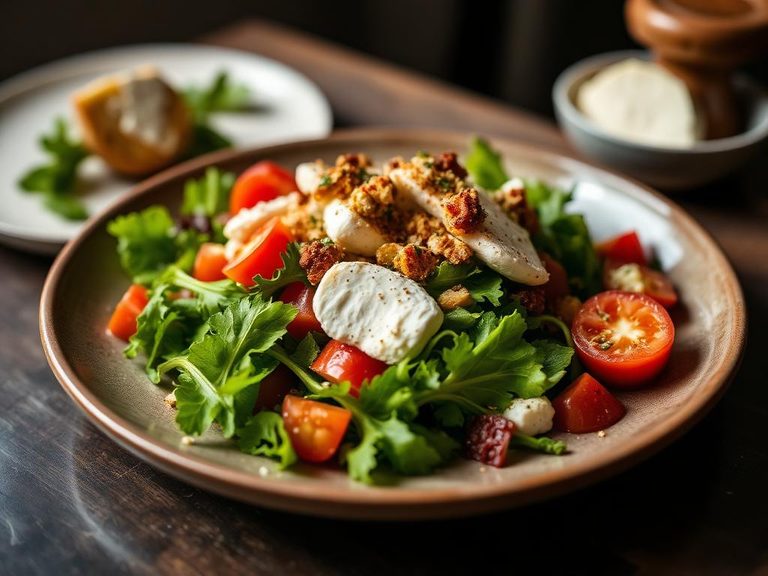
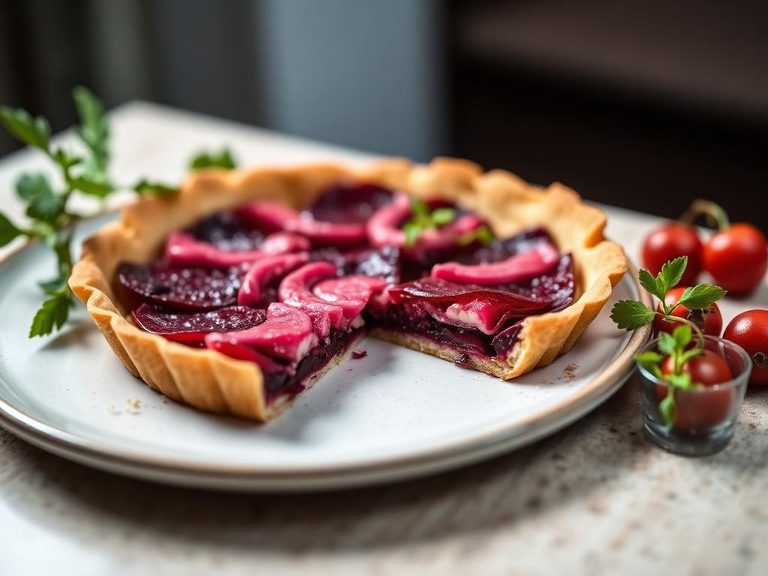
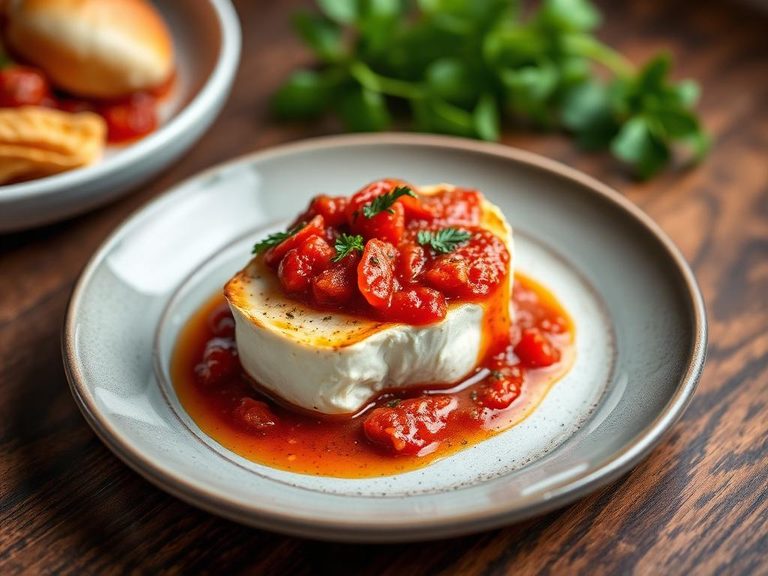
People cherish goat cheese for its vibrant, versatile flavor that can brighten a simple salad or anchor a gourmet tart. Its cultural significance in French and Mediterranean cuisines adds a layer of rustic elegance and tradition to any dish.
⚠️ Watch-outs & how to enjoy it better
Its strong, tangy flavor can be polarizing for those accustomed to milder cheeses. As a high-fat, calorie-dense food, portion control is key for weight management. For those with a milk protein allergy, it remains a common allergen and must be avoided. To counteract the richness, pair it with fiber-rich vegetables, acidic dressings, or use it as a flavor accent rather than the main component.
Key benefits
- Excellent source of complete protein for muscle maintenance.
- Rich in calcium and phosphorus for bone health.
- Contains medium-chain fatty acids for quicker energy metabolism.
- Often easier to digest than cow's milk cheese for some individuals.
- Naturally low in lactose due to the fermentation process.
🍽️ Popular dishes

🌍 Where it's eaten
💡 Did you know?
Goat cheese is one of the oldest known cheeses, with evidence suggesting its production began around 8,000 years ago in the Fertile Crescent, shortly after goats were domesticated.
Full nutrition (USDA data · scales with serving)
| Water | 45.5 g |
| Energy | 364 kcal |
| Protein | 21.6 g |
| Total lipid (fat) | 29.8 g |
| Carbohydrate, by difference | 0.12 g |
| Fiber, total dietary | 0.00 g |
| Total Sugars | 0.12 g |
| Calcium, Ca | 298 mg |
| Iron, Fe | 1.6 mg |
| Magnesium, Mg | 29.0 mg |
| Phosphorus, P | 375 mg |
| Potassium, K | 158 mg |
| Sodium, Na | 415 mg |
| Zinc, Zn | 0.66 mg |
| Copper, Cu | 0.56 mg |
| Selenium, Se | 3.8 ug |
| Vitamin C, total ascorbic acid | 0.00 mg |
| Thiamin | 0.07 mg |
| Riboflavin | 0.68 mg |
| Niacin | 1.1 mg |
| Vitamin B-6 | 0.06 mg |
| Folate, total | 2.0 ug |
| Folic acid | 0.00 ug |
| Folate, food | 2.0 ug |
| Folate, DFE | 2.0 ug |
| Choline, total | 15.4 mg |
| Vitamin B-12 | 0.22 ug |
| Vitamin B-12, added | 0.00 ug |
| Vitamin A, RAE | 407 ug |
| Retinol | 401 ug |
| Carotene, beta | 77.0 ug |
| Carotene, alpha | 0.00 ug |
| Cryptoxanthin, beta | 0.00 ug |
| Lycopene | 0.00 ug |
| Lutein + zeaxanthin | 0.00 ug |
| Vitamin E (alpha-tocopherol) | 0.26 mg |
| Vitamin E, added | 0.00 mg |
| Vitamin D (D2 + D3) | 0.50 ug |
| Vitamin K (phylloquinone) | 2.5 ug |
| Alcohol, ethyl | 0.00 g |
| Caffeine | 0.00 mg |
| Theobromine | 0.00 mg |
Fat & fatty acid profile (per 100g)
| Fatty acids, total saturated | 20.6 g |
| SFA 4:0 | 1.5 g |
| SFA 6:0 | 0.66 g |
| SFA 8:0 | 0.81 g |
| SFA 10:0 | 2.9 g |
| SFA 12:0 | 1.3 g |
| SFA 14:0 | 3.0 g |
| SFA 16:0 | 7.8 g |
| SFA 18:0 | 2.6 g |
| Fatty acids, total monounsaturated | 6.8 g |
| MUFA 16:1 | 0.71 g |
| MUFA 18:1 | 6.1 g |
| MUFA 20:1 | 0.00 g |
| MUFA 22:1 | 0.00 g |
| Fatty acids, total polyunsaturated | 0.71 g |
| PUFA 18:2 | 0.71 g |
| PUFA 18:3 | 0.00 g |
| PUFA 18:4 | 0.00 g |
| PUFA 20:4 | 0.00 g |
| PUFA 20:5 n-3 (EPA) | 0.00 g |
| PUFA 22:5 n-3 (DPA) | 0.00 g |
| PUFA 22:6 n-3 (DHA) | 0.00 g |
| Cholesterol | 79.0 mg |
Amino acid profile (per 100g)
Estimated from Crackers, cheese, sandwich-type with cheese filling — USDA does not publish this profile for Cheese.
| Tryptophan | 0.11 g |
| Threonine | 0.33 g |
| Isoleucine | 0.36 g |
| Leucine | 0.64 g |
| Lysine | 0.39 g |
| Methionine | 0.15 g |
| Cystine | 0.15 g |
| Phenylalanine | 0.35 g |
| Tyrosine | 0.25 g |
| Valine | 0.38 g |
| Arginine | 0.29 g |
| Histidine | 0.17 g |
| Alanine | 0.30 g |
| Aspartic acid | 0.52 g |
| Glutamic acid | 2.2 g |
| Glycine | 0.24 g |
| Proline | 0.77 g |
| Serine | 0.40 g |
FAQ
Is goat cheese lactose-free?
While not completely lactose-free, goat cheese is very low in lactose, especially aged varieties. The fermentation process breaks down most of the lactose, making it tolerable for many with lactose sensitivity.
How is the taste different from cow's milk cheese?
Goat cheese typically has a tangier, brighter, and more 'grassy' or earthy flavor profile compared to the milder, creamier taste of most cow's milk cheeses. The texture is also often softer and more crumbly.
What's the best way to store it?
Store it in its original packaging or wrap tightly in wax or parchment paper, then place it in a sealed container in the refrigerator. This allows it to breathe without drying out. Consume within a week of opening.
Nutrient density (calculated · NRF9.3)
Nutrient Rich Foods index: beneficial nutrients (protein, fiber, vitamins, minerals) minus saturated fat, added sugar & sodium, per 100 kcal.
NRF9.3 index — Fulgoni, Keast & Drewnowski, 2009. Computed from USDA nutrients.
Weight-loss friendliness (composite index)
Energy density 3.64 kcal/g · 24% calories from protein · 0.0 g fiber · 0.1 g sugar per 100 g.
Composite of energy density (Rolls et al., 1999), protein & fiber satiety, minus sugar. A calculated heuristic — ranks satiety-per-calorie, not a clinical measure.
Dietary load (calculated from USDA values)
Potential renal acid load. Positive = acid-forming, negative = alkaline-forming.
Sodium-to-potassium ratio: 2.63 (lower is better — aim for ≤ 1)
Sodium:potassium per WHO potassium guidance. Computed from USDA nutrients.