

Cheese and Queso as ingredient
Common food
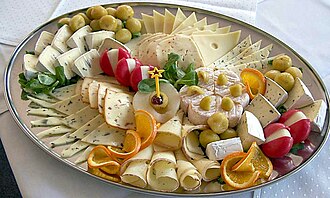
Photo: Wikipedia
A rich, savory dairy ingredient, cheese and queso provide a creamy, salty, and often tangy flavor with a texture ranging from soft and spreadable to firm and sliceable. They are a concentrated source of protein and fat, offering a dense caloric profile with minimal carbohydrates. This makes them a powerful flavor enhancer and a substantial component in countless dishes.
Calorie split: 24% protein · 3% carbs · 73% fat
↓ Full nutrition💚 Why it's loved
People love cheese and queso for their unparalleled ability to transform simple foods with rich, complex flavors and satisfying textures. Their cultural significance in comfort foods and social gatherings makes them a beloved staple worldwide.
⚠️ Watch-outs & how to enjoy it better
Due to high saturated fat and sodium content, those managing heart health or blood pressure should be mindful of portions. The lactose in many cheeses can cause digestive issues for the intolerant. Tip: Choose aged, lower-lactose varieties like Parmesan or Swiss, and balance meals with fiber-rich vegetables to offset the sodium and fat load.
Key benefits
- Excellent source of complete protein for muscle maintenance.
- High in calcium for bone and dental health.
- Provides fat-soluble vitamins like A, D, and K2.
- Enhances satiety due to high protein and fat content.
- Versatile ingredient for adding depth and umami.
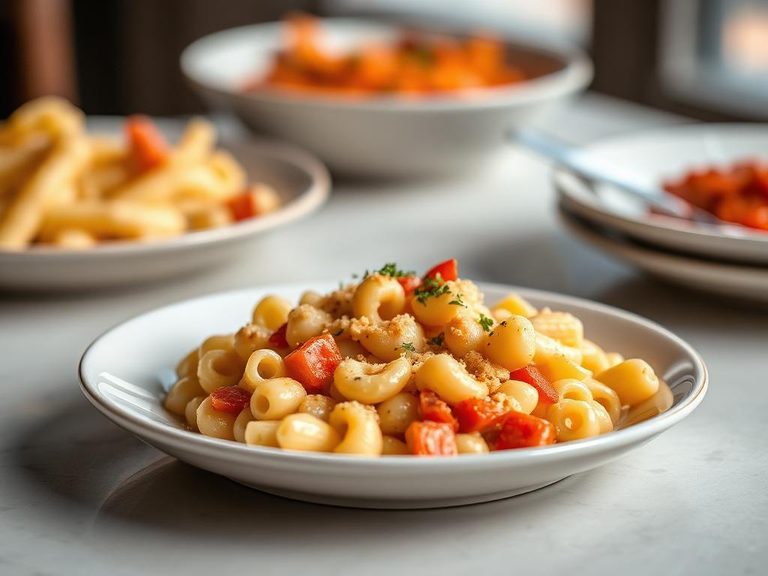
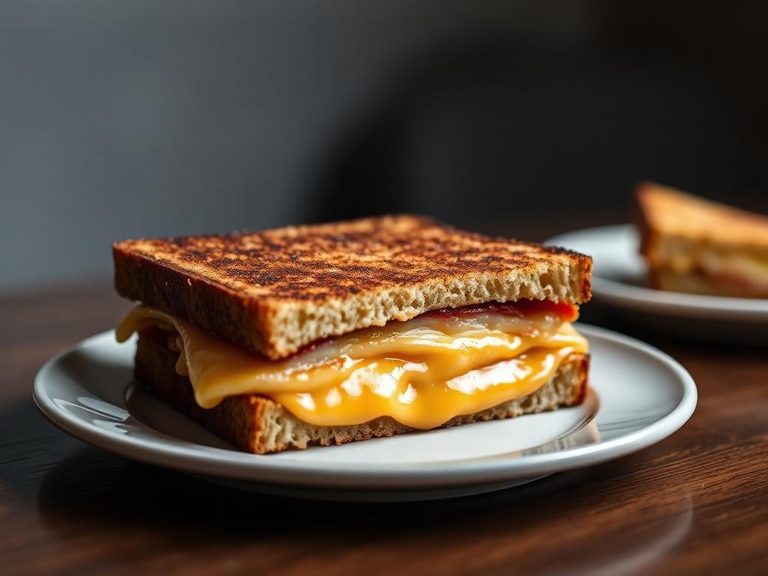
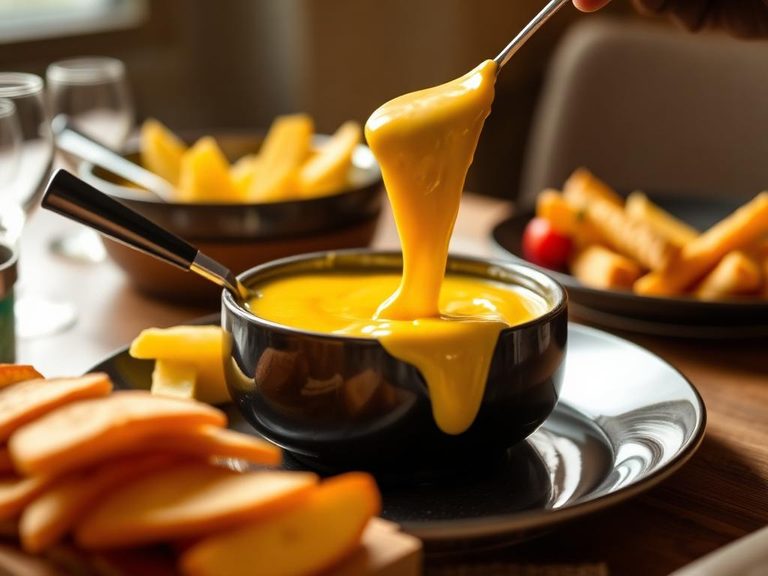
🍽️ Popular dishes

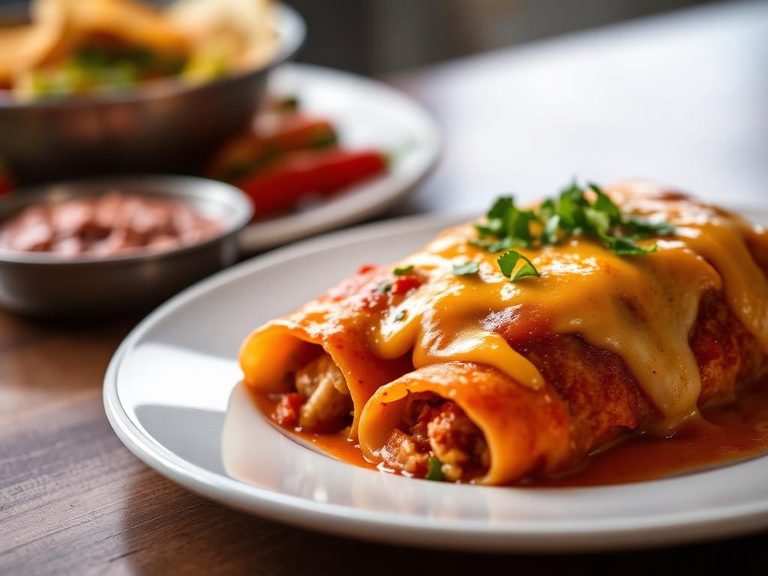
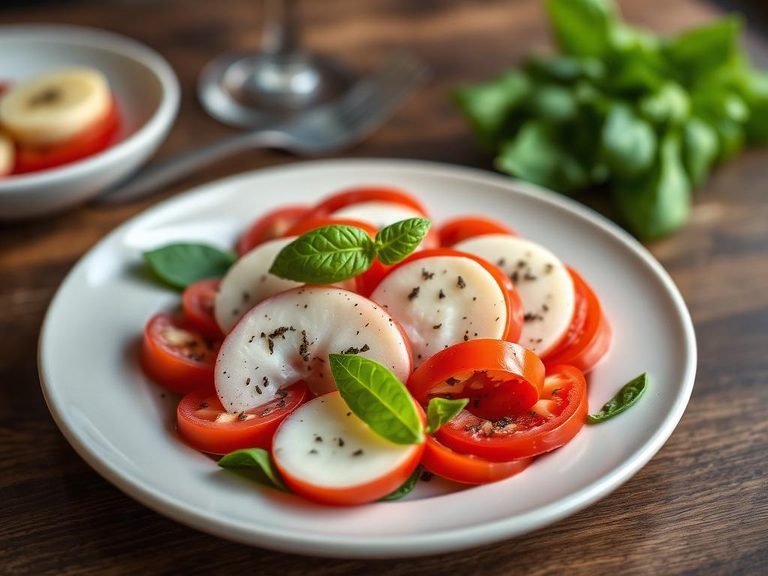
🌍 Where it's eaten
💡 Did you know?
The holes in Swiss cheese, like Emmental, are formed by bacteria that release carbon dioxide during fermentation, creating bubbles in the cheese paste.
Full nutrition (USDA data · scales with serving)
| Water | 42.6 g |
| Energy | 362 kcal |
| Protein | 21.9 g |
| Total lipid (fat) | 29.3 g |
| Carbohydrate, by difference | 2.4 g |
| Fiber, total dietary | 0.00 g |
| Total Sugars | 0.84 g |
| Calcium, Ca | 665 mg |
| Iron, Fe | 0.05 mg |
| Magnesium, Mg | 28.0 mg |
| Phosphorus, P | 438 mg |
| Potassium, K | 93.0 mg |
| Sodium, Na | 710 mg |
| Zinc, Zn | 3.5 mg |
| Copper, Cu | 0.01 mg |
| Selenium, Se | 20.1 ug |
| Vitamin C, total ascorbic acid | 0.00 mg |
| Thiamin | 0.03 mg |
| Riboflavin | 0.33 mg |
| Niacin | 0.07 mg |
| Vitamin B-6 | 0.07 mg |
| Folate, total | 15.0 ug |
| Folic acid | 0.00 ug |
| Folate, food | 15.0 ug |
| Folate, DFE | 15.0 ug |
| Choline, total | 15.1 mg |
| Vitamin B-12 | 1.2 ug |
| Vitamin B-12, added | 0.00 ug |
| Vitamin A, RAE | 213 ug |
| Retinol | 213 ug |
| Carotene, beta | 1.0 ug |
| Carotene, alpha | 0.00 ug |
| Cryptoxanthin, beta | 0.00 ug |
| Lycopene | 0.00 ug |
| Lutein + zeaxanthin | 1.0 ug |
| Vitamin E (alpha-tocopherol) | 0.44 mg |
| Vitamin E, added | 0.00 mg |
| Vitamin D (D2 + D3) | 0.20 ug |
| Vitamin K (phylloquinone) | 2.0 ug |
| Alcohol, ethyl | 0.00 g |
| Caffeine | 0.00 mg |
| Theobromine | 0.00 mg |
Fat & fatty acid profile (per 100g)
| Fatty acids, total saturated | 17.0 g |
| SFA 4:0 | 0.76 g |
| SFA 6:0 | 0.40 g |
| SFA 8:0 | 0.29 g |
| SFA 10:0 | 0.65 g |
| SFA 12:0 | 0.89 g |
| SFA 14:0 | 2.7 g |
| SFA 16:0 | 8.1 g |
| SFA 18:0 | 2.7 g |
| Fatty acids, total monounsaturated | 6.2 g |
| MUFA 16:1 | 0.65 g |
| MUFA 18:1 | 6.8 g |
| MUFA 20:1 | 0.04 g |
| MUFA 22:1 | 0.00 g |
| Fatty acids, total polyunsaturated | 1.0 g |
| PUFA 18:2 | 0.82 g |
| PUFA 18:3 | 0.18 g |
| PUFA 18:4 | 0.00 g |
| PUFA 20:4 | 0.03 g |
| PUFA 20:5 n-3 (EPA) | 0.01 g |
| PUFA 22:5 n-3 (DPA) | 0.01 g |
| PUFA 22:6 n-3 (DHA) | 0.00 g |
| Cholesterol | 90.0 mg |
Amino acid profile (per 100g)
Estimated from Restaurant, Latino, pupusas con queso (pupusas, cheese) — USDA does not publish this profile for Cheese and Queso as ingredient.
| Tryptophan | 0.15 g |
| Threonine | 0.46 g |
| Isoleucine | 0.56 g |
| Leucine | 1.3 g |
| Lysine | 0.87 g |
| Methionine | 0.35 g |
| Cystine | 0.10 g |
| Phenylalanine | 0.63 g |
| Tyrosine | 0.48 g |
| Valine | 0.74 g |
| Arginine | 0.48 g |
| Histidine | 0.37 g |
| Alanine | 0.46 g |
| Aspartic acid | 0.89 g |
| Glutamic acid | 2.8 g |
| Glycine | 0.27 g |
| Proline | 1.3 g |
| Serine | 0.70 g |
FAQ
What's the difference between cheese and queso?
Cheese is a broad category of dairy products made from curdled milk. 'Queso' is the Spanish word for cheese and often refers specifically to melted cheese dishes or fresh, soft cheeses like queso fresco used in Latin American cuisine.
Is cheese a good source of protein?
Yes, cheese is a concentrated source of high-quality, complete protein. For example, cheddar cheese contains about 25 grams of protein per 100 grams, making it a valuable protein source in many diets.
Why is cheese so high in calories?
Cheese is calorie-dense primarily because of its high fat content, which provides 9 calories per gram. The protein content also contributes significantly. This combination makes it energy-rich but also very satiating.
Nutrient density (calculated · NRF9.3)
Nutrient Rich Foods index: beneficial nutrients (protein, fiber, vitamins, minerals) minus saturated fat, added sugar & sodium, per 100 kcal.
NRF9.3 index — Fulgoni, Keast & Drewnowski, 2009. Computed from USDA nutrients.
Weight-loss friendliness (composite index)
Energy density 3.62 kcal/g · 24% calories from protein · 0.0 g fiber · 0.8 g sugar per 100 g.
Composite of energy density (Rolls et al., 1999), protein & fiber satiety, minus sugar. A calculated heuristic — ranks satiety-per-calorie, not a clinical measure.
Dietary load (calculated from USDA values)
Potential renal acid load. Positive = acid-forming, negative = alkaline-forming.
Sodium-to-potassium ratio: 7.63 (lower is better — aim for ≤ 1)
Sodium:potassium per WHO potassium guidance. Computed from USDA nutrients.