

Cereals, WHEATENA, dry
Whole food · Breakfast Cereals

Photo: Wikipedia
Wheatena is a classic, coarse-ground hot cereal made from toasted whole wheat groats, delivering a robust, nutty flavor and a pleasantly chewy, hearty texture. Nutritionally, it's a powerhouse of complex carbohydrates and fiber, providing sustained energy without the refined sugars found in many breakfast options.
Calorie split: 14% protein · 79% carbs · 7% fat
↓ Full nutrition💚 Why it's loved
People love Wheatena for its deep, toasted grain flavor that feels both comforting and substantial, making it a satisfying start to the day. It's also cherished for its versatility as a blank canvas for both sweet and savory toppings.
⚠️ Watch-outs & how to enjoy it better
Its high fiber content can cause digestive discomfort if introduced too quickly, and its dense carbohydrate load may affect blood sugar levels. To mitigate this, pair it with protein (like nuts or yogurt) and healthy fats (like seeds or a drizzle of nut butter), and ensure you drink plenty of water.
Key benefits
- Excellent source of dietary fiber (12.8g per 100g)
- High in plant-based protein (13.1g per 100g)
- Low in fat (2.9g per 100g)
- Contains no added sugar (only 1.6g naturally occurring)
- Provides sustained energy due to complex carbohydrates
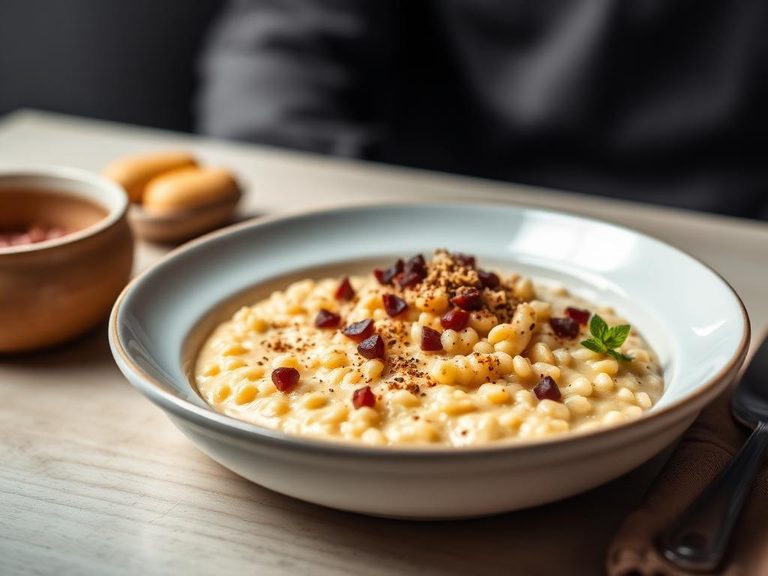
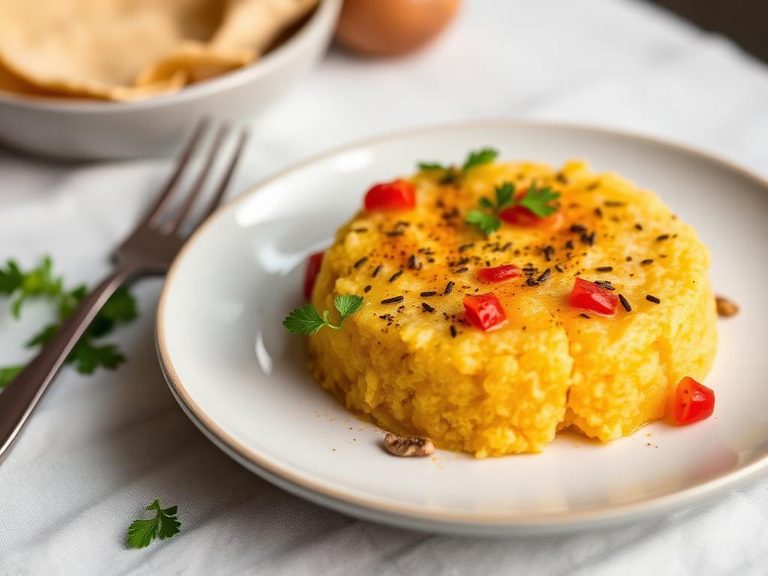
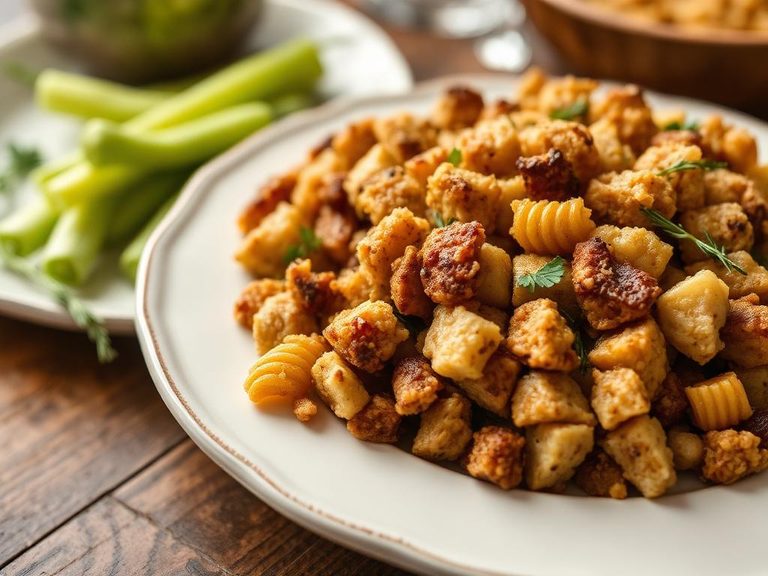
🍽️ Popular dishes


🌍 Where it's eaten
💡 Did you know?
Wheatena was introduced in 1879 and was famously marketed as a health food, with its name derived from 'wheat' and the suffix '-ena' to sound scientific and modern for its time.
Full nutrition (USDA data · scales with serving)
| Water | 6.5 g |
| Energy | 357 kcal |
| Energy | 1494 kj |
| Protein | 13.1 g |
| Total lipid (fat) | 2.9 g |
| Ash | 1.9 g |
| Carbohydrate, by difference | 75.6 g |
| Fiber, total dietary | 12.8 g |
| Total Sugars | 1.6 g |
| Calcium, Ca | 500 mg |
| Iron, Fe | 3.6 mg |
| Magnesium, Mg | 130 mg |
| Phosphorus, P | 384 mg |
| Potassium, K | 492 mg |
| Sodium, Na | 13.0 mg |
| Zinc, Zn | 4.4 mg |
| Copper, Cu | 0.33 mg |
| Manganese, Mn | 5.3 mg |
| Selenium, Se | 70.7 ug |
| Vitamin C, total ascorbic acid | 0.00 mg |
| Thiamin | 0.07 mg |
| Riboflavin | 0.14 mg |
| Niacin | 3.5 mg |
| Pantothenic acid | 0.27 mg |
| Vitamin B-6 | 0.12 mg |
| Folate, total | 59.0 ug |
| Folic acid | 0.00 ug |
| Folate, food | 59.0 ug |
| Folate, DFE | 59.0 ug |
| Vitamin B-12 | 0.00 ug |
| Vitamin A, RAE | 1.0 ug |
| Retinol | 0.00 ug |
| Carotene, beta | 13.0 ug |
| Carotene, alpha | 0.00 ug |
| Cryptoxanthin, beta | 0.00 ug |
| Vitamin A, IU | 22.0 iu |
| Lycopene | 0.00 ug |
| Lutein + zeaxanthin | 292 ug |
| Vitamin E (alpha-tocopherol) | 3.4 mg |
| Vitamin K (phylloquinone) | 2.3 ug |
| Alcohol, ethyl | 0.00 g |
| Caffeine | 0.00 mg |
| Theobromine | 0.00 mg |
Fat & fatty acid profile (per 100g)
| Fatty acids, total saturated | 0.43 g |
| SFA 4:0 | 0.00 g |
| SFA 6:0 | 0.00 g |
| SFA 8:0 | 0.00 g |
| SFA 10:0 | 0.00 g |
| SFA 12:0 | 0.00 g |
| SFA 14:0 | 0.00 g |
| SFA 16:0 | 0.42 g |
| SFA 18:0 | 0.01 g |
| Fatty acids, total monounsaturated | 0.41 g |
| MUFA 16:1 | 0.00 g |
| MUFA 18:1 | 0.41 g |
| MUFA 20:1 | 0.00 g |
| MUFA 22:1 | 0.00 g |
| Fatty acids, total polyunsaturated | 1.5 g |
| PUFA 18:2 | 1.4 g |
| PUFA 18:3 | 0.11 g |
| PUFA 18:4 | 0.00 g |
| PUFA 20:4 | 0.00 g |
| PUFA 20:5 n-3 (EPA) | 0.00 g |
| PUFA 22:5 n-3 (DPA) | 0.00 g |
| PUFA 22:6 n-3 (DHA) | 0.00 g |
| Cholesterol | 0.00 mg |
Amino acid profile (per 100g)
Estimated from Cereals ready-to-eat, POST, HONEY BUNCHES OF OATS, honey roasted — USDA does not publish this profile for Cereals.
| Tryptophan | 0.09 g |
| Threonine | 0.24 g |
| Isoleucine | 0.26 g |
| Leucine | 0.80 g |
| Lysine | 0.12 g |
| Methionine | 0.10 g |
| Cystine | 0.11 g |
| Phenylalanine | 0.39 g |
| Tyrosine | 0.21 g |
| Valine | 0.34 g |
| Arginine | 0.24 g |
| Histidine | 0.18 g |
| Alanine | 0.46 g |
| Aspartic acid | 0.48 g |
| Glutamic acid | 1.9 g |
| Glycine | 0.27 g |
| Proline | 0.49 g |
| Serine | 0.38 g |
FAQ
Is Wheatena the same as oatmeal?
No, Wheatena is made from toasted whole wheat groats, while oatmeal is made from oats. They have different flavors, textures, and nutritional profiles, with Wheatena typically being higher in protein and fiber.
How do I cook Wheatena?
Typically, you combine 1 part Wheatena with 3-4 parts water or milk, bring to a boil, then simmer for 5-10 minutes, stirring occasionally until thickened. It can also be prepared overnight in a slow cooker.
Is Wheatena gluten-free?
No, Wheatena is made from wheat and therefore contains gluten. It is not suitable for individuals with celiac disease or gluten sensitivity.
Nutrient density (calculated · NRF9.3)
Nutrient Rich Foods index: beneficial nutrients (protein, fiber, vitamins, minerals) minus saturated fat, added sugar & sodium, per 100 kcal.
NRF9.3 index — Fulgoni, Keast & Drewnowski, 2009. Computed from USDA nutrients.
Weight-loss friendliness (composite index)
Energy density 3.57 kcal/g · 15% calories from protein · 12.8 g fiber · 1.6 g sugar per 100 g.
Composite of energy density (Rolls et al., 1999), protein & fiber satiety, minus sugar. A calculated heuristic — ranks satiety-per-calorie, not a clinical measure.
Dietary load (calculated from USDA values)
Potential renal acid load. Positive = acid-forming, negative = alkaline-forming.
Sodium-to-potassium ratio: 0.03 (lower is better — aim for ≤ 1)
Sodium:potassium per WHO potassium guidance. Computed from USDA nutrients.