

Carrots, raw, salad
Common food

Photo: Wikipedia
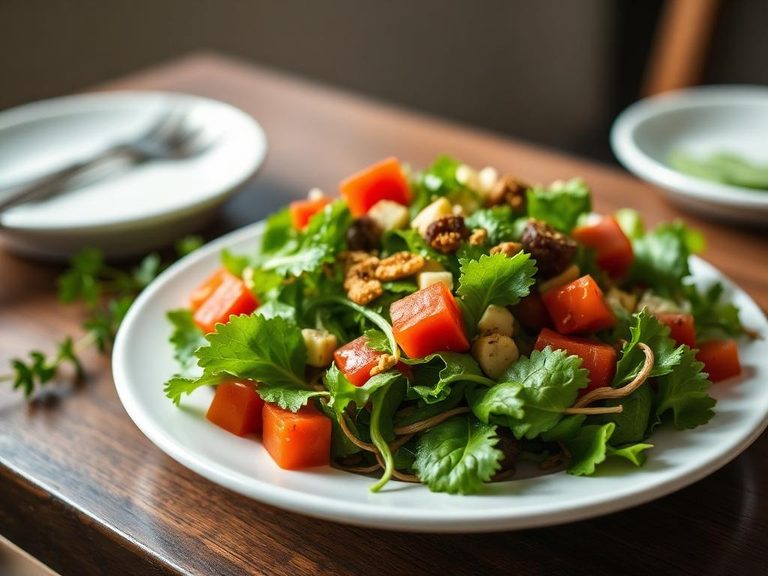
This is a vibrant, crunchy salad of freshly grated or thinly sliced raw carrots, often tossed with a light vinaigrette. Its natural sweetness is bright and earthy, with a satisfying snap that adds texture to any meal. The high fat content in this preparation comes from the dressing, which helps the body absorb the carrot's fat-soluble beta-carotene.
Calorie split: 2% protein · 32% carbs · 65% fat
↓ Full nutrition💚 Why it's loved
People love this salad for its refreshing crunch and natural sweetness, which pairs perfectly with tangy or savory dressings. It's a versatile, colorful side that complements everything from grilled meats to hearty sandwiches.
⚠️ Watch-outs & how to enjoy it better
The added sugar and fat in some dressings can turn a healthy vegetable into a higher-calorie dish. For those monitoring blood sugar, the combination of carrot's natural sugars with added sugar can cause a spike. To counteract this, use a simple olive oil and vinegar dressing and control portion size.
Key benefits
- Excellent source of beta-carotene, which the body converts to vitamin A
- Provides dietary fiber for digestive health
- Contains antioxidants like lutein and lycopene
- The added fat in the dressing enhances nutrient absorption
🍽️ Popular dishes
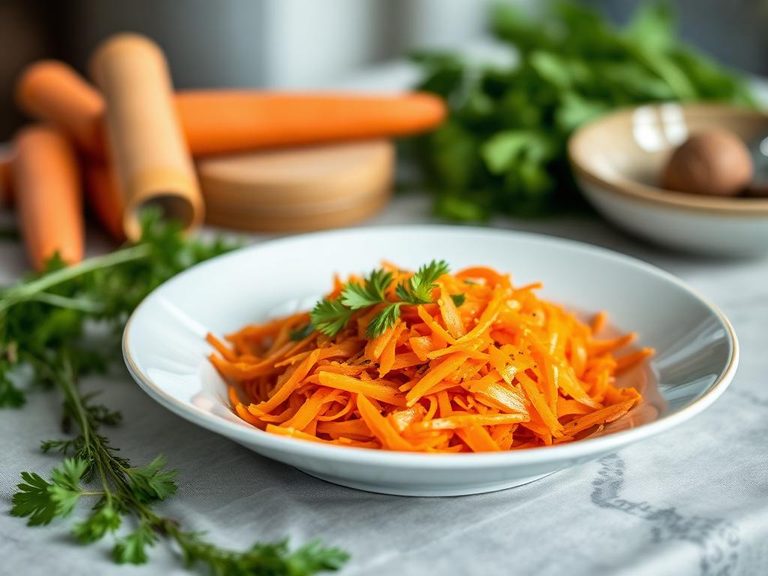
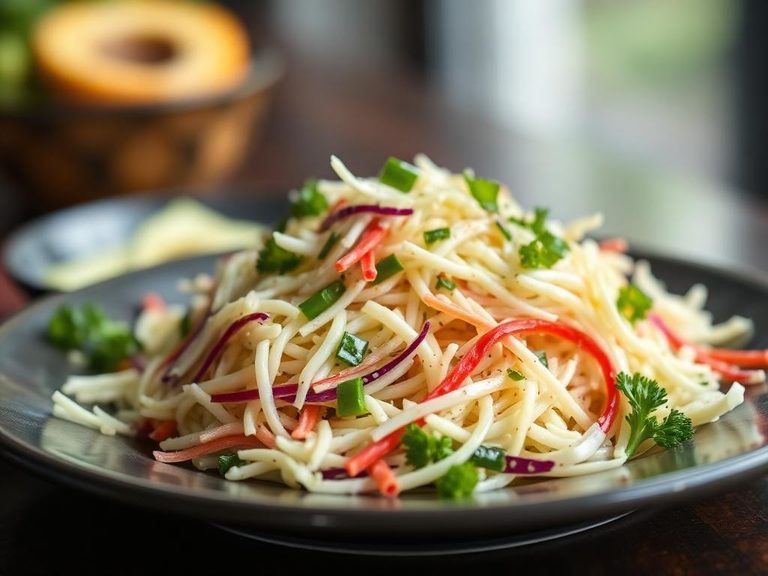
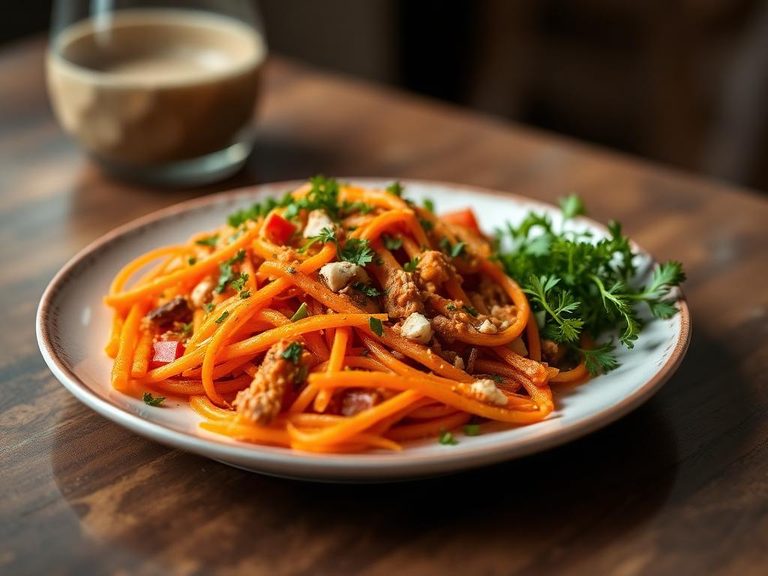
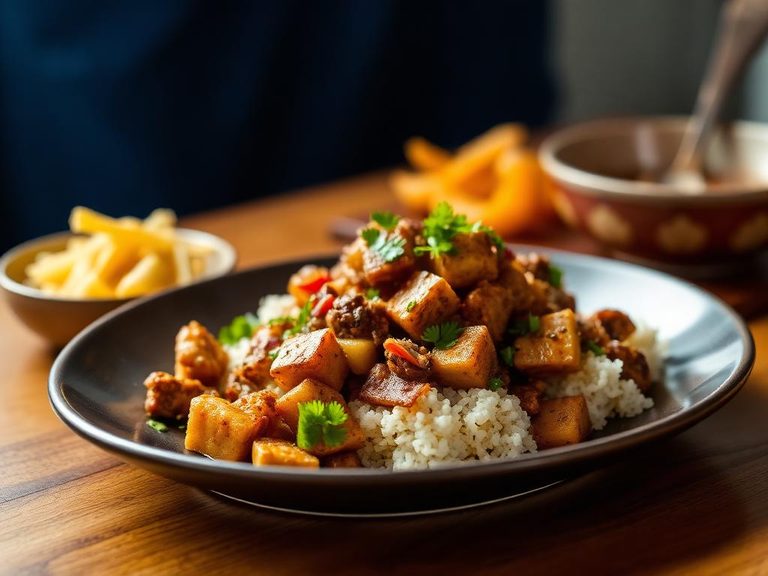
🌍 Where it's eaten
💡 Did you know?
The word 'carrot' comes from the Greek word 'karoton,' but the first carrots cultivated were purple, not orange.
Full nutrition (USDA data · scales with serving)
| Water | 64.3 g |
| Energy | 212 kcal |
| Protein | 1.3 g |
| Total lipid (fat) | 15.7 g |
| Carbohydrate, by difference | 17.6 g |
| Fiber, total dietary | 2.6 g |
| Total Sugars | 12.0 g |
| Calcium, Ca | 30.0 mg |
| Iron, Fe | 0.39 mg |
| Magnesium, Mg | 13.0 mg |
| Phosphorus, P | 43.0 mg |
| Potassium, K | 283 mg |
| Sodium, Na | 189 mg |
| Zinc, Zn | 0.23 mg |
| Copper, Cu | 0.08 mg |
| Selenium, Se | 0.60 ug |
| Vitamin C, total ascorbic acid | 6.1 mg |
| Thiamin | 0.06 mg |
| Riboflavin | 0.08 mg |
| Niacin | 0.98 mg |
| Vitamin B-6 | 0.12 mg |
| Folate, total | 25.0 ug |
| Folic acid | 0.00 ug |
| Folate, food | 25.0 ug |
| Folate, DFE | 25.0 ug |
| Choline, total | 14.3 mg |
| Vitamin B-12 | 0.02 ug |
| Vitamin B-12, added | 0.00 ug |
| Vitamin A, RAE | 521 ug |
| Retinol | 3.0 ug |
| Carotene, beta | 5141 ug |
| Carotene, alpha | 2157 ug |
| Cryptoxanthin, beta | 1.0 ug |
| Lycopene | 1.0 ug |
| Lutein + zeaxanthin | 162 ug |
| Vitamin E (alpha-tocopherol) | 1.1 mg |
| Vitamin E, added | 0.00 mg |
| Vitamin D (D2 + D3) | 0.00 ug |
| Vitamin K (phylloquinone) | 42.4 ug |
| Alcohol, ethyl | 0.00 g |
| Caffeine | 0.00 mg |
| Theobromine | 0.00 mg |
Fat & fatty acid profile (per 100g)
| Fatty acids, total saturated | 2.5 g |
| SFA 4:0 | 0.00 g |
| SFA 6:0 | 0.00 g |
| SFA 8:0 | 0.00 g |
| SFA 10:0 | 0.00 g |
| SFA 12:0 | 0.00 g |
| SFA 14:0 | 0.01 g |
| SFA 16:0 | 1.7 g |
| SFA 18:0 | 0.64 g |
| Fatty acids, total monounsaturated | 3.5 g |
| MUFA 16:1 | 0.02 g |
| MUFA 18:1 | 3.4 g |
| MUFA 20:1 | 0.05 g |
| MUFA 22:1 | 0.01 g |
| Fatty acids, total polyunsaturated | 9.3 g |
| PUFA 18:2 | 8.2 g |
| PUFA 18:3 | 1.1 g |
| PUFA 18:4 | 0.00 g |
| PUFA 20:4 | 0.01 g |
| PUFA 20:5 n-3 (EPA) | 0.00 g |
| PUFA 22:5 n-3 (DPA) | 0.00 g |
| PUFA 22:6 n-3 (DHA) | 0.00 g |
| Cholesterol | 9.0 mg |
Amino acid profile (per 100g)
Estimated from Carrots, canned, no salt added, drained solids — USDA does not publish this profile for Carrots.
| Tryptophan | 0.01 g |
| Threonine | 0.02 g |
| Isoleucine | 0.03 g |
| Leucine | 0.03 g |
| Lysine | 0.03 g |
| Methionine | 0.00 g |
| Cystine | 0.01 g |
| Phenylalanine | 0.02 g |
| Tyrosine | 0.01 g |
| Valine | 0.03 g |
| Arginine | 0.03 g |
| Histidine | 0.01 g |
| Alanine | 0.04 g |
| Aspartic acid | 0.08 g |
| Glutamic acid | 0.12 g |
| Glycine | 0.02 g |
| Proline | 0.02 g |
| Serine | 0.02 g |
FAQ
Why is there so much fat in a carrot salad?
The fat comes from the dressing, typically oil like olive or sunflower oil. This isn't just for flavor; fat helps your body absorb the fat-soluble vitamins and antioxidants in the carrots.
Is this salad high in sugar?
Carrots have natural sugars, but the 12g of sugar per 100g listed includes any added sugar in the dressing. A classic French version often includes a small amount of sugar to balance the vinegar.
Can I make it healthier?
Absolutely. Use a dressing of just extra virgin olive oil, lemon juice or vinegar, and herbs. Skip any added sugar, and add fresh parsley or a sprinkle of seeds for extra texture and nutrients.
Nutrient density (calculated · NRF9.3)
Nutrient Rich Foods index: beneficial nutrients (protein, fiber, vitamins, minerals) minus saturated fat, added sugar & sodium, per 100 kcal.
NRF9.3 index — Fulgoni, Keast & Drewnowski, 2009. Computed from USDA nutrients.
Weight-loss friendliness (composite index)
Energy density 2.12 kcal/g · 2% calories from protein · 2.6 g fiber · 12.0 g sugar per 100 g.
Composite of energy density (Rolls et al., 1999), protein & fiber satiety, minus sugar. A calculated heuristic — ranks satiety-per-calorie, not a clinical measure.
Dietary load (calculated from USDA values)
Potential renal acid load. Positive = acid-forming, negative = alkaline-forming.
Sodium-to-potassium ratio: 0.67 (lower is better — aim for ≤ 1)
Sodium:potassium per WHO potassium guidance. Computed from USDA nutrients.