

Carrots, cooked, as ingredient
Common food
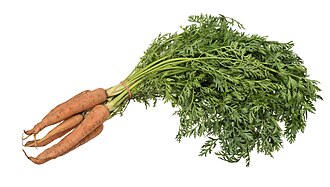
Photo: Wikipedia
Cooked carrots are tender, sweet, and earthy, with a soft, melt-in-your-mouth texture that intensifies their natural sugars. They are a vibrant, nutrient-dense ingredient, famously rich in beta-carotene, which the body converts to vitamin A.
Calorie split: 8% protein · 86% carbs · 6% fat
↓ Full nutrition💚 Why it's loved
People love cooked carrots for their deep, caramelized sweetness and incredible versatility—they can be glazed, roasted, puréed into soups, or simply steamed as a comforting side.
⚠️ Watch-outs & how to enjoy it better
Their high natural sugar content (4.94g per 100g) can contribute to blood sugar spikes if eaten in large, isolated portions. To counteract this, pair them with a source of protein (like chicken) or fat (like olive oil or butter) to slow sugar absorption and enhance nutrient uptake.
Key benefits
- Excellent source of beta-carotene (vitamin A precursor)
- Provides dietary fiber for digestive health
- Contains antioxidants like lutein and lycopene
- Low in calories and fat
- Natural sweetness can reduce added sugar needs
🍽️ Popular dishes
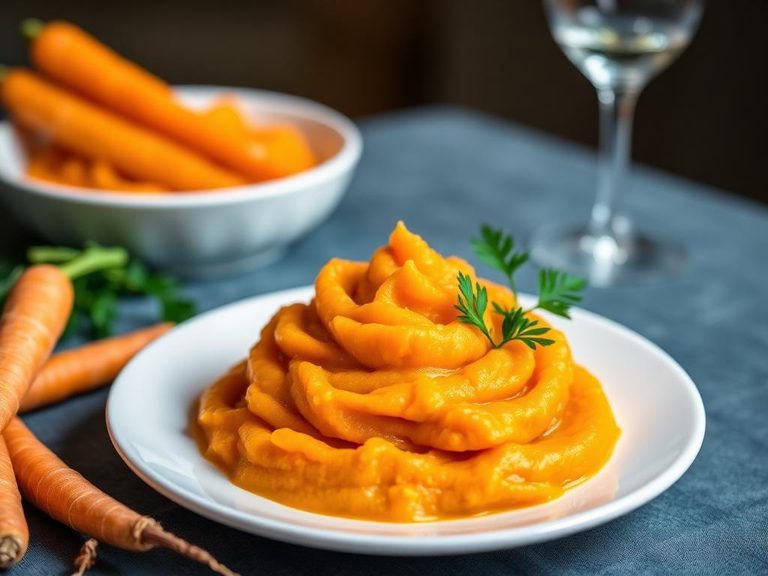
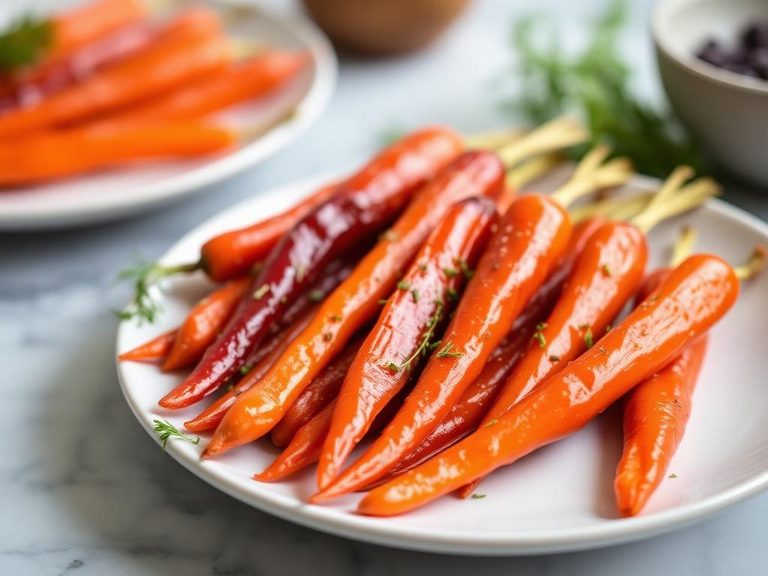

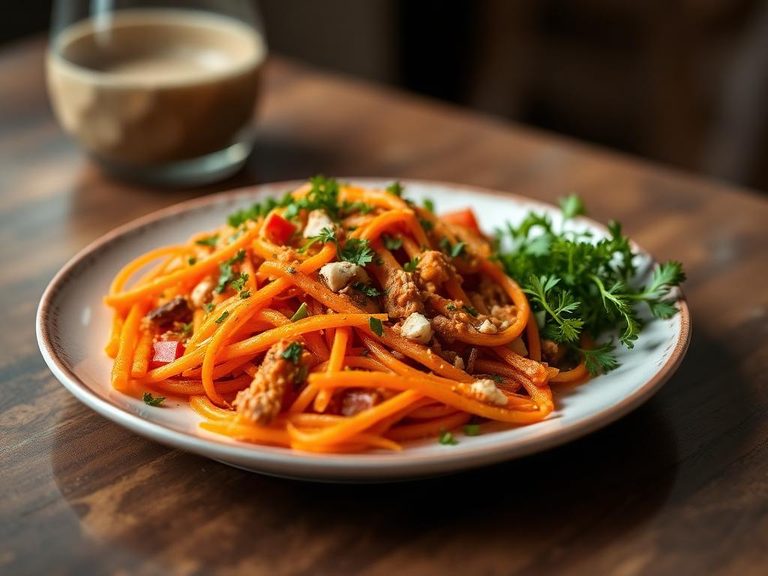
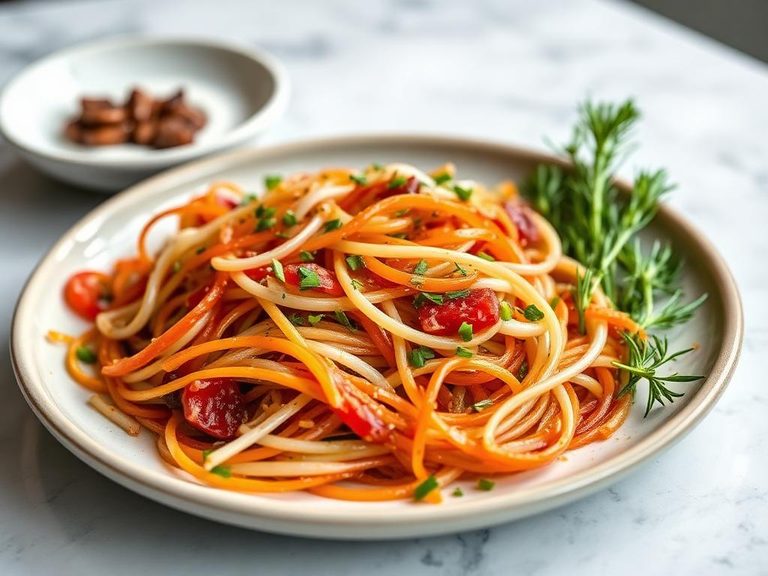
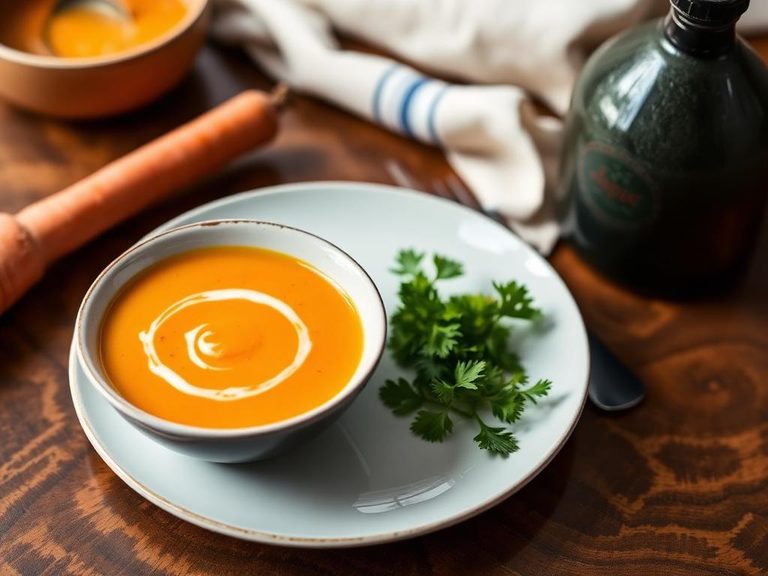
🌍 Where it's eaten
💡 Did you know?
Cooking carrots actually increases the bioavailability of beta-carotene, making it easier for your body to absorb than from raw carrots.
Full nutrition (USDA data · scales with serving)
| Water | 87.2 g |
| Energy | 50.0 kcal |
| Protein | 0.98 g |
| Total lipid (fat) | 0.36 g |
| Carbohydrate, by difference | 10.7 g |
| Fiber, total dietary | 3.2 g |
| Total Sugars | 4.9 g |
| Calcium, Ca | 31.0 mg |
| Iron, Fe | 0.16 mg |
| Magnesium, Mg | 12.0 mg |
| Phosphorus, P | 42.0 mg |
| Potassium, K | 292 mg |
| Sodium, Na | 91.0 mg |
| Zinc, Zn | 0.25 mg |
| Copper, Cu | 0.06 mg |
| Selenium, Se | 0.00 ug |
| Vitamin C, total ascorbic acid | 5.2 mg |
| Thiamin | 0.06 mg |
| Riboflavin | 0.09 mg |
| Niacin | 1.4 mg |
| Vitamin B-6 | 0.14 mg |
| Folate, total | 33.0 ug |
| Folic acid | 0.00 ug |
| Folate, food | 33.0 ug |
| Folate, DFE | 33.0 ug |
| Choline, total | 9.2 mg |
| Vitamin B-12 | 0.00 ug |
| Vitamin B-12, added | 0.00 ug |
| Vitamin A, RAE | 826 ug |
| Retinol | 0.00 ug |
| Carotene, beta | 8199 ug |
| Carotene, alpha | 3441 ug |
| Cryptoxanthin, beta | 0.00 ug |
| Lycopene | 1.0 ug |
| Lutein + zeaxanthin | 253 ug |
| Vitamin E (alpha-tocopherol) | 0.69 mg |
| Vitamin E, added | 0.00 mg |
| Vitamin D (D2 + D3) | 0.00 ug |
| Vitamin K (phylloquinone) | 13.8 ug |
| Alcohol, ethyl | 0.00 g |
| Caffeine | 0.00 mg |
| Theobromine | 0.00 mg |
Fat & fatty acid profile (per 100g)
| Fatty acids, total saturated | 0.03 g |
| SFA 4:0 | 0.00 g |
| SFA 6:0 | 0.00 g |
| SFA 8:0 | 0.00 g |
| SFA 10:0 | 0.00 g |
| SFA 12:0 | 0.00 g |
| SFA 14:0 | 0.00 g |
| SFA 16:0 | 0.03 g |
| SFA 18:0 | 0.00 g |
| Fatty acids, total monounsaturated | 0.01 g |
| MUFA 16:1 | 0.00 g |
| MUFA 18:1 | 0.01 g |
| MUFA 20:1 | 0.00 g |
| MUFA 22:1 | 0.00 g |
| Fatty acids, total polyunsaturated | 0.11 g |
| PUFA 18:2 | 0.10 g |
| PUFA 18:3 | 0.00 g |
| PUFA 18:4 | 0.00 g |
| PUFA 20:4 | 0.00 g |
| PUFA 20:5 n-3 (EPA) | 0.00 g |
| PUFA 22:5 n-3 (DPA) | 0.00 g |
| PUFA 22:6 n-3 (DHA) | 0.00 g |
| Cholesterol | 0.00 mg |
Amino acid profile (per 100g)
Estimated from Carrots, canned, no salt added, drained solids — USDA does not publish this profile for Carrots.
| Tryptophan | 0.01 g |
| Threonine | 0.02 g |
| Isoleucine | 0.03 g |
| Leucine | 0.03 g |
| Lysine | 0.03 g |
| Methionine | 0.00 g |
| Cystine | 0.01 g |
| Phenylalanine | 0.02 g |
| Tyrosine | 0.01 g |
| Valine | 0.03 g |
| Arginine | 0.03 g |
| Histidine | 0.01 g |
| Alanine | 0.04 g |
| Aspartic acid | 0.08 g |
| Glutamic acid | 0.12 g |
| Glycine | 0.02 g |
| Proline | 0.02 g |
| Serine | 0.02 g |
FAQ
Are cooked carrots healthier than raw?
Cooking breaks down cell walls, making beta-carotene more absorbable. However, some heat-sensitive nutrients like vitamin C are reduced. Both forms are nutritious; cooking offers a different nutritional profile.
How does cooking affect the sugar in carrots?
Cooking concentrates the natural sugars and breaks down starches into simpler sugars, making cooked carrots taste sweeter. This doesn't add sugar but can affect glycemic response if eaten alone.
Can I eat too many carrots?
In extreme excess, beta-carotene can cause carotenemia, a harmless yellowing of the skin. It's reversible and not a health risk. A balanced diet with varied vegetables is ideal.
Nutrient density (calculated · NRF9.3)
Nutrient Rich Foods index: beneficial nutrients (protein, fiber, vitamins, minerals) minus saturated fat, added sugar & sodium, per 100 kcal.
NRF9.3 index — Fulgoni, Keast & Drewnowski, 2009. Computed from USDA nutrients.
Weight-loss friendliness (composite index)
Energy density 0.50 kcal/g · 8% calories from protein · 3.2 g fiber · 4.9 g sugar per 100 g.
Composite of energy density (Rolls et al., 1999), protein & fiber satiety, minus sugar. A calculated heuristic — ranks satiety-per-calorie, not a clinical measure.
Dietary load (calculated from USDA values)
Potential renal acid load. Positive = acid-forming, negative = alkaline-forming.
Sodium-to-potassium ratio: 0.31 (lower is better — aim for ≤ 1)
Sodium:potassium per WHO potassium guidance. Computed from USDA nutrients.