

Chicken as ingredient in recipes
Common food
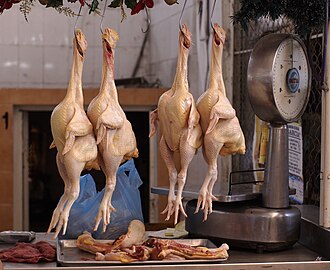
Photo: Wikipedia
Chicken breast, when used as a recipe ingredient, is a lean, mild-flavored protein powerhouse with a firm, fibrous texture that readily absorbs marinades and sauces. Its neutral taste makes it a blank canvas for global cuisines, while its impressive protein-to-calorie ratio supports muscle maintenance and satiety. Cooked properly, it can be juicy and tender, but overcooking quickly turns it dry and chalky.
Calorie split: 63% protein · 0% carbs · 37% fat
↓ Full nutrition💚 Why it's loved
People love chicken breast for its incredible versatility—it can be grilled, poached, stir-fried, or shredded into salads, adapting to flavors from spicy Thai curries to classic Italian piccata. It's a global staple because it's relatively affordable, familiar, and perceived as a 'clean' protein source for health-conscious cooking.
⚠️ Watch-outs & how to enjoy it better
The primary downside is its tendency to become dry and tough if overcooked, which can make meals unpalatable. To counteract this, use a meat thermometer to pull it at 165°F (74°C), brine it in saltwater for 30 minutes before cooking, or slice it thin against the grain after resting. Those watching sodium should be mindful of pre-marinated or processed chicken products.
Key benefits
- Excellent source of complete, high-quality protein (28g per 100g).
- Very low in carbohydrates and sugars, suitable for low-carb diets.
- Rich in essential amino acids like leucine for muscle synthesis.
- Versatile base that pairs with virtually any herb, spice, or sauce.
- Generally leaner than red meats, contributing to lower saturated fat intake.
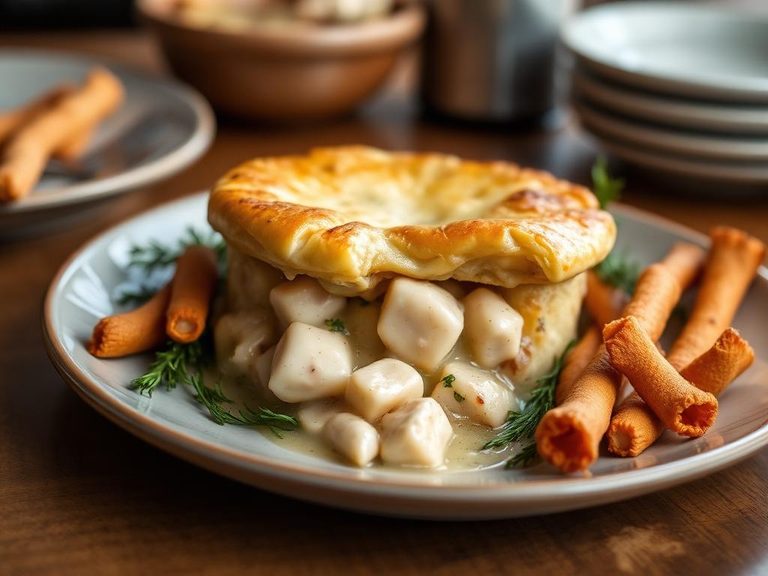
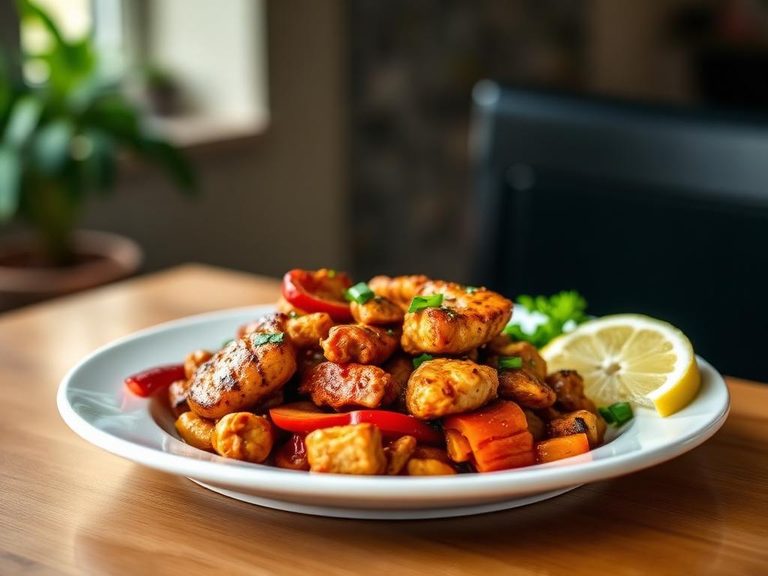
🍽️ Popular dishes

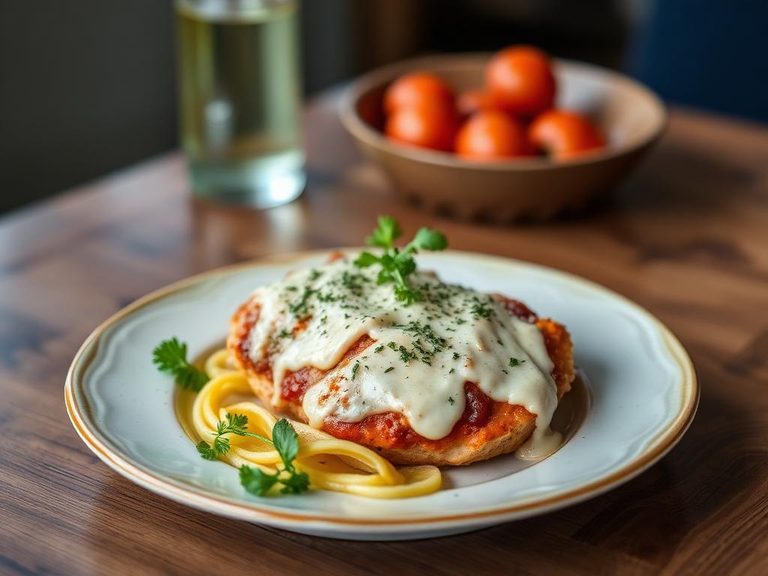
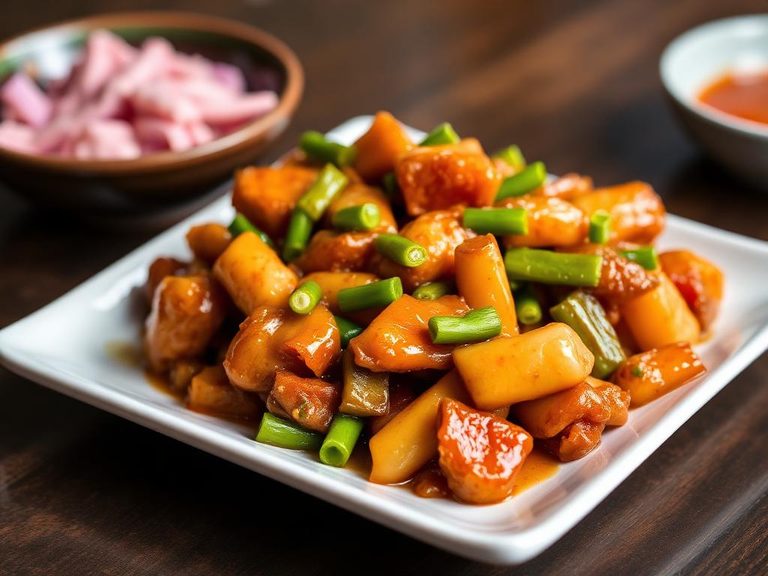
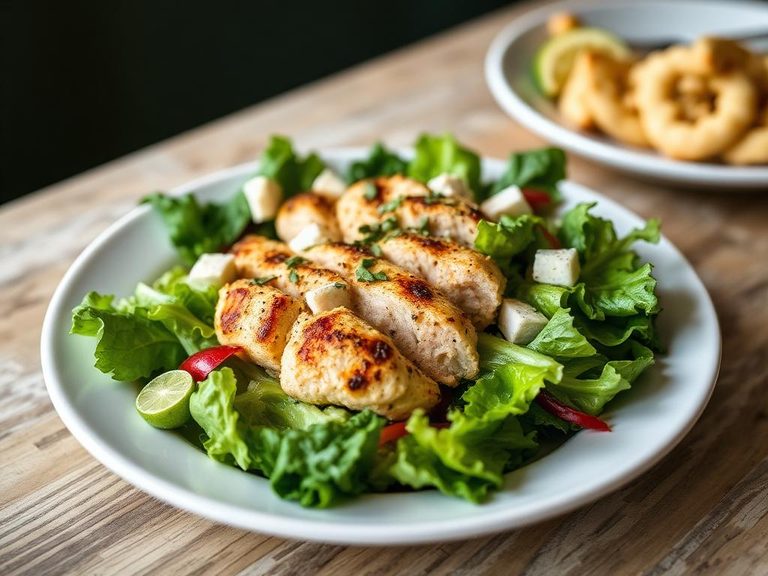
🌍 Where it's eaten
💡 Did you know?
The protein in cooked chicken breast is so efficient that your body can utilize about 80-90% of it for building and repairing tissues, a higher biological value than most plant proteins.
Full nutrition (USDA data · scales with serving)
| Water | 64.9 g |
| Energy | 182 kcal |
| Protein | 28.1 g |
| Total lipid (fat) | 7.3 g |
| Carbohydrate, by difference | 0.00 g |
| Fiber, total dietary | 0.00 g |
| Total Sugars | 0.00 g |
| Calcium, Ca | 8.0 mg |
| Iron, Fe | 0.80 mg |
| Magnesium, Mg | 28.0 mg |
| Phosphorus, P | 232 mg |
| Potassium, K | 302 mg |
| Sodium, Na | 76.0 mg |
| Zinc, Zn | 1.4 mg |
| Copper, Cu | 0.05 mg |
| Selenium, Se | 29.0 ug |
| Vitamin C, total ascorbic acid | 0.00 mg |
| Thiamin | 0.10 mg |
| Riboflavin | 0.20 mg |
| Niacin | 7.7 mg |
| Vitamin B-6 | 0.68 mg |
| Folate, total | 4.0 ug |
| Folic acid | 0.00 ug |
| Folate, food | 4.0 ug |
| Folate, DFE | 4.0 ug |
| Choline, total | 93.4 mg |
| Vitamin B-12 | 0.32 ug |
| Vitamin B-12, added | 0.00 ug |
| Vitamin A, RAE | 11.0 ug |
| Retinol | 11.0 ug |
| Carotene, beta | 0.00 ug |
| Carotene, alpha | 0.00 ug |
| Cryptoxanthin, beta | 0.00 ug |
| Lycopene | 0.00 ug |
| Lutein + zeaxanthin | 4.0 ug |
| Vitamin E (alpha-tocopherol) | 0.26 mg |
| Vitamin E, added | 0.00 mg |
| Vitamin D (D2 + D3) | 0.10 ug |
| Vitamin K (phylloquinone) | 4.0 ug |
| Alcohol, ethyl | 0.00 g |
| Caffeine | 0.00 mg |
| Theobromine | 0.00 mg |
Fat & fatty acid profile (per 100g)
| Fatty acids, total saturated | 2.1 g |
| SFA 4:0 | 0.00 g |
| SFA 6:0 | 0.00 g |
| SFA 8:0 | 0.00 g |
| SFA 10:0 | 0.01 g |
| SFA 12:0 | 0.01 g |
| SFA 14:0 | 0.04 g |
| SFA 16:0 | 1.6 g |
| SFA 18:0 | 0.42 g |
| Fatty acids, total monounsaturated | 3.0 g |
| MUFA 16:1 | 0.43 g |
| MUFA 18:1 | 2.6 g |
| MUFA 20:1 | 0.04 g |
| MUFA 22:1 | 0.00 g |
| Fatty acids, total polyunsaturated | 1.6 g |
| PUFA 18:2 | 1.3 g |
| PUFA 18:3 | 0.06 g |
| PUFA 18:4 | 0.00 g |
| PUFA 20:4 | 0.09 g |
| PUFA 20:5 n-3 (EPA) | 0.01 g |
| PUFA 22:5 n-3 (DPA) | 0.01 g |
| PUFA 22:6 n-3 (DHA) | 0.01 g |
| Cholesterol | 124 mg |
FAQ
How do I keep chicken breast from drying out?
Brine it, pound it to even thickness, don't overcook (use a thermometer), and let it rest for 5 minutes after cooking before slicing.
Is chicken breast healthier than thigh?
Breast is leaner and lower in calories and fat, while thigh has more iron, zinc, and B vitamins, and is often more flavorful and forgiving to cook.
Can I eat chicken breast raw or undercooked?
No, always cook chicken to an internal temperature of 165°F (74°C) to eliminate harmful bacteria like Salmonella.
Nutrient density (calculated · NRF9.3)
Nutrient Rich Foods index: beneficial nutrients (protein, fiber, vitamins, minerals) minus saturated fat, added sugar & sodium, per 100 kcal.
NRF9.3 index — Fulgoni, Keast & Drewnowski, 2009. Computed from USDA nutrients.
Weight-loss friendliness (composite index)
Energy density 1.82 kcal/g · 62% calories from protein · 0.0 g fiber · 0.0 g sugar per 100 g.
Composite of energy density (Rolls et al., 1999), protein & fiber satiety, minus sugar. A calculated heuristic — ranks satiety-per-calorie, not a clinical measure.
Dietary load (calculated from USDA values)
Potential renal acid load. Positive = acid-forming, negative = alkaline-forming.
Sodium-to-potassium ratio: 0.25 (lower is better — aim for ≤ 1)
Sodium:potassium per WHO potassium guidance. Computed from USDA nutrients.