

Onions, cooked, as ingredient
Common food
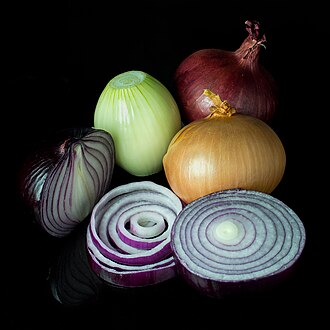
Photo: Wikipedia
Cooked onions are the soft, sweet, and savory foundation of countless dishes worldwide. Their texture transforms from crisp to tender and silky, while their flavor mellows from sharp to deeply caramelized or subtly sweet. Nutritionally, they are a low-calorie source of fiber and natural sugars, providing a satisfying base without significant fat.
Calorie split: 10% protein · 88% carbs · 2% fat
↓ Full nutrition💚 Why it's loved
People love cooked onions for their incredible versatility and ability to build a deep, savory flavor foundation in soups, stews, and sauces. Their natural sweetness when caramelized is a cornerstone of culinary comfort across many cultures.
⚠️ Watch-outs & how to enjoy it better
The natural sugars in cooked onions can contribute to a quicker blood sugar rise compared to raw onions, which may be a consideration for some. To mitigate this, pair them with protein (like beans or meat) and healthy fats (like olive oil) to slow digestion and create a more balanced meal.
Key benefits
- Excellent source of prebiotic fiber to support gut health
- Contains antioxidants like quercetin, especially when lightly cooked
- Adds significant flavor with minimal calories and no fat
- Provides vitamin C and B vitamins, including folate
- Low in sodium, making it a heart-healthy flavor base
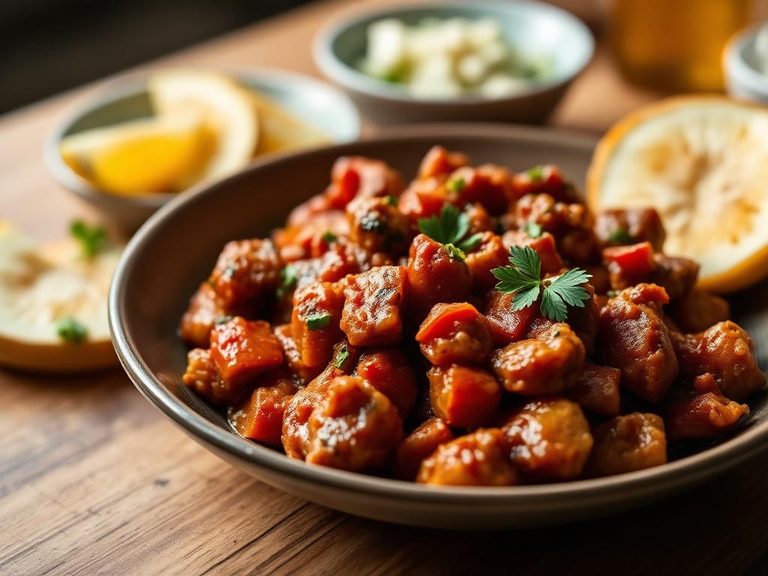
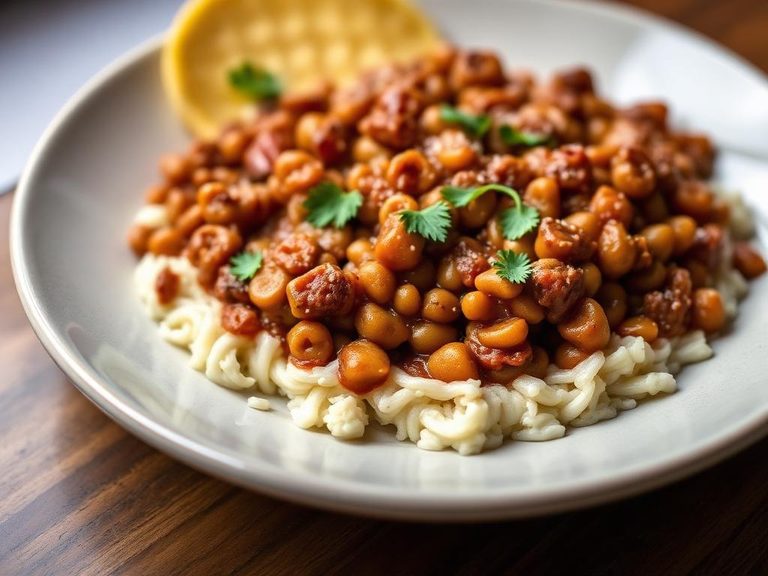
🍽️ Popular dishes
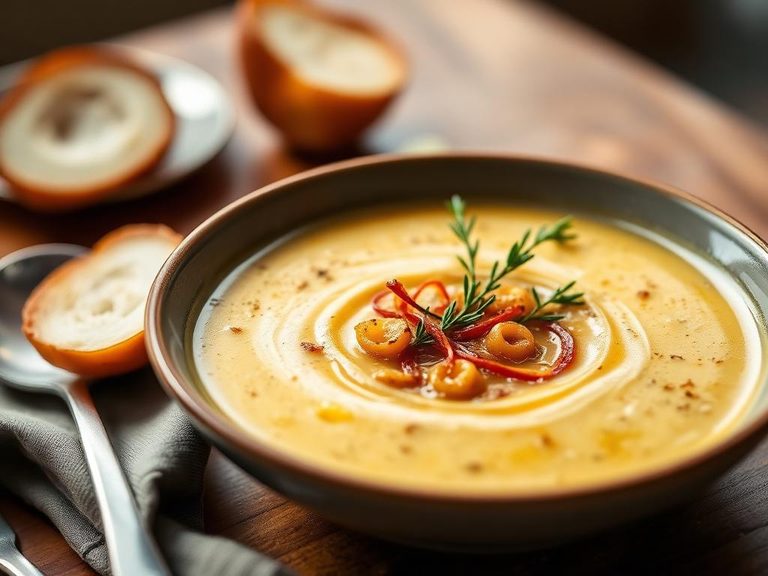

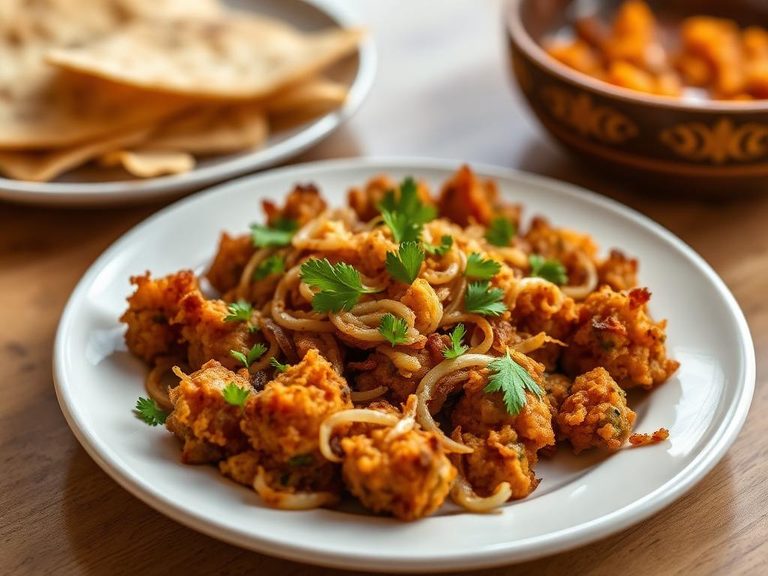
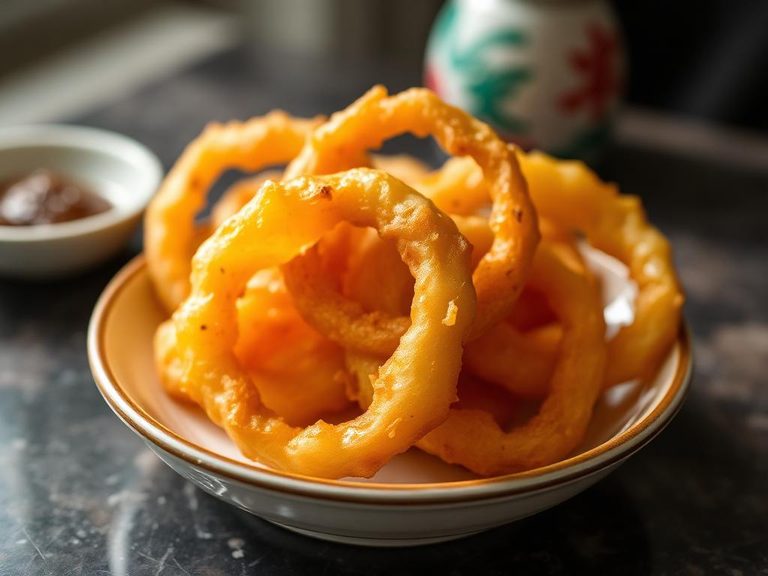
🌍 Where it's eaten
💡 Did you know?
The chemical reaction that causes your eyes to water when cutting raw onions is stopped by cooking them, as heat breaks down the sulfur compounds before they can become a gas.
Full nutrition (USDA data · scales with serving)
| Water | 87.2 g |
| Energy | 47.0 kcal |
| Protein | 1.3 g |
| Total lipid (fat) | 0.12 g |
| Carbohydrate, by difference | 11.0 g |
| Fiber, total dietary | 2.0 g |
| Total Sugars | 5.0 g |
| Calcium, Ca | 27.0 mg |
| Iron, Fe | 0.25 mg |
| Magnesium, Mg | 12.0 mg |
| Phosphorus, P | 34.0 mg |
| Potassium, K | 172 mg |
| Sodium, Na | 5.0 mg |
| Zinc, Zn | 0.20 mg |
| Copper, Cu | 0.05 mg |
| Selenium, Se | 0.60 ug |
| Vitamin C, total ascorbic acid | 7.4 mg |
| Thiamin | 0.05 mg |
| Riboflavin | 0.03 mg |
| Niacin | 0.13 mg |
| Vitamin B-6 | 0.13 mg |
| Folate, total | 19.0 ug |
| Folic acid | 0.00 ug |
| Folate, food | 19.0 ug |
| Folate, DFE | 19.0 ug |
| Choline, total | 7.2 mg |
| Vitamin B-12 | 0.00 ug |
| Vitamin B-12, added | 0.00 ug |
| Vitamin A, RAE | 0.00 ug |
| Retinol | 0.00 ug |
| Carotene, beta | 1.0 ug |
| Carotene, alpha | 0.00 ug |
| Cryptoxanthin, beta | 0.00 ug |
| Lycopene | 0.00 ug |
| Lutein + zeaxanthin | 4.0 ug |
| Vitamin E (alpha-tocopherol) | 0.02 mg |
| Vitamin E, added | 0.00 mg |
| Vitamin D (D2 + D3) | 0.00 ug |
| Vitamin K (phylloquinone) | 0.50 ug |
| Alcohol, ethyl | 0.00 g |
| Caffeine | 0.00 mg |
| Theobromine | 0.00 mg |
Fat & fatty acid profile (per 100g)
| Fatty acids, total saturated | 0.05 g |
| SFA 4:0 | 0.00 g |
| SFA 6:0 | 0.00 g |
| SFA 8:0 | 0.00 g |
| SFA 10:0 | 0.00 g |
| SFA 12:0 | 0.00 g |
| SFA 14:0 | 0.01 g |
| SFA 16:0 | 0.04 g |
| SFA 18:0 | 0.01 g |
| Fatty acids, total monounsaturated | 0.01 g |
| MUFA 16:1 | 0.00 g |
| MUFA 18:1 | 0.01 g |
| MUFA 20:1 | 0.00 g |
| MUFA 22:1 | 0.00 g |
| Fatty acids, total polyunsaturated | 0.02 g |
| PUFA 18:2 | 0.01 g |
| PUFA 18:3 | 0.01 g |
| PUFA 18:4 | 0.00 g |
| PUFA 20:4 | 0.00 g |
| PUFA 20:5 n-3 (EPA) | 0.00 g |
| PUFA 22:5 n-3 (DPA) | 0.00 g |
| PUFA 22:6 n-3 (DHA) | 0.00 g |
| Cholesterol | 0.00 mg |
Amino acid profile (per 100g)
Estimated from Onions, dehydrated flakes — USDA does not publish this profile for Onions.
| Tryptophan | 0.13 g |
| Threonine | 0.22 g |
| Isoleucine | 0.32 g |
| Leucine | 0.31 g |
| Lysine | 0.43 g |
| Methionine | 0.07 g |
| Cystine | 0.16 g |
| Phenylalanine | 0.23 g |
| Tyrosine | 0.22 g |
| Valine | 0.21 g |
| Arginine | 1.2 g |
| Histidine | 0.15 g |
| Alanine | 0.25 g |
| Aspartic acid | 0.49 g |
| Glutamic acid | 1.4 g |
| Glycine | 0.37 g |
| Proline | 0.28 g |
| Serine | 0.26 g |
FAQ
Why do cooked onions taste sweeter than raw ones?
Cooking breaks down the onion's complex starches and proteins into simpler sugars through a process called caramelization and the Maillard reaction, which develops a deeper, sweeter flavor.
Are cooked onions still nutritious?
Yes, though some heat-sensitive nutrients like vitamin C are reduced. However, cooking makes other antioxidants more bioavailable and concentrates the fiber and minerals.
How do I store leftover cooked onions?
Cool them quickly and store in an airtight container in the refrigerator for 3-5 days, or freeze them for up to 3 months for convenient future use in sauces, soups, and stews.
Nutrient density (calculated · NRF9.3)
Nutrient Rich Foods index: beneficial nutrients (protein, fiber, vitamins, minerals) minus saturated fat, added sugar & sodium, per 100 kcal.
NRF9.3 index — Fulgoni, Keast & Drewnowski, 2009. Computed from USDA nutrients.
Weight-loss friendliness (composite index)
Energy density 0.47 kcal/g · 11% calories from protein · 2.0 g fiber · 5.0 g sugar per 100 g.
Composite of energy density (Rolls et al., 1999), protein & fiber satiety, minus sugar. A calculated heuristic — ranks satiety-per-calorie, not a clinical measure.
Dietary load (calculated from USDA values)
Potential renal acid load. Positive = acid-forming, negative = alkaline-forming.
Sodium-to-potassium ratio: 0.03 (lower is better — aim for ≤ 1)
Sodium:potassium per WHO potassium guidance. Computed from USDA nutrients.