

Burrito, pork, with rice, cheese
Common food

Photo: Wikipedia
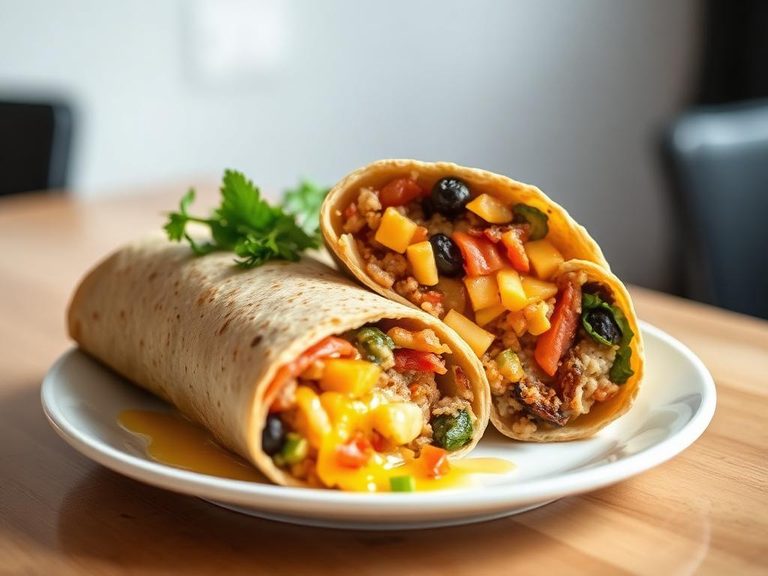
A tightly rolled flour tortilla encasing a savory core of seasoned pork, fluffy rice, and melted cheese. Each bite offers a satisfying contrast between the soft, chewy tortilla and the tender, juicy filling. At roughly 232 calories per 100g, it provides a balanced mix of protein and carbohydrates for a filling meal.
Calorie split: 18% protein · 50% carbs · 33% fat
↓ Full nutrition💚 Why it's loved
People love it for the harmonious blend of savory pork, creamy cheese, and mild rice, all wrapped in a warm, comforting tortilla. It's a beloved, customizable staple of Mexican and Tex-Mex cuisine, perfect for a quick lunch or hearty dinner.
⚠️ Watch-outs & how to enjoy it better
The refined flour tortilla and white rice can cause a rapid blood-sugar spike, and the meal may be high in sodium from seasoned pork and cheese. To counteract this, pair it with a side of beans or a fiber-rich salad to slow digestion, and choose a smaller portion or a whole-wheat tortilla if available.
Key benefits
- Good source of protein from pork for muscle maintenance.
- Carbohydrates from rice and tortilla provide quick energy.
- Contains calcium from the cheese for bone health.
- Convenient, portable, and self-contained meal format.
- Can be a balanced meal with protein, carbs, and fat.
🍽️ Popular dishes
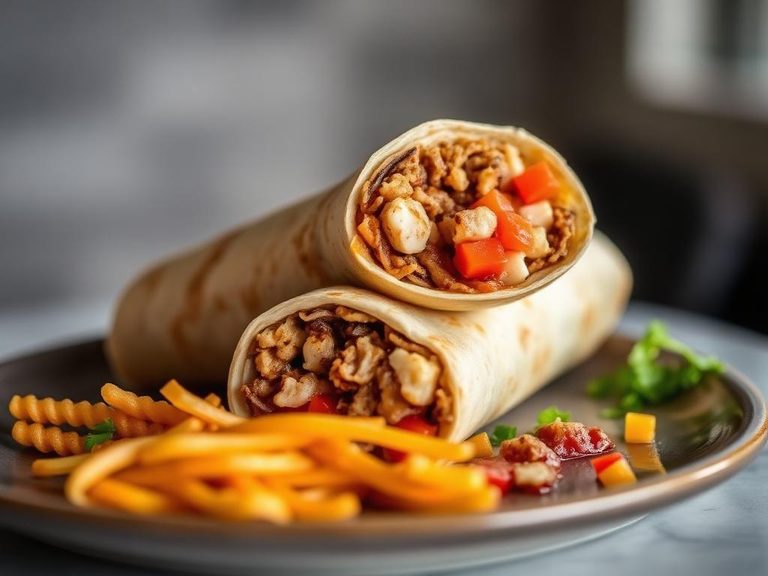
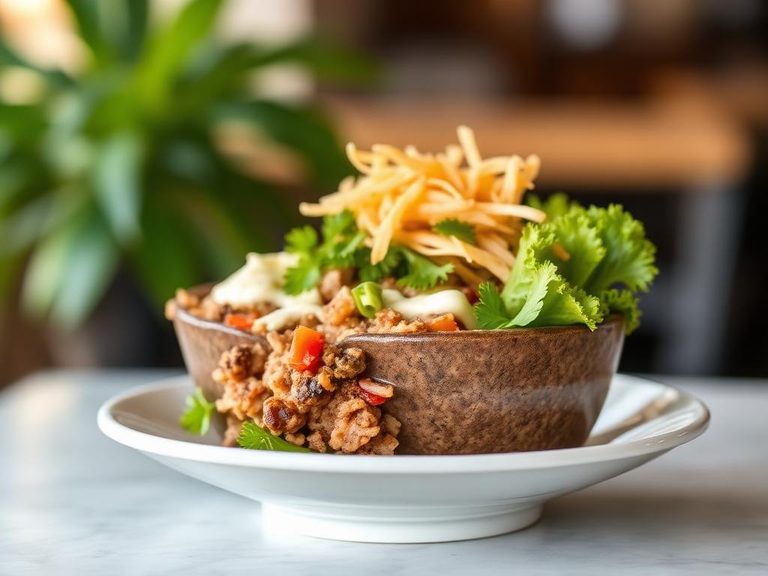
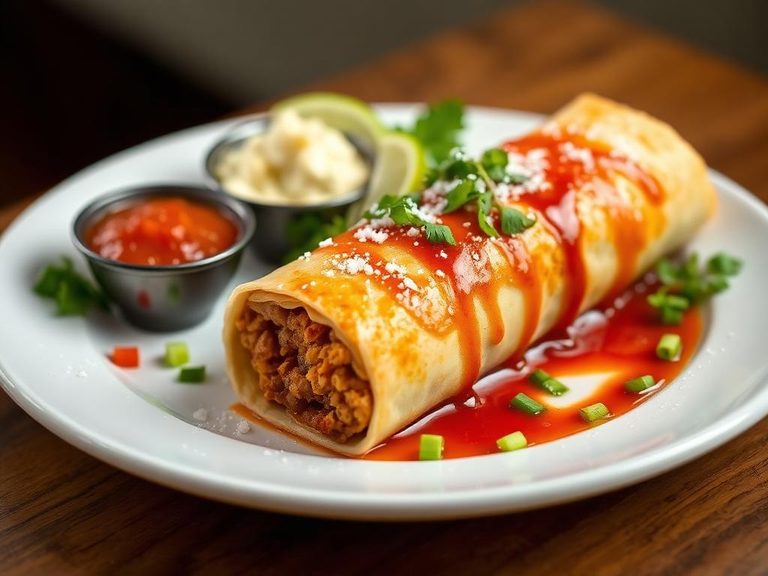
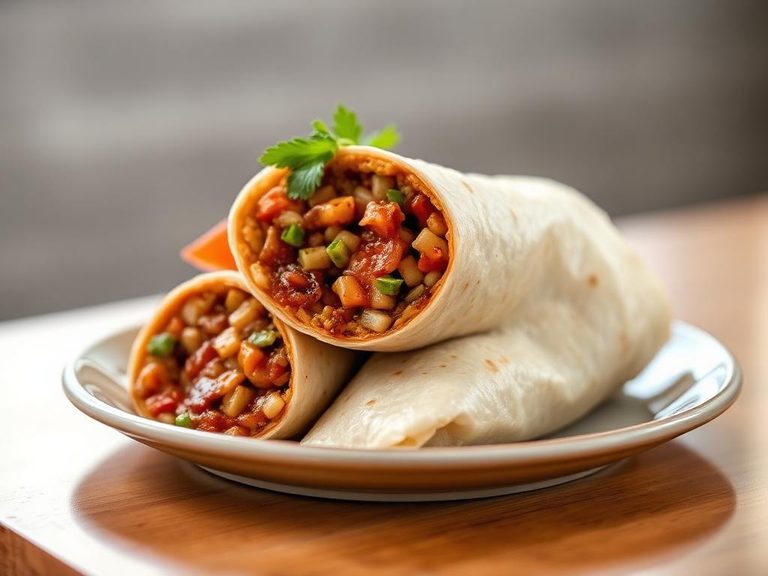
🌍 Where it's eaten
💡 Did you know?
The word 'burrito' translates to 'little donkey' in Spanish, possibly referring to the bedrolls or packs that donkeys carried, which the wrapped tortilla resembles.
Full nutrition (USDA data · scales with serving)
| Water | 51.3 g |
| Energy | 232 kcal |
| Protein | 10.2 g |
| Total lipid (fat) | 8.3 g |
| Carbohydrate, by difference | 28.2 g |
| Fiber, total dietary | 1.5 g |
| Total Sugars | 1.5 g |
| Calcium, Ca | 100 mg |
| Iron, Fe | 2.2 mg |
| Magnesium, Mg | 18.0 mg |
| Phosphorus, P | 158 mg |
| Potassium, K | 126 mg |
| Sodium, Na | 442 mg |
| Zinc, Zn | 1.5 mg |
| Copper, Cu | 0.09 mg |
| Selenium, Se | 20.6 ug |
| Vitamin C, total ascorbic acid | 0.00 mg |
| Thiamin | 0.35 mg |
| Riboflavin | 0.21 mg |
| Niacin | 3.0 mg |
| Vitamin B-6 | 0.14 mg |
| Folate, total | 56.0 ug |
| Folic acid | 48.0 ug |
| Folate, food | 8.0 ug |
| Folate, DFE | 89.0 ug |
| Choline, total | 24.9 mg |
| Vitamin B-12 | 0.24 ug |
| Vitamin B-12, added | 0.00 ug |
| Vitamin A, RAE | 11.0 ug |
| Retinol | 11.0 ug |
| Carotene, beta | 0.00 ug |
| Carotene, alpha | 0.00 ug |
| Cryptoxanthin, beta | 0.00 ug |
| Lycopene | 0.00 ug |
| Lutein + zeaxanthin | 4.0 ug |
| Vitamin E (alpha-tocopherol) | 0.06 mg |
| Vitamin E, added | 0.00 mg |
| Vitamin D (D2 + D3) | 0.20 ug |
| Vitamin K (phylloquinone) | 3.0 ug |
| Alcohol, ethyl | 0.00 g |
| Caffeine | 0.00 mg |
| Theobromine | 0.00 mg |
Fat & fatty acid profile (per 100g)
| Fatty acids, total saturated | 3.4 g |
| SFA 4:0 | 0.04 g |
| SFA 6:0 | 0.02 g |
| SFA 8:0 | 0.01 g |
| SFA 10:0 | 0.04 g |
| SFA 12:0 | 0.05 g |
| SFA 14:0 | 0.19 g |
| SFA 16:0 | 1.9 g |
| SFA 18:0 | 1.0 g |
| Fatty acids, total monounsaturated | 2.6 g |
| MUFA 16:1 | 0.12 g |
| MUFA 18:1 | 2.5 g |
| MUFA 20:1 | 0.04 g |
| MUFA 22:1 | 0.00 g |
| Fatty acids, total polyunsaturated | 1.4 g |
| PUFA 18:2 | 1.2 g |
| PUFA 18:3 | 0.12 g |
| PUFA 18:4 | 0.00 g |
| PUFA 20:4 | 0.02 g |
| PUFA 20:5 n-3 (EPA) | 0.00 g |
| PUFA 22:5 n-3 (DPA) | 0.00 g |
| PUFA 22:6 n-3 (DHA) | 0.00 g |
| Cholesterol | 24.0 mg |
Amino acid profile (per 100g)
Estimated from TACO BELL, BURRITO SUPREME with steak — USDA does not publish this profile for Burrito.
| Tryptophan | 0.11 g |
| Threonine | 0.37 g |
| Isoleucine | 0.37 g |
| Leucine | 0.69 g |
| Lysine | 0.62 g |
| Methionine | 0.17 g |
| Cystine | 0.11 g |
| Phenylalanine | 0.42 g |
| Tyrosine | 0.27 g |
| Valine | 0.43 g |
| Arginine | 0.46 g |
| Histidine | 0.25 g |
| Alanine | 0.41 g |
| Aspartic acid | 0.82 g |
| Glutamic acid | 1.9 g |
| Glycine | 0.38 g |
| Proline | 0.59 g |
| Serine | 0.44 g |
FAQ
Is a pork and cheese burrito a good source of protein?
Yes, with about 10g of protein per 100g, it contributes meaningfully to daily protein needs, especially from the pork.
How can I make this burrito healthier?
Use a whole-wheat tortilla, add beans and vegetables like peppers or onions, and choose lean pork or reduce the cheese to lower fat and increase fiber.
Why might this food cause a blood sugar spike?
The combination of refined white flour in the tortilla and white rice, which are high-glycemic carbs, can lead to a quick rise in blood sugar.
Nutrient density (calculated · NRF9.3)
Nutrient Rich Foods index: beneficial nutrients (protein, fiber, vitamins, minerals) minus saturated fat, added sugar & sodium, per 100 kcal.
NRF9.3 index — Fulgoni, Keast & Drewnowski, 2009. Computed from USDA nutrients.
Weight-loss friendliness (composite index)
Energy density 2.32 kcal/g · 18% calories from protein · 1.5 g fiber · 1.5 g sugar per 100 g.
Composite of energy density (Rolls et al., 1999), protein & fiber satiety, minus sugar. A calculated heuristic — ranks satiety-per-calorie, not a clinical measure.
Dietary load (calculated from USDA values)
Potential renal acid load. Positive = acid-forming, negative = alkaline-forming.
Sodium-to-potassium ratio: 3.51 (lower is better — aim for ≤ 1)
Sodium:potassium per WHO potassium guidance. Computed from USDA nutrients.