

Burrito
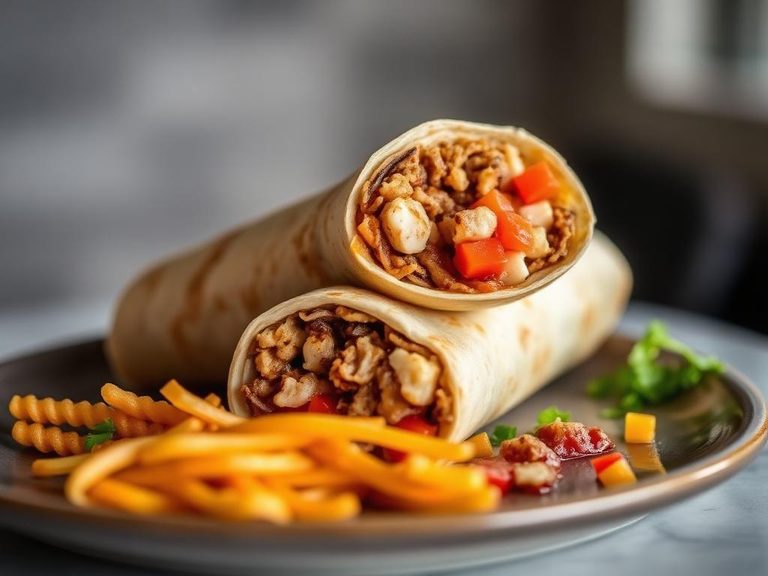
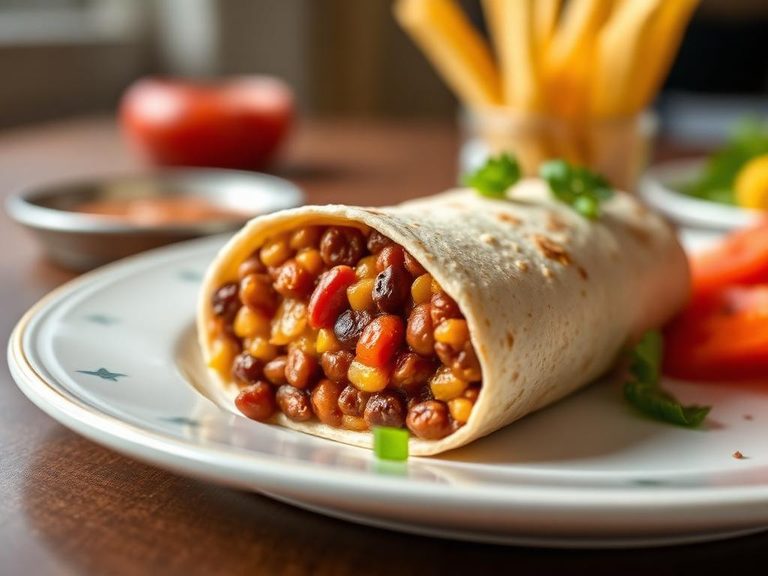
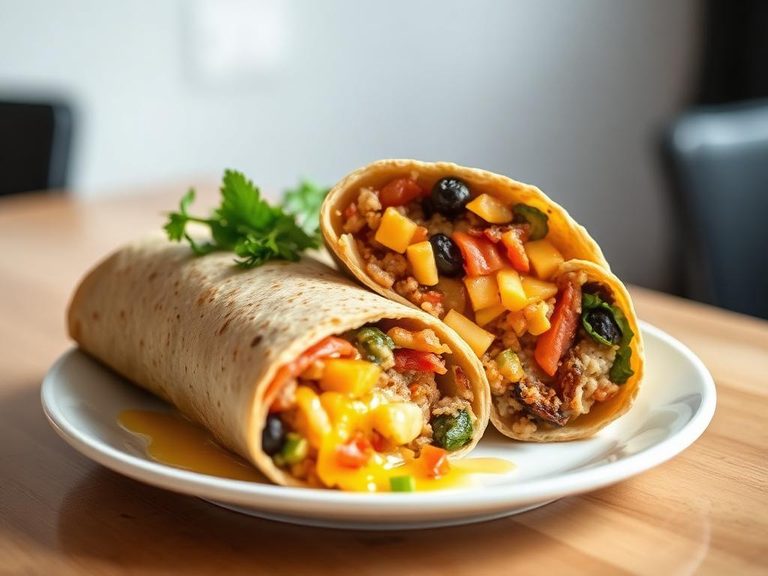
A burrito is a popular Mexican and Tex-Mex dish consisting of a flour tortilla wrapped into a sealed cylindrical shape around a variety of fillings. Common ingredients include seasoned rice, beans, meat (like chicken, beef, or pork), cheese, salsa, and vegetables such as lettuce or peppers. It originated in northern Mexico and has become a global staple with countless regional and modern variations.
🍳 View the full Burrito recipe →
🍽️ Nutrition at a glance
A typical burrito is a calorie-dense meal, often ranging from 500 to over 1000 calories depending on size and fillings, and is high in carbohydrates from the tortilla and rice, with significant protein from beans and meat. It provides key nutrients like fiber, iron, and calcium, but can also be high in sodium and saturated fat, especially with added cheese, sour cream, or creamy sauces.
Nutrition breakdown
| Calories | 550 kcal |
| Protein | 25 g |
| Carbs | 55 g |
| Fat | 28 g |
| Fiber | 8 g |
| Sugar | 6 g |
| Sodium | 1200 mg |
| Potassium | 450 mg |
| Iron | 4 mg |
| Calcium | 150 mg |
| Vitamin C | 10 mg |
| Vitamin A | 80 mcg |
| Vitamin B12 | 1.5 mcg |
| Folate | 120 mcg |
| Magnesium | 60 mg |
Per 1 burrito (about 250 g) · estimated, varies by recipe
💡 What's interesting
Culturally, the burrito represents a perfect example of culinary adaptation, evolving from a simple street food in Mexico to a customizable fast-casual icon worldwide. Nutritionally, its wrapped format makes it a self-contained, balanced meal that can be easily tailored to various dietary needs, from high-protein to plant-based.
🍽️ Related dishes


AI estimate may be inaccurate · Terms