

Broccoli, NS as to form, cooked
Common food

Photo: Wikipedia
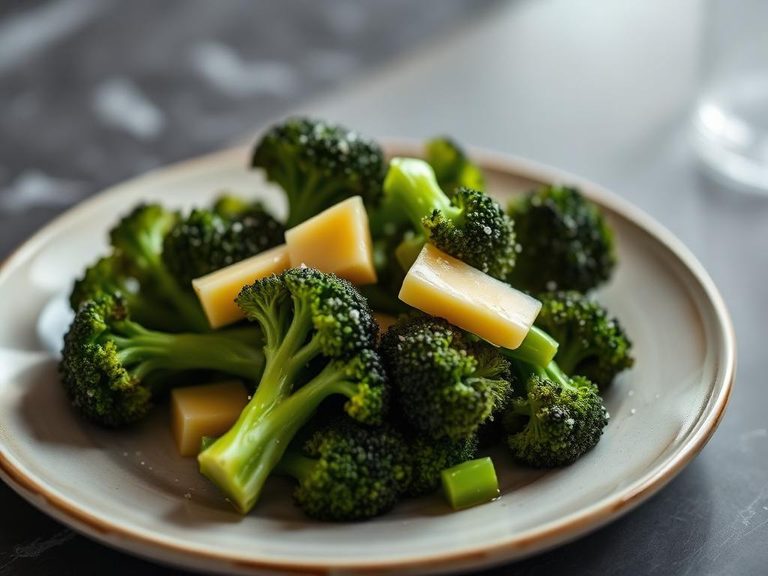
Broccoli, cooked, offers a tender yet slightly crisp texture with a mild, earthy, and subtly sweet flavor that deepens with roasting or sautéing. Nutritionally, it's a low-calorie powerhouse, packing 63 kcal per 100g with a notable 2.6g of protein and 2.4g of fiber. Its vibrant green color signals a rich profile of vitamins and antioxidants, making it a staple for health-conscious eaters.
Calorie split: 17% protein · 40% carbs · 43% fat
↓ Full nutrition💚 Why it's loved
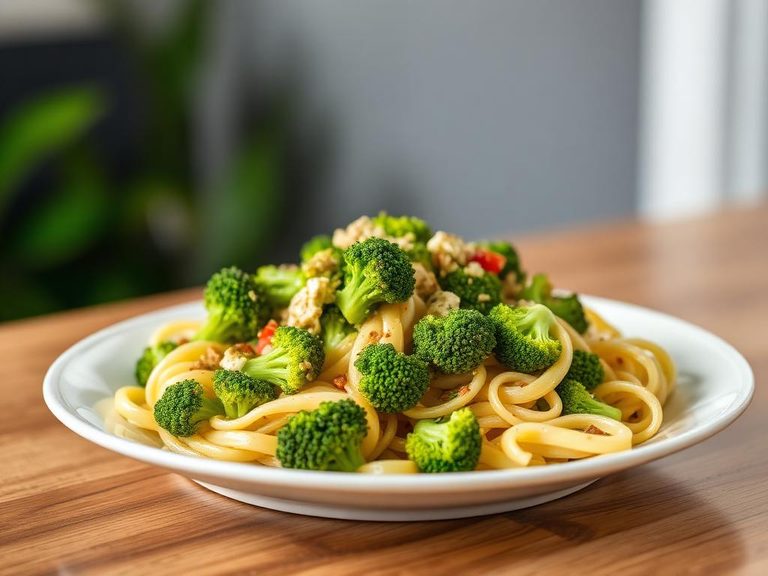
People love broccoli for its incredible versatility—it can be steamed, roasted, stir-fried, or blended into soups, absorbing sauces and seasonings beautifully. Its familiar, comforting flavor and satisfying crunch make it a go-to side dish in countless cuisines, from classic American dinners to Asian stir-fries.
⚠️ Watch-outs & how to enjoy it better
Some find cooked broccoli's texture mushy or its sulfurous aroma unappealing if overcooked. To counteract this, avoid over-boiling; instead, steam lightly, roast at high heat for caramelization, or blanch and shock in ice water to retain a crisp-tender bite. Those with thyroid concerns or on blood thinners should be mindful of its vitamin K and goitrogen content, but moderate consumption is generally safe.
Key benefits
- High in fiber for digestive health and satiety
- Good source of plant-based protein for a vegetable
- Low in calories and sugar, supporting weight management
- Rich in vitamins C and K for immune and bone support
- Contains antioxidants like sulforaphane
🍽️ Popular dishes
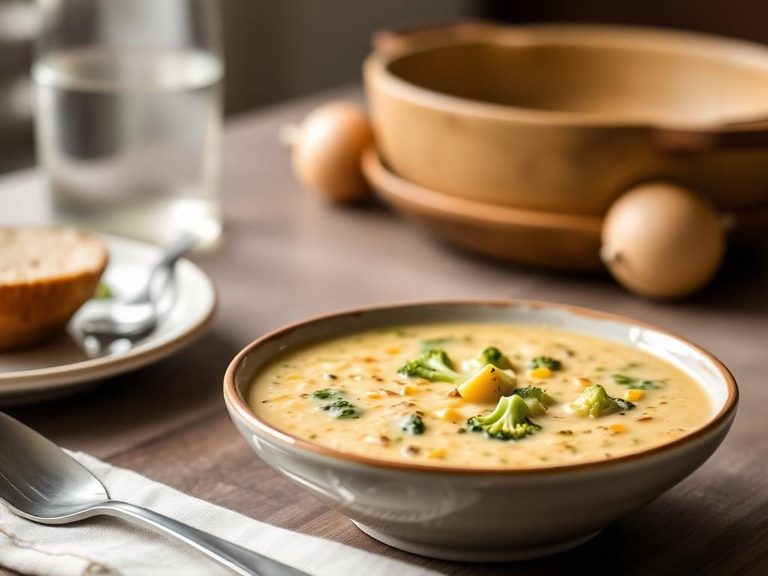
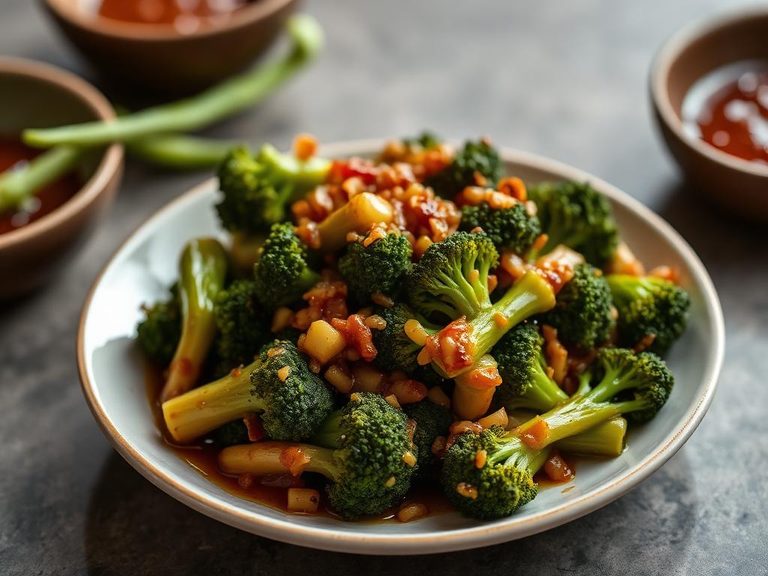
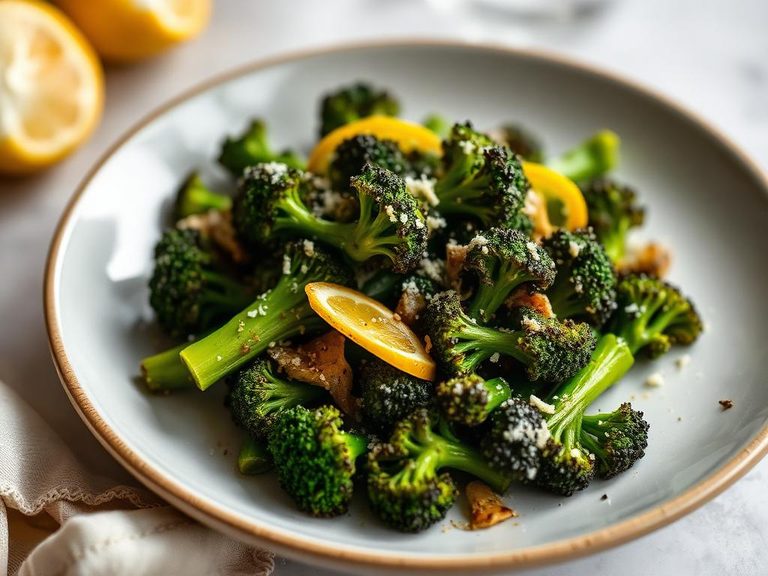
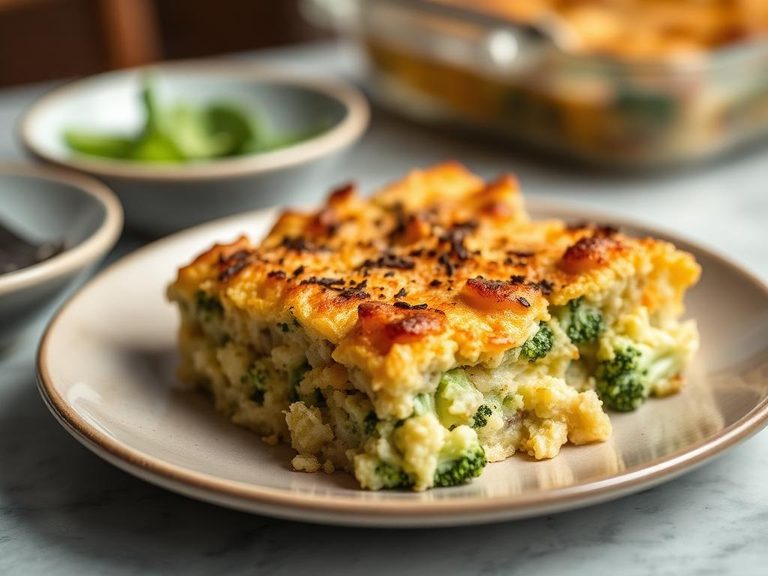
🌍 Where it's eaten
💡 Did you know?
Broccoli is a member of the Brassica family, which also includes cabbage, kale, and Brussels sprouts, and it was first cultivated in Italy during the Roman Empire.
Full nutrition (USDA data · scales with serving)
| Water | 86.9 g |
| Energy | 63.0 kcal |
| Protein | 2.6 g |
| Total lipid (fat) | 3.0 g |
| Carbohydrate, by difference | 6.3 g |
| Fiber, total dietary | 2.4 g |
| Total Sugars | 1.4 g |
| Calcium, Ca | 47.0 mg |
| Iron, Fe | 0.70 mg |
| Magnesium, Mg | 21.0 mg |
| Phosphorus, P | 68.0 mg |
| Potassium, K | 306 mg |
| Sodium, Na | 162 mg |
| Zinc, Zn | 0.42 mg |
| Copper, Cu | 0.06 mg |
| Selenium, Se | 1.6 ug |
| Vitamin C, total ascorbic acid | 78.3 mg |
| Thiamin | 0.07 mg |
| Riboflavin | 0.11 mg |
| Niacin | 0.61 mg |
| Vitamin B-6 | 0.19 mg |
| Folate, total | 56.0 ug |
| Folic acid | 0.00 ug |
| Folate, food | 56.0 ug |
| Folate, DFE | 56.0 ug |
| Choline, total | 19.1 mg |
| Vitamin B-12 | 0.00 ug |
| Vitamin B-12, added | 0.00 ug |
| Vitamin A, RAE | 19.0 ug |
| Retinol | 11.0 ug |
| Carotene, beta | 94.0 ug |
| Carotene, alpha | 0.00 ug |
| Cryptoxanthin, beta | 0.00 ug |
| Lycopene | 0.00 ug |
| Lutein + zeaxanthin | 714 ug |
| Vitamin E (alpha-tocopherol) | 0.55 mg |
| Vitamin E, added | 0.00 mg |
| Vitamin D (D2 + D3) | 0.00 ug |
| Vitamin K (phylloquinone) | 105 ug |
| Alcohol, ethyl | 0.00 g |
| Caffeine | 0.00 mg |
| Theobromine | 0.00 mg |
Fat & fatty acid profile (per 100g)
| Fatty acids, total saturated | 0.73 g |
| SFA 4:0 | 0.02 g |
| SFA 6:0 | 0.01 g |
| SFA 8:0 | 0.01 g |
| SFA 10:0 | 0.02 g |
| SFA 12:0 | 0.02 g |
| SFA 14:0 | 0.07 g |
| SFA 16:0 | 0.41 g |
| SFA 18:0 | 0.15 g |
| Fatty acids, total monounsaturated | 0.95 g |
| MUFA 16:1 | 0.01 g |
| MUFA 18:1 | 0.92 g |
| MUFA 20:1 | 0.01 g |
| MUFA 22:1 | 0.00 g |
| Fatty acids, total polyunsaturated | 0.78 g |
| PUFA 18:2 | 0.69 g |
| PUFA 18:3 | 0.11 g |
| PUFA 18:4 | 0.00 g |
| PUFA 20:4 | 0.00 g |
| PUFA 20:5 n-3 (EPA) | 0.00 g |
| PUFA 22:5 n-3 (DPA) | 0.00 g |
| PUFA 22:6 n-3 (DHA) | 0.00 g |
| Cholesterol | 2.0 mg |
Amino acid profile (per 100g)
Estimated from Broccoli, cooked, boiled, drained, with salt — USDA does not publish this profile for Broccoli.
| Tryptophan | 0.03 g |
| Threonine | 0.10 g |
| Isoleucine | 0.09 g |
| Leucine | 0.15 g |
| Lysine | 0.15 g |
| Methionine | 0.04 g |
| Cystine | 0.03 g |
| Phenylalanine | 0.12 g |
| Tyrosine | 0.06 g |
| Valine | 0.14 g |
| Arginine | 0.20 g |
| Histidine | 0.06 g |
| Alanine | 0.11 g |
| Aspartic acid | 0.33 g |
| Glutamic acid | 0.55 g |
| Glycine | 0.10 g |
| Proline | 0.11 g |
| Serine | 0.13 g |
FAQ
Is cooked broccoli healthier than raw broccoli?
Cooking broccoli can make some nutrients like beta-carotene more bioavailable, but it may reduce vitamin C content. Both forms are nutritious, so it's best to enjoy a mix.
How do I prevent broccoli from turning mushy?
Cook it quickly using methods like steaming, blanching, or roasting at high heat. Avoid over-boiling, and stop cooking when it's still bright green and crisp-tender.
Can broccoli cause digestive issues?
Broccoli contains fiber and raffinose, which can cause gas or bloating in some people. To minimize this, cook it thoroughly and start with small portions.
Nutrient density (calculated · NRF9.3)
Nutrient Rich Foods index: beneficial nutrients (protein, fiber, vitamins, minerals) minus saturated fat, added sugar & sodium, per 100 kcal.
NRF9.3 index — Fulgoni, Keast & Drewnowski, 2009. Computed from USDA nutrients.
Weight-loss friendliness (composite index)
Energy density 0.63 kcal/g · 17% calories from protein · 2.4 g fiber · 1.4 g sugar per 100 g.
Composite of energy density (Rolls et al., 1999), protein & fiber satiety, minus sugar. A calculated heuristic — ranks satiety-per-calorie, not a clinical measure.
Dietary load (calculated from USDA values)
Potential renal acid load. Positive = acid-forming, negative = alkaline-forming.
Sodium-to-potassium ratio: 0.53 (lower is better — aim for ≤ 1)
Sodium:potassium per WHO potassium guidance. Computed from USDA nutrients.