

Broccoli, fresh, cooked with oil
Common food

Photo: Wikipedia
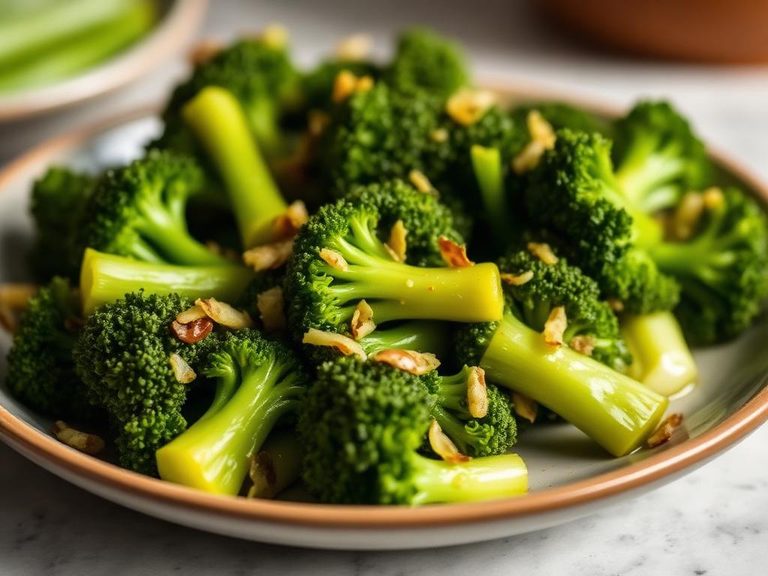
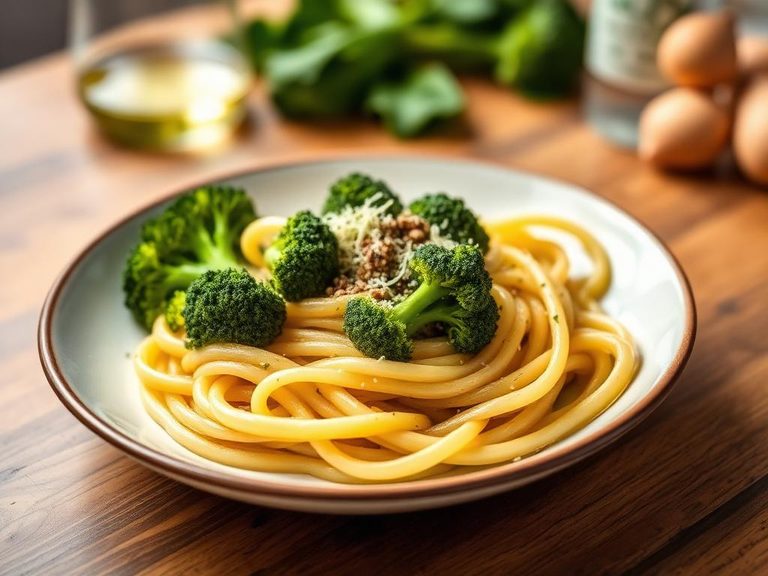
Broccoli, when gently sautéed in oil, transforms from a crisp, raw vegetable into a tender-crisp delight with a sweet, nutty depth and a satisfying bite. This simple cooking method enhances its natural flavors while creating a glossy, appetizing sheen. It delivers a potent dose of vitamins and fiber for just 67 calories per 100g.
Calorie split: 16% protein · 38% carbs · 46% fat
↓ Full nutrition💚 Why it's loved
People adore its perfect balance of earthy sweetness and satisfying texture, which acts as a versatile canvas for garlic, lemon, or chili flakes. It's a cornerstone of healthy eating that feels indulgent, not restrictive, and is a beloved side dish across countless cultures.
⚠️ Watch-outs & how to enjoy it better
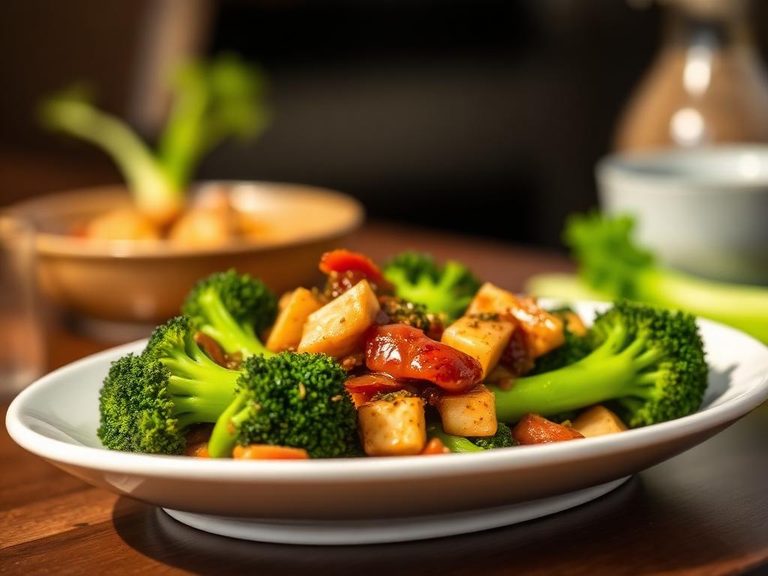
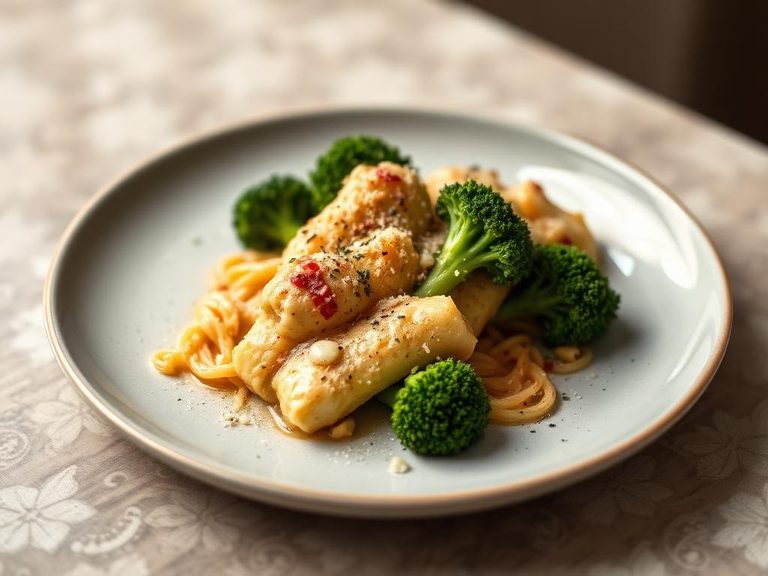
Some may experience digestive discomfort or bloating due to its high fiber and raffinose content, and those on blood thinners should monitor vitamin K intake. To minimize gas, cook it thoroughly, start with smaller portions, and chew thoroughly. Pairing it with a protein like chicken or tofu can also aid digestion.
Key benefits
- Excellent source of vitamin C and vitamin K
- Provides dietary fiber for digestive health
- Contains sulforaphane, a compound studied for cellular health
- Low in calories, making it ideal for weight management
- Rich in antioxidants that help combat oxidative stress
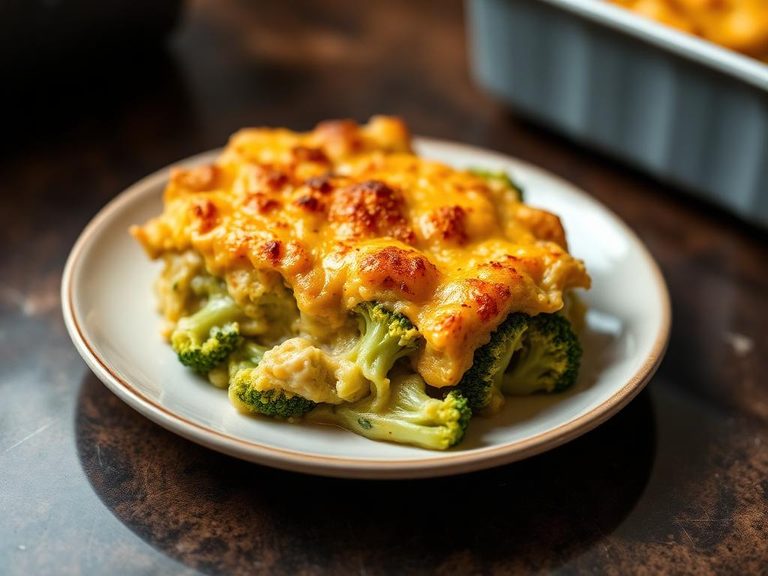
🍽️ Popular dishes
🌍 Where it's eaten
💡 Did you know?
The part we eat is actually an immature flower head; if left unharvested, those tiny green buds would bloom into small, bright yellow flowers.
Full nutrition (USDA data · scales with serving)
| Water | 86.6 g |
| Energy | 67.0 kcal |
| Protein | 2.6 g |
| Total lipid (fat) | 3.4 g |
| Carbohydrate, by difference | 6.3 g |
| Fiber, total dietary | 2.4 g |
| Total Sugars | 1.4 g |
| Calcium, Ca | 47.0 mg |
| Iron, Fe | 0.70 mg |
| Magnesium, Mg | 21.0 mg |
| Phosphorus, P | 68.0 mg |
| Potassium, K | 306 mg |
| Sodium, Na | 153 mg |
| Zinc, Zn | 0.42 mg |
| Copper, Cu | 0.06 mg |
| Selenium, Se | 1.6 ug |
| Vitamin C, total ascorbic acid | 78.3 mg |
| Thiamin | 0.07 mg |
| Riboflavin | 0.11 mg |
| Niacin | 0.61 mg |
| Vitamin B-6 | 0.17 mg |
| Folate, total | 56.0 ug |
| Folic acid | 0.00 ug |
| Folate, food | 56.0 ug |
| Folate, DFE | 56.0 ug |
| Choline, total | 18.9 mg |
| Vitamin B-12 | 0.00 ug |
| Vitamin B-12, added | 0.00 ug |
| Vitamin A, RAE | 8.0 ug |
| Retinol | 0.00 ug |
| Carotene, beta | 89.0 ug |
| Carotene, alpha | 0.00 ug |
| Cryptoxanthin, beta | 0.00 ug |
| Lycopene | 0.00 ug |
| Lutein + zeaxanthin | 714 ug |
| Vitamin E (alpha-tocopherol) | 0.73 mg |
| Vitamin E, added | 0.00 mg |
| Vitamin D (D2 + D3) | 0.00 ug |
| Vitamin K (phylloquinone) | 106 ug |
| Alcohol, ethyl | 0.00 g |
| Caffeine | 0.00 mg |
| Theobromine | 0.00 mg |
Fat & fatty acid profile (per 100g)
| Fatty acids, total saturated | 0.44 g |
| SFA 4:0 | 0.00 g |
| SFA 6:0 | 0.00 g |
| SFA 8:0 | 0.00 g |
| SFA 10:0 | 0.00 g |
| SFA 12:0 | 0.00 g |
| SFA 14:0 | 0.00 g |
| SFA 16:0 | 0.32 g |
| SFA 18:0 | 0.09 g |
| Fatty acids, total monounsaturated | 1.3 g |
| MUFA 16:1 | 0.01 g |
| MUFA 18:1 | 1.3 g |
| MUFA 20:1 | 0.02 g |
| MUFA 22:1 | 0.00 g |
| Fatty acids, total polyunsaturated | 1.2 g |
| PUFA 18:2 | 1.0 g |
| PUFA 18:3 | 0.15 g |
| PUFA 18:4 | 0.00 g |
| PUFA 20:4 | 0.00 g |
| PUFA 20:5 n-3 (EPA) | 0.00 g |
| PUFA 22:5 n-3 (DPA) | 0.00 g |
| PUFA 22:6 n-3 (DHA) | 0.00 g |
| Cholesterol | 0.00 mg |
Amino acid profile (per 100g)
Estimated from Broccoli, cooked, boiled, drained, with salt — USDA does not publish this profile for Broccoli.
| Tryptophan | 0.03 g |
| Threonine | 0.10 g |
| Isoleucine | 0.09 g |
| Leucine | 0.15 g |
| Lysine | 0.15 g |
| Methionine | 0.04 g |
| Cystine | 0.03 g |
| Phenylalanine | 0.12 g |
| Tyrosine | 0.06 g |
| Valine | 0.14 g |
| Arginine | 0.20 g |
| Histidine | 0.06 g |
| Alanine | 0.11 g |
| Aspartic acid | 0.33 g |
| Glutamic acid | 0.55 g |
| Glycine | 0.10 g |
| Proline | 0.11 g |
| Serine | 0.13 g |
FAQ
How do I prevent broccoli from becoming mushy when cooking with oil?
Use high heat for a short time (2-4 minutes) in a hot skillet. The goal is to char the edges slightly while keeping the core tender-crisp. Don't overcrowd the pan, and add a splash of water if needed to create a quick steam.
Is the nutritional value different from raw broccoli?
Cooking can slightly reduce heat-sensitive nutrients like vitamin C, but it makes other antioxidants, like beta-carotene, more bioavailable. The oil in sautéing helps your body absorb fat-soluble vitamins A, D, E, and K found in broccoli.
Why does my cooked broccoli sometimes smell sulfurous?
That smell comes from sulfur-containing compounds (glucosinolates) breaking down. Overcooking, especially boiling, releases more of these compounds. Quick, high-heat methods like sautéing or roasting minimize this effect and preserve a sweeter flavor.
Nutrient density (calculated · NRF9.3)
Nutrient Rich Foods index: beneficial nutrients (protein, fiber, vitamins, minerals) minus saturated fat, added sugar & sodium, per 100 kcal.
NRF9.3 index — Fulgoni, Keast & Drewnowski, 2009. Computed from USDA nutrients.
Weight-loss friendliness (composite index)
Energy density 0.67 kcal/g · 15% calories from protein · 2.4 g fiber · 1.4 g sugar per 100 g.
Composite of energy density (Rolls et al., 1999), protein & fiber satiety, minus sugar. A calculated heuristic — ranks satiety-per-calorie, not a clinical measure.
Dietary load (calculated from USDA values)
Potential renal acid load. Positive = acid-forming, negative = alkaline-forming.
Sodium-to-potassium ratio: 0.50 (lower is better — aim for ≤ 1)
Sodium:potassium per WHO potassium guidance. Computed from USDA nutrients.