

Broccoli, chinese, raw
Common food

Photo: Wikipedia
Chinese broccoli, or gai lan, is a leafy green with thick, juicy stems and small broccoli-like florets. It has a robust, slightly bitter, and earthy flavor with a satisfyingly crisp-tender texture when stir-fried. Nutritionally, it's a low-calorie powerhouse, delivering significant fiber and vitamin K with every bite.
Calorie split: 16% protein · 62% carbs · 23% fat
↓ Full nutrition💚 Why it's loved
People adore gai lan for its ability to absorb savory sauces while retaining a pleasant crunch. It's a staple in Cantonese cuisine, valued for its versatility in quick stir-fries and its distinct, hearty flavor that stands up to garlic and oyster sauce.
⚠️ Watch-outs & how to enjoy it better
Its natural bitterness can be off-putting to some palates, especially if overcooked. To counteract this, blanch it briefly in salted water before stir-frying, or pair it with a savory, slightly sweet sauce like oyster sauce or a dash of sugar to balance the flavor. Those on blood thinners should be mindful of its high vitamin K content.
Key benefits
- Excellent source of vitamin K for bone health.
- High in dietary fiber to support digestion.
- Rich in antioxidants like beta-carotene and lutein.
- Provides a good amount of vitamin C.
- Very low in calories and naturally low in fat.
🍽️ Popular dishes
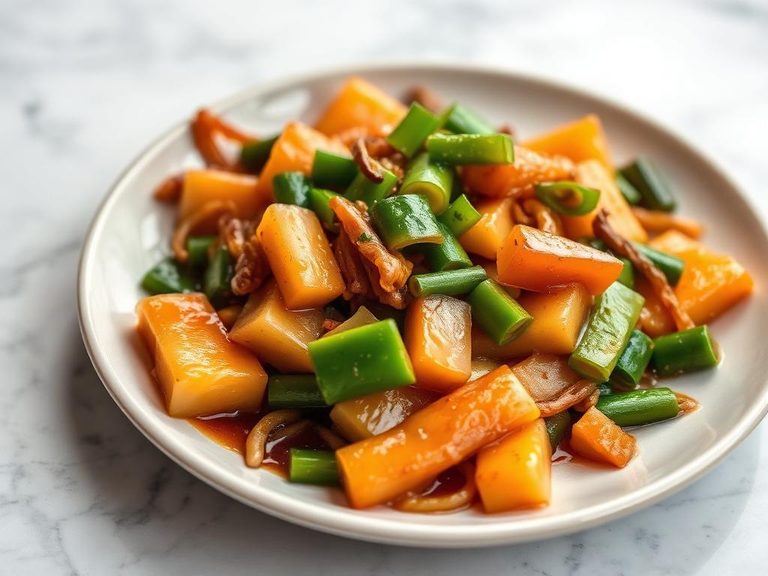
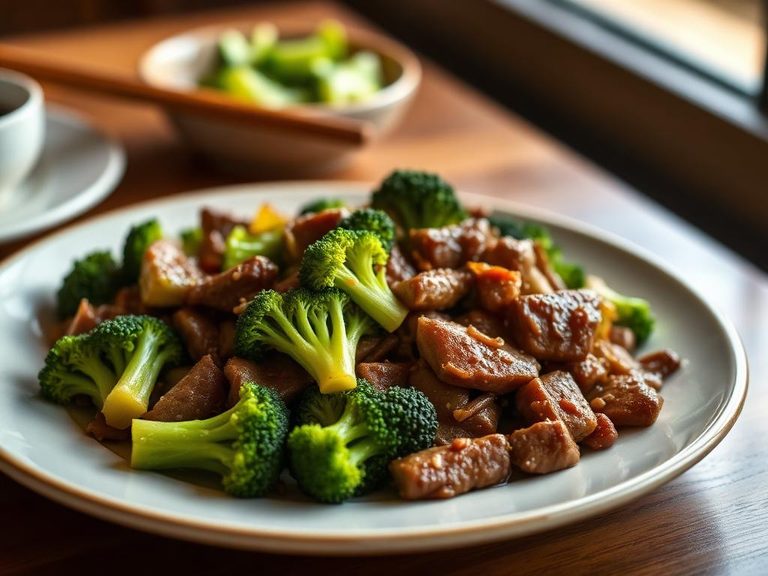
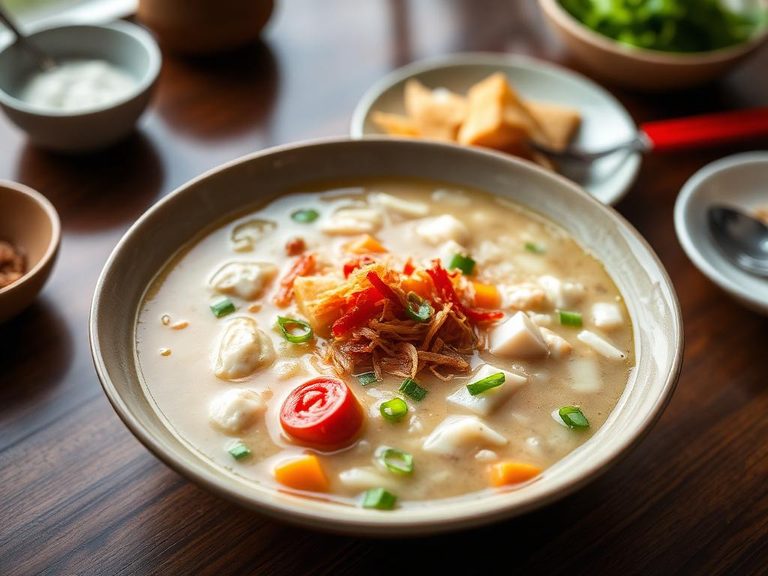
🌍 Where it's eaten
💡 Did you know?
Unlike its cousin broccoli, Chinese broccoli is harvested before the flower buds fully open, which is key to its tender stems and concentrated flavor.
Full nutrition (USDA data · scales with serving)
| Water | 92.5 g |
| Energy | 26.0 kcal |
| Protein | 1.2 g |
| Total lipid (fat) | 0.76 g |
| Carbohydrate, by difference | 4.7 g |
| Fiber, total dietary | 2.6 g |
| Total Sugars | 0.88 g |
| Calcium, Ca | 105 mg |
| Iron, Fe | 0.59 mg |
| Magnesium, Mg | 19.0 mg |
| Phosphorus, P | 43.0 mg |
| Potassium, K | 274 mg |
| Sodium, Na | 7.0 mg |
| Zinc, Zn | 0.41 mg |
| Copper, Cu | 0.06 mg |
| Selenium, Se | 1.4 ug |
| Vitamin C, total ascorbic acid | 29.6 mg |
| Thiamin | 0.10 mg |
| Riboflavin | 0.15 mg |
| Niacin | 0.46 mg |
| Vitamin B-6 | 0.07 mg |
| Folate, total | 104 ug |
| Folic acid | 0.00 ug |
| Folate, food | 104 ug |
| Folate, DFE | 104 ug |
| Choline, total | 26.5 mg |
| Vitamin B-12 | 0.00 ug |
| Vitamin B-12, added | 0.00 ug |
| Vitamin A, RAE | 86.0 ug |
| Retinol | 0.00 ug |
| Carotene, beta | 1032 ug |
| Carotene, alpha | 0.00 ug |
| Cryptoxanthin, beta | 0.00 ug |
| Lycopene | 0.00 ug |
| Lutein + zeaxanthin | 957 ug |
| Vitamin E (alpha-tocopherol) | 0.50 mg |
| Vitamin E, added | 0.00 mg |
| Vitamin D (D2 + D3) | 0.00 ug |
| Vitamin K (phylloquinone) | 89.1 ug |
| Alcohol, ethyl | 0.00 g |
| Caffeine | 0.00 mg |
| Theobromine | 0.00 mg |
Fat & fatty acid profile (per 100g)
| Fatty acids, total saturated | 0.12 g |
| SFA 4:0 | 0.00 g |
| SFA 6:0 | 0.00 g |
| SFA 8:0 | 0.00 g |
| SFA 10:0 | 0.00 g |
| SFA 12:0 | 0.00 g |
| SFA 14:0 | 0.00 g |
| SFA 16:0 | 0.10 g |
| SFA 18:0 | 0.01 g |
| Fatty acids, total monounsaturated | 0.05 g |
| MUFA 16:1 | 0.00 g |
| MUFA 18:1 | 0.05 g |
| MUFA 20:1 | 0.00 g |
| MUFA 22:1 | 0.00 g |
| Fatty acids, total polyunsaturated | 0.35 g |
| PUFA 18:2 | 0.08 g |
| PUFA 18:3 | 0.27 g |
| PUFA 18:4 | 0.00 g |
| PUFA 20:4 | 0.00 g |
| PUFA 20:5 n-3 (EPA) | 0.00 g |
| PUFA 22:5 n-3 (DPA) | 0.00 g |
| PUFA 22:6 n-3 (DHA) | 0.00 g |
| Cholesterol | 0.00 mg |
Amino acid profile (per 100g)
Estimated from Broccoli, cooked, boiled, drained, with salt — USDA does not publish this profile for Broccoli.
| Tryptophan | 0.03 g |
| Threonine | 0.10 g |
| Isoleucine | 0.09 g |
| Leucine | 0.15 g |
| Lysine | 0.15 g |
| Methionine | 0.04 g |
| Cystine | 0.03 g |
| Phenylalanine | 0.12 g |
| Tyrosine | 0.06 g |
| Valine | 0.14 g |
| Arginine | 0.20 g |
| Histidine | 0.06 g |
| Alanine | 0.11 g |
| Aspartic acid | 0.33 g |
| Glutamic acid | 0.55 g |
| Glycine | 0.10 g |
| Proline | 0.11 g |
| Serine | 0.13 g |
FAQ
What's the difference between Chinese broccoli and regular broccoli?
Chinese broccoli (gai lan) has longer, thinner stems, larger leaves, and smaller florets. It has a more pronounced, slightly bitter flavor compared to the milder, sweeter taste of common broccoli.
How do I prepare it to reduce bitterness?
You can blanch it in boiling salted water for 30-60 seconds, then shock in ice water. Alternatively, a quick stir-fry with garlic and a splash of oyster sauce or a pinch of sugar helps balance the bitterness.
Is the stem edible?
Yes, the stem is the best part! Peel the tough outer layer of thicker stems to reveal the tender, crisp interior, which is delicious when sliced and cooked.
Nutrient density (calculated · NRF9.3)
Nutrient Rich Foods index: beneficial nutrients (protein, fiber, vitamins, minerals) minus saturated fat, added sugar & sodium, per 100 kcal.
NRF9.3 index — Fulgoni, Keast & Drewnowski, 2009. Computed from USDA nutrients.
Weight-loss friendliness (composite index)
Energy density 0.26 kcal/g · 18% calories from protein · 2.6 g fiber · 0.9 g sugar per 100 g.
Composite of energy density (Rolls et al., 1999), protein & fiber satiety, minus sugar. A calculated heuristic — ranks satiety-per-calorie, not a clinical measure.
Dietary load (calculated from USDA values)
Potential renal acid load. Positive = acid-forming, negative = alkaline-forming.
Sodium-to-potassium ratio: 0.03 (lower is better — aim for ≤ 1)
Sodium:potassium per WHO potassium guidance. Computed from USDA nutrients.