

In congee
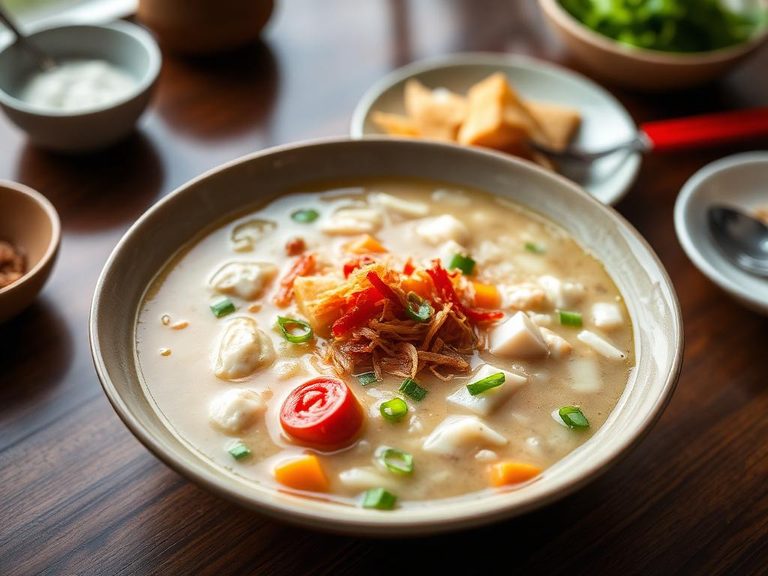
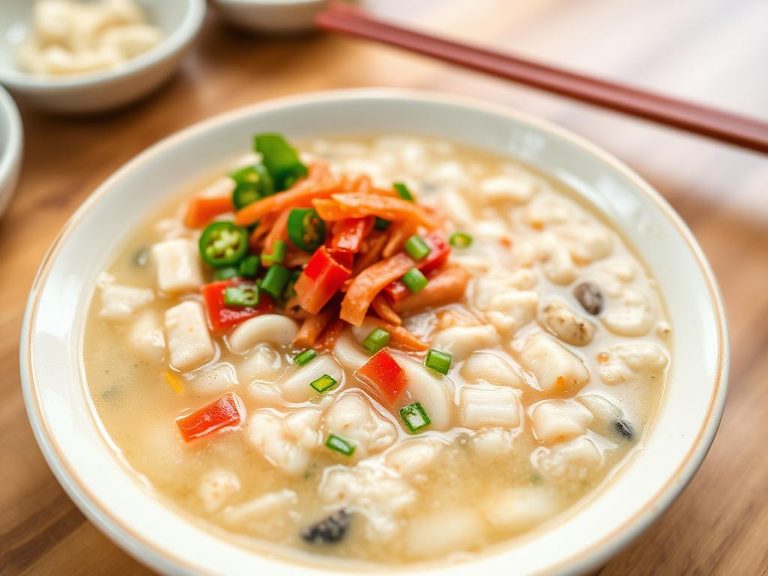
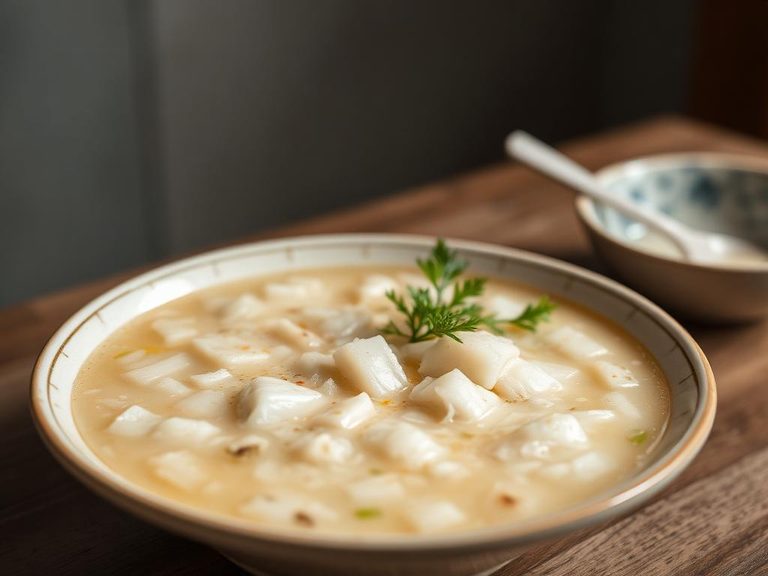
Congee, also known as 'jook' or 'zhou', is a savory rice porridge that is a staple comfort food across many Asian cultures, particularly in China. It is made by slowly simmering rice in a large amount of water or broth until the grains break down into a thick, creamy consistency, and is typically served with a variety of savory toppings like shredded chicken, century egg, ginger, or fried shallots.
🍽️ Nutrition at a glance
Congee is primarily a carbohydrate-rich dish, providing a gentle source of energy and easily digestible calories. A typical bowl is low in fat and protein unless enriched with toppings, and it offers key nutrients like B vitamins and minerals from the rice and any added ingredients.
Nutrition breakdown
| Calories | 130 kcal |
| Protein | 2.5 g |
| Carbs | 28 g |
| Fat | 0.5 g |
| Fiber | 0.5 g |
| Sugar | 0.2 g |
| Sodium | 400 mg |
| Manganese | 0.5 mg |
| Thiamin (B1) | 0.2 mg |
| Niacin (B3) | 2.0 mg |
| Iron | 1.0 mg |
| Magnesium | 10 mg |
| Phosphorus | 30 mg |
| Selenium | 6.0 mcg |
| Copper | 0.1 mg |
Per 1 cup (240 g) · estimated, varies by recipe
💡 What's interesting
Culturally, congee is deeply associated with healing and comfort, often served to the sick, elderly, or young as a soothing, nourishing meal. Nutritionally, the long cooking process breaks down the starches, making it exceptionally easy to digest and hydrating.
🍽️ Related dishes
AI estimate may be inaccurate · Terms