

Bread, oatmeal
Common food
Oatmeal bread is a hearty, moist loaf with a tender crumb and a subtly sweet, nutty flavor from whole rolled oats. Its texture is denser and more substantial than white bread, often with a chewy bite and a slightly rustic crust. Nutritionally, it stands out for its excellent fiber content and balanced macronutrients, offering sustained energy.
Calorie split: 13% protein · 73% carbs · 15% fat
↓ Full nutrition💚 Why it's loved
People love oatmeal bread for its comforting, wholesome flavor and versatile texture that pairs equally well with sweet jams or savory soups. It's a staple in home baking and deli counters, evoking a sense of rustic, nourishing tradition.
⚠️ Watch-outs & how to enjoy it better
The dense texture can feel heavy to some, and the natural sugars, while moderate, can contribute to blood sugar rises if eaten alone. For better blood sugar control, pair a slice with protein like eggs or nut butter, or healthy fats like avocado. Those with celiac disease must ensure it's made with certified gluten-free oats.
Key benefits
- High in soluble fiber (beta-glucan) which supports heart health.
- Provides a good source of plant-based protein for muscle maintenance.
- Complex carbohydrates offer steady energy release.
- Contains essential minerals like manganese and phosphorus.
- Lower glycemic index than many refined grain breads.
🍽️ Popular dishes

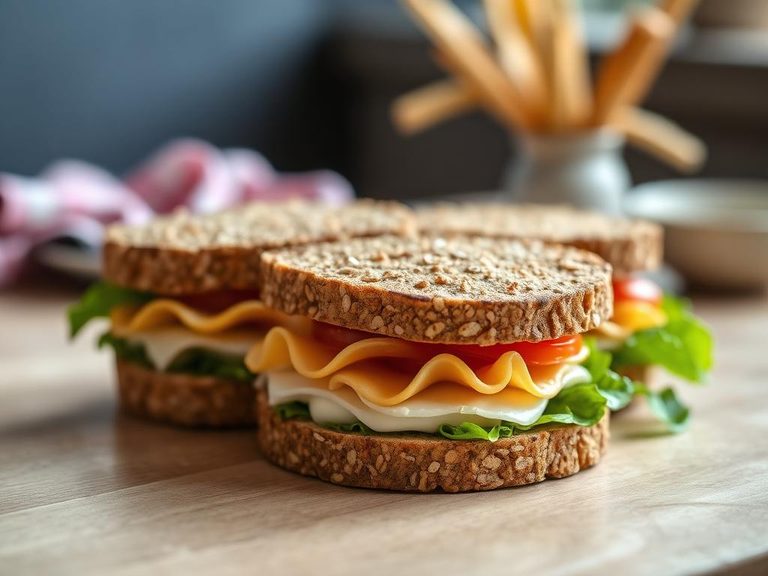

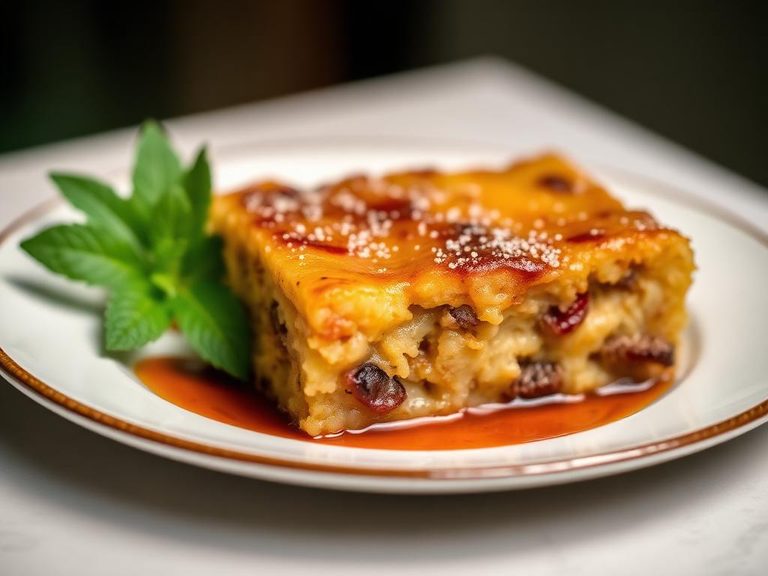
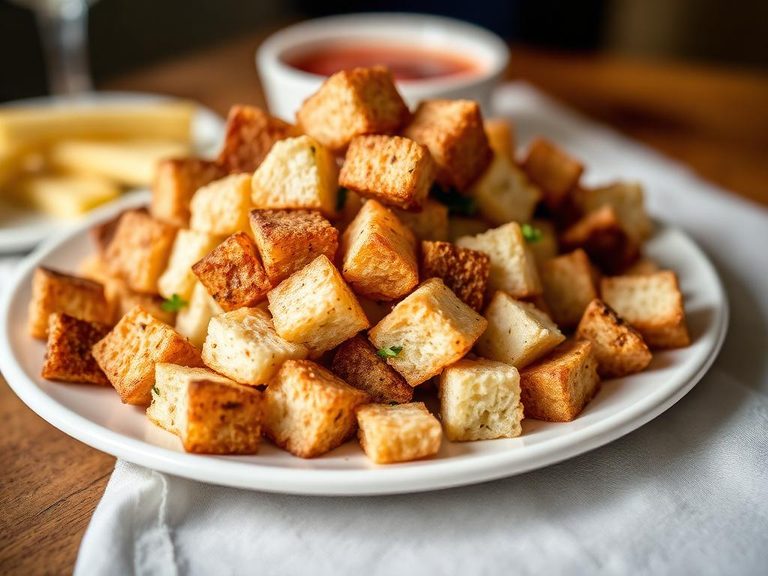
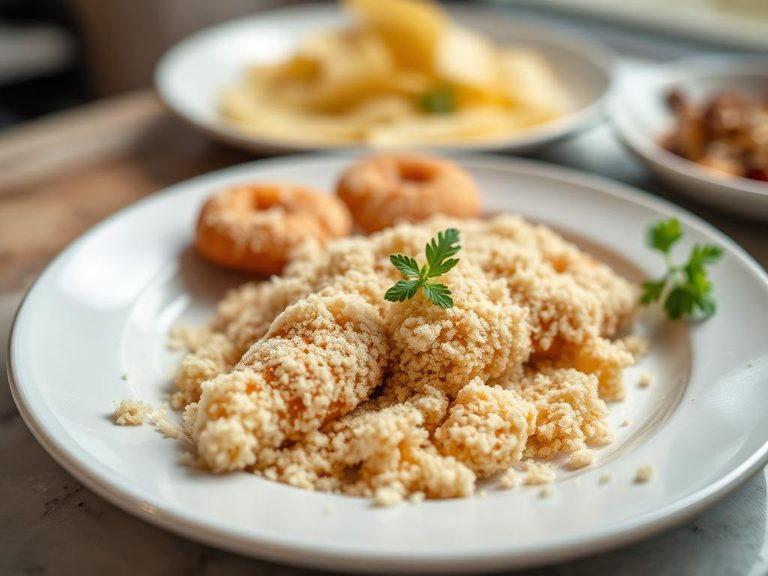
🌍 Where it's eaten
💡 Did you know?
The beta-glucan fiber in oats forms a gel-like substance in your gut, which is what helps slow digestion and can aid in managing cholesterol levels.
Full nutrition (USDA data · scales with serving)
| Water | 36.7 g |
| Energy | 269 kcal |
| Protein | 8.4 g |
| Total lipid (fat) | 4.4 g |
| Carbohydrate, by difference | 48.5 g |
| Fiber, total dietary | 4.0 g |
| Total Sugars | 8.1 g |
| Calcium, Ca | 66.0 mg |
| Iron, Fe | 2.7 mg |
| Magnesium, Mg | 37.0 mg |
| Phosphorus, P | 126 mg |
| Potassium, K | 142 mg |
| Sodium, Na | 447 mg |
| Zinc, Zn | 1.0 mg |
| Copper, Cu | 0.21 mg |
| Selenium, Se | 24.6 ug |
| Vitamin C, total ascorbic acid | 0.00 mg |
| Thiamin | 0.40 mg |
| Riboflavin | 0.24 mg |
| Niacin | 3.1 mg |
| Vitamin B-6 | 0.07 mg |
| Folate, total | 62.0 ug |
| Folic acid | 35.0 ug |
| Folate, food | 27.0 ug |
| Folate, DFE | 87.0 ug |
| Choline, total | 18.7 mg |
| Vitamin B-12 | 0.03 ug |
| Vitamin B-12, added | 0.00 ug |
| Vitamin A, RAE | 5.0 ug |
| Retinol | 5.0 ug |
| Carotene, beta | 0.00 ug |
| Carotene, alpha | 0.00 ug |
| Cryptoxanthin, beta | 0.00 ug |
| Lycopene | 0.00 ug |
| Lutein + zeaxanthin | 72.0 ug |
| Vitamin E (alpha-tocopherol) | 0.48 mg |
| Vitamin E, added | 0.00 mg |
| Vitamin D (D2 + D3) | 0.00 ug |
| Vitamin K (phylloquinone) | 1.5 ug |
| Alcohol, ethyl | 0.00 g |
| Caffeine | 0.00 mg |
| Theobromine | 0.00 mg |
Fat & fatty acid profile (per 100g)
| Fatty acids, total saturated | 0.70 g |
| SFA 4:0 | 0.00 g |
| SFA 6:0 | 0.00 g |
| SFA 8:0 | 0.00 g |
| SFA 10:0 | 0.00 g |
| SFA 12:0 | 0.01 g |
| SFA 14:0 | 0.01 g |
| SFA 16:0 | 0.53 g |
| SFA 18:0 | 0.15 g |
| Fatty acids, total monounsaturated | 1.6 g |
| MUFA 16:1 | 0.02 g |
| MUFA 18:1 | 1.6 g |
| MUFA 20:1 | 0.00 g |
| MUFA 22:1 | 0.00 g |
| Fatty acids, total polyunsaturated | 1.7 g |
| PUFA 18:2 | 1.6 g |
| PUFA 18:3 | 0.10 g |
| PUFA 18:4 | 0.00 g |
| PUFA 20:4 | 0.00 g |
| PUFA 20:5 n-3 (EPA) | 0.00 g |
| PUFA 22:5 n-3 (DPA) | 0.00 g |
| PUFA 22:6 n-3 (DHA) | 0.00 g |
| Cholesterol | 0.00 mg |
Amino acid profile (per 100g)
Estimated from Bread, salvadoran sweet cheese (quesadilla salvadorena) — USDA does not publish this profile for Bread.
| Tryptophan | 0.07 g |
| Threonine | 0.21 g |
| Isoleucine | 0.30 g |
| Leucine | 0.65 g |
| Lysine | 0.50 g |
| Methionine | 0.28 g |
| Cystine | 0.06 g |
| Phenylalanine | 0.37 g |
| Tyrosine | 0.23 g |
| Valine | 0.43 g |
| Arginine | 0.25 g |
| Histidine | 0.15 g |
| Alanine | 0.36 g |
| Aspartic acid | 0.59 g |
| Glutamic acid | 1.3 g |
| Glycine | 0.20 g |
| Proline | 0.83 g |
| Serine | 0.45 g |
| Hydroxyproline | 0.00 g |
FAQ
Is oatmeal bread gluten-free?
Not necessarily. While oats are naturally gluten-free, they are often processed in facilities with wheat, leading to cross-contamination. For a safe option, look for bread made with certified gluten-free oats.
How does it compare nutritionally to whole wheat bread?
Oatmeal bread often has a similar or slightly higher fiber content and a comparable calorie count. Its key advantage is the specific beta-glucan fiber from oats, which is particularly beneficial for heart health.
Can I use it for making sandwiches?
Absolutely. Its sturdy texture holds up well to both moist and dry fillings, making it an excellent choice for everything from classic deli sandwiches to grilled cheese.
Nutrient density (calculated · NRF9.3)
Nutrient Rich Foods index: beneficial nutrients (protein, fiber, vitamins, minerals) minus saturated fat, added sugar & sodium, per 100 kcal.
NRF9.3 index — Fulgoni, Keast & Drewnowski, 2009. Computed from USDA nutrients.
Weight-loss friendliness (composite index)
Energy density 2.69 kcal/g · 12% calories from protein · 4.0 g fiber · 8.1 g sugar per 100 g.
Composite of energy density (Rolls et al., 1999), protein & fiber satiety, minus sugar. A calculated heuristic — ranks satiety-per-calorie, not a clinical measure.
Dietary load (calculated from USDA values)
Potential renal acid load. Positive = acid-forming, negative = alkaline-forming.
Sodium-to-potassium ratio: 3.15 (lower is better — aim for ≤ 1)
Sodium:potassium per WHO potassium guidance. Computed from USDA nutrients.