

Beverages, Fruit flavored drink, less than 3% juice, not fortified with vitamin C
Whole food · Beverages

Photo: Wikipedia
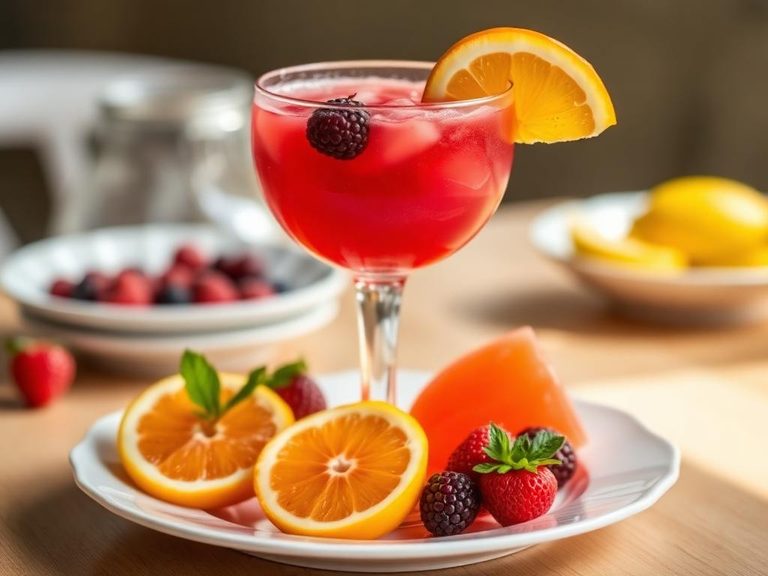
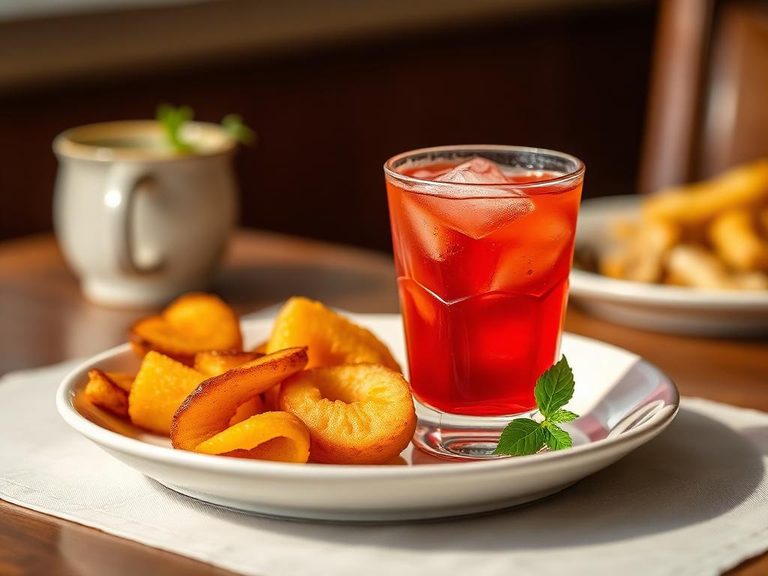
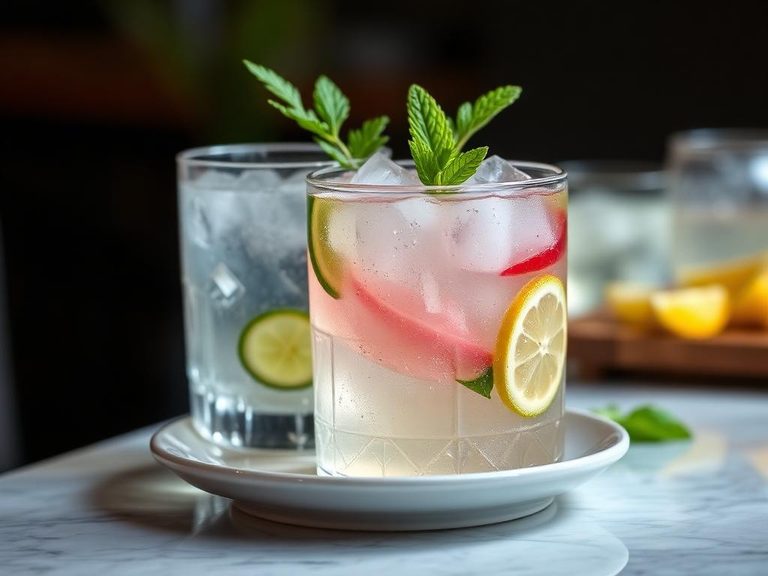
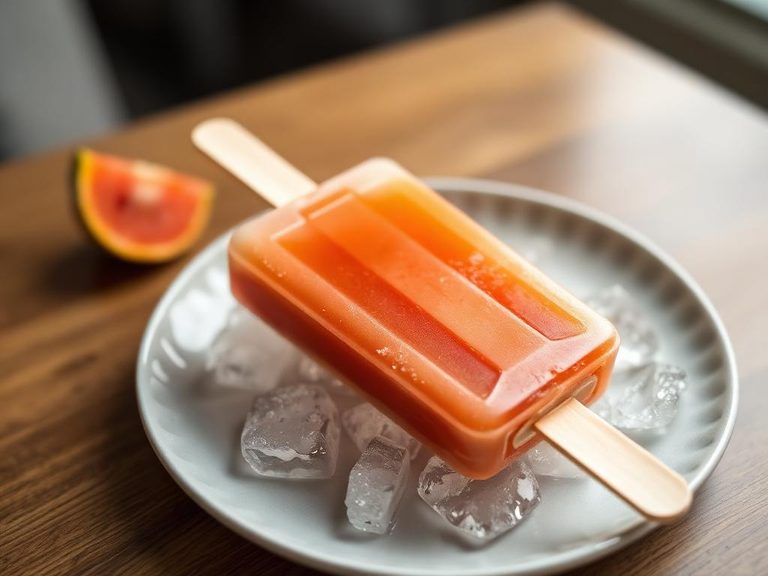
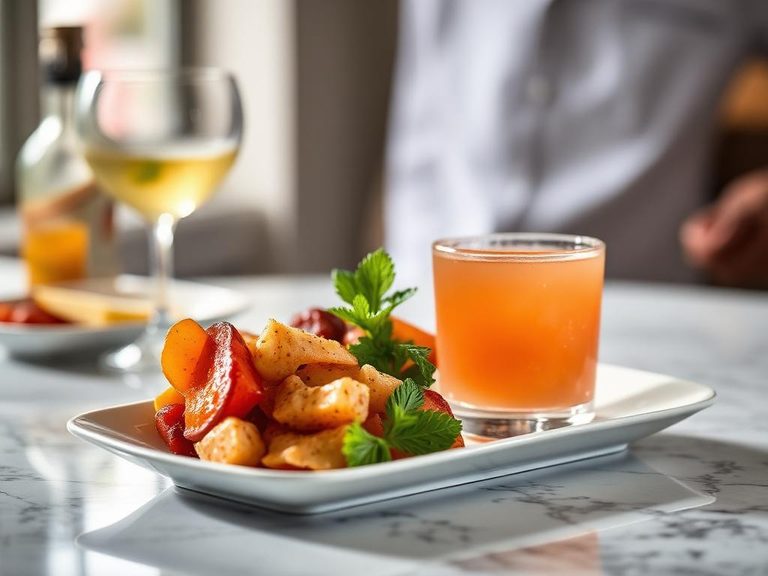
This is a brightly colored, fruit-flavored drink that is more about sweet, artificial fruit essence than actual fruit. It has a thin, watery texture and a sugary, tangy taste with no pulp or body. Nutritionally, it's essentially a source of empty calories, delivering a significant sugar hit (nearly 16g per 100g) with no protein, fat, or fiber.
Calorie split: 0% protein · 100% carbs · 0% fat
↓ Full nutrition💚 Why it's loved
People love it for its intensely sweet, nostalgic flavor and refreshing quality, especially when chilled. It's a versatile, simple pleasure often associated with childhood, parties, and casual social gatherings.
⚠️ Watch-outs & how to enjoy it better
The high sugar content can lead to rapid blood-sugar spikes and subsequent crashes, offering no satiety. To counteract this, consider diluting it with sparkling water to reduce sugar per serving, or pairing it with a protein-rich snack like nuts or cheese to slow sugar absorption.
Key benefits
- Quick source of simple carbohydrates for energy
- Provides hydration and electrolytes in some formulations
- Offers a palatable alternative to plain water for some
- Convenient and widely available for on-the-go consumption
🍽️ Popular dishes
🌍 Where it's eaten
💡 Did you know?
The vibrant colors in many fruit-flavored drinks are often derived from coal tar or petroleum byproducts, not fruit.
Full nutrition (USDA data · scales with serving)
| Water | 83.9 g |
| Energy | 64.0 kcal |
| Energy | 268 kj |
| Protein | 0.00 g |
| Total lipid (fat) | 0.00 g |
| Ash | 0.10 g |
| Carbohydrate, by difference | 16.0 g |
| Fiber, total dietary | 0.00 g |
| Total Sugars | 15.8 g |
| Calcium, Ca | 3.0 mg |
| Iron, Fe | 0.00 mg |
| Magnesium, Mg | 1.0 mg |
| Phosphorus, P | 0.00 mg |
| Potassium, K | 31.0 mg |
| Sodium, Na | 36.0 mg |
| Zinc, Zn | 0.00 mg |
| Copper, Cu | 0.01 mg |
| Selenium, Se | 0.00 ug |
| Vitamin C, total ascorbic acid | 0.00 mg |
| Thiamin | 0.00 mg |
| Riboflavin | 0.00 mg |
| Niacin | 0.00 mg |
| Vitamin B-6 | 0.00 mg |
| Folate, total | 0.00 ug |
| Folic acid | 0.00 ug |
| Folate, food | 0.00 ug |
| Folate, DFE | 0.00 ug |
| Choline, total | 0.00 mg |
| Vitamin B-12 | 0.00 ug |
| Vitamin B-12, added | 0.00 ug |
| Vitamin A, RAE | 0.00 ug |
| Retinol | 0.00 ug |
| Carotene, beta | 0.00 ug |
| Carotene, alpha | 0.00 ug |
| Cryptoxanthin, beta | 0.00 ug |
| Vitamin A, IU | 0.00 iu |
| Lycopene | 0.00 ug |
| Lutein + zeaxanthin | 0.00 ug |
| Vitamin E (alpha-tocopherol) | 0.00 mg |
| Vitamin E, added | 0.00 mg |
| Vitamin D (D2 + D3), International Units | 0.00 iu |
| Vitamin D (D2 + D3) | 0.00 ug |
| Vitamin K (phylloquinone) | 0.00 ug |
| Alcohol, ethyl | 0.00 g |
| Caffeine | 0.00 mg |
| Theobromine | 0.00 mg |
Fat & fatty acid profile (per 100g)
| Fatty acids, total saturated | 0.00 g |
| SFA 4:0 | 0.00 g |
| SFA 6:0 | 0.00 g |
| SFA 8:0 | 0.00 g |
| SFA 10:0 | 0.00 g |
| SFA 12:0 | 0.00 g |
| SFA 14:0 | 0.00 g |
| SFA 16:0 | 0.00 g |
| SFA 18:0 | 0.00 g |
| Fatty acids, total monounsaturated | 0.00 g |
| MUFA 16:1 | 0.00 g |
| MUFA 18:1 | 0.00 g |
| MUFA 20:1 | 0.00 g |
| MUFA 22:1 | 0.00 g |
| Fatty acids, total polyunsaturated | 0.00 g |
| PUFA 18:2 | 0.00 g |
| PUFA 18:3 | 0.00 g |
| PUFA 18:4 | 0.00 g |
| PUFA 20:4 | 0.00 g |
| PUFA 20:5 n-3 (EPA) | 0.00 g |
| PUFA 22:5 n-3 (DPA) | 0.00 g |
| PUFA 22:6 n-3 (DHA) | 0.00 g |
| Fatty acids, total trans | 0.00 g |
| Cholesterol | 0.00 mg |
Amino acid profile (per 100g)
Estimated from Beverages, carbonated, tonic water — USDA does not publish this profile for Beverages.
| Tryptophan | 0.00 g |
| Threonine | 0.00 g |
| Isoleucine | 0.00 g |
| Leucine | 0.00 g |
| Lysine | 0.00 g |
| Methionine | 0.00 g |
| Cystine | 0.00 g |
| Phenylalanine | 0.00 g |
| Tyrosine | 0.00 g |
| Valine | 0.00 g |
| Arginine | 0.00 g |
| Histidine | 0.00 g |
| Alanine | 0.00 g |
| Aspartic acid | 0.00 g |
| Glutamic acid | 0.00 g |
| Glycine | 0.00 g |
| Proline | 0.00 g |
| Serine | 0.00 g |
FAQ
How does this differ from 100% fruit juice?
This drink contains less than 3% actual fruit juice, meaning the flavor and color are primarily from added sugars, artificial flavors, and colorings. 100% fruit juice contains no added sugars and retains some of the fruit's natural nutrients and fiber.
Is it a good source of vitamins?
No. This specific product is not fortified with Vitamin C or other vitamins, so it provides negligible micronutrients. Its nutritional value is almost entirely from simple carbohydrates (sugar).
Can it be part of a healthy diet?
In moderation, as an occasional treat. Due to its high sugar and low nutrient density, it's best consumed sparingly. Prioritizing water, unsweetened tea, or whole fruit is generally a healthier choice.
Nutrient density (calculated · NRF9.3)
Nutrient Rich Foods index: beneficial nutrients (protein, fiber, vitamins, minerals) minus saturated fat, added sugar & sodium, per 100 kcal.
NRF9.3 index — Fulgoni, Keast & Drewnowski, 2009. Computed from USDA nutrients.
Weight-loss friendliness (composite index)
Energy density 0.64 kcal/g · 0% calories from protein · 0.0 g fiber · 15.8 g sugar per 100 g.
Composite of energy density (Rolls et al., 1999), protein & fiber satiety, minus sugar. A calculated heuristic — ranks satiety-per-calorie, not a clinical measure.
Dietary load (calculated from USDA values)
Potential renal acid load. Positive = acid-forming, negative = alkaline-forming.
Sodium-to-potassium ratio: 1.16 (lower is better — aim for ≤ 1)
Sodium:potassium per WHO potassium guidance. Computed from USDA nutrients.