

Beef, tenderloin, roast, separable lean and fat, trimmed to 1/8" fat, all grades, cooked, roasted
Whole food · Beef Products

Photo: Wikipedia
This is the prime cut of beef, roasted to a tender, buttery perfection with a rich, beefy flavor and a melt-in-your-mouth texture. It's a lean protein powerhouse with virtually no carbohydrates, making it a staple for high-protein, low-carb diets. The careful trimming to 1/8-inch fat balances flavor and leanness.
Calorie split: 30% protein · 0% carbs · 70% fat
↓ Full nutrition💚 Why it's loved
People adore tenderloin for its unparalleled tenderness and subtle, refined beef flavor that doesn't require heavy sauces. It's the centerpiece of celebratory meals, from classic steakhouse dinners to elegant holiday roasts.
⚠️ Watch-outs & how to enjoy it better
Its high saturated fat and calorie density mean it's best enjoyed in moderation, especially for those managing heart health or calorie intake. To counteract, practice portion control (stick to the size of a deck of cards) and pair it with a large portion of fiber-rich vegetables like roasted broccoli or a leafy salad to enhance satiety and balance the meal.
Key benefits
- Excellent source of high-quality complete protein
- Naturally very low in carbohydrates
- Rich in bioavailable iron and zinc
- Contains B vitamins, especially B12 and B6
- Provides conjugated linoleic acid (CLA) from the fat
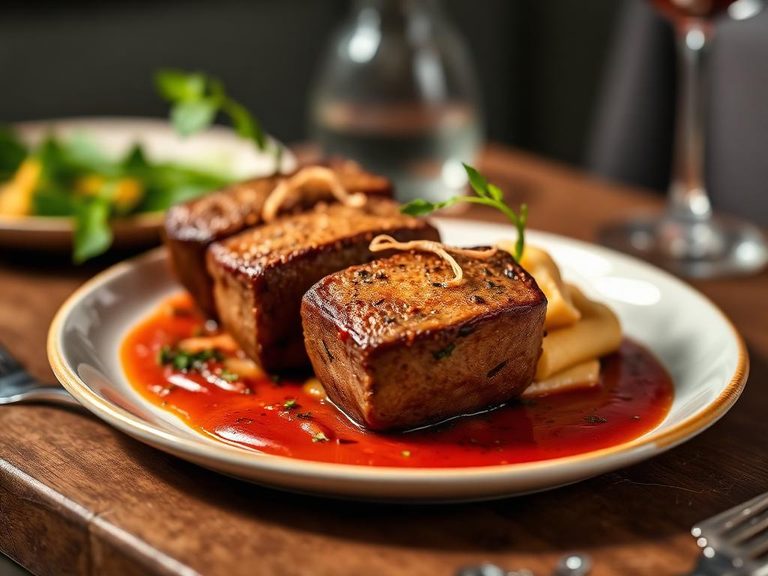
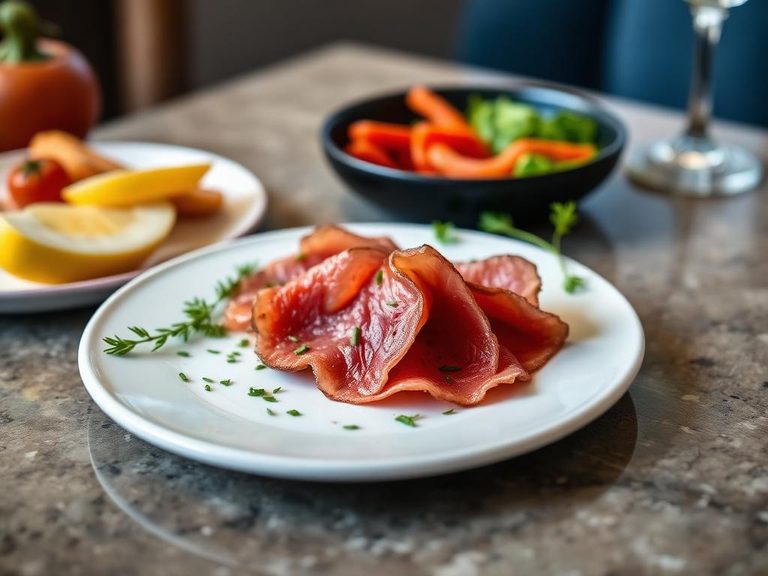
🍽️ Popular dishes
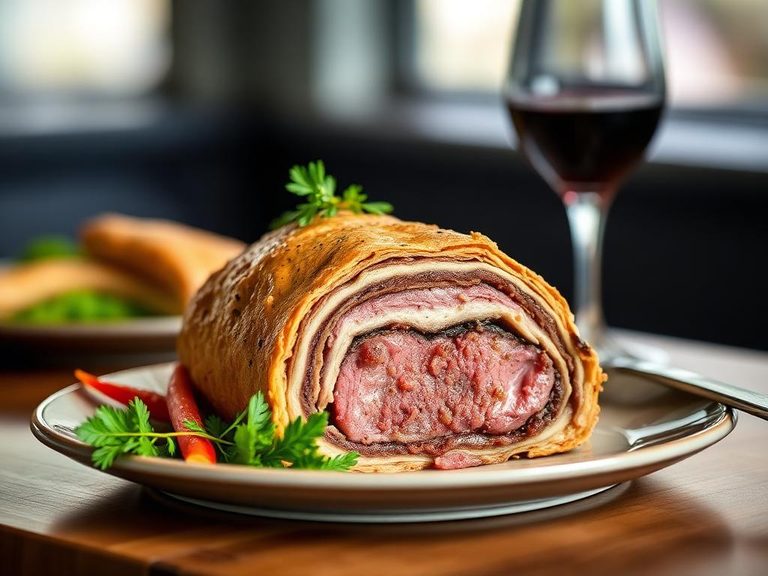
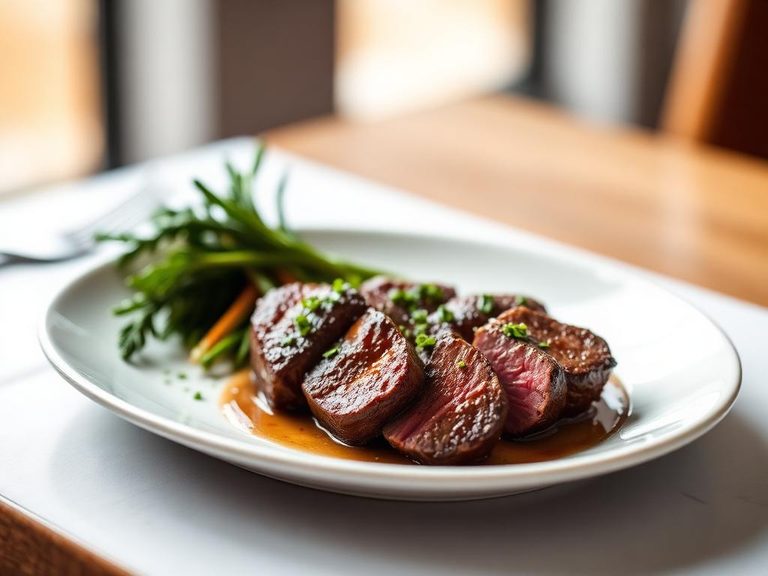
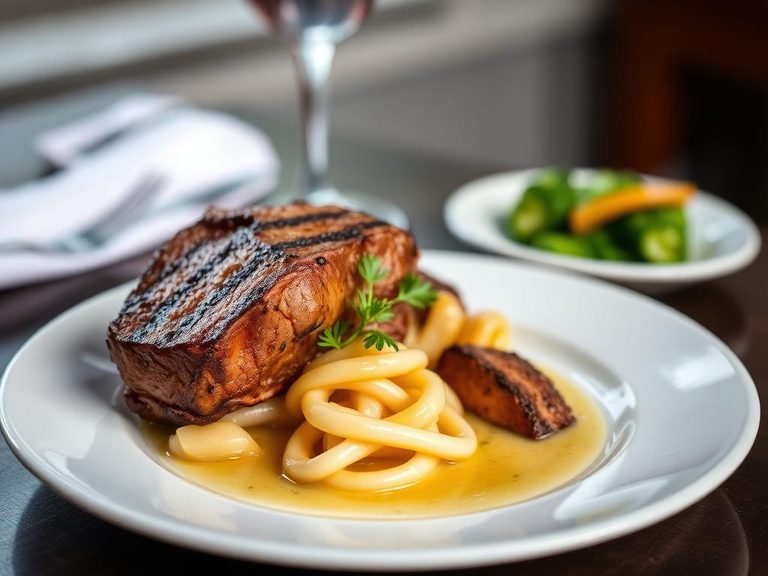
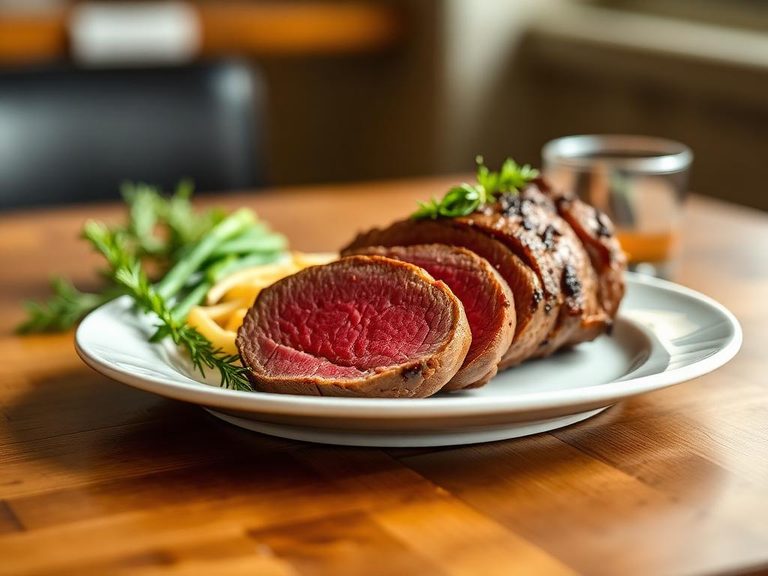
🌍 Where it's eaten
💡 Did you know?
The tenderloin is the most tender muscle in the cow because it's a non-weight-bearing muscle along the spine, meaning it gets very little exercise.
Full nutrition (USDA data · scales with serving)
| Water | 48.4 g |
| Energy | 324 kcal |
| Energy | 1356 kj |
| Protein | 23.9 g |
| Total lipid (fat) | 24.6 g |
| Ash | 1.2 g |
| Carbohydrate, by difference | 0.00 g |
| Fiber, total dietary | 0.00 g |
| Total Sugars | 0.00 g |
| Calcium, Ca | 9.0 mg |
| Iron, Fe | 3.1 mg |
| Magnesium, Mg | 22.0 mg |
| Phosphorus, P | 203 mg |
| Potassium, K | 331 mg |
| Sodium, Na | 57.0 mg |
| Zinc, Zn | 4.0 mg |
| Copper, Cu | 0.12 mg |
| Manganese, Mn | 0.01 mg |
| Selenium, Se | 22.9 ug |
| Vitamin C, total ascorbic acid | 0.00 mg |
| Thiamin | 0.09 mg |
| Riboflavin | 0.26 mg |
| Niacin | 3.0 mg |
| Pantothenic acid | 0.25 mg |
| Vitamin B-6 | 0.25 mg |
| Folate, total | 8.0 ug |
| Folic acid | 0.00 ug |
| Folate, food | 8.0 ug |
| Folate, DFE | 8.0 ug |
| Choline, total | 91.0 mg |
| Betaine | 12.0 mg |
| Vitamin B-12 | 2.5 ug |
| Vitamin B-12, added | 0.00 ug |
| Vitamin A, RAE | 0.00 ug |
| Carotene, beta | 0.00 ug |
| Carotene, alpha | 0.00 ug |
| Cryptoxanthin, beta | 0.00 ug |
| Vitamin A, IU | 0.00 iu |
| Lycopene | 0.00 ug |
| Lutein + zeaxanthin | 0.00 ug |
| Alcohol, ethyl | 0.00 g |
| Caffeine | 0.00 mg |
| Theobromine | 0.00 mg |
Fat & fatty acid profile (per 100g)
| Fatty acids, total saturated | 9.7 g |
| SFA 4:0 | 0.00 g |
| SFA 6:0 | 0.00 g |
| SFA 8:0 | 0.00 g |
| SFA 10:0 | 0.06 g |
| SFA 12:0 | 0.06 g |
| SFA 14:0 | 0.75 g |
| SFA 16:0 | 5.9 g |
| SFA 18:0 | 2.9 g |
| Fatty acids, total monounsaturated | 10.3 g |
| MUFA 16:1 | 0.97 g |
| MUFA 18:1 | 9.3 g |
| MUFA 20:1 | 0.04 g |
| Fatty acids, total polyunsaturated | 1.0 g |
| PUFA 18:2 | 0.68 g |
| PUFA 18:3 | 0.27 g |
| PUFA 18:4 | 0.00 g |
| PUFA 20:4 | 0.05 g |
| Cholesterol | 85.0 mg |
Amino acid profile (per 100g)
| Tryptophan | 0.27 g |
| Threonine | 1.0 g |
| Isoleucine | 1.1 g |
| Leucine | 1.9 g |
| Lysine | 2.0 g |
| Methionine | 0.61 g |
| Cystine | 0.27 g |
| Phenylalanine | 0.93 g |
| Tyrosine | 0.80 g |
| Valine | 1.2 g |
| Arginine | 1.5 g |
| Histidine | 0.82 g |
| Alanine | 1.4 g |
| Aspartic acid | 2.2 g |
| Glutamic acid | 3.6 g |
| Glycine | 1.3 g |
| Proline | 1.1 g |
| Serine | 0.91 g |
FAQ
What's the best way to cook beef tenderloin to keep it tender?
High-heat searing followed by a gentle finish in the oven (the 'reverse sear' method) is ideal. Always use a meat thermometer and pull it off the heat at 125-130°F (52-54°C) for medium-rare, as it will continue to cook while resting.
Is beef tenderloin the same as filet mignon?
Yes, filet mignon is the name given to the medallion steaks cut from the smaller, tapered end of the tenderloin roast.
Why is it so expensive?
It's the most tender cut, but the tenderloin is also a very small muscle on the animal (yielding only about 2-3% of the total carcass weight), making it scarce and highly prized.
Nutrient density (calculated · NRF9.3)
Nutrient Rich Foods index: beneficial nutrients (protein, fiber, vitamins, minerals) minus saturated fat, added sugar & sodium, per 100 kcal.
NRF9.3 index — Fulgoni, Keast & Drewnowski, 2009. Computed from USDA nutrients.
Weight-loss friendliness (composite index)
Energy density 3.24 kcal/g · 30% calories from protein · 0.0 g fiber · 0.0 g sugar per 100 g.
Composite of energy density (Rolls et al., 1999), protein & fiber satiety, minus sugar. A calculated heuristic — ranks satiety-per-calorie, not a clinical measure.
Dietary load (calculated from USDA values)
Potential renal acid load. Positive = acid-forming, negative = alkaline-forming.
Sodium-to-potassium ratio: 0.17 (lower is better — aim for ≤ 1)
Sodium:potassium per WHO potassium guidance. Computed from USDA nutrients.