

Beef, steak, ribeye, NS as to fat eaten
Common food

Photo: Wikipedia
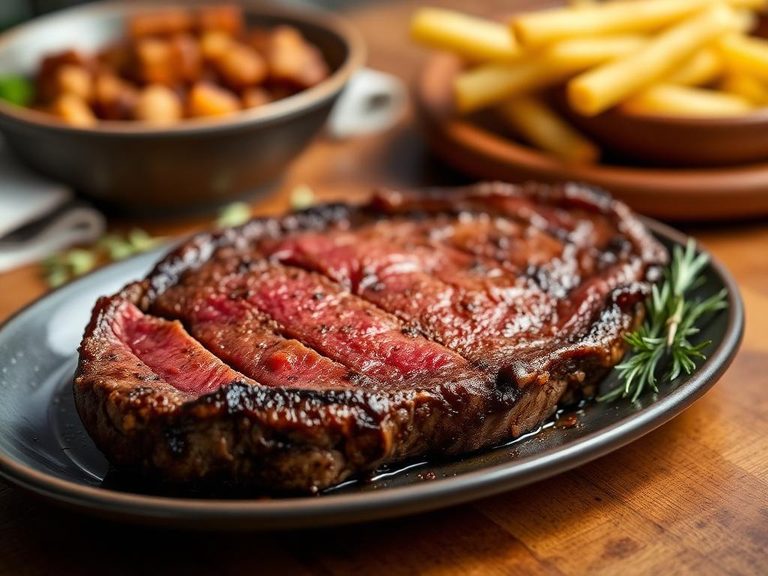
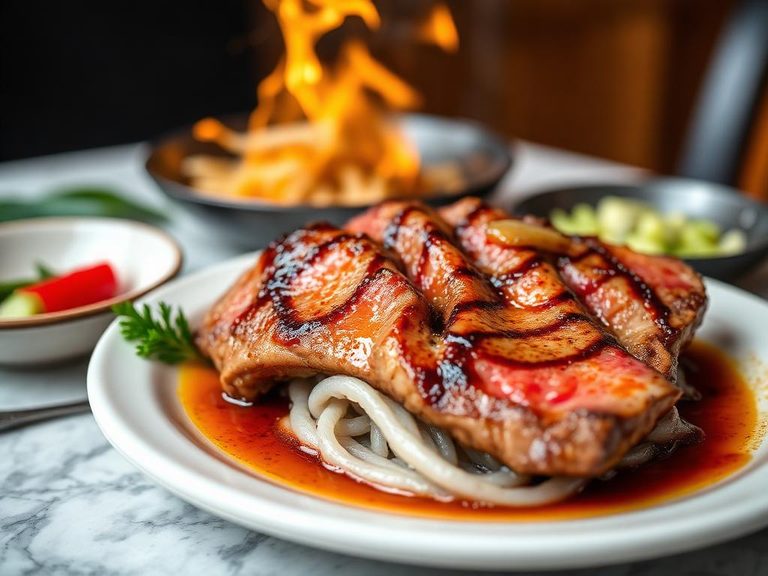
A ribeye steak is a rich, marbled cut from the rib section of the cow, prized for its deep beefy flavor and tender, juicy texture. The generous intramuscular fat, or marbling, bastes the meat as it cooks, resulting in a succulent bite. Nutritionally, it's a dense source of high-quality protein and provides essential nutrients like iron and B vitamins.
Calorie split: 39% protein · 0% carbs · 61% fat
↓ Full nutrition💚 Why it's loved
People adore the ribeye for its unparalleled, buttery richness and robust beef flavor that comes from its signature marbling. It's a celebratory centerpiece, equally at home at a backyard grill or a high-end steakhouse, symbolizing indulgence and quality.
⚠️ Watch-outs & how to enjoy it better
The high saturated fat content makes it a less frequent choice for those monitoring heart health or calorie intake. To enjoy it mindfully, practice strict portion control (a 3-4 oz serving is ample), trim any thick external fat caps before cooking, and balance the meal with large portions of non-starchy vegetables like asparagus or a fresh salad to add fiber and volume.
Key benefits
- Excellent source of complete protein for muscle maintenance and repair.
- Rich in heme iron, which is highly bioavailable and helps prevent anemia.
- Provides significant amounts of zinc, crucial for immune function.
- Contains B vitamins, especially B12, vital for nerve health and energy production.
- The fat content aids in the absorption of fat-soluble vitamins like A and K.
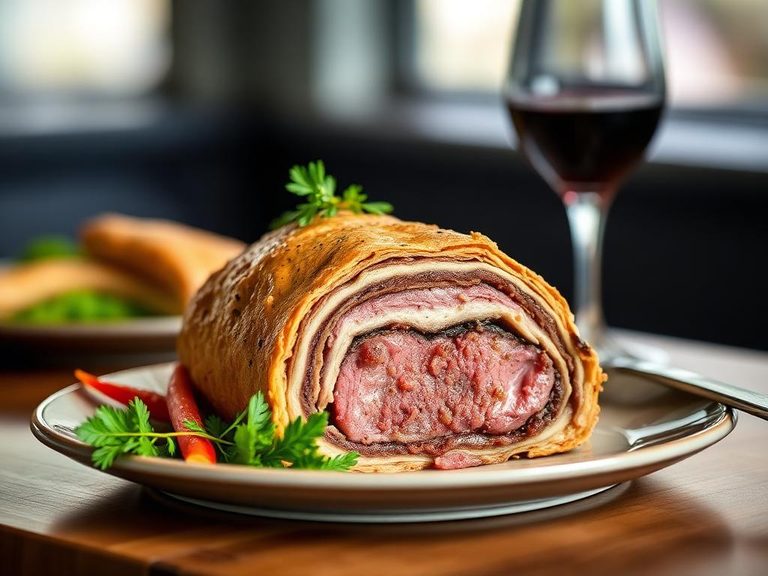
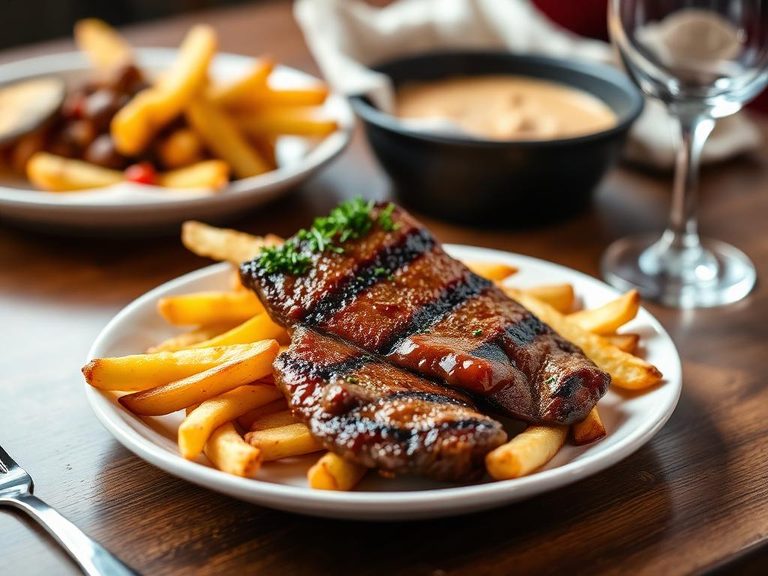
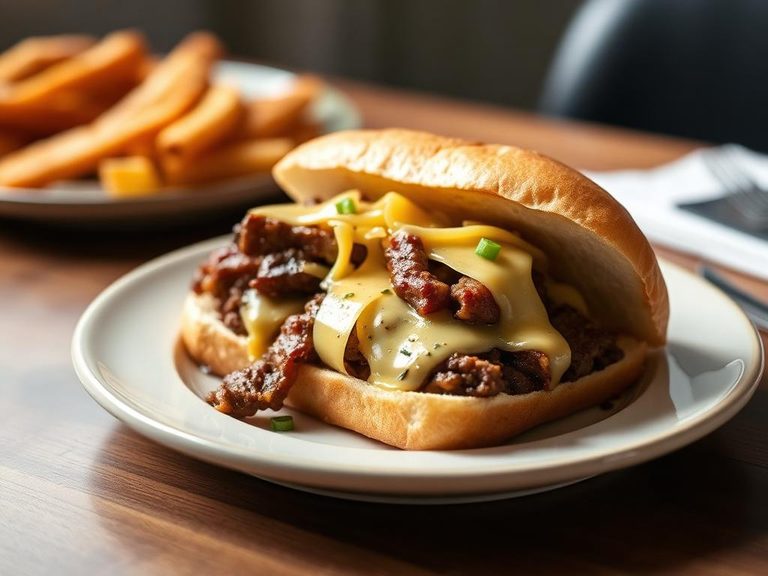
🍽️ Popular dishes
🌍 Where it's eaten
💡 Did you know?
The 'ribeye' name comes from the fact that this cut is from the rib section (ribs 6-12) and contains a prominent 'eye' of meat within the larger muscle.
Full nutrition (USDA data · scales with serving)
| Water | 56.5 g |
| Energy | 260 kcal |
| Protein | 25.0 g |
| Total lipid (fat) | 17.7 g |
| Carbohydrate, by difference | 0.00 g |
| Fiber, total dietary | 0.00 g |
| Total Sugars | 0.00 g |
| Calcium, Ca | 10.0 mg |
| Iron, Fe | 2.3 mg |
| Magnesium, Mg | 23.0 mg |
| Phosphorus, P | 159 mg |
| Potassium, K | 270 mg |
| Sodium, Na | 362 mg |
| Zinc, Zn | 6.2 mg |
| Copper, Cu | 0.08 mg |
| Selenium, Se | 31.5 ug |
| Vitamin C, total ascorbic acid | 0.00 mg |
| Thiamin | 0.07 mg |
| Riboflavin | 0.30 mg |
| Niacin | 5.2 mg |
| Vitamin B-6 | 0.50 mg |
| Folate, total | 6.0 ug |
| Folic acid | 0.00 ug |
| Folate, food | 6.0 ug |
| Folate, DFE | 6.0 ug |
| Choline, total | 51.3 mg |
| Vitamin B-12 | 2.2 ug |
| Vitamin B-12, added | 0.00 ug |
| Vitamin A, RAE | 6.0 ug |
| Retinol | 6.0 ug |
| Carotene, beta | 0.00 ug |
| Carotene, alpha | 0.00 ug |
| Cryptoxanthin, beta | 0.00 ug |
| Lycopene | 0.00 ug |
| Lutein + zeaxanthin | 0.00 ug |
| Vitamin E (alpha-tocopherol) | 0.10 mg |
| Vitamin E, added | 0.00 mg |
| Vitamin D (D2 + D3) | 0.20 ug |
| Vitamin K (phylloquinone) | 1.6 ug |
| Alcohol, ethyl | 0.00 g |
| Caffeine | 0.00 mg |
| Theobromine | 0.00 mg |
Fat & fatty acid profile (per 100g)
| Fatty acids, total saturated | 7.7 g |
| SFA 4:0 | 0.00 g |
| SFA 6:0 | 0.00 g |
| SFA 8:0 | 0.00 g |
| SFA 10:0 | 0.01 g |
| SFA 12:0 | 0.01 g |
| SFA 14:0 | 0.51 g |
| SFA 16:0 | 4.1 g |
| SFA 18:0 | 2.7 g |
| Fatty acids, total monounsaturated | 8.5 g |
| MUFA 16:1 | 0.57 g |
| MUFA 18:1 | 7.6 g |
| MUFA 20:1 | 0.03 g |
| MUFA 22:1 | 0.00 g |
| Fatty acids, total polyunsaturated | 0.85 g |
| PUFA 18:2 | 0.72 g |
| PUFA 18:3 | 0.03 g |
| PUFA 18:4 | 0.00 g |
| PUFA 20:4 | 0.06 g |
| PUFA 20:5 n-3 (EPA) | 0.00 g |
| PUFA 22:5 n-3 (DPA) | 0.01 g |
| PUFA 22:6 n-3 (DHA) | 0.00 g |
| Cholesterol | 79.0 mg |
Amino acid profile (per 100g)
Estimated from Beef, variety meats and by-products, mechanically separated beef, raw — USDA does not publish this profile for Beef.
| Tryptophan | 0.17 g |
| Threonine | 0.47 g |
| Isoleucine | 0.58 g |
| Leucine | 1.2 g |
| Lysine | 1.2 g |
| Methionine | 0.43 g |
| Cystine | 0.23 g |
| Phenylalanine | 0.64 g |
| Tyrosine | 0.38 g |
| Valine | 0.92 g |
| Arginine | 1.2 g |
| Histidine | 0.44 g |
| Alanine | 1.0 g |
| Aspartic acid | 1.3 g |
| Glutamic acid | 2.1 g |
| Glycine | 1.2 g |
| Proline | 0.92 g |
| Serine | 0.57 g |
FAQ
What's the difference between a ribeye and a New York strip?
A ribeye (from the rib) has more marbling and a looser texture, making it richer and more forgiving to cook. A New York strip (from the short loin) is leaner with a firmer chew and a distinct strip of fat along one edge.
Should I cook a ribeye with the fat cap on or off?
It's best to cook it with the fat cap on. As the steak cooks, the fat renders and bastes the meat, adding flavor and moisture. You can trim excess fat after cooking if desired.
Why is my ribeye tough?
Ribeye can become tough if overcooked, as the abundant fat needs heat to render and tenderize the meat. Aim for medium-rare to medium (130-145°F internal temp). Also, letting the steak rest for 5-10 minutes after cooking allows juices to redistribute, ensuring tenderness.
Nutrient density (calculated · NRF9.3)
Nutrient Rich Foods index: beneficial nutrients (protein, fiber, vitamins, minerals) minus saturated fat, added sugar & sodium, per 100 kcal.
NRF9.3 index — Fulgoni, Keast & Drewnowski, 2009. Computed from USDA nutrients.
Weight-loss friendliness (composite index)
Energy density 2.60 kcal/g · 38% calories from protein · 0.0 g fiber · 0.0 g sugar per 100 g.
Composite of energy density (Rolls et al., 1999), protein & fiber satiety, minus sugar. A calculated heuristic — ranks satiety-per-calorie, not a clinical measure.
Dietary load (calculated from USDA values)
Potential renal acid load. Positive = acid-forming, negative = alkaline-forming.
Sodium-to-potassium ratio: 1.34 (lower is better — aim for ≤ 1)
Sodium:potassium per WHO potassium guidance. Computed from USDA nutrients.