

Beef, noodles, and vegetables excluding carrots, broccoli, and dark-green leafy; tomato-based sauce
Common food

Photo: Wikipedia
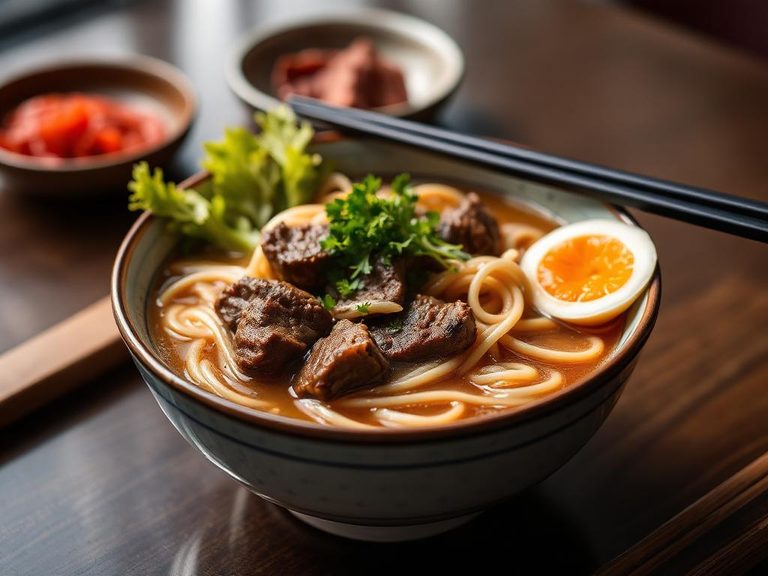
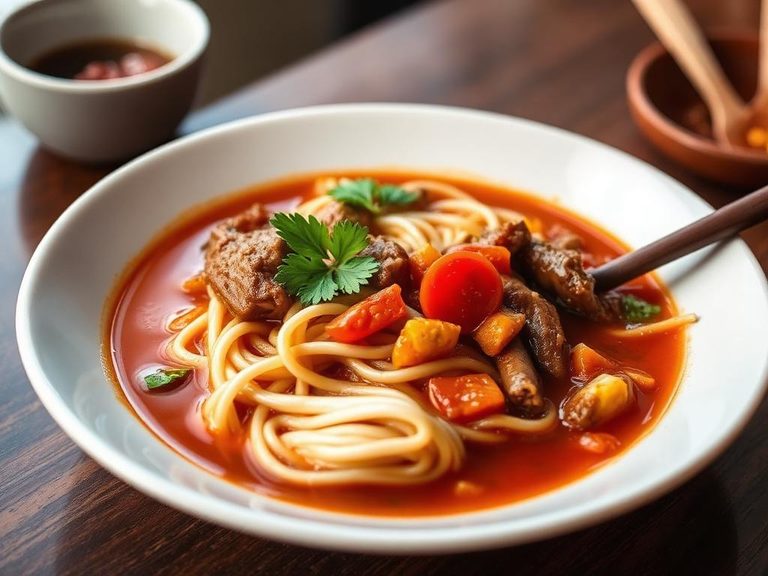
A hearty, comforting bowl of tender beef, springy wheat noodles, and a colorful medley of vegetables like bell peppers, onions, and zucchini, all simmered in a tangy, savory tomato-based sauce. It's a balanced, one-pot meal where the soft noodles soak up the rich sauce, complemented by the slight crunch of the veggies and the savory chew of the beef. With a moderate calorie count and a good balance of protein and carbs, it's a satisfying yet not overly heavy option for a main meal.
Calorie split: 20% protein · 45% carbs · 35% fat
↓ Full nutrition💚 Why it's loved
People love this dish for its ultimate comfort-food appeal—the warm, savory, slightly acidic tomato sauce perfectly coats the noodles and beef, creating a deeply satisfying and familiar flavor profile. It's also incredibly versatile, allowing for endless tweaks with different vegetables, noodle types, or cuts of beef to suit personal taste and pantry availability.
⚠️ Watch-outs & how to enjoy it better
The tomato-based sauce and potential use of processed noodles or broth can make this dish high in sodium, which may be a concern for those monitoring blood pressure. To counteract this, you can use low-sodium broth, rinse canned tomatoes, and boost flavor with herbs like basil and oregano instead of salt. Additionally, the combination of refined noodles and sauce sugars can cause a quicker blood sugar rise; pairing it with extra vegetables or a side salad can help slow digestion.
Key benefits
- Good source of lean protein from beef for muscle maintenance.
- Provides complex carbohydrates from noodles for sustained energy.
- Contains dietary fiber from vegetables and tomato sauce for digestive health.
- Offers vitamins A and C from the tomato and vegetable mix.
- A complete, balanced meal in a single bowl.
🍽️ Popular dishes

🌍 Where it's eaten
💡 Did you know?
The tomato, a key ingredient in the sauce, was once feared as poisonous in Europe and was grown for centuries as an ornamental plant before being embraced in the 18th century.
Full nutrition (USDA data · scales with serving)
| Water | 72.0 g |
| Energy | 130 kcal |
| Protein | 6.8 g |
| Total lipid (fat) | 5.1 g |
| Carbohydrate, by difference | 14.9 g |
| Fiber, total dietary | 1.4 g |
| Total Sugars | 1.6 g |
| Calcium, Ca | 14.0 mg |
| Iron, Fe | 1.4 mg |
| Magnesium, Mg | 20.0 mg |
| Phosphorus, P | 76.0 mg |
| Potassium, K | 164 mg |
| Sodium, Na | 306 mg |
| Zinc, Zn | 1.1 mg |
| Copper, Cu | 0.09 mg |
| Selenium, Se | 15.1 ug |
| Vitamin C, total ascorbic acid | 2.5 mg |
| Thiamin | 0.15 mg |
| Riboflavin | 0.11 mg |
| Niacin | 2.0 mg |
| Vitamin B-6 | 0.11 mg |
| Folate, total | 46.0 ug |
| Folic acid | 34.0 ug |
| Folate, food | 12.0 ug |
| Folate, DFE | 70.0 ug |
| Choline, total | 32.7 mg |
| Vitamin B-12 | 0.27 ug |
| Vitamin B-12, added | 0.00 ug |
| Vitamin A, RAE | 11.0 ug |
| Retinol | 3.0 ug |
| Carotene, beta | 94.0 ug |
| Carotene, alpha | 6.0 ug |
| Cryptoxanthin, beta | 12.0 ug |
| Lycopene | 3698 ug |
| Lutein + zeaxanthin | 129 ug |
| Vitamin E (alpha-tocopherol) | 1.1 mg |
| Vitamin E, added | 0.00 mg |
| Vitamin D (D2 + D3) | 0.10 ug |
| Vitamin K (phylloquinone) | 7.2 ug |
| Alcohol, ethyl | 0.00 g |
| Caffeine | 0.00 mg |
| Theobromine | 0.00 mg |
Fat & fatty acid profile (per 100g)
| Fatty acids, total saturated | 1.0 g |
| SFA 4:0 | 0.00 g |
| SFA 6:0 | 0.00 g |
| SFA 8:0 | 0.00 g |
| SFA 10:0 | 0.00 g |
| SFA 12:0 | 0.00 g |
| SFA 14:0 | 0.04 g |
| SFA 16:0 | 0.72 g |
| SFA 18:0 | 0.25 g |
| Fatty acids, total monounsaturated | 2.0 g |
| MUFA 16:1 | 0.08 g |
| MUFA 18:1 | 1.9 g |
| MUFA 20:1 | 0.02 g |
| MUFA 22:1 | 0.00 g |
| Fatty acids, total polyunsaturated | 1.4 g |
| PUFA 18:2 | 1.3 g |
| PUFA 18:3 | 0.15 g |
| PUFA 18:4 | 0.00 g |
| PUFA 20:4 | 0.00 g |
| PUFA 20:5 n-3 (EPA) | 0.00 g |
| PUFA 22:5 n-3 (DPA) | 0.00 g |
| PUFA 22:6 n-3 (DHA) | 0.00 g |
| Cholesterol | 25.0 mg |
Amino acid profile (per 100g)
Estimated from Beef, variety meats and by-products, mechanically separated beef, raw — USDA does not publish this profile for Beef.
| Tryptophan | 0.17 g |
| Threonine | 0.47 g |
| Isoleucine | 0.58 g |
| Leucine | 1.2 g |
| Lysine | 1.2 g |
| Methionine | 0.43 g |
| Cystine | 0.23 g |
| Phenylalanine | 0.64 g |
| Tyrosine | 0.38 g |
| Valine | 0.92 g |
| Arginine | 1.2 g |
| Histidine | 0.44 g |
| Alanine | 1.0 g |
| Aspartic acid | 1.3 g |
| Glutamic acid | 2.1 g |
| Glycine | 1.2 g |
| Proline | 0.92 g |
| Serine | 0.57 g |
FAQ
Can I make this dish ahead of time?
Yes, it's excellent for meal prep. Store in airtight containers in the fridge for up to 4 days. The flavors often meld and improve overnight. Reheat gently on the stove or in the microwave, adding a splash of water if needed to loosen the sauce.
What's the best cut of beef to use?
For quick-cooking stir-fries, use tender cuts like sirloin or tenderloin, sliced thinly against the grain. For simmered soups or stews, tougher, more flavorful cuts like chuck or brisket work well, as they become tender with longer cooking.
How can I reduce the sodium content?
Use low-sodium or no-salt-added canned tomatoes and broth. Rinse canned beans or vegetables if using them. Build flavor with aromatics like garlic, onion, ginger, and herbs such as basil, oregano, or red pepper flakes instead of relying on salt.
Nutrient density (calculated · NRF9.3)
Nutrient Rich Foods index: beneficial nutrients (protein, fiber, vitamins, minerals) minus saturated fat, added sugar & sodium, per 100 kcal.
NRF9.3 index — Fulgoni, Keast & Drewnowski, 2009. Computed from USDA nutrients.
Weight-loss friendliness (composite index)
Energy density 1.30 kcal/g · 21% calories from protein · 1.4 g fiber · 1.6 g sugar per 100 g.
Composite of energy density (Rolls et al., 1999), protein & fiber satiety, minus sugar. A calculated heuristic — ranks satiety-per-calorie, not a clinical measure.
Dietary load (calculated from USDA values)
Potential renal acid load. Positive = acid-forming, negative = alkaline-forming.
Sodium-to-potassium ratio: 1.87 (lower is better — aim for ≤ 1)
Sodium:potassium per WHO potassium guidance. Computed from USDA nutrients.