

Beef, brisket
Common food

Photo: Wikipedia
Beef brisket is a hardworking cut from the lower chest of the cow, known for its rich, beefy flavor and a texture that transforms from tough to meltingly tender with proper slow cooking. It's a protein powerhouse with virtually no carbs, making it a staple in low-carb and ketogenic diets. The marbling of fat throughout the meat bastes it from within during cooking, ensuring deep flavor and succulence.
Calorie split: 52% protein · 0% carbs · 48% fat
↓ Full nutrition💚 Why it's loved
People adore brisket for its profound, savory flavor and the satisfying, fall-apart texture achieved through slow smoking or braising. It's the centerpiece of communal feasts and cultural traditions, from American barbecue to Jewish holiday meals.
⚠️ Watch-outs & how to enjoy it better
Brisket is a fatty cut, which can be a concern for those monitoring saturated fat intake. Its toughness requires long, slow cooking times (4-12+ hours), demanding patience and planning. To mitigate richness, serve with acidic, fiber-rich sides like coleslaw or pickles, and trim excess external fat before cooking.
Key benefits
- Excellent source of high-quality complete protein
- Rich in iron, zinc, and B vitamins (especially B12)
- Contains zero carbohydrates, suitable for keto diets
- Provides conjugated linoleic acid (CLA), a type of beneficial fat
- The collagen in brisket breaks down into gelatin, supporting joint and gut health when consumed as broth.
🍽️ Popular dishes

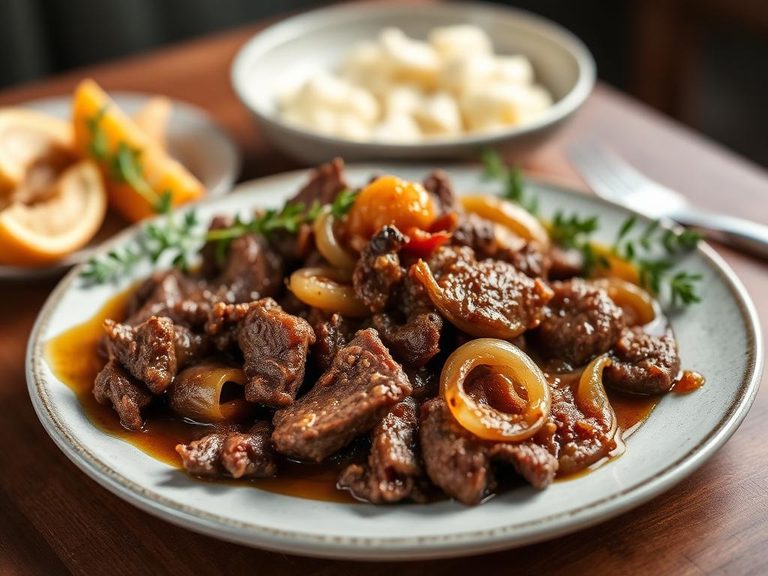
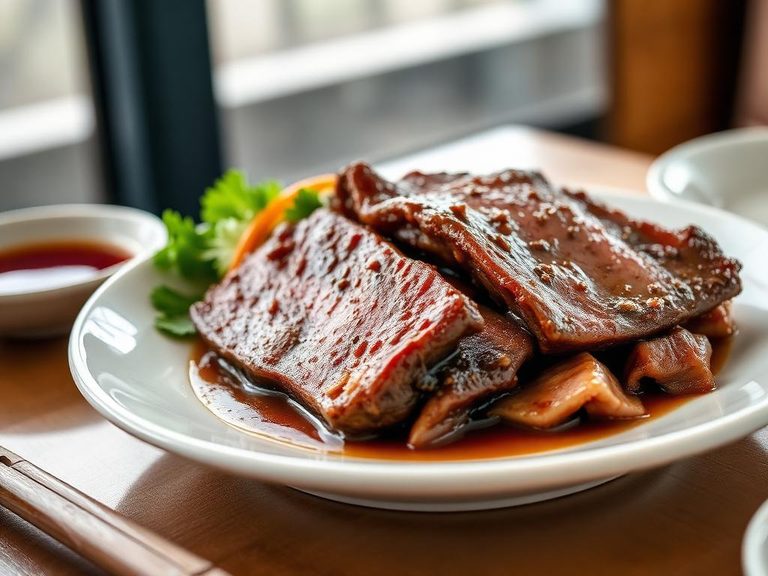
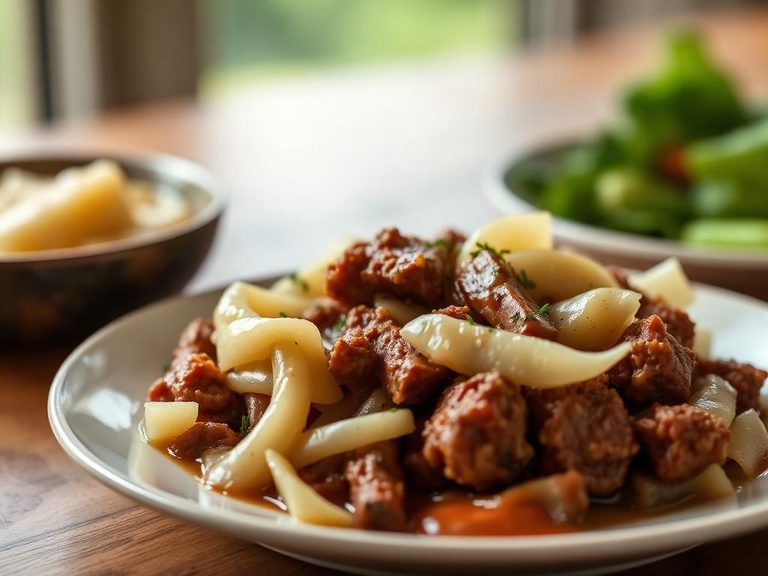
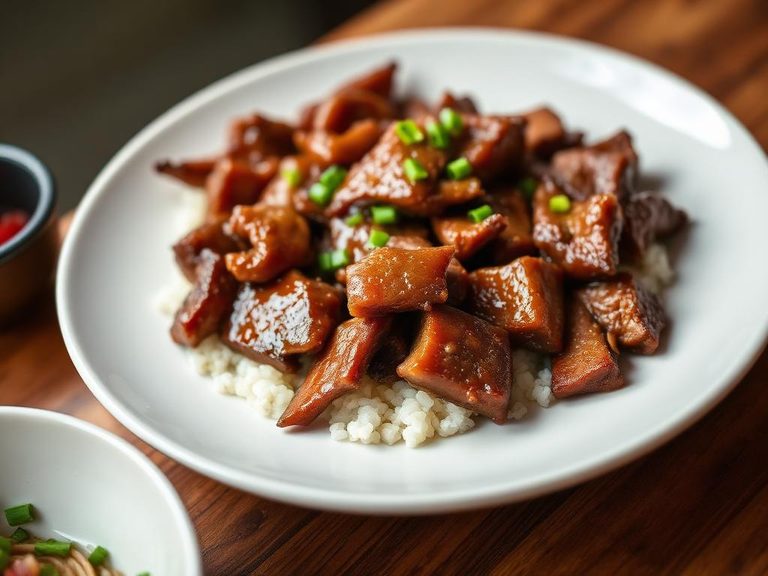
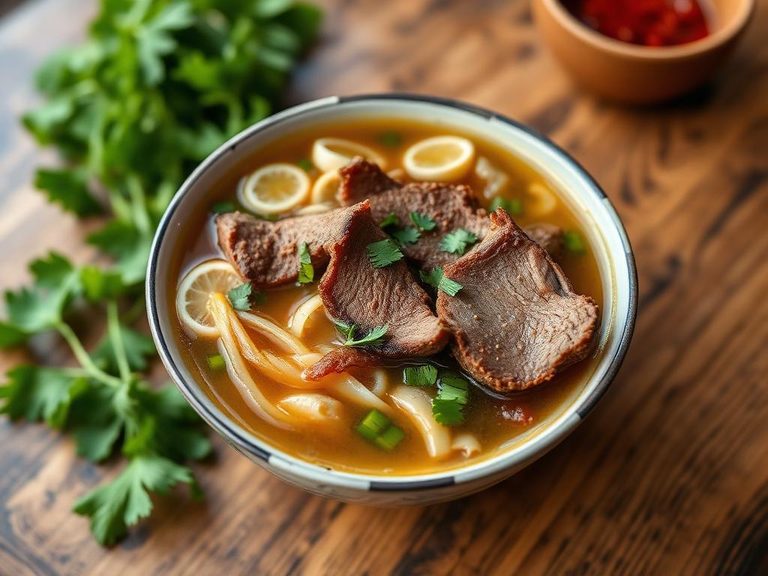
🌍 Where it's eaten
💡 Did you know?
The two main muscles of a brisket—the flat and the point—have different grain directions, which is why expert slicers cut against the grain for maximum tenderness.
Full nutrition (USDA data · scales with serving)
| Water | 56.0 g |
| Energy | 231 kcal |
| Protein | 29.4 g |
| Total lipid (fat) | 12.0 g |
| Carbohydrate, by difference | 0.00 g |
| Fiber, total dietary | 0.00 g |
| Total Sugars | 0.00 g |
| Calcium, Ca | 10.0 mg |
| Iron, Fe | 2.7 mg |
| Magnesium, Mg | 22.0 mg |
| Phosphorus, P | 227 mg |
| Potassium, K | 285 mg |
| Sodium, Na | 377 mg |
| Zinc, Zn | 7.0 mg |
| Copper, Cu | 0.12 mg |
| Selenium, Se | 27.2 ug |
| Vitamin C, total ascorbic acid | 0.00 mg |
| Thiamin | 0.07 mg |
| Riboflavin | 0.22 mg |
| Niacin | 3.7 mg |
| Vitamin B-6 | 0.35 mg |
| Folate, total | 8.0 ug |
| Folic acid | 0.00 ug |
| Folate, food | 8.0 ug |
| Folate, DFE | 8.0 ug |
| Choline, total | 105 mg |
| Vitamin B-12 | 2.6 ug |
| Vitamin B-12, added | 0.00 ug |
| Vitamin A, RAE | 1.0 ug |
| Retinol | 1.0 ug |
| Carotene, beta | 0.00 ug |
| Carotene, alpha | 0.00 ug |
| Cryptoxanthin, beta | 0.00 ug |
| Lycopene | 0.00 ug |
| Lutein + zeaxanthin | 0.00 ug |
| Vitamin E (alpha-tocopherol) | 0.14 mg |
| Vitamin E, added | 0.00 mg |
| Vitamin D (D2 + D3) | 0.20 ug |
| Vitamin K (phylloquinone) | 1.7 ug |
| Alcohol, ethyl | 0.00 g |
| Caffeine | 0.00 mg |
| Theobromine | 0.00 mg |
Fat & fatty acid profile (per 100g)
| Fatty acids, total saturated | 4.6 g |
| SFA 4:0 | 0.00 g |
| SFA 6:0 | 0.00 g |
| SFA 8:0 | 0.00 g |
| SFA 10:0 | 0.02 g |
| SFA 12:0 | 0.01 g |
| SFA 14:0 | 0.37 g |
| SFA 16:0 | 2.8 g |
| SFA 18:0 | 1.4 g |
| Fatty acids, total monounsaturated | 5.6 g |
| MUFA 16:1 | 0.52 g |
| MUFA 18:1 | 5.0 g |
| MUFA 20:1 | 0.02 g |
| MUFA 22:1 | 0.00 g |
| Fatty acids, total polyunsaturated | 0.47 g |
| PUFA 18:2 | 0.35 g |
| PUFA 18:3 | 0.07 g |
| PUFA 18:4 | 0.00 g |
| PUFA 20:4 | 0.04 g |
| PUFA 20:5 n-3 (EPA) | 0.00 g |
| PUFA 22:5 n-3 (DPA) | 0.01 g |
| PUFA 22:6 n-3 (DHA) | 0.00 g |
| Cholesterol | 94.0 mg |
Amino acid profile (per 100g)
Estimated from Beef, variety meats and by-products, mechanically separated beef, raw — USDA does not publish this profile for Beef.
| Tryptophan | 0.17 g |
| Threonine | 0.47 g |
| Isoleucine | 0.58 g |
| Leucine | 1.2 g |
| Lysine | 1.2 g |
| Methionine | 0.43 g |
| Cystine | 0.23 g |
| Phenylalanine | 0.64 g |
| Tyrosine | 0.38 g |
| Valine | 0.92 g |
| Arginine | 1.2 g |
| Histidine | 0.44 g |
| Alanine | 1.0 g |
| Aspartic acid | 1.3 g |
| Glutamic acid | 2.1 g |
| Glycine | 1.2 g |
| Proline | 0.92 g |
| Serine | 0.57 g |
FAQ
What's the difference between the flat and the point?
The flat is leaner and more uniform, often used for slicing. The point is fattier and more marbled, ideal for burnt ends or chopped beef.
Why is my brisket tough?
It likely wasn't cooked long enough. Brisket needs to reach an internal temperature of about 200-205°F (93-96°C) for the collagen to fully break down into gelatin.
Can I cook brisket in a regular oven?
Absolutely. Braise it low and slow (around 300°F/150°C) in a covered pot with some liquid until fork-tender.
Nutrient density (calculated · NRF9.3)
Nutrient Rich Foods index: beneficial nutrients (protein, fiber, vitamins, minerals) minus saturated fat, added sugar & sodium, per 100 kcal.
NRF9.3 index — Fulgoni, Keast & Drewnowski, 2009. Computed from USDA nutrients.
Weight-loss friendliness (composite index)
Energy density 2.31 kcal/g · 51% calories from protein · 0.0 g fiber · 0.0 g sugar per 100 g.
Composite of energy density (Rolls et al., 1999), protein & fiber satiety, minus sugar. A calculated heuristic — ranks satiety-per-calorie, not a clinical measure.
Dietary load (calculated from USDA values)
Potential renal acid load. Positive = acid-forming, negative = alkaline-forming.
Sodium-to-potassium ratio: 1.32 (lower is better — aim for ≤ 1)
Sodium:potassium per WHO potassium guidance. Computed from USDA nutrients.