

Beef, bacon, reduced sodium, cooked
Common food
Reduced-sodium cooked beef bacon is a rich, smoky, and intensely savory meat product made from beef belly, offering a robust, chewy texture and deep umami flavor. It provides a high-protein, high-fat profile with minimal carbohydrates, making it a dense source of energy and satiety. Its reduced sodium content offers a slightly milder saltiness compared to traditional pork bacon, while still delivering the classic crispy, fatty satisfaction.
Calorie split: 28% protein · 1% carbs · 71% fat
↓ Full nutrition💚 Why it's loved
People love beef bacon for its deep, smoky flavor and satisfying crunch, which is often described as more robust and meaty than pork bacon. It's a versatile ingredient that adds a savory punch to breakfasts, salads, and sandwiches, and it holds cultural significance in regions where beef is preferred over pork.
⚠️ Watch-outs & how to enjoy it better
The high fat and calorie content (541 kcal per 100g) can be a concern for those watching calorie intake or managing heart health. Additionally, while reduced in sodium, it still contains salt, so individuals with hypertension or kidney issues should consume it in moderation. To counteract these, pair it with fiber-rich vegetables or whole grains, practice portion control (e.g., 1-2 slices per meal), and choose cooking methods like baking or grilling to reduce added fat.
Key benefits
- High in protein (37g per 100g) for muscle maintenance and satiety
- Very low in carbohydrates (1.43g per 100g), suitable for low-carb diets
- Reduced sodium content compared to standard bacon
- Rich in fat for energy and flavor enhancement
- Zero sugar and fiber, making it a simple, unprocessed meat option
🍽️ Popular dishes
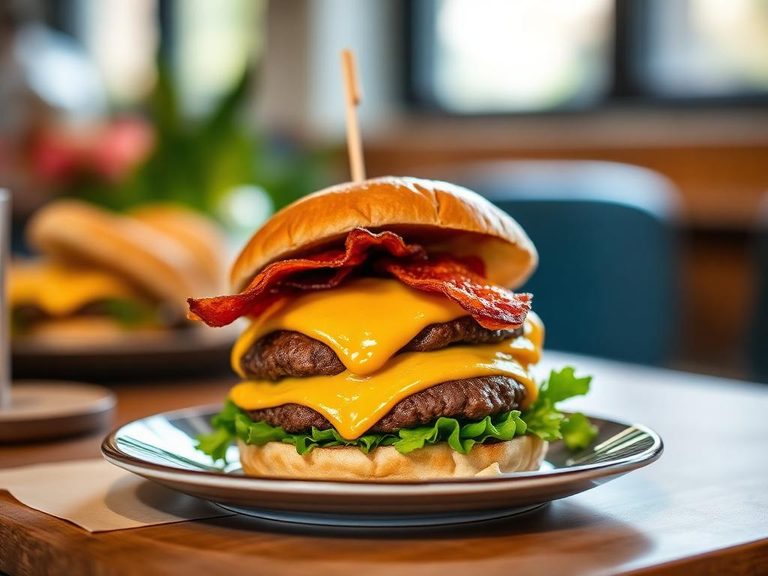

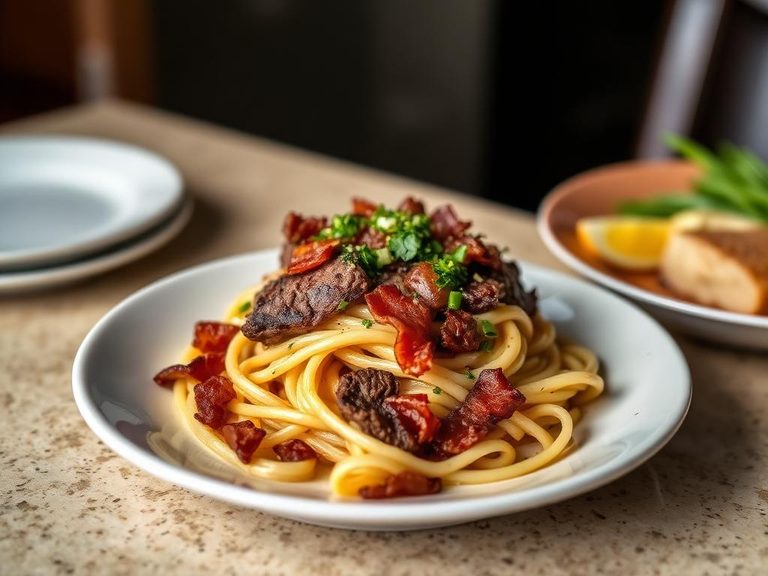
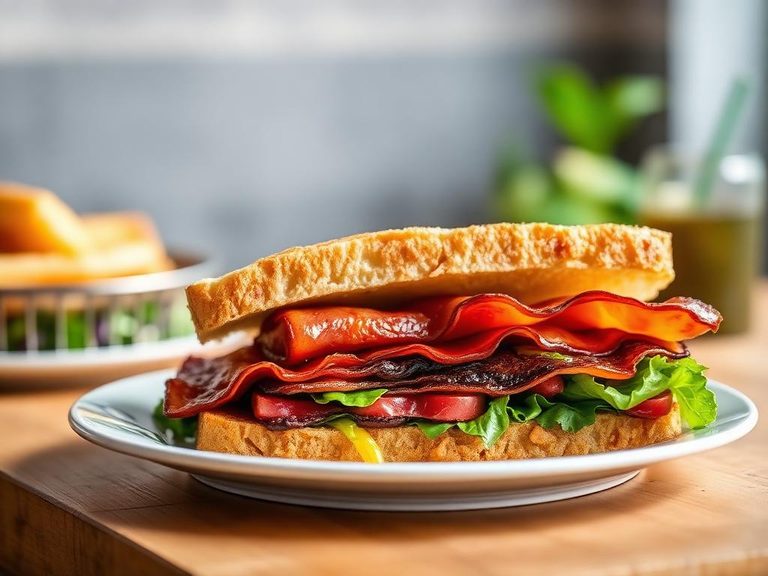
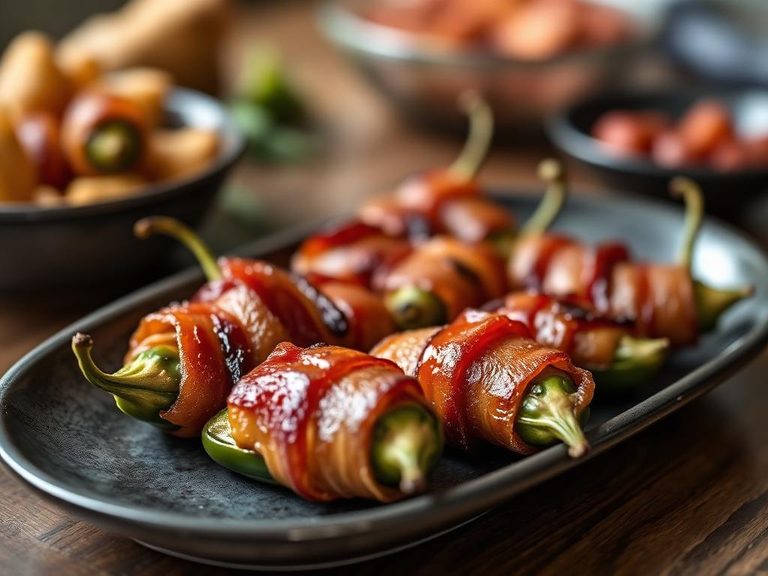
🌍 Where it's eaten
💡 Did you know?
Beef bacon is often made from the navel or belly of the cow, similar to pork bacon, but it's cured and smoked to achieve a distinct, smoky flavor that's popular in regions where pork is not consumed for religious or cultural reasons.
Full nutrition (USDA data · scales with serving)
| Water | 12.3 g |
| Energy | 541 kcal |
| Protein | 37.0 g |
| Total lipid (fat) | 41.8 g |
| Carbohydrate, by difference | 1.4 g |
| Fiber, total dietary | 0.00 g |
| Total Sugars | 0.00 g |
| Calcium, Ca | 11.0 mg |
| Iron, Fe | 1.4 mg |
| Magnesium, Mg | 33.0 mg |
| Phosphorus, P | 533 mg |
| Potassium, K | 565 mg |
| Sodium, Na | 1030 mg |
| Zinc, Zn | 3.5 mg |
| Copper, Cu | 0.16 mg |
| Selenium, Se | 62.0 ug |
| Vitamin C, total ascorbic acid | 0.00 mg |
| Thiamin | 0.40 mg |
| Riboflavin | 0.26 mg |
| Niacin | 11.1 mg |
| Vitamin B-6 | 0.35 mg |
| Folate, total | 2.0 ug |
| Folic acid | 0.00 ug |
| Folate, food | 2.0 ug |
| Folate, DFE | 2.0 ug |
| Choline, total | 123 mg |
| Vitamin B-12 | 1.2 ug |
| Vitamin B-12, added | 0.00 ug |
| Vitamin A, RAE | 11.0 ug |
| Retinol | 11.0 ug |
| Carotene, beta | 0.00 ug |
| Carotene, alpha | 0.00 ug |
| Cryptoxanthin, beta | 0.00 ug |
| Lycopene | 0.00 ug |
| Lutein + zeaxanthin | 0.00 ug |
| Vitamin E (alpha-tocopherol) | 0.31 mg |
| Vitamin E, added | 0.00 mg |
| Vitamin D (D2 + D3) | 1.0 ug |
| Vitamin K (phylloquinone) | 0.10 ug |
| Alcohol, ethyl | 0.00 g |
| Caffeine | 0.00 mg |
| Theobromine | 0.00 mg |
Fat & fatty acid profile (per 100g)
| Fatty acids, total saturated | 13.7 g |
| SFA 4:0 | 0.00 g |
| SFA 6:0 | 0.00 g |
| SFA 8:0 | 0.00 g |
| SFA 10:0 | 0.01 g |
| SFA 12:0 | 0.00 g |
| SFA 14:0 | 0.53 g |
| SFA 16:0 | 8.7 g |
| SFA 18:0 | 4.3 g |
| Fatty acids, total monounsaturated | 18.5 g |
| MUFA 16:1 | 1.2 g |
| MUFA 18:1 | 16.9 g |
| MUFA 20:1 | 0.32 g |
| MUFA 22:1 | 0.00 g |
| Fatty acids, total polyunsaturated | 4.5 g |
| PUFA 18:2 | 4.0 g |
| PUFA 18:3 | 0.20 g |
| PUFA 18:4 | 0.00 g |
| PUFA 20:4 | 0.15 g |
| PUFA 20:5 n-3 (EPA) | 0.00 g |
| PUFA 22:5 n-3 (DPA) | 0.00 g |
| PUFA 22:6 n-3 (DHA) | 0.00 g |
| Cholesterol | 110 mg |
Amino acid profile (per 100g)
Estimated from Beef, variety meats and by-products, mechanically separated beef, raw — USDA does not publish this profile for Beef.
| Tryptophan | 0.17 g |
| Threonine | 0.47 g |
| Isoleucine | 0.58 g |
| Leucine | 1.2 g |
| Lysine | 1.2 g |
| Methionine | 0.43 g |
| Cystine | 0.23 g |
| Phenylalanine | 0.64 g |
| Tyrosine | 0.38 g |
| Valine | 0.92 g |
| Arginine | 1.2 g |
| Histidine | 0.44 g |
| Alanine | 1.0 g |
| Aspartic acid | 1.3 g |
| Glutamic acid | 2.1 g |
| Glycine | 1.2 g |
| Proline | 0.92 g |
| Serine | 0.57 g |
FAQ
Is beef bacon healthier than pork bacon?
Beef bacon can be slightly healthier in terms of sodium if it's reduced-sodium, but it's still high in fat and calories. Both are similar in protein content, so the choice often depends on dietary preferences or restrictions.
Can I use beef bacon in recipes that call for pork bacon?
Yes, beef bacon can be a 1:1 substitute in most recipes, though it may have a slightly different texture and flavor. It's especially useful in dishes where pork is not consumed.
How should I store cooked beef bacon?
Store cooked beef bacon in an airtight container in the refrigerator for up to 4-5 days, or freeze it for up to 1 month. Reheat in a skillet or oven to maintain crispiness.
Nutrient density (calculated · NRF9.3)
Nutrient Rich Foods index: beneficial nutrients (protein, fiber, vitamins, minerals) minus saturated fat, added sugar & sodium, per 100 kcal.
NRF9.3 index — Fulgoni, Keast & Drewnowski, 2009. Computed from USDA nutrients.
Weight-loss friendliness (composite index)
Energy density 5.41 kcal/g · 27% calories from protein · 0.0 g fiber · 0.0 g sugar per 100 g.
Composite of energy density (Rolls et al., 1999), protein & fiber satiety, minus sugar. A calculated heuristic — ranks satiety-per-calorie, not a clinical measure.
Dietary load (calculated from USDA values)
Potential renal acid load. Positive = acid-forming, negative = alkaline-forming.
Sodium-to-potassium ratio: 1.82 (lower is better — aim for ≤ 1)
Sodium:potassium per WHO potassium guidance. Computed from USDA nutrients.