

Turkey bacon, reduced sodium, cooked
Common food

Photo: Wikipedia
Turkey bacon is a lean, processed poultry product designed to mimic traditional pork bacon. It typically has a milder, less smoky flavor and a firmer, chewier texture that doesn't crisp up in the same way. Nutritionally, it's a lower-fat, lower-calorie alternative, though often higher in sodium.
Calorie split: 21% protein · 8% carbs · 71% fat
↓ Full nutrition💚 Why it's loved
People love it for the familiar sizzle and savory, salty flavor of bacon without the pork, making it a versatile staple for breakfast plates, salads, and sandwiches across many cultures.
⚠️ Watch-outs & how to enjoy it better
The high sodium content can be a concern for those monitoring blood pressure, and the processed nature means it's not a whole food. To counteract, pair it with potassium-rich foods like avocado or spinach, and use it as a flavor accent rather than the main protein.
Key benefits
- Lower in saturated fat than pork bacon
- Significant source of protein per serving
- Lower calorie density for portion control
- Suitable for pork-free dietary restrictions
🍽️ Popular dishes
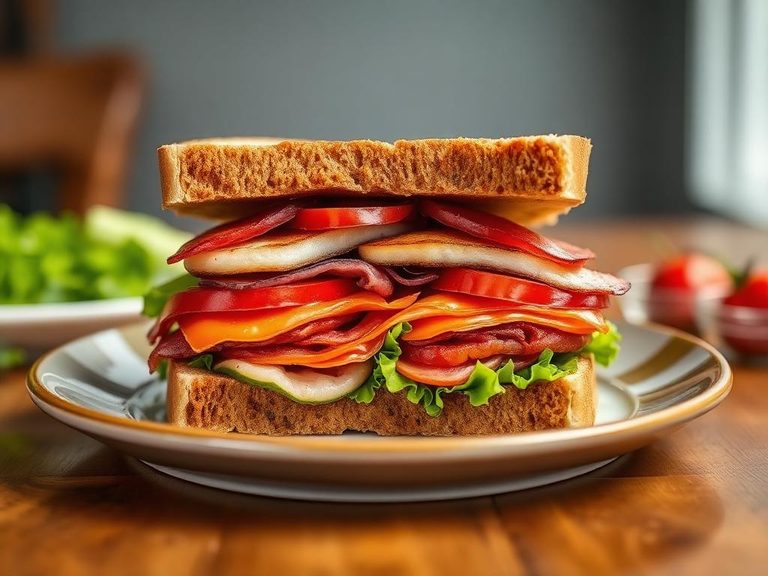
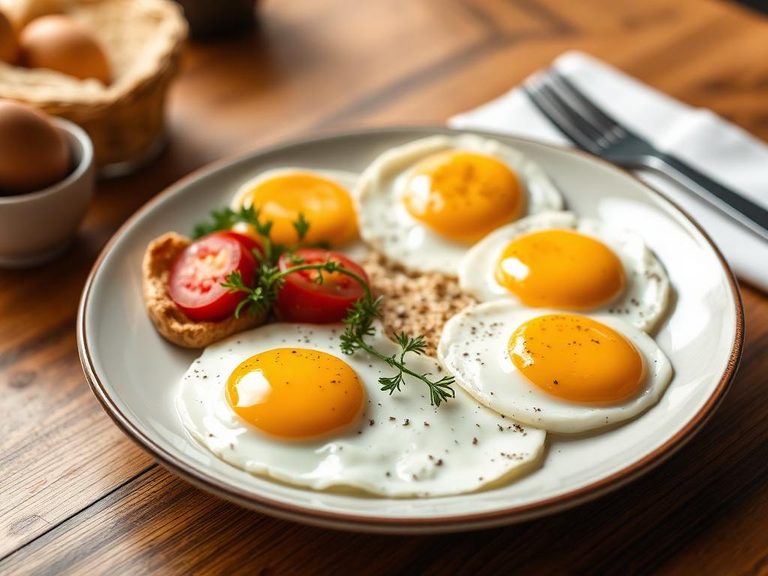
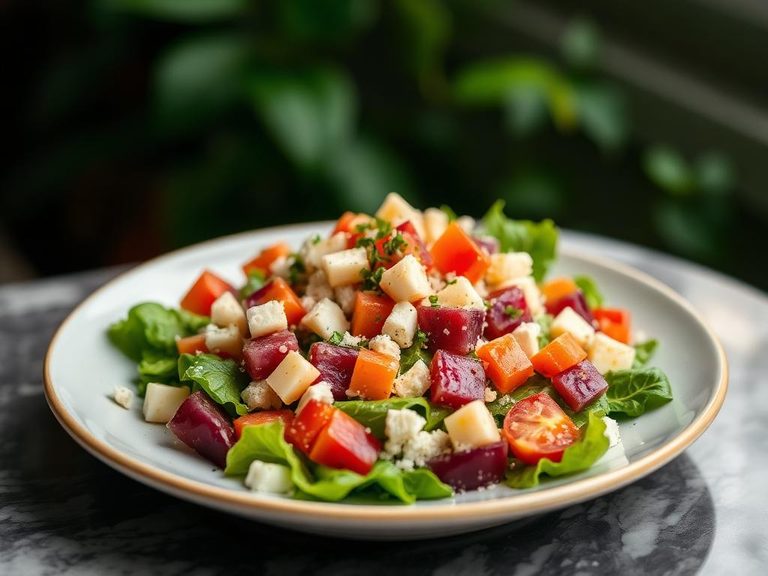
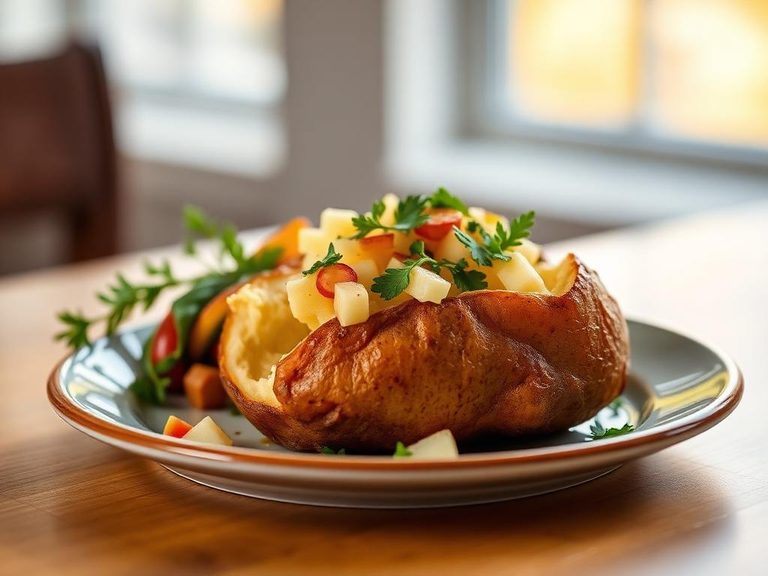
🌍 Where it's eaten
💡 Did you know?
Despite its name, most commercial turkey bacon is made from dark turkey meat mixed with fat, seasonings, and binders, not from a whole turkey breast.
Full nutrition (USDA data · scales with serving)
| Water | 58.9 g |
| Energy | 253 kcal |
| Protein | 13.3 g |
| Total lipid (fat) | 20.0 g |
| Carbohydrate, by difference | 4.8 g |
| Fiber, total dietary | 0.00 g |
| Total Sugars | 0.00 g |
| Calcium, Ca | 10.0 mg |
| Iron, Fe | 0.72 mg |
| Magnesium, Mg | 19.0 mg |
| Phosphorus, P | 145 mg |
| Potassium, K | 156 mg |
| Sodium, Na | 900 mg |
| Zinc, Zn | 1.6 mg |
| Copper, Cu | 0.06 mg |
| Selenium, Se | 19.4 ug |
| Vitamin C, total ascorbic acid | 24.0 mg |
| Thiamin | 0.03 mg |
| Riboflavin | 0.18 mg |
| Niacin | 6.2 mg |
| Vitamin B-6 | 0.40 mg |
| Folate, total | 6.0 ug |
| Folic acid | 0.00 ug |
| Folate, food | 6.0 ug |
| Folate, DFE | 6.0 ug |
| Choline, total | 56.9 mg |
| Vitamin B-12 | 0.66 ug |
| Vitamin B-12, added | 0.00 ug |
| Vitamin A, RAE | 8.0 ug |
| Retinol | 8.0 ug |
| Carotene, beta | 0.00 ug |
| Carotene, alpha | 0.00 ug |
| Cryptoxanthin, beta | 0.00 ug |
| Lycopene | 0.00 ug |
| Lutein + zeaxanthin | 0.00 ug |
| Vitamin E (alpha-tocopherol) | 2.7 mg |
| Vitamin E, added | 0.00 mg |
| Vitamin D (D2 + D3) | 0.20 ug |
| Vitamin K (phylloquinone) | 10.8 ug |
| Alcohol, ethyl | 0.00 g |
| Caffeine | 0.00 mg |
| Theobromine | 0.00 mg |
Fat & fatty acid profile (per 100g)
| Fatty acids, total saturated | 6.7 g |
| SFA 4:0 | 0.00 g |
| SFA 6:0 | 0.00 g |
| SFA 8:0 | 0.00 g |
| SFA 10:0 | 0.01 g |
| SFA 12:0 | 0.04 g |
| SFA 14:0 | 0.13 g |
| SFA 16:0 | 4.2 g |
| SFA 18:0 | 1.8 g |
| Fatty acids, total monounsaturated | 8.6 g |
| MUFA 16:1 | 0.15 g |
| MUFA 18:1 | 8.2 g |
| MUFA 20:1 | 0.17 g |
| MUFA 22:1 | 0.00 g |
| Fatty acids, total polyunsaturated | 4.3 g |
| PUFA 18:2 | 3.1 g |
| PUFA 18:3 | 1.1 g |
| PUFA 18:4 | 0.00 g |
| PUFA 20:4 | 0.04 g |
| PUFA 20:5 n-3 (EPA) | 0.00 g |
| PUFA 22:5 n-3 (DPA) | 0.00 g |
| PUFA 22:6 n-3 (DHA) | 0.00 g |
| Cholesterol | 100 mg |
Amino acid profile (per 100g)
Estimated from Bacon, turkey, low sodium — USDA does not publish this profile for Turkey bacon.
| Tryptophan | 0.19 g |
| Threonine | 0.65 g |
| Isoleucine | 0.52 g |
| Leucine | 1.3 g |
| Lysine | 1.5 g |
| Methionine | 0.47 g |
| Cystine | 0.17 g |
| Phenylalanine | 0.59 g |
| Tyrosine | 0.53 g |
| Valine | 0.59 g |
| Arginine | 1.1 g |
| Histidine | 0.49 g |
| Alanine | 1.0 g |
| Aspartic acid | 1.5 g |
| Glutamic acid | 2.5 g |
| Glycine | 0.93 g |
| Proline | 1.1 g |
| Serine | 0.72 g |
FAQ
Is turkey bacon healthier than pork bacon?
Generally, yes. It has fewer calories, less total fat, and less saturated fat. However, it often contains comparable or higher sodium levels, so it's not a universally 'healthier' choice for everyone.
Can I get turkey bacon crispy?
It's more challenging than pork bacon due to lower fat content. Use a non-stick pan over medium heat, don't overcrowd, and cook slowly. Some people find baking it on a rack in the oven yields the best texture.
What is turkey bacon made of?
The primary ingredient is ground dark turkey meat, which is then formed into strips with added water, salt, sugar, spices, and often sodium phosphates for moisture retention and smoke flavor for taste.
Nutrient density (calculated · NRF9.3)
Nutrient Rich Foods index: beneficial nutrients (protein, fiber, vitamins, minerals) minus saturated fat, added sugar & sodium, per 100 kcal.
NRF9.3 index — Fulgoni, Keast & Drewnowski, 2009. Computed from USDA nutrients.
Weight-loss friendliness (composite index)
Energy density 2.53 kcal/g · 21% calories from protein · 0.0 g fiber · 0.0 g sugar per 100 g.
Composite of energy density (Rolls et al., 1999), protein & fiber satiety, minus sugar. A calculated heuristic — ranks satiety-per-calorie, not a clinical measure.
Dietary load (calculated from USDA values)
Potential renal acid load. Positive = acid-forming, negative = alkaline-forming.
Sodium-to-potassium ratio: 5.77 (lower is better — aim for ≤ 1)
Sodium:potassium per WHO potassium guidance. Computed from USDA nutrients.