

Beef and vegetables excluding carrots, broccoli, and dark-green leafy; no potatoes, no sauce
Common food

Photo: Wikipedia
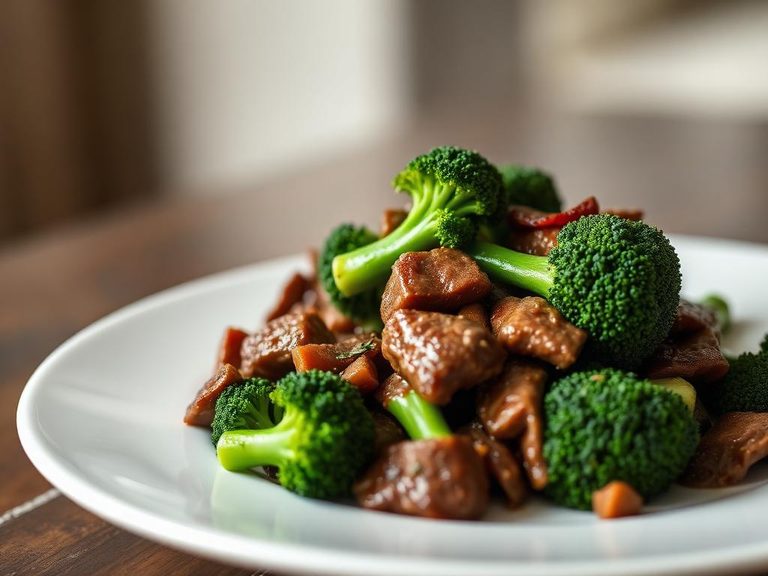
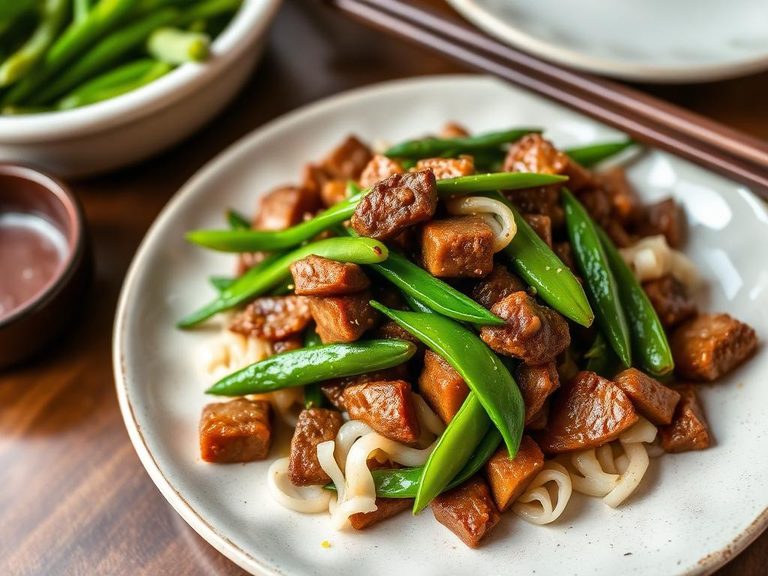
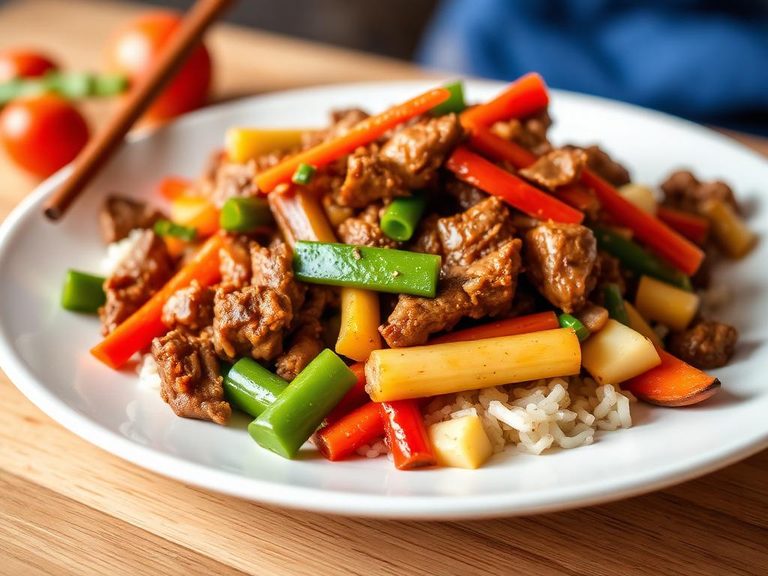
This is a simple, lean stir-fry or sauté of beef strips with a medley of non-starchy vegetables like bell peppers, onions, mushrooms, and zucchini. The texture is a satisfying contrast between tender, juicy beef and crisp-tender vegetables, with a savory, umami-rich flavor profile from the beef. Nutritionally, it's a high-protein, moderate-fat dish with a low carbohydrate count, making it a staple for balanced, protein-focused meals.
Calorie split: 32% protein · 17% carbs · 51% fat
↓ Full nutrition💚 Why it's loved
People love it for its hearty, savory satisfaction and incredible versatility—it's a blank canvas for countless flavor profiles, from garlic-ginger Asian styles to herbaceous Mediterranean preparations. It's a reliable, quick weeknight staple that feels nourishing and substantial.
⚠️ Watch-outs & how to enjoy it better
The primary concern is the potential for high sodium content if using pre-made sauces or seasoned broths. Those watching their saturated fat intake should opt for leaner cuts like sirloin or round. To counteract, use low-sodium soy sauce or tamari, flavor with aromatics (garlic, ginger, herbs) instead of salt, and trim visible fat from the beef before cooking.
Key benefits
- Excellent source of complete protein for muscle maintenance and satiety.
- Rich in B vitamins (like B12 and niacin) from the beef for energy metabolism.
- Provides iron and zinc, essential minerals for immune function and oxygen transport.
- Low in carbohydrates and sugar, suitable for low-carb or ketogenic dietary patterns.
- High-volume, nutrient-dense meal that supports weight management goals.
🍽️ Popular dishes


🌍 Where it's eaten
💡 Did you know?
The technique of quickly cooking small, uniform pieces of beef and vegetables in a very hot wok or skillet is a cornerstone of Chinese cooking called 'chǎo' (炒), which literally means 'to stir and fry' and is designed to preserve texture and nutrients.
Full nutrition (USDA data · scales with serving)
| Water | 76.5 g |
| Energy | 121 kcal |
| Protein | 10.0 g |
| Total lipid (fat) | 7.1 g |
| Carbohydrate, by difference | 5.2 g |
| Fiber, total dietary | 1.1 g |
| Total Sugars | 0.99 g |
| Calcium, Ca | 12.0 mg |
| Iron, Fe | 0.99 mg |
| Magnesium, Mg | 16.0 mg |
| Phosphorus, P | 80.0 mg |
| Potassium, K | 154 mg |
| Sodium, Na | 324 mg |
| Zinc, Zn | 1.7 mg |
| Copper, Cu | 0.05 mg |
| Selenium, Se | 9.8 ug |
| Vitamin C, total ascorbic acid | 1.5 mg |
| Thiamin | 0.03 mg |
| Riboflavin | 0.08 mg |
| Niacin | 2.0 mg |
| Vitamin B-6 | 0.15 mg |
| Folate, total | 15.0 ug |
| Folic acid | 0.00 ug |
| Folate, food | 15.0 ug |
| Folate, DFE | 15.0 ug |
| Choline, total | 42.3 mg |
| Vitamin B-12 | 0.51 ug |
| Vitamin B-12, added | 0.00 ug |
| Vitamin A, RAE | 6.0 ug |
| Retinol | 0.00 ug |
| Carotene, beta | 55.0 ug |
| Carotene, alpha | 14.0 ug |
| Cryptoxanthin, beta | 24.0 ug |
| Lycopene | 0.00 ug |
| Lutein + zeaxanthin | 239 ug |
| Vitamin E (alpha-tocopherol) | 0.95 mg |
| Vitamin E, added | 0.00 mg |
| Vitamin D (D2 + D3) | 0.00 ug |
| Vitamin K (phylloquinone) | 12.4 ug |
| Alcohol, ethyl | 0.00 g |
| Caffeine | 0.00 mg |
| Theobromine | 0.00 mg |
Fat & fatty acid profile (per 100g)
| Fatty acids, total saturated | 1.6 g |
| SFA 4:0 | 0.00 g |
| SFA 6:0 | 0.00 g |
| SFA 8:0 | 0.00 g |
| SFA 10:0 | 0.01 g |
| SFA 12:0 | 0.01 g |
| SFA 14:0 | 0.08 g |
| SFA 16:0 | 1.1 g |
| SFA 18:0 | 0.42 g |
| Fatty acids, total monounsaturated | 3.0 g |
| MUFA 16:1 | 0.13 g |
| MUFA 18:1 | 2.8 g |
| MUFA 20:1 | 0.03 g |
| MUFA 22:1 | 0.00 g |
| Fatty acids, total polyunsaturated | 1.8 g |
| PUFA 18:2 | 1.6 g |
| PUFA 18:3 | 0.22 g |
| PUFA 18:4 | 0.00 g |
| PUFA 20:4 | 0.01 g |
| PUFA 20:5 n-3 (EPA) | 0.00 g |
| PUFA 22:5 n-3 (DPA) | 0.01 g |
| PUFA 22:6 n-3 (DHA) | 0.00 g |
| Cholesterol | 27.0 mg |
Amino acid profile (per 100g)
Estimated from Restaurant, Chinese, beef and vegetables — USDA does not publish this profile for Beef and vegetables excluding carrots.
| Tryptophan | 0.08 g |
| Threonine | 0.31 g |
| Isoleucine | 0.31 g |
| Leucine | 0.53 g |
| Lysine | 0.55 g |
| Methionine | 0.16 g |
| Cystine | 0.07 g |
| Phenylalanine | 0.32 g |
| Tyrosine | 0.27 g |
| Valine | 0.33 g |
| Arginine | 0.52 g |
| Histidine | 0.21 g |
| Alanine | 0.38 g |
| Aspartic acid | 0.67 g |
| Glutamic acid | 1.3 g |
| Glycine | 0.28 g |
| Proline | 0.26 g |
| Serine | 0.29 g |
FAQ
How do I keep the beef tender and not chewy?
Slice the beef thinly against the grain, and consider a brief marinade with a little cornstarch, oil, and soy sauce (a technique called 'velveting') before a quick, high-heat sear.
What vegetables work best if I'm excluding carrots, broccoli, and dark greens?
Excellent choices include bell peppers (all colors), onions, mushrooms, zucchini, summer squash, snap peas, water chestnuts, and bamboo shoots for varied texture and flavor.
Is this dish suitable for a low-FODMAP diet?
It can be, but it depends on the vegetables chosen. Avoid onions and garlic (use garlic-infused oil instead) and be mindful of portion sizes for vegetables like mushrooms and bell peppers.
Nutrient density (calculated · NRF9.3)
Nutrient Rich Foods index: beneficial nutrients (protein, fiber, vitamins, minerals) minus saturated fat, added sugar & sodium, per 100 kcal.
NRF9.3 index — Fulgoni, Keast & Drewnowski, 2009. Computed from USDA nutrients.
Weight-loss friendliness (composite index)
Energy density 1.21 kcal/g · 33% calories from protein · 1.1 g fiber · 1.0 g sugar per 100 g.
Composite of energy density (Rolls et al., 1999), protein & fiber satiety, minus sugar. A calculated heuristic — ranks satiety-per-calorie, not a clinical measure.
Dietary load (calculated from USDA values)
Potential renal acid load. Positive = acid-forming, negative = alkaline-forming.
Sodium-to-potassium ratio: 2.10 (lower is better — aim for ≤ 1)
Sodium:potassium per WHO potassium guidance. Computed from USDA nutrients.