

Beans, pinto, mature seeds, cooked, boiled, with salt
Whole food · Legumes and Legume Products
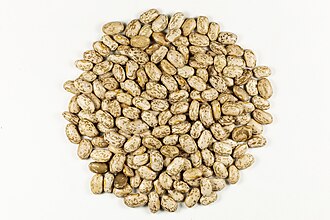
Photo: Wikipedia
Pinto beans are the speckled workhorse of the American Southwest, transforming from a dry, hard seed into a creamy, earthy, and slightly nutty staple after a long simmer. Their texture is the perfect balance of tender and substantial, making them ideal for holding up in hearty stews and refried dishes. Nutritionally, they are a powerhouse of plant-based protein and fiber, offering sustained energy with a very low fat content.
Calorie split: 25% protein · 71% carbs · 4% fat
↓ Full nutrition💚 Why it's loved
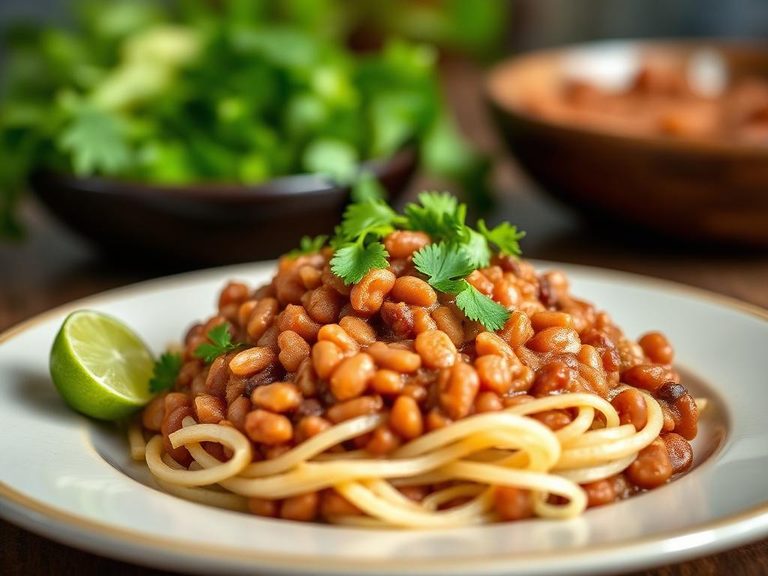
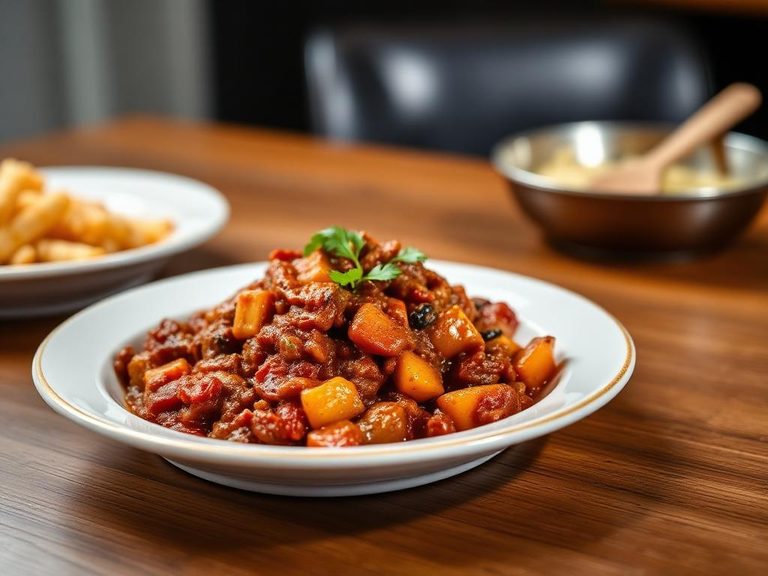
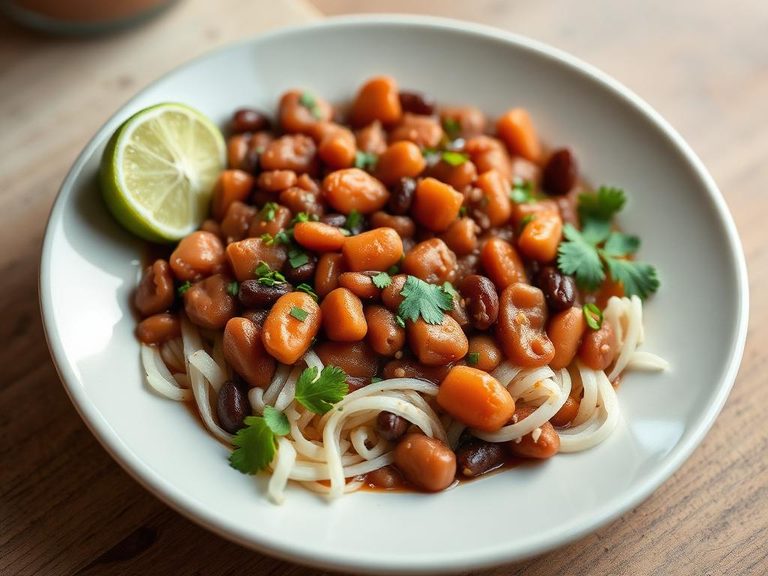
People love pinto beans for their comforting, versatile flavor that absorbs spices and aromatics beautifully, and for their central role in iconic dishes from chili to refried beans. They are a beloved, affordable staple in many cultures, symbolizing home cooking and sustenance.
⚠️ Watch-outs & how to enjoy it better
The high fiber content can cause digestive discomfort (gas, bloating) for some, especially if not accustomed to it. The canned variety often contains significant sodium. To counteract, start with smaller portions, rinse canned beans thoroughly to reduce sodium by up to 40%, and gradually increase fiber intake to allow your system to adjust.
Key benefits
- Excellent source of plant-based protein (9g per 100g cooked).
- High in dietary fiber (9g per 100g), promoting digestive health and satiety.
- Rich in folate, a B-vitamin essential for cell function.
- Contains minerals like iron, magnesium, and potassium.
- Low in fat and naturally cholesterol-free.
🍽️ Popular dishes
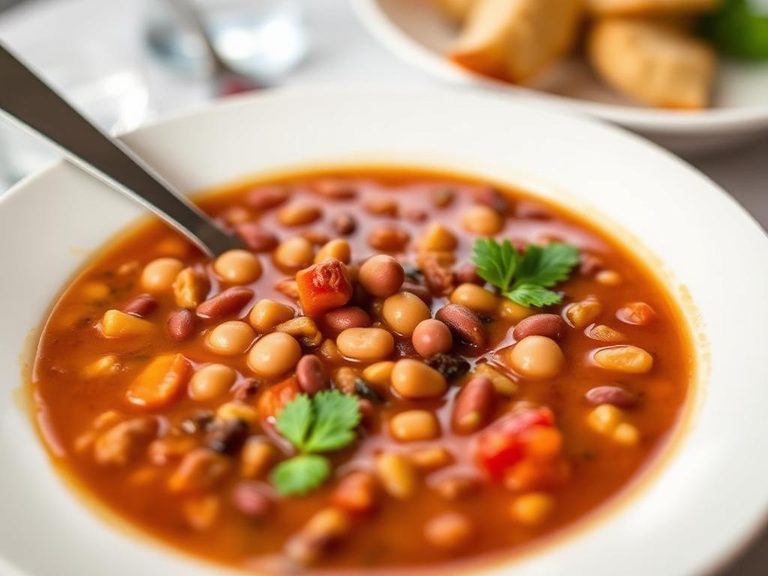

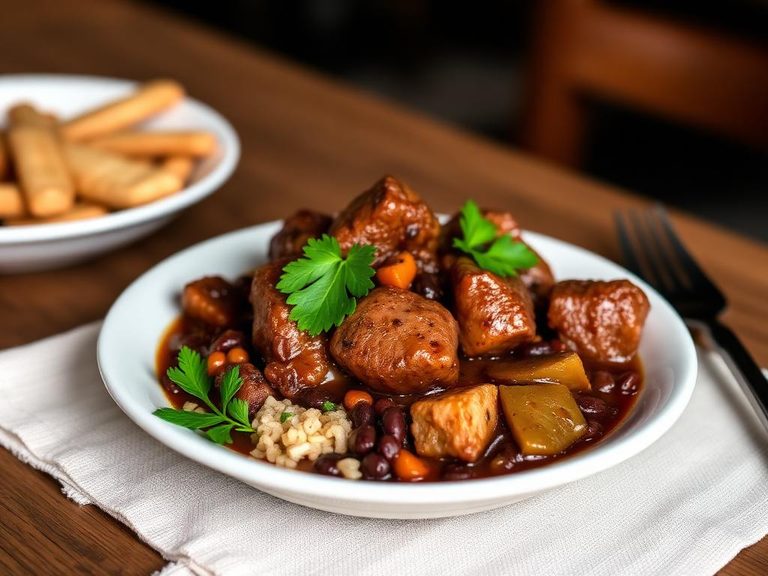
🌍 Where it's eaten
💡 Did you know?
The name 'pinto' means 'painted' in Spanish, referring to their distinctive speckled appearance, which fades to a uniform beige or pinkish-brown when cooked.
Full nutrition (USDA data · scales with serving)
| Water | 63.0 g |
| Energy | 143 kcal |
| Energy | 600 kj |
| Protein | 9.0 g |
| Total lipid (fat) | 0.65 g |
| Ash | 1.2 g |
| Carbohydrate, by difference | 26.2 g |
| Fiber, total dietary | 9.0 g |
| Total Sugars | 0.34 g |
| Sucrose | 0.34 g |
| Glucose | 0.00 g |
| Fructose | 0.00 g |
| Lactose | 0.00 g |
| Maltose | 0.00 g |
| Starch | 15.2 g |
| Calcium, Ca | 46.0 mg |
| Iron, Fe | 2.1 mg |
| Magnesium, Mg | 50.0 mg |
| Phosphorus, P | 147 mg |
| Potassium, K | 436 mg |
| Sodium, Na | 238 mg |
| Zinc, Zn | 0.98 mg |
| Copper, Cu | 0.22 mg |
| Manganese, Mn | 0.45 mg |
| Selenium, Se | 6.2 ug |
| Vitamin C, total ascorbic acid | 0.80 mg |
| Thiamin | 0.19 mg |
| Riboflavin | 0.06 mg |
| Niacin | 0.32 mg |
| Pantothenic acid | 0.21 mg |
| Vitamin B-6 | 0.23 mg |
| Folate, total | 172 ug |
| Folic acid | 0.00 ug |
| Folate, food | 172 ug |
| Folate, DFE | 172 ug |
| Vitamin B-12 | 0.00 ug |
| Vitamin A, RAE | 0.00 ug |
| Retinol | 0.00 ug |
| Carotene, beta | 0.00 ug |
| Carotene, alpha | 0.00 ug |
| Cryptoxanthin, beta | 0.00 ug |
| Vitamin A, IU | 0.00 iu |
| Lycopene | 0.00 ug |
| Lutein + zeaxanthin | 0.00 ug |
| Vitamin E (alpha-tocopherol) | 0.94 mg |
| Vitamin D (D2 + D3), International Units | 0.00 iu |
| Vitamin D (D2 + D3) | 0.00 ug |
| Vitamin K (phylloquinone) | 3.5 ug |
| Vitamin K (Dihydrophylloquinone) | 0.00 ug |
Fat & fatty acid profile (per 100g)
| Fatty acids, total saturated | 0.11 g |
| SFA 14:0 | 0.00 g |
| SFA 16:0 | 0.11 g |
| SFA 18:0 | 0.00 g |
| Fatty acids, total monounsaturated | 0.11 g |
| MUFA 18:1 | 0.11 g |
| Fatty acids, total polyunsaturated | 0.19 g |
| PUFA 18:2 | 0.08 g |
| PUFA 18:3 | 0.11 g |
| Fatty acids, total trans | 0.00 g |
| Cholesterol | 0.00 mg |
Amino acid profile (per 100g)
| Tryptophan | 0.10 g |
| Threonine | 0.35 g |
| Isoleucine | 0.37 g |
| Leucine | 0.66 g |
| Lysine | 0.57 g |
| Methionine | 0.13 g |
| Cystine | 0.09 g |
| Phenylalanine | 0.45 g |
| Tyrosine | 0.23 g |
| Valine | 0.43 g |
| Arginine | 0.52 g |
| Histidine | 0.23 g |
| Alanine | 0.35 g |
| Aspartic acid | 1.0 g |
| Glutamic acid | 1.3 g |
| Glycine | 0.33 g |
| Proline | 0.35 g |
| Serine | 0.45 g |
FAQ
Do I need to soak pinto beans before cooking?
Soaking is recommended for dry beans to reduce cooking time and improve digestibility by helping break down complex sugars that cause gas. A quick-soak method involves boiling for 2 minutes, then letting them stand covered for an hour before draining and cooking fresh water.
Are canned pinto beans as nutritious as dried?
Yes, canned pinto beans retain most of their protein, fiber, and minerals. The main difference is higher sodium content in the canning liquid. Rinsing and draining canned beans can reduce sodium by about 40% without significantly affecting nutrient content.
Why do my pinto beans stay hard after hours of cooking?
This is often caused by adding acidic ingredients (like tomatoes, vinegar, or salt) too early, which can toughen the bean skins. Also, using hard water or very old beans can prevent softening. Cook beans in plain water or broth until tender, then add acidic components and seasonings.
Nutrient density (calculated · NRF9.3)
Nutrient Rich Foods index: beneficial nutrients (protein, fiber, vitamins, minerals) minus saturated fat, added sugar & sodium, per 100 kcal.
NRF9.3 index — Fulgoni, Keast & Drewnowski, 2009. Computed from USDA nutrients.
Weight-loss friendliness (composite index)
Energy density 1.43 kcal/g · 25% calories from protein · 9.0 g fiber · 0.3 g sugar per 100 g.
Composite of energy density (Rolls et al., 1999), protein & fiber satiety, minus sugar. A calculated heuristic — ranks satiety-per-calorie, not a clinical measure.
Dietary load (calculated from USDA values)
Potential renal acid load. Positive = acid-forming, negative = alkaline-forming.
Sodium-to-potassium ratio: 0.55 (lower is better — aim for ≤ 1)
Sodium:potassium per WHO potassium guidance. Computed from USDA nutrients.