

Beans, from dried, NS as to type, fat added
Common food

Photo: Wikipedia
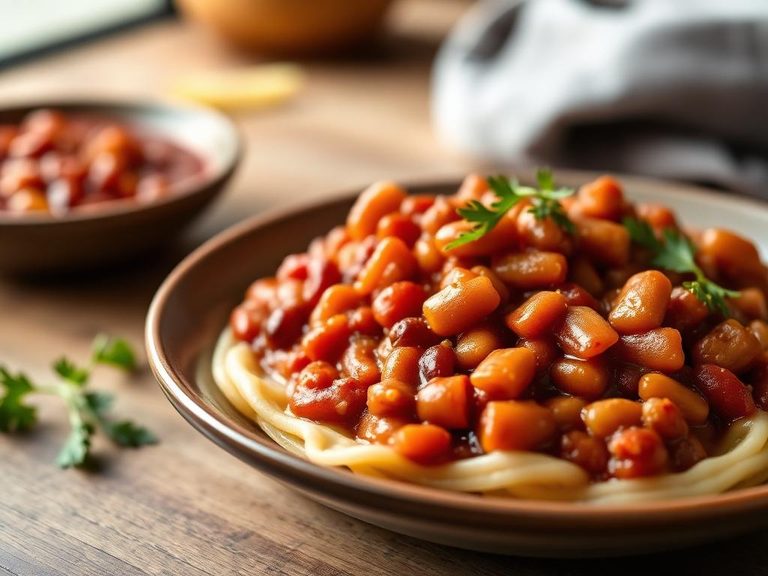
This is a hearty bowl of rehydrated beans, simmered until tender and enriched with a touch of fat for a richer mouthfeel. Expect a creamy, starchy texture with a mild, earthy flavor that beautifully absorbs surrounding seasonings. Nutritionally, it's a solid source of plant-based protein and dietary fiber, with a notable 7.08g of fat per 100g.
Calorie split: 17% protein · 49% carbs · 33% fat
↓ Full nutrition💚 Why it's loved
People love this dish for its comforting, savory depth and incredible versatility as a canvas for spices, herbs, and aromatics. It's a staple in countless cultures, representing both humble sustenance and celebratory feasts.
⚠️ Watch-outs & how to enjoy it better
The added fat increases calorie density, which may concern those monitoring intake. Beans contain oligosaccharides that can cause gas and bloating in some individuals. To counteract, start with smaller portions, ensure beans are thoroughly cooked (or soak dried beans overnight before cooking), and consider digestive aids like epazote or ginger in the recipe.
Key benefits
- Excellent source of plant-based protein (8.34g per 100g)
- High in dietary fiber (8.3g) for digestive health
- Provides a good source of complex carbohydrates for sustained energy
- Contains added fat which can aid in the absorption of fat-soluble vitamins
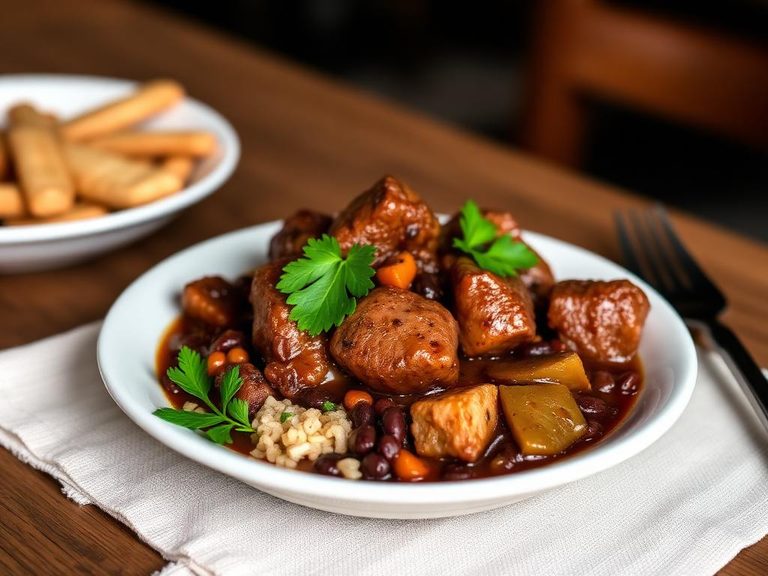
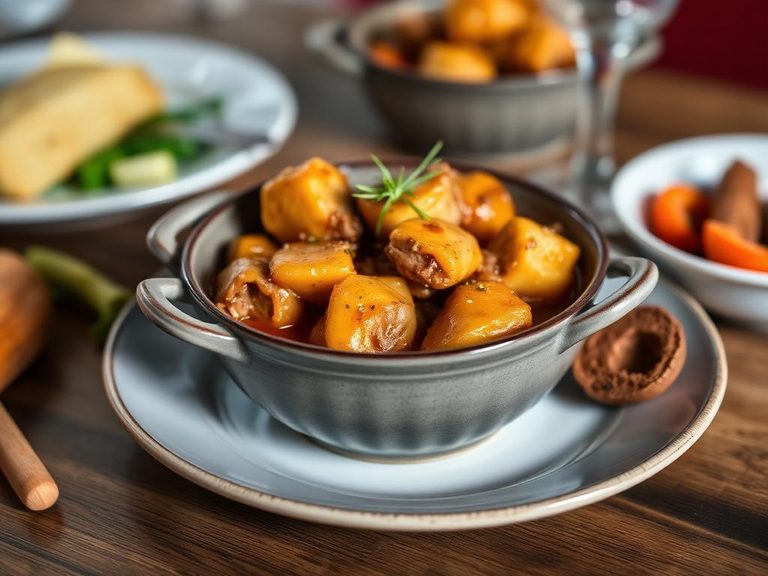
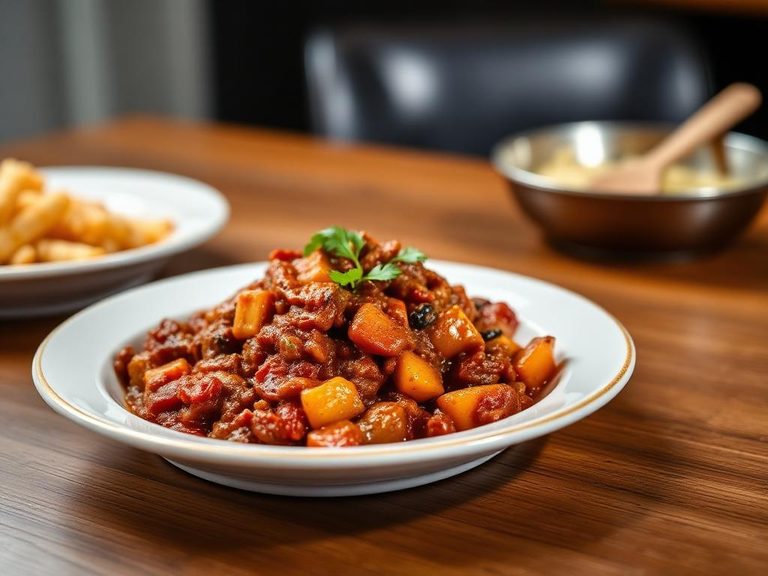
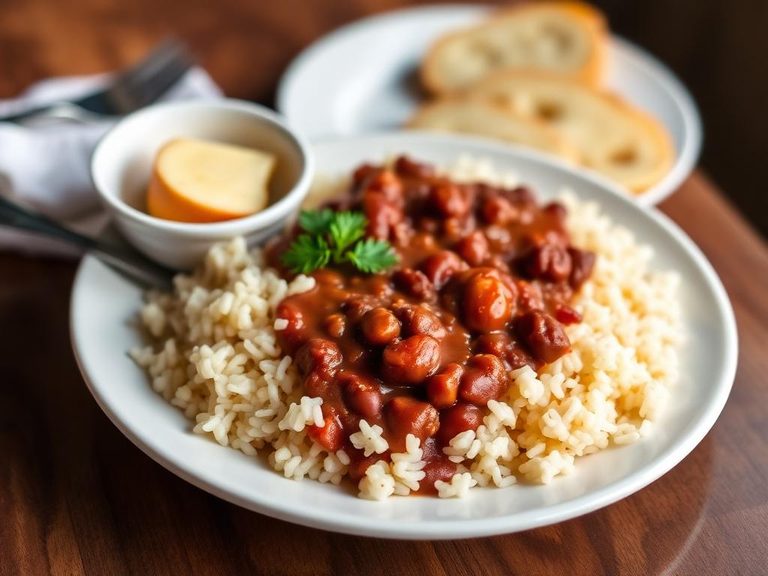
🍽️ Popular dishes
🌍 Where it's eaten
💡 Did you know?
The 'bean burp' phenomenon is caused by our gut bacteria fermenting the indigestible oligosaccharides (like raffinose) found in beans, producing gas as a byproduct.
Full nutrition (USDA data · scales with serving)
| Water | 59.1 g |
| Energy | 189 kcal |
| Protein | 8.3 g |
| Total lipid (fat) | 7.1 g |
| Carbohydrate, by difference | 23.8 g |
| Fiber, total dietary | 8.3 g |
| Total Sugars | 0.31 g |
| Calcium, Ca | 39.0 mg |
| Iron, Fe | 2.0 mg |
| Magnesium, Mg | 51.0 mg |
| Phosphorus, P | 135 mg |
| Potassium, K | 386 mg |
| Sodium, Na | 217 mg |
| Zinc, Zn | 0.94 mg |
| Copper, Cu | 0.20 mg |
| Selenium, Se | 4.6 ug |
| Vitamin C, total ascorbic acid | 0.50 mg |
| Thiamin | 0.18 mg |
| Riboflavin | 0.05 mg |
| Niacin | 0.32 mg |
| Vitamin B-6 | 0.17 mg |
| Folate, total | 147 ug |
| Folic acid | 0.00 ug |
| Folate, food | 147 ug |
| Folate, DFE | 147 ug |
| Choline, total | 32.2 mg |
| Vitamin B-12 | 0.00 ug |
| Vitamin B-12, added | 0.00 ug |
| Vitamin A, RAE | 0.00 ug |
| Retinol | 0.00 ug |
| Carotene, beta | 0.00 ug |
| Carotene, alpha | 0.00 ug |
| Cryptoxanthin, beta | 0.00 ug |
| Lycopene | 0.00 ug |
| Lutein + zeaxanthin | 0.00 ug |
| Vitamin E (alpha-tocopherol) | 2.1 mg |
| Vitamin E, added | 0.00 mg |
| Vitamin D (D2 + D3) | 0.00 ug |
| Vitamin K (phylloquinone) | 9.7 ug |
| Alcohol, ethyl | 0.00 g |
| Caffeine | 0.00 mg |
| Theobromine | 0.00 mg |
Fat & fatty acid profile (per 100g)
| Fatty acids, total saturated | 1.00 g |
| SFA 4:0 | 0.00 g |
| SFA 6:0 | 0.00 g |
| SFA 8:0 | 0.00 g |
| SFA 10:0 | 0.00 g |
| SFA 12:0 | 0.00 g |
| SFA 14:0 | 0.00 g |
| SFA 16:0 | 0.75 g |
| SFA 18:0 | 0.19 g |
| Fatty acids, total monounsaturated | 2.9 g |
| MUFA 16:1 | 0.02 g |
| MUFA 18:1 | 2.8 g |
| MUFA 20:1 | 0.04 g |
| MUFA 22:1 | 0.00 g |
| Fatty acids, total polyunsaturated | 2.7 g |
| PUFA 18:2 | 2.3 g |
| PUFA 18:3 | 0.40 g |
| PUFA 18:4 | 0.00 g |
| PUFA 20:4 | 0.00 g |
| PUFA 20:5 n-3 (EPA) | 0.00 g |
| PUFA 22:5 n-3 (DPA) | 0.00 g |
| PUFA 22:6 n-3 (DHA) | 0.00 g |
| Cholesterol | 0.00 mg |
Amino acid profile (per 100g)
Estimated from Restaurant, Mexican, refried beans — USDA does not publish this profile for Beans.
| Tryptophan | 0.07 g |
| Threonine | 0.27 g |
| Isoleucine | 0.27 g |
| Leucine | 0.54 g |
| Lysine | 0.53 g |
| Methionine | 0.08 g |
| Cystine | 0.06 g |
| Phenylalanine | 0.39 g |
| Tyrosine | 0.17 g |
| Valine | 0.29 g |
| Arginine | 0.41 g |
| Histidine | 0.20 g |
| Alanine | 0.27 g |
| Aspartic acid | 0.73 g |
| Glutamic acid | 0.97 g |
| Glycine | 0.28 g |
| Proline | 0.26 g |
| Serine | 0.39 g |
| Hydroxyproline | 0.00 g |
FAQ
Is this the same as canned beans?
Not exactly. This description specifies beans cooked from a dried state with fat added. Canned beans are pre-cooked and packed in liquid, often with added salt, but typically without significant fat unless seasoned.
Why is there fat added?
Fat (like lard, oil, or butter) is often added during cooking to enhance flavor, create a richer texture, and help carry the flavors of other ingredients in the dish.
How does the fiber content compare to other foods?
At 8.3g per 100g, this is a very high-fiber food. For context, a medium apple has about 4.4g of fiber, and a slice of whole-wheat bread has about 2g.
Nutrient density (calculated · NRF9.3)
Nutrient Rich Foods index: beneficial nutrients (protein, fiber, vitamins, minerals) minus saturated fat, added sugar & sodium, per 100 kcal.
NRF9.3 index — Fulgoni, Keast & Drewnowski, 2009. Computed from USDA nutrients.
Weight-loss friendliness (composite index)
Energy density 1.89 kcal/g · 18% calories from protein · 8.3 g fiber · 0.3 g sugar per 100 g.
Composite of energy density (Rolls et al., 1999), protein & fiber satiety, minus sugar. A calculated heuristic — ranks satiety-per-calorie, not a clinical measure.
Dietary load (calculated from USDA values)
Potential renal acid load. Positive = acid-forming, negative = alkaline-forming.
Sodium-to-potassium ratio: 0.56 (lower is better — aim for ≤ 1)
Sodium:potassium per WHO potassium guidance. Computed from USDA nutrients.