

Beans and tomatoes, no added fat
Common food

Photo: Wikipedia
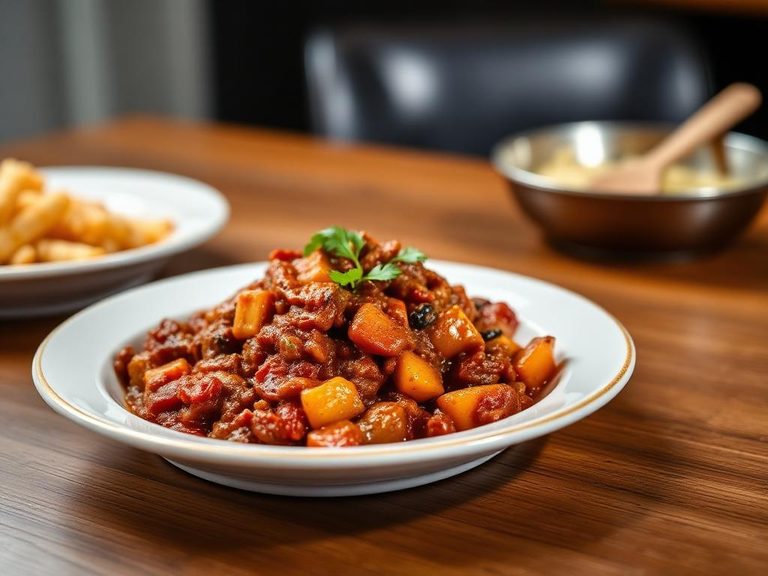
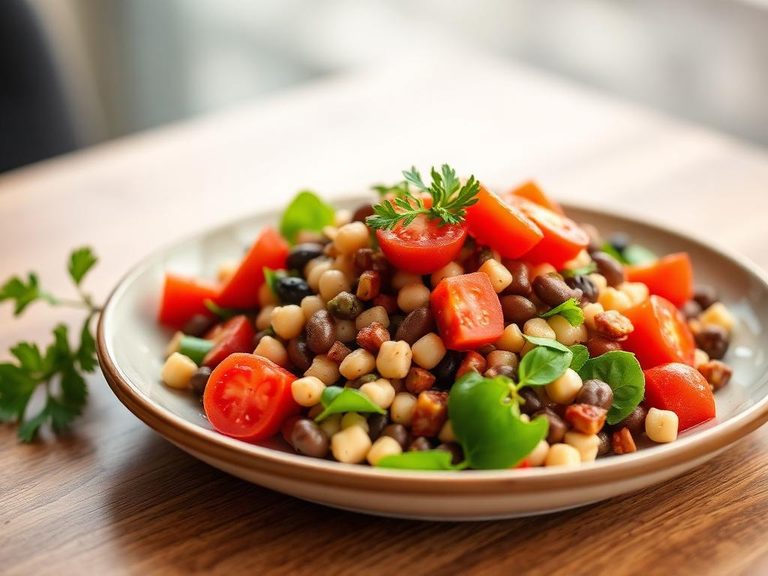
This is a hearty, plant-based combination of tender beans and ripe tomatoes, simmered together without any added fat. The result is a comforting, savory dish with a soft, slightly starchy texture from the beans and a bright, tangy sweetness from the tomatoes. It's a low-calorie, high-fiber staple that delivers substantial plant protein.
Calorie split: 24% protein · 71% carbs · 4% fat
↓ Full nutrition💚 Why it's loved
People love this simple pairing for its deep, savory umami flavor and the satisfying, hearty texture that makes it feel like a complete meal. It's a versatile canvas that absorbs herbs and spices beautifully, forming the base of countless comforting stews and salads across global cuisines.
⚠️ Watch-outs & how to enjoy it better
The combination of beans and tomatoes can be high in natural sugars and carbohydrates, which may cause blood sugar spikes for some individuals. To counteract this, pair it with a source of healthy fat (like a sprinkle of cheese or avocado) or lean protein to slow digestion. The fiber content can also cause digestive discomfort for those not accustomed to it; start with smaller portions and increase gradually.
Key benefits
- Excellent source of dietary fiber for digestive health.
- Provides plant-based protein for muscle maintenance.
- Very low in fat and naturally cholesterol-free.
- Rich in antioxidants like lycopene from cooked tomatoes.
- Contains complex carbohydrates for sustained energy.
🍽️ Popular dishes
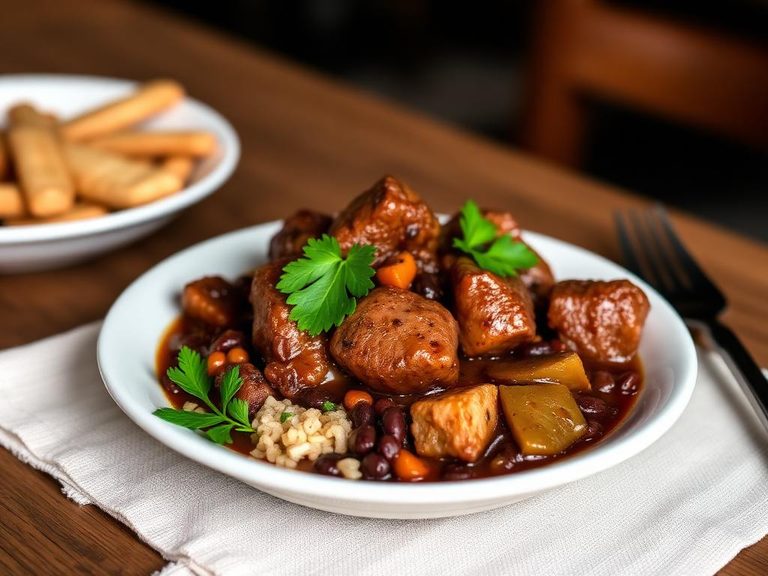
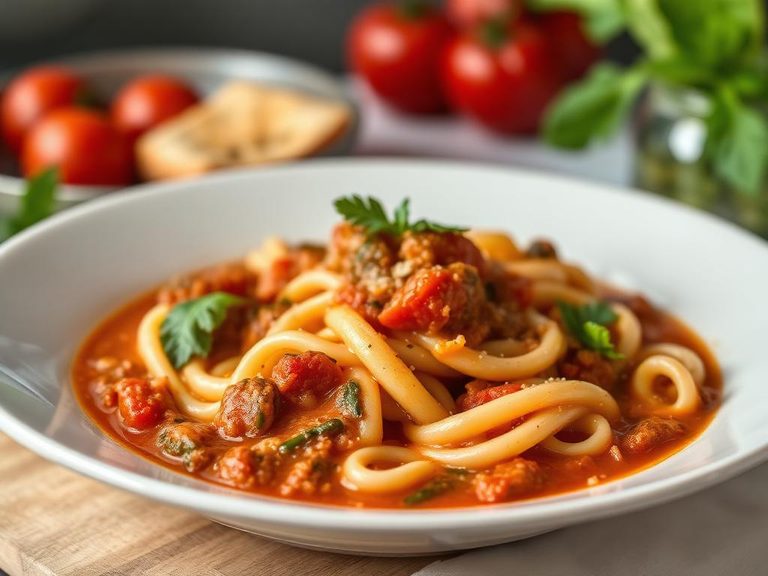
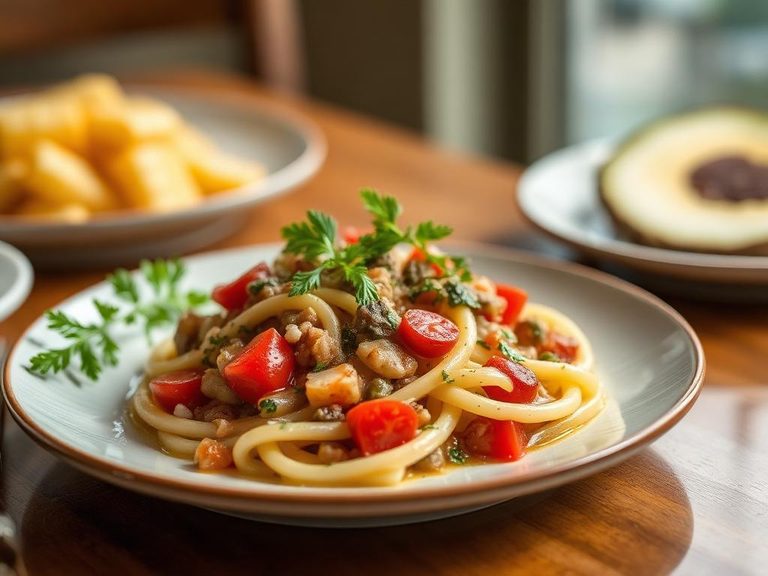
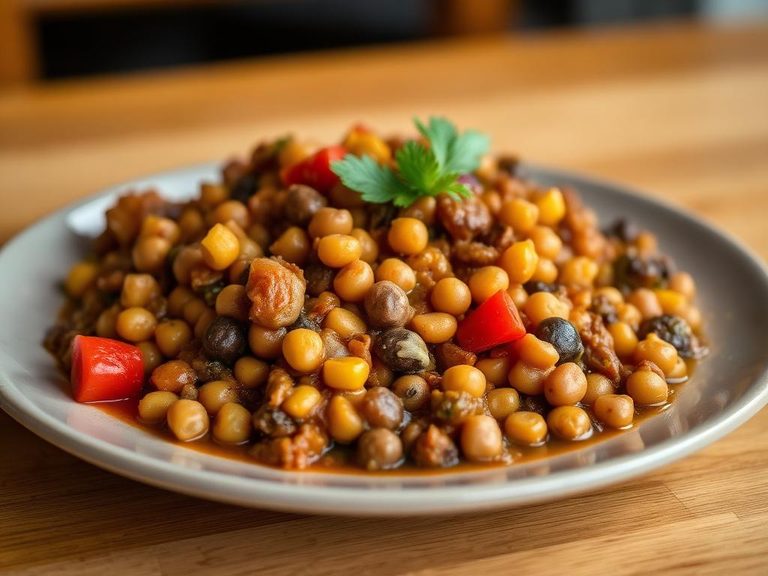
🌍 Where it's eaten
💡 Did you know?
Cooking tomatoes actually increases the bioavailability of the antioxidant lycopene, making the body better able to absorb it compared to raw tomatoes.
Full nutrition (USDA data · scales with serving)
| Water | 72.4 g |
| Energy | 101 kcal |
| Protein | 6.4 g |
| Total lipid (fat) | 0.51 g |
| Carbohydrate, by difference | 18.8 g |
| Fiber, total dietary | 6.4 g |
| Total Sugars | 1.4 g |
| Calcium, Ca | 32.0 mg |
| Iron, Fe | 1.7 mg |
| Magnesium, Mg | 42.0 mg |
| Phosphorus, P | 106 mg |
| Potassium, K | 374 mg |
| Sodium, Na | 370 mg |
| Zinc, Zn | 0.75 mg |
| Copper, Cu | 0.18 mg |
| Selenium, Se | 3.4 ug |
| Vitamin C, total ascorbic acid | 2.7 mg |
| Thiamin | 0.14 mg |
| Riboflavin | 0.06 mg |
| Niacin | 0.56 mg |
| Vitamin B-6 | 0.15 mg |
| Folate, total | 108 ug |
| Folic acid | 0.00 ug |
| Folate, food | 108 ug |
| Folate, DFE | 108 ug |
| Choline, total | 26.3 mg |
| Vitamin B-12 | 0.00 ug |
| Vitamin B-12, added | 0.00 ug |
| Vitamin A, RAE | 7.0 ug |
| Retinol | 0.00 ug |
| Carotene, beta | 85.0 ug |
| Carotene, alpha | 0.00 ug |
| Cryptoxanthin, beta | 1.0 ug |
| Lycopene | 4568 ug |
| Lutein + zeaxanthin | 8.0 ug |
| Vitamin E (alpha-tocopherol) | 1.1 mg |
| Vitamin E, added | 0.00 mg |
| Vitamin D (D2 + D3) | 0.00 ug |
| Vitamin K (phylloquinone) | 3.2 ug |
| Alcohol, ethyl | 0.00 g |
| Caffeine | 0.00 mg |
| Theobromine | 0.00 mg |
Fat & fatty acid profile (per 100g)
| Fatty acids, total saturated | 0.10 g |
| SFA 4:0 | 0.00 g |
| SFA 6:0 | 0.00 g |
| SFA 8:0 | 0.00 g |
| SFA 10:0 | 0.00 g |
| SFA 12:0 | 0.00 g |
| SFA 14:0 | 0.00 g |
| SFA 16:0 | 0.10 g |
| SFA 18:0 | 0.01 g |
| Fatty acids, total monounsaturated | 0.09 g |
| MUFA 16:1 | 0.00 g |
| MUFA 18:1 | 0.09 g |
| MUFA 20:1 | 0.00 g |
| MUFA 22:1 | 0.00 g |
| Fatty acids, total polyunsaturated | 0.20 g |
| PUFA 18:2 | 0.11 g |
| PUFA 18:3 | 0.09 g |
| PUFA 18:4 | 0.00 g |
| PUFA 20:4 | 0.00 g |
| PUFA 20:5 n-3 (EPA) | 0.00 g |
| PUFA 22:5 n-3 (DPA) | 0.00 g |
| PUFA 22:6 n-3 (DHA) | 0.00 g |
| Cholesterol | 0.00 mg |
Amino acid profile (per 100g)
Estimated from Fast foods, nachos, with cheese, beans, ground beef, and tomatoes — USDA does not publish this profile for Beans and tomatoes.
| Tryptophan | 0.06 g |
| Threonine | 0.22 g |
| Isoleucine | 0.28 g |
| Leucine | 0.54 g |
| Lysine | 0.34 g |
| Methionine | 0.12 g |
| Phenylalanine | 0.28 g |
| Tyrosine | 0.17 g |
| Valine | 0.33 g |
| Arginine | 0.35 g |
| Histidine | 0.19 g |
| Alanine | 0.35 g |
| Aspartic acid | 0.59 g |
| Glutamic acid | 1.1 g |
| Glycine | 0.33 g |
| Proline | 0.51 g |
| Serine | 0.28 g |
| Hydroxyproline | 0.09 g |
FAQ
Does cooking destroy the nutrients in the tomatoes?
While some heat-sensitive vitamins like Vitamin C may be reduced, cooking tomatoes significantly increases the availability of the powerful antioxidant lycopene and makes other nutrients more bioavailable.
Can I use canned beans and tomatoes for this dish?
Absolutely. Canned beans and tomatoes are convenient, nutritious, and perfectly suitable. Just rinse canned beans to reduce sodium by about 40% and choose no-salt-added tomatoes for better control over seasoning.
Why does my bean and tomato dish sometimes taste bitter?
Bitterness can come from underripe tomatoes, the skins of certain beans, or even the pot material. Using ripe tomatoes, adding a pinch of sugar or baking soda to balance acidity, or cooking in a non-reactive pot (like stainless steel or enamel) can help.
Nutrient density (calculated · NRF9.3)
Nutrient Rich Foods index: beneficial nutrients (protein, fiber, vitamins, minerals) minus saturated fat, added sugar & sodium, per 100 kcal.
NRF9.3 index — Fulgoni, Keast & Drewnowski, 2009. Computed from USDA nutrients.
Weight-loss friendliness (composite index)
Energy density 1.01 kcal/g · 25% calories from protein · 6.4 g fiber · 1.4 g sugar per 100 g.
Composite of energy density (Rolls et al., 1999), protein & fiber satiety, minus sugar. A calculated heuristic — ranks satiety-per-calorie, not a clinical measure.
Dietary load (calculated from USDA values)
Potential renal acid load. Positive = acid-forming, negative = alkaline-forming.
Sodium-to-potassium ratio: 0.99 (lower is better — aim for ≤ 1)
Sodium:potassium per WHO potassium guidance. Computed from USDA nutrients.