

Beans and tomatoes, fat added
Common food

Photo: Wikipedia
A hearty, savory staple of simmered beans in a rich tomato sauce, often with added fat for a silky mouthfeel. The beans offer a creamy, starchy texture while the tomatoes provide a bright, tangy counterpoint. Nutritionally, it's a fiber-packed, plant-based protein source with a balanced macronutrient profile.
Calorie split: 17% protein · 49% carbs · 34% fat
↓ Full nutrition💚 Why it's loved
People cherish it as a deeply comforting, affordable, and versatile one-pot meal that forms the backbone of countless home-cooked traditions across cultures. Its robust, savory flavor and satisfying texture make it a beloved staple for both everyday dinners and festive occasions.
⚠️ Watch-outs & how to enjoy it better
The added fat can increase calorie density, and some canned versions may be high in sodium. For those with sensitive digestive systems, the high fiber content can cause gas or bloating. Counteract this by choosing low-sodium beans, rinsing them well, and starting with smaller portions while your system adjusts.
Key benefits
- Excellent source of dietary fiber for digestive health
- Good plant-based protein content
- Low in sugar and naturally cholesterol-free
- Rich in complex carbohydrates for sustained energy
- Provides essential minerals like iron and potassium
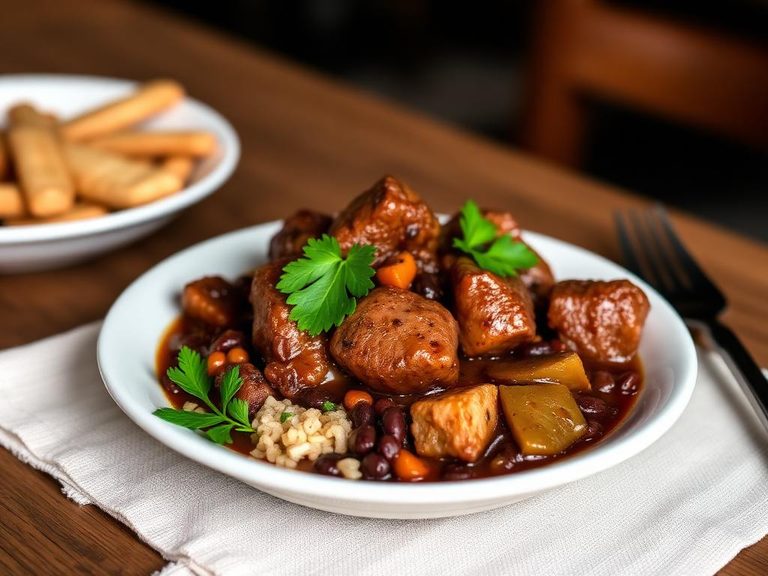
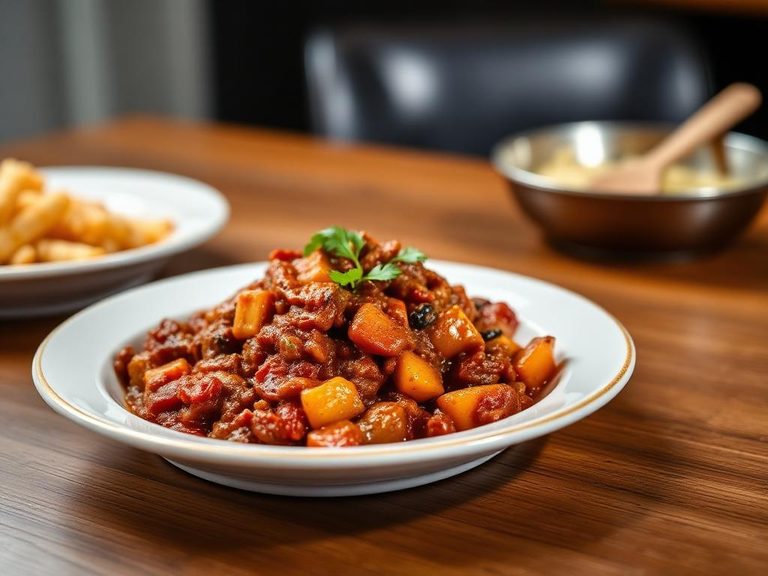
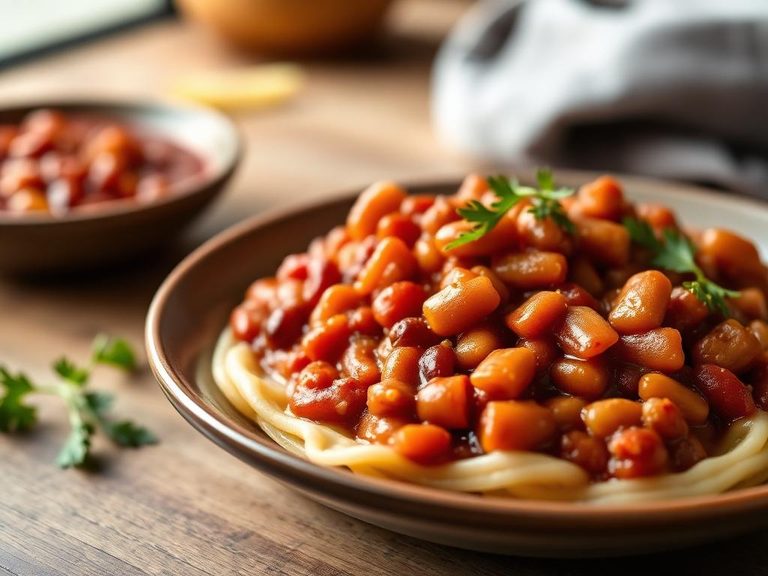
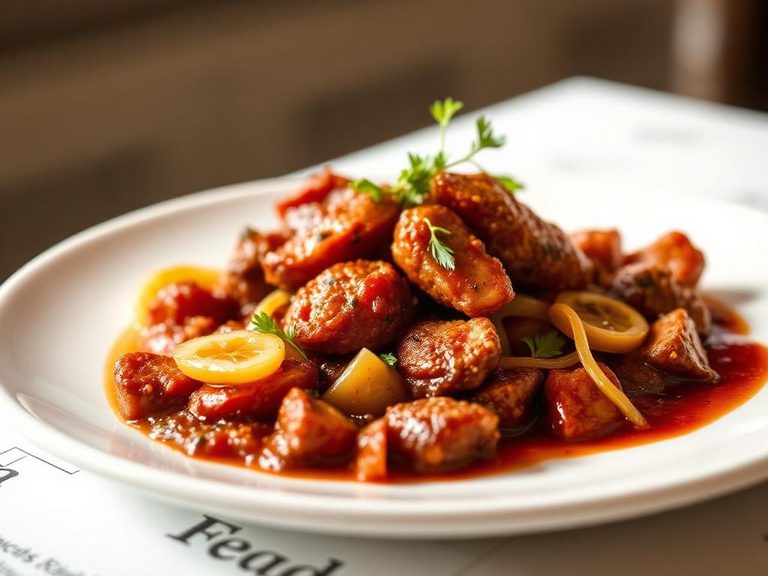
🍽️ Popular dishes
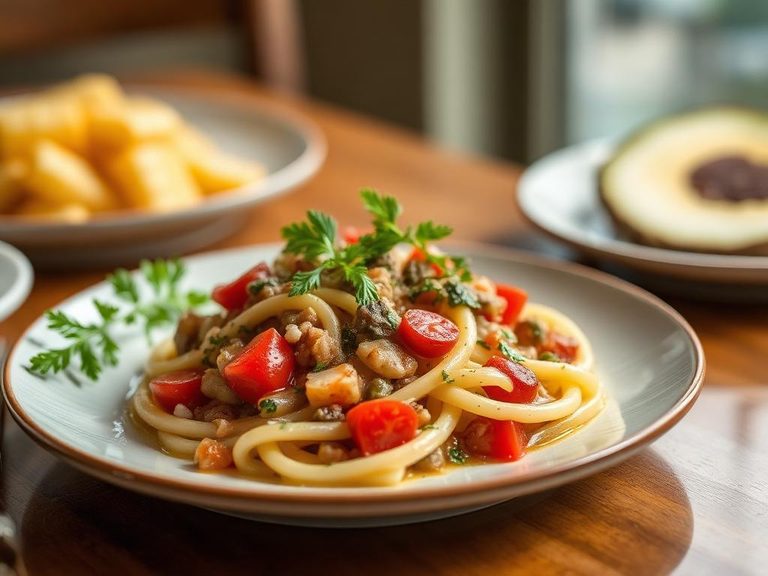
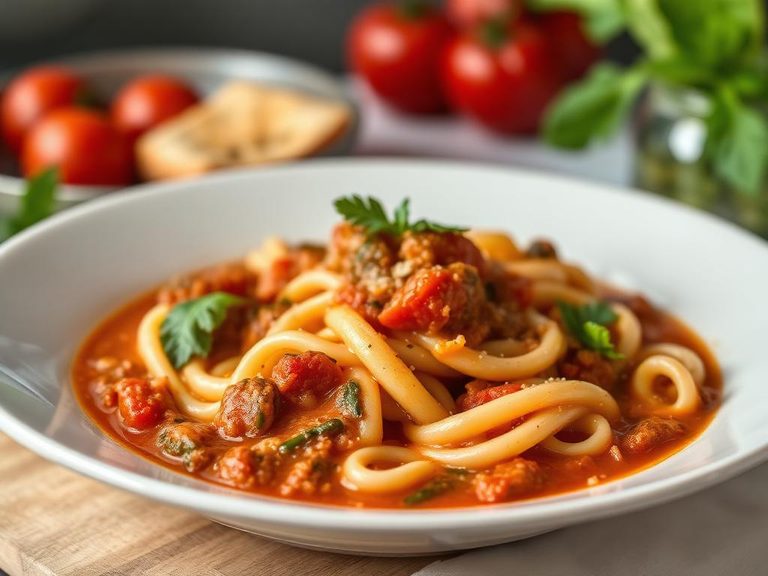
🌍 Where it's eaten
💡 Did you know?
The combination of beans and tomatoes is a classic example of 'New World' ingredients meeting on the plate, as both are native to the Americas and were later adopted into European and African cuisines.
Full nutrition (USDA data · scales with serving)
| Water | 68.7 g |
| Energy | 142 kcal |
| Protein | 6.0 g |
| Total lipid (fat) | 5.6 g |
| Carbohydrate, by difference | 17.8 g |
| Fiber, total dietary | 6.1 g |
| Total Sugars | 1.3 g |
| Calcium, Ca | 31.0 mg |
| Iron, Fe | 1.6 mg |
| Magnesium, Mg | 39.0 mg |
| Phosphorus, P | 100 mg |
| Potassium, K | 355 mg |
| Sodium, Na | 351 mg |
| Zinc, Zn | 0.71 mg |
| Copper, Cu | 0.17 mg |
| Selenium, Se | 3.3 ug |
| Vitamin C, total ascorbic acid | 2.5 mg |
| Thiamin | 0.13 mg |
| Riboflavin | 0.06 mg |
| Niacin | 0.53 mg |
| Vitamin B-6 | 0.14 mg |
| Folate, total | 103 ug |
| Folic acid | 0.00 ug |
| Folate, food | 103 ug |
| Folate, DFE | 103 ug |
| Choline, total | 25.0 mg |
| Vitamin B-12 | 0.00 ug |
| Vitamin B-12, added | 0.00 ug |
| Vitamin A, RAE | 7.0 ug |
| Retinol | 0.00 ug |
| Carotene, beta | 81.0 ug |
| Carotene, alpha | 0.00 ug |
| Cryptoxanthin, beta | 1.0 ug |
| Lycopene | 4327 ug |
| Lutein + zeaxanthin | 7.0 ug |
| Vitamin E (alpha-tocopherol) | 2.0 mg |
| Vitamin E, added | 0.00 mg |
| Vitamin D (D2 + D3) | 0.00 ug |
| Vitamin K (phylloquinone) | 8.2 ug |
| Alcohol, ethyl | 0.00 g |
| Caffeine | 0.00 mg |
| Theobromine | 0.00 mg |
Fat & fatty acid profile (per 100g)
| Fatty acids, total saturated | 0.78 g |
| SFA 4:0 | 0.00 g |
| SFA 6:0 | 0.00 g |
| SFA 8:0 | 0.00 g |
| SFA 10:0 | 0.00 g |
| SFA 12:0 | 0.00 g |
| SFA 14:0 | 0.00 g |
| SFA 16:0 | 0.58 g |
| SFA 18:0 | 0.15 g |
| Fatty acids, total monounsaturated | 2.2 g |
| MUFA 16:1 | 0.02 g |
| MUFA 18:1 | 2.2 g |
| MUFA 20:1 | 0.03 g |
| MUFA 22:1 | 0.00 g |
| Fatty acids, total polyunsaturated | 2.1 g |
| PUFA 18:2 | 1.8 g |
| PUFA 18:3 | 0.30 g |
| PUFA 18:4 | 0.00 g |
| PUFA 20:4 | 0.00 g |
| PUFA 20:5 n-3 (EPA) | 0.00 g |
| PUFA 22:5 n-3 (DPA) | 0.00 g |
| PUFA 22:6 n-3 (DHA) | 0.00 g |
| Cholesterol | 0.00 mg |
Amino acid profile (per 100g)
Estimated from Fast foods, nachos, with cheese, beans, ground beef, and tomatoes — USDA does not publish this profile for Beans and tomatoes.
| Tryptophan | 0.06 g |
| Threonine | 0.22 g |
| Isoleucine | 0.28 g |
| Leucine | 0.54 g |
| Lysine | 0.34 g |
| Methionine | 0.12 g |
| Phenylalanine | 0.28 g |
| Tyrosine | 0.17 g |
| Valine | 0.33 g |
| Arginine | 0.35 g |
| Histidine | 0.19 g |
| Alanine | 0.35 g |
| Aspartic acid | 0.59 g |
| Glutamic acid | 1.1 g |
| Glycine | 0.33 g |
| Proline | 0.51 g |
| Serine | 0.28 g |
| Hydroxyproline | 0.09 g |
FAQ
Is this dish vegetarian or vegan?
The base recipe of beans, tomatoes, and added fat is typically vegan. However, many traditional versions (like Feijoada or Chili con Carne) include meat. Always check the specific recipe or preparation method.
Can I reduce the fat content?
Yes. You can use less added fat (oil, lard, etc.) or substitute with a small amount of vegetable broth for sautéing. Using naturally leaner beans and tomatoes keeps the dish flavorful with minimal fat.
Why are beans sometimes hard to digest?
Beans contain oligosaccharides, complex sugars that our bodies break down slowly, which can produce gas. Soaking dried beans overnight and discarding the water, or thoroughly rinsing canned beans, can significantly reduce these compounds.
Nutrient density (calculated · NRF9.3)
Nutrient Rich Foods index: beneficial nutrients (protein, fiber, vitamins, minerals) minus saturated fat, added sugar & sodium, per 100 kcal.
NRF9.3 index — Fulgoni, Keast & Drewnowski, 2009. Computed from USDA nutrients.
Weight-loss friendliness (composite index)
Energy density 1.42 kcal/g · 17% calories from protein · 6.1 g fiber · 1.3 g sugar per 100 g.
Composite of energy density (Rolls et al., 1999), protein & fiber satiety, minus sugar. A calculated heuristic — ranks satiety-per-calorie, not a clinical measure.
Dietary load (calculated from USDA values)
Potential renal acid load. Positive = acid-forming, negative = alkaline-forming.
Sodium-to-potassium ratio: 0.99 (lower is better — aim for ≤ 1)
Sodium:potassium per WHO potassium guidance. Computed from USDA nutrients.