

Barbecue beef, no sauce
Common food
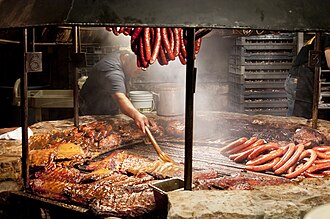
Photo: Wikipedia
Barbecue beef, served without sauce, is a lean, protein-dense cut of beef cooked over direct heat or smoke, resulting in a charred exterior and a tender, juicy interior. Its flavor profile is defined by the beef itself, enhanced by a simple dry rub of salt, pepper, and spices, allowing the natural, savory meatiness to shine. Nutritionally, it's a powerhouse of high-quality protein with zero carbohydrates, making it a staple for low-carb and ketogenic diets.
Calorie split: 45% protein · 0% carbs · 55% fat
↓ Full nutrition💚 Why it's loved
People love it for its pure, unadulterated beef flavor and the satisfying, smoky crust from the grill. It's a versatile canvas for any dry rub or spice blend and serves as a foundational protein in countless global cuisines, from American backyard cookouts to Korean BBQ.
⚠️ Watch-outs & how to enjoy it better
Without sauce, the primary concern is the potential for high sodium content from dry rubs, which can be an issue for those monitoring blood pressure. To counteract this, opt for low-sodium rubs or use herbs and spices like garlic powder, paprika, and black pepper for flavor. Additionally, ensure proper cooking to avoid charring, which can produce heterocyclic amines (HCAs); marinating beforehand or cooking at slightly lower temperatures can reduce this risk.
Key benefits
- Excellent source of complete protein for muscle maintenance and satiety
- Zero carbohydrates and sugars, ideal for blood sugar management
- Rich in bioavailable iron and B vitamins like B12
- Provides essential minerals like zinc and selenium
- High protein content supports thermogenesis and metabolism
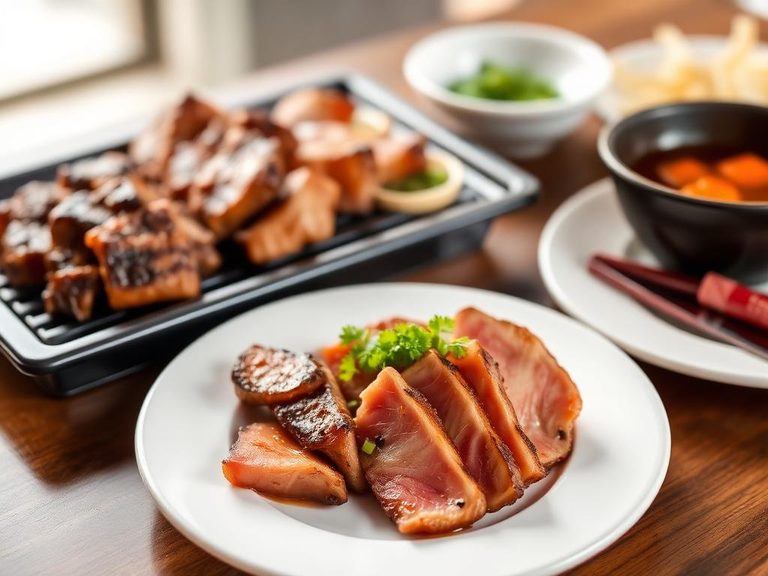
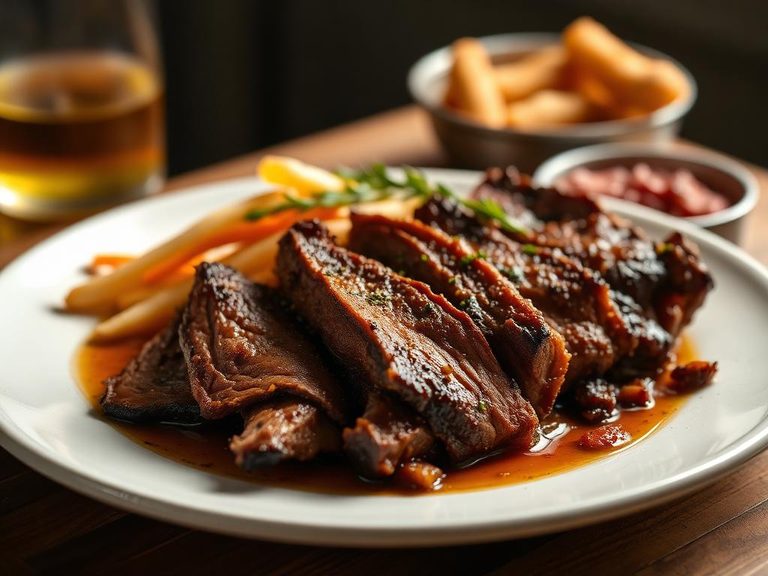
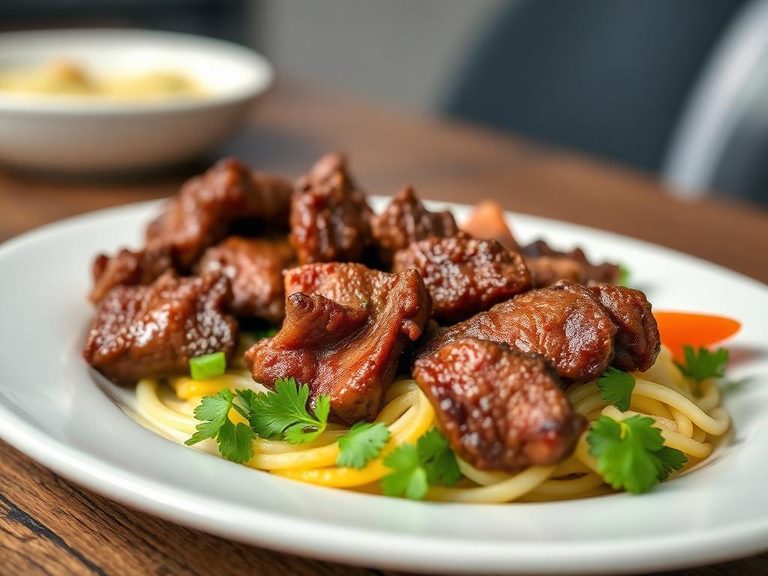
🍽️ Popular dishes
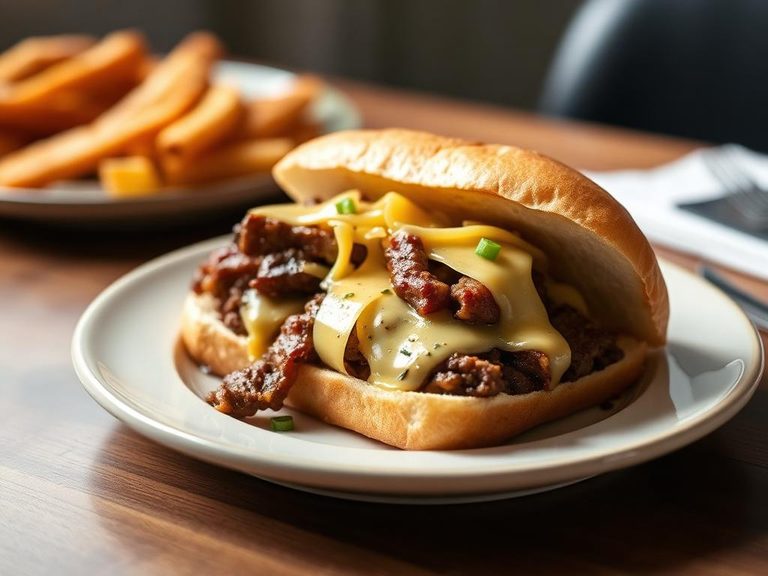
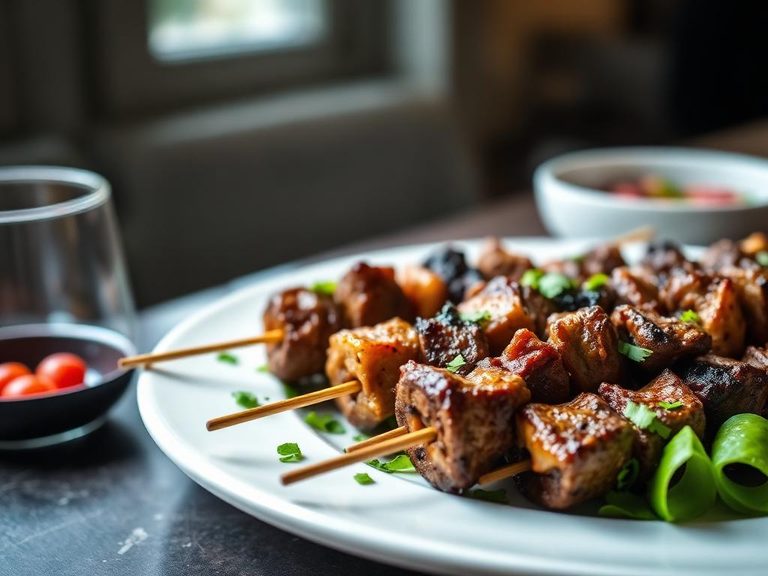
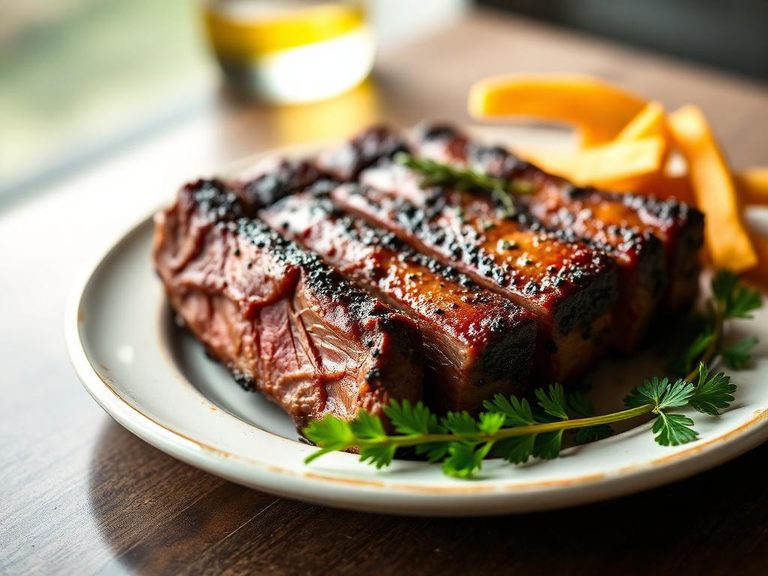
🌍 Where it's eaten
💡 Did you know?
The smoke ring—a pink layer just beneath the surface of smoked barbecue beef—is not from the meat being undercooked. It's a chemical reaction between nitrogen dioxide in the smoke and the myoglobin in the meat.
Full nutrition (USDA data · scales with serving)
| Water | 54.6 g |
| Energy | 252 kcal |
| Protein | 28.0 g |
| Total lipid (fat) | 15.2 g |
| Carbohydrate, by difference | 0.00 g |
| Fiber, total dietary | 0.00 g |
| Total Sugars | 0.00 g |
| Calcium, Ca | 10.0 mg |
| Iron, Fe | 2.7 mg |
| Magnesium, Mg | 21.0 mg |
| Phosphorus, P | 205 mg |
| Potassium, K | 271 mg |
| Sodium, Na | 411 mg |
| Zinc, Zn | 7.9 mg |
| Copper, Cu | 0.10 mg |
| Selenium, Se | 27.4 ug |
| Vitamin C, total ascorbic acid | 0.00 mg |
| Thiamin | 0.07 mg |
| Riboflavin | 0.21 mg |
| Niacin | 3.6 mg |
| Vitamin B-6 | 0.29 mg |
| Folate, total | 7.0 ug |
| Folic acid | 0.00 ug |
| Folate, food | 7.0 ug |
| Folate, DFE | 7.0 ug |
| Choline, total | 97.4 mg |
| Vitamin B-12 | 2.8 ug |
| Vitamin B-12, added | 0.00 ug |
| Vitamin A, RAE | 4.0 ug |
| Retinol | 4.0 ug |
| Carotene, beta | 0.00 ug |
| Carotene, alpha | 0.00 ug |
| Cryptoxanthin, beta | 0.00 ug |
| Lycopene | 0.00 ug |
| Lutein + zeaxanthin | 0.00 ug |
| Vitamin E (alpha-tocopherol) | 0.11 mg |
| Vitamin E, added | 0.00 mg |
| Vitamin D (D2 + D3) | 0.10 ug |
| Vitamin K (phylloquinone) | 1.6 ug |
| Alcohol, ethyl | 0.00 g |
| Caffeine | 0.00 mg |
| Theobromine | 0.00 mg |
Fat & fatty acid profile (per 100g)
| Fatty acids, total saturated | 5.9 g |
| SFA 4:0 | 0.00 g |
| SFA 6:0 | 0.00 g |
| SFA 8:0 | 0.00 g |
| SFA 10:0 | 0.00 g |
| SFA 12:0 | 0.00 g |
| SFA 14:0 | 0.44 g |
| SFA 16:0 | 3.3 g |
| SFA 18:0 | 2.0 g |
| Fatty acids, total monounsaturated | 7.0 g |
| MUFA 16:1 | 0.53 g |
| MUFA 18:1 | 6.3 g |
| MUFA 20:1 | 0.03 g |
| MUFA 22:1 | 0.00 g |
| Fatty acids, total polyunsaturated | 0.57 g |
| PUFA 18:2 | 0.49 g |
| PUFA 18:3 | 0.03 g |
| PUFA 18:4 | 0.00 g |
| PUFA 20:4 | 0.05 g |
| PUFA 20:5 n-3 (EPA) | 0.00 g |
| PUFA 22:5 n-3 (DPA) | 0.01 g |
| PUFA 22:6 n-3 (DHA) | 0.00 g |
| Cholesterol | 95.0 mg |
Amino acid profile (per 100g)
Estimated from Barbecue loaf, pork, beef — USDA does not publish this profile for Barbecue beef.
| Tryptophan | 0.17 g |
| Threonine | 0.68 g |
| Isoleucine | 0.73 g |
| Leucine | 1.3 g |
| Lysine | 1.3 g |
| Methionine | 0.40 g |
| Cystine | 0.20 g |
| Phenylalanine | 0.64 g |
| Tyrosine | 0.54 g |
| Valine | 0.80 g |
| Arginine | 0.97 g |
| Histidine | 0.52 g |
| Alanine | 0.89 g |
| Aspartic acid | 1.4 g |
| Glutamic acid | 2.5 g |
| Glycine | 0.84 g |
| Proline | 0.91 g |
| Serine | 0.68 g |
FAQ
Is barbecue beef without sauce healthier than with sauce?
Generally, yes. Skipping sauce eliminates added sugars, high-fructose corn syrup, and excess sodium found in many commercial barbecue sauces, making the dish lower in calories and carbohydrates. The nutritional profile becomes almost purely protein and fat from the meat itself.
What's the best way to ensure it's tender without sauce?
Tenderness comes from the cut of beef and the cooking method. Choose well-marbled cuts like ribeye or brisket for grilling/smoking. For leaner cuts like flank steak, marinating and slicing against the grain are key. Low-and-slow cooking methods (like smoking) break down tough connective tissue into gelatin.
Can I get enough iron from barbecue beef?
Absolutely. A 100g serving of beef provides a significant portion of the daily recommended intake for heme iron, which is more easily absorbed by the body than plant-based (non-heme) iron. Pairing it with a source of vitamin C (like a side salad with lemon dressing) can further enhance absorption.
Nutrient density (calculated · NRF9.3)
Nutrient Rich Foods index: beneficial nutrients (protein, fiber, vitamins, minerals) minus saturated fat, added sugar & sodium, per 100 kcal.
NRF9.3 index — Fulgoni, Keast & Drewnowski, 2009. Computed from USDA nutrients.
Weight-loss friendliness (composite index)
Energy density 2.52 kcal/g · 44% calories from protein · 0.0 g fiber · 0.0 g sugar per 100 g.
Composite of energy density (Rolls et al., 1999), protein & fiber satiety, minus sugar. A calculated heuristic — ranks satiety-per-calorie, not a clinical measure.
Dietary load (calculated from USDA values)
Potential renal acid load. Positive = acid-forming, negative = alkaline-forming.
Sodium-to-potassium ratio: 1.52 (lower is better — aim for ≤ 1)
Sodium:potassium per WHO potassium guidance. Computed from USDA nutrients.