

Barbecue beef sandwich, on wheat bun
Common food
Photo: Wikipedia
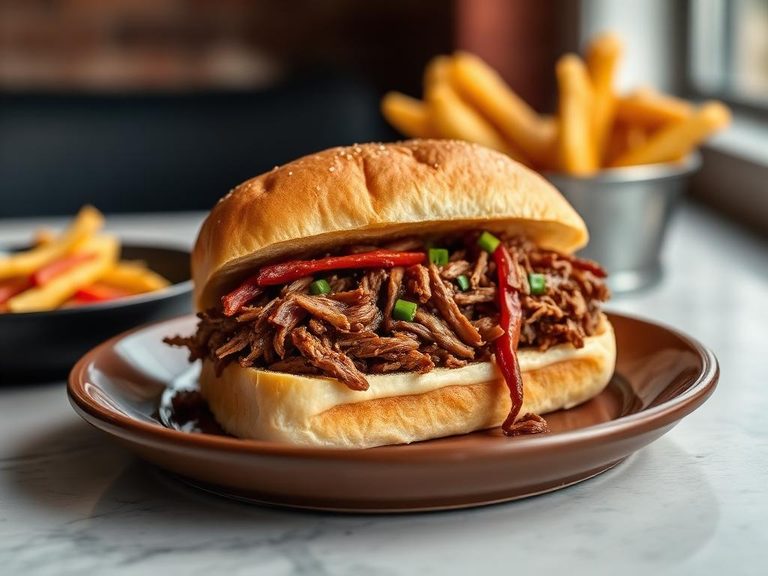
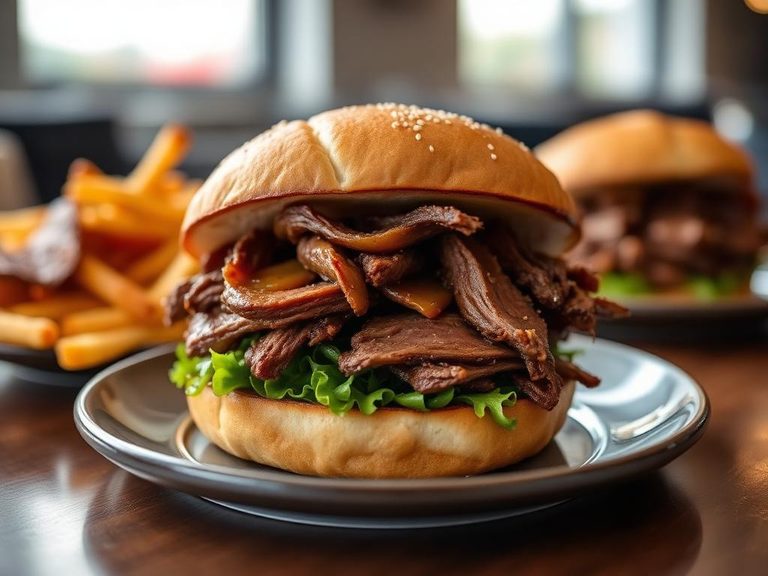
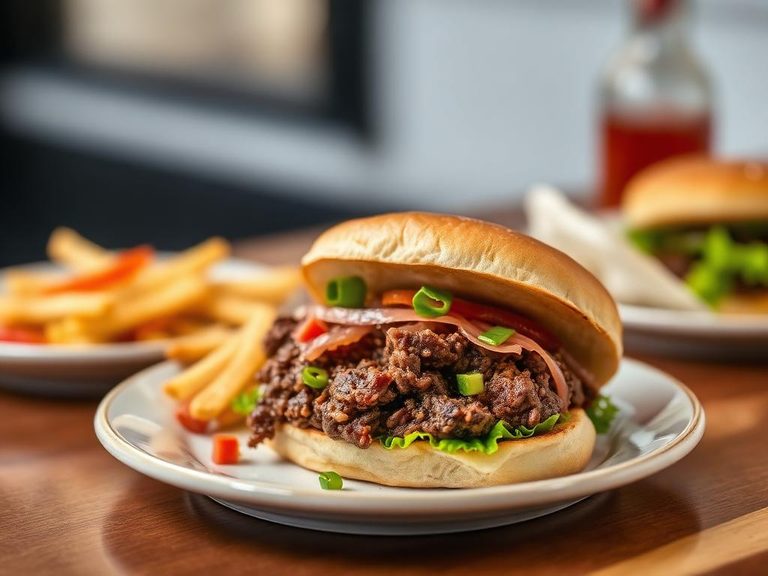
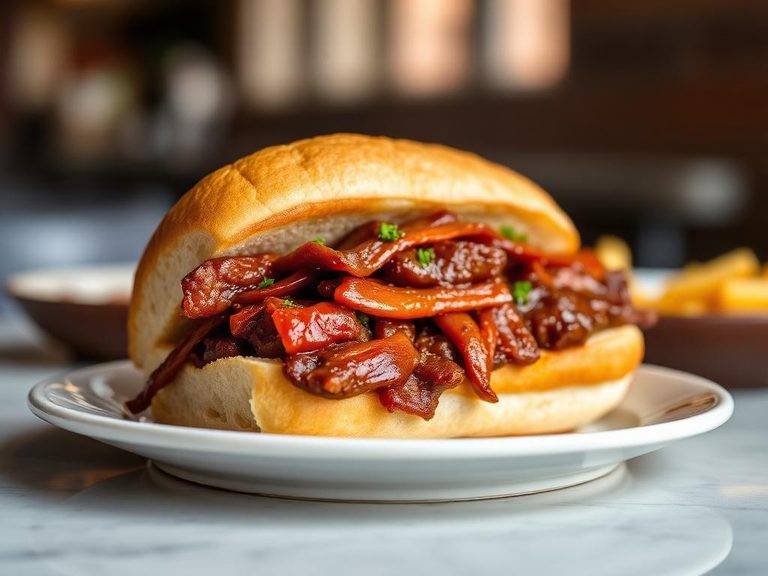
A barbecue beef sandwich on a wheat bun is a hearty, handheld meal featuring tender, shredded or sliced beef smoky-sweet barbecue sauce, nestled in a soft, slightly nutty whole-wheat roll. The beef offers a savory, umami-rich chew, while the sauce provides a sticky, tangy-sweet glaze that soaks into the bun. With 17g of protein per 100g, it's a substantial source of muscle-supporting nutrients.
Calorie split: 29% protein · 39% carbs · 32% fat
↓ Full nutrition💚 Why it's loved
People adore it for the perfect marriage of smoky, tangy, and sweet flavors with the satisfying texture of tender beef and soft bread. It's a versatile comfort food that feels at home at backyard cookouts, sports stadiums, and casual diners alike.
⚠️ Watch-outs & how to enjoy it better
The combination of sugary sauce and refined carbs can cause rapid blood-sugar spikes, and commercial versions are often high in sodium. Opt for a vinegar-based sauce, load up on a side of coleslaw for fiber, and choose a smaller portion or open-faced style to manage intake.
Key benefits
- High in protein for muscle maintenance and satiety.
- Whole-wheat bun provides dietary fiber and B vitamins.
- Iron and zinc from beef support immune function.
- Convenient, calorie-dense meal for active lifestyles.
🍽️ Popular dishes
🌍 Where it's eaten
💡 Did you know?
The wheat bun is a relatively modern addition; historically, barbecue beef was often served on simple white bread or even just wrapped in butcher paper.
Full nutrition (USDA data · scales with serving)
| Water | 48.8 g |
| Energy | 240 kcal |
| Protein | 17.0 g |
| Total lipid (fat) | 8.5 g |
| Carbohydrate, by difference | 23.3 g |
| Fiber, total dietary | 2.0 g |
| Total Sugars | 8.4 g |
| Calcium, Ca | 65.0 mg |
| Iron, Fe | 2.5 mg |
| Magnesium, Mg | 31.0 mg |
| Phosphorus, P | 155 mg |
| Potassium, K | 236 mg |
| Sodium, Na | 544 mg |
| Zinc, Zn | 4.2 mg |
| Copper, Cu | 0.13 mg |
| Selenium, Se | 22.3 ug |
| Vitamin C, total ascorbic acid | 0.20 mg |
| Thiamin | 0.17 mg |
| Riboflavin | 0.18 mg |
| Niacin | 3.4 mg |
| Vitamin B-6 | 0.20 mg |
| Folate, total | 28.0 ug |
| Folic acid | 5.0 ug |
| Folate, food | 23.0 ug |
| Folate, DFE | 31.0 ug |
| Choline, total | 54.0 mg |
| Vitamin B-12 | 1.3 ug |
| Vitamin B-12, added | 0.00 ug |
| Vitamin A, RAE | 4.0 ug |
| Retinol | 2.0 ug |
| Carotene, beta | 27.0 ug |
| Carotene, alpha | 0.00 ug |
| Cryptoxanthin, beta | 0.00 ug |
| Lycopene | 910 ug |
| Lutein + zeaxanthin | 39.0 ug |
| Vitamin E (alpha-tocopherol) | 0.33 mg |
| Vitamin E, added | 0.00 mg |
| Vitamin D (D2 + D3) | 0.10 ug |
| Vitamin K (phylloquinone) | 2.9 ug |
| Alcohol, ethyl | 0.00 g |
| Caffeine | 0.00 mg |
| Theobromine | 0.00 mg |
Fat & fatty acid profile (per 100g)
| Fatty acids, total saturated | 3.0 g |
| SFA 4:0 | 0.00 g |
| SFA 6:0 | 0.00 g |
| SFA 8:0 | 0.00 g |
| SFA 10:0 | 0.00 g |
| SFA 12:0 | 0.00 g |
| SFA 14:0 | 0.21 g |
| SFA 16:0 | 1.7 g |
| SFA 18:0 | 1.0 g |
| Fatty acids, total monounsaturated | 3.5 g |
| MUFA 16:1 | 0.25 g |
| MUFA 18:1 | 3.2 g |
| MUFA 20:1 | 0.02 g |
| MUFA 22:1 | 0.01 g |
| Fatty acids, total polyunsaturated | 0.81 g |
| PUFA 18:2 | 0.71 g |
| PUFA 18:3 | 0.07 g |
| PUFA 18:4 | 0.00 g |
| PUFA 20:4 | 0.02 g |
| PUFA 20:5 n-3 (EPA) | 0.00 g |
| PUFA 22:5 n-3 (DPA) | 0.01 g |
| PUFA 22:6 n-3 (DHA) | 0.00 g |
| Cholesterol | 44.0 mg |
Amino acid profile (per 100g)
Estimated from Barbecue loaf, pork, beef — USDA does not publish this profile for Barbecue beef sandwich.
| Tryptophan | 0.17 g |
| Threonine | 0.68 g |
| Isoleucine | 0.73 g |
| Leucine | 1.3 g |
| Lysine | 1.3 g |
| Methionine | 0.40 g |
| Cystine | 0.20 g |
| Phenylalanine | 0.64 g |
| Tyrosine | 0.54 g |
| Valine | 0.80 g |
| Arginine | 0.97 g |
| Histidine | 0.52 g |
| Alanine | 0.89 g |
| Aspartic acid | 1.4 g |
| Glutamic acid | 2.5 g |
| Glycine | 0.84 g |
| Proline | 0.91 g |
| Serine | 0.68 g |
FAQ
Is a barbecue beef sandwich on wheat healthier than on white bread?
Generally, yes. The whole-wheat bun offers more fiber, which can help slow digestion and provide a steadier energy release compared to refined white bread.
How can I reduce the sugar content in my homemade version?
Use a tomato paste or vinegar-based sauce as a base, sweeten minimally with molasses or fruit puree instead of brown sugar, and avoid adding extra sweeteners.
What's the best beef cut for a tender sandwich?
For slow-cooking and shredding, chuck roast is ideal due to its marbling. For slicing, brisket is the classic choice when cooked low and slow.
Nutrient density (calculated · NRF9.3)
Nutrient Rich Foods index: beneficial nutrients (protein, fiber, vitamins, minerals) minus saturated fat, added sugar & sodium, per 100 kcal.
NRF9.3 index — Fulgoni, Keast & Drewnowski, 2009. Computed from USDA nutrients.
Weight-loss friendliness (composite index)
Energy density 2.40 kcal/g · 28% calories from protein · 2.0 g fiber · 8.4 g sugar per 100 g.
Composite of energy density (Rolls et al., 1999), protein & fiber satiety, minus sugar. A calculated heuristic — ranks satiety-per-calorie, not a clinical measure.
Dietary load (calculated from USDA values)
Potential renal acid load. Positive = acid-forming, negative = alkaline-forming.
Sodium-to-potassium ratio: 2.31 (lower is better — aim for ≤ 1)
Sodium:potassium per WHO potassium guidance. Computed from USDA nutrients.