

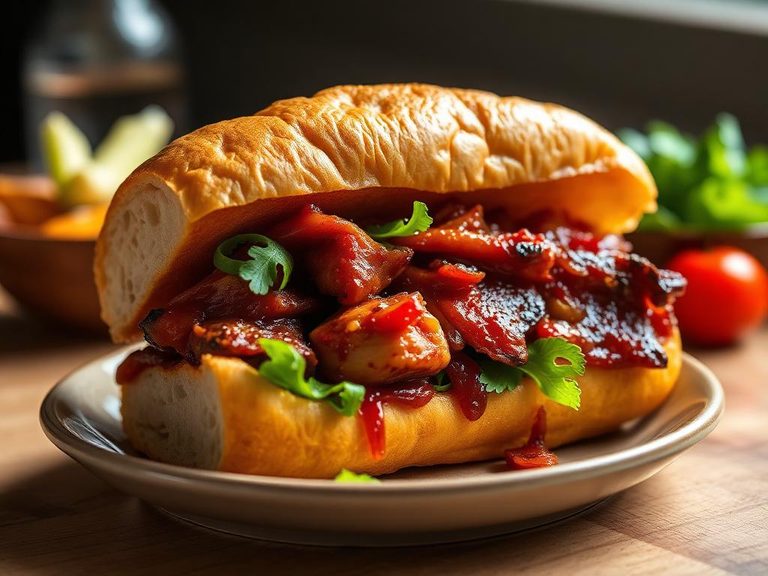
Barbecue pork sandwich, on wheat bun
Common food

Photo: Wikipedia
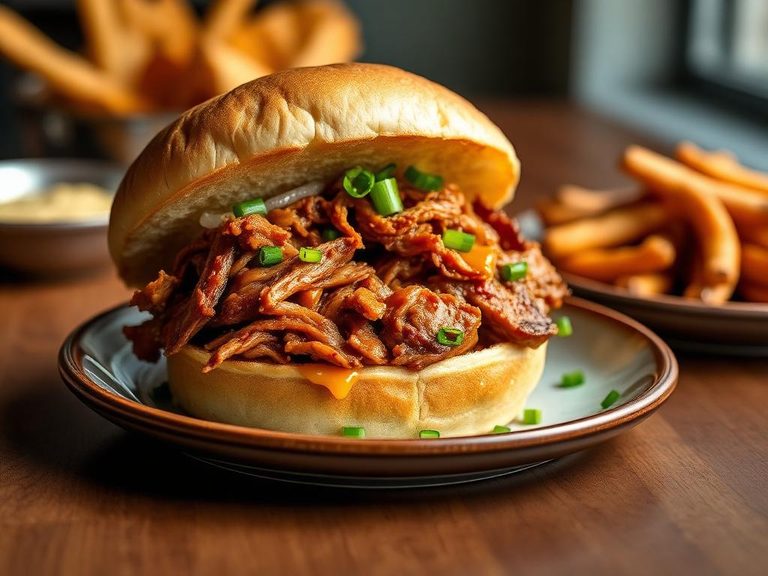
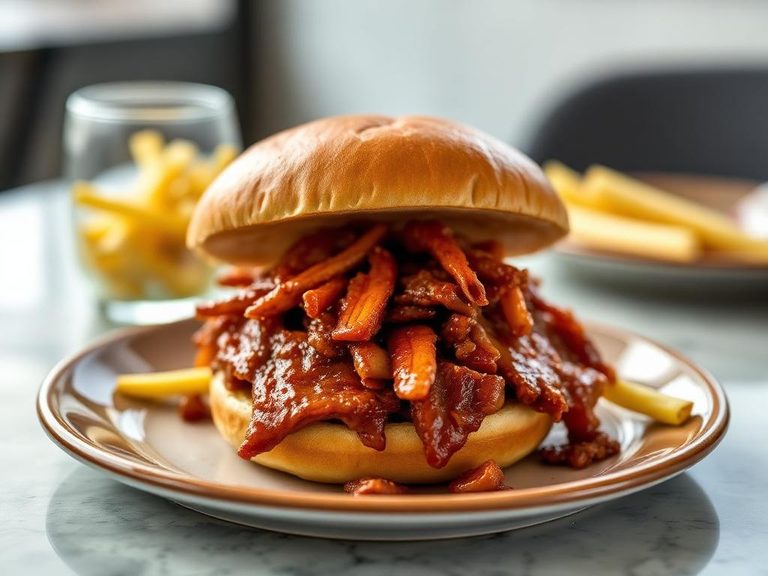
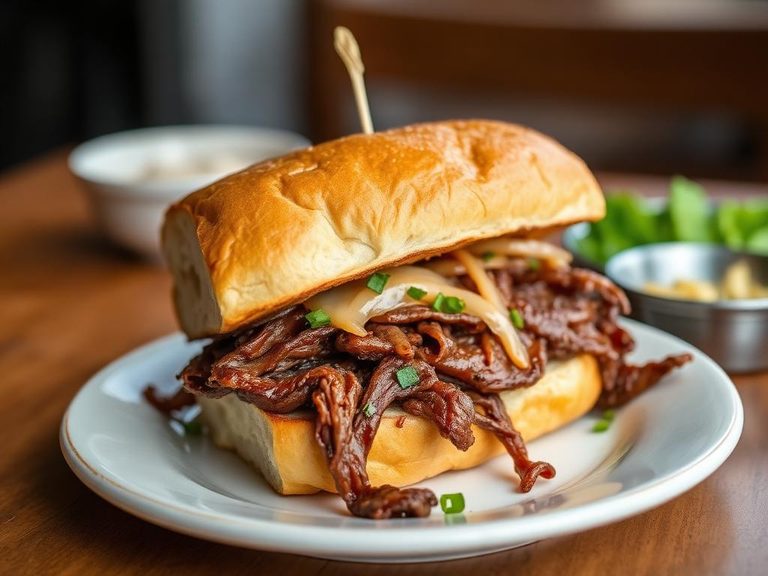
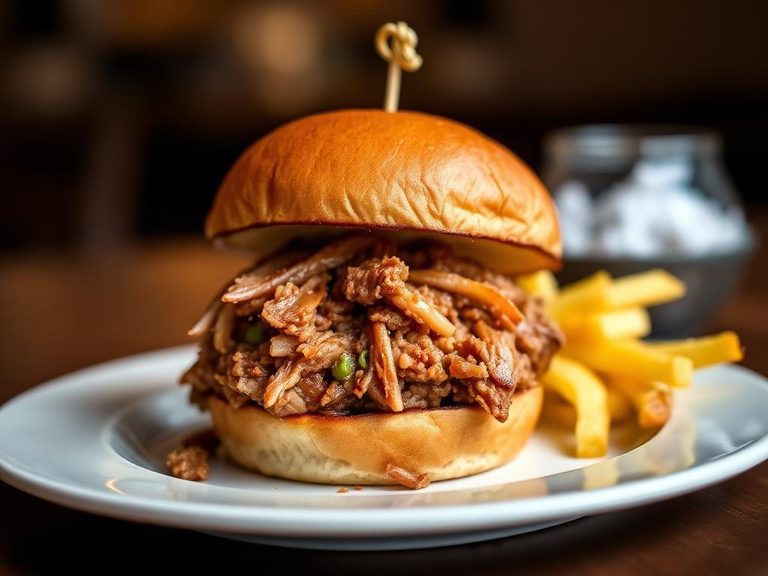
A tender, smoky barbecue pork sandwich served on a soft wheat bun, offering a satisfying balance of savory, sweet, and tangy flavors. The pork is typically slow-cooked until pull-apart tender, then piled high on the bun. It's a protein-rich, moderately caloric meal that provides a good source of B vitamins and minerals like zinc and selenium.
Calorie split: 26% protein · 40% carbs · 34% fat
↓ Full nutrition💚 Why it's loved
People love it for the iconic, comforting combination of smoky, tender pork with the sweetness and tang of barbecue sauce, all held in a soft, edible vessel. It's a versatile staple of casual dining, cookouts, and sports events, deeply embedded in American culinary culture.
⚠️ Watch-outs & how to enjoy it better
The sandwich can be high in sodium and added sugars from the barbecue sauce, which may concern those monitoring blood pressure or blood sugar. The wheat bun is a common gluten allergen. To counteract, opt for a vinegar-based or low-sugar sauce, choose a whole-grain bun for more fiber, and pair with a fresh, crunchy side salad to balance the meal.
Key benefits
- Good source of complete protein for muscle maintenance
- Provides essential B vitamins (B1, B6, B12) for energy metabolism
- Contains minerals like selenium and zinc for immune support
- The wheat bun offers some dietary fiber and iron
- A satisfying, energy-dense meal for active individuals
🍽️ Popular dishes
🌍 Where it's eaten
💡 Did you know?
The 'bark'—the dark, flavorful crust on the outside of smoked pork—is highly prized by BBQ aficionados and is created by the reaction of smoke, spices, and meat proteins.
Full nutrition (USDA data · scales with serving)
| Water | 49.9 g |
| Energy | 238 kcal |
| Protein | 15.5 g |
| Total lipid (fat) | 8.9 g |
| Carbohydrate, by difference | 23.3 g |
| Fiber, total dietary | 2.0 g |
| Total Sugars | 8.4 g |
| Calcium, Ca | 70.0 mg |
| Iron, Fe | 1.8 mg |
| Magnesium, Mg | 32.0 mg |
| Phosphorus, P | 163 mg |
| Potassium, K | 262 mg |
| Sodium, Na | 549 mg |
| Zinc, Zn | 2.3 mg |
| Copper, Cu | 0.13 mg |
| Selenium, Se | 26.1 ug |
| Vitamin C, total ascorbic acid | 0.20 mg |
| Thiamin | 0.35 mg |
| Riboflavin | 0.24 mg |
| Niacin | 3.9 mg |
| Vitamin B-6 | 0.25 mg |
| Folate, total | 26.0 ug |
| Folic acid | 5.0 ug |
| Folate, food | 21.0 ug |
| Folate, DFE | 29.0 ug |
| Choline, total | 56.1 mg |
| Vitamin B-12 | 0.39 ug |
| Vitamin B-12, added | 0.00 ug |
| Vitamin A, RAE | 4.0 ug |
| Retinol | 1.0 ug |
| Carotene, beta | 27.0 ug |
| Carotene, alpha | 0.00 ug |
| Cryptoxanthin, beta | 0.00 ug |
| Lycopene | 910 ug |
| Lutein + zeaxanthin | 39.0 ug |
| Vitamin E (alpha-tocopherol) | 0.36 mg |
| Vitamin E, added | 0.00 mg |
| Vitamin D (D2 + D3) | 0.50 ug |
| Vitamin K (phylloquinone) | 2.2 ug |
| Alcohol, ethyl | 0.00 g |
| Caffeine | 0.00 mg |
| Theobromine | 0.00 mg |
Fat & fatty acid profile (per 100g)
| Fatty acids, total saturated | 2.9 g |
| SFA 4:0 | 0.00 g |
| SFA 6:0 | 0.00 g |
| SFA 8:0 | 0.00 g |
| SFA 10:0 | 0.01 g |
| SFA 12:0 | 0.01 g |
| SFA 14:0 | 0.09 g |
| SFA 16:0 | 1.8 g |
| SFA 18:0 | 0.96 g |
| Fatty acids, total monounsaturated | 3.5 g |
| MUFA 16:1 | 0.17 g |
| MUFA 18:1 | 3.3 g |
| MUFA 20:1 | 0.06 g |
| MUFA 22:1 | 0.01 g |
| Fatty acids, total polyunsaturated | 1.7 g |
| PUFA 18:2 | 1.5 g |
| PUFA 18:3 | 0.10 g |
| PUFA 18:4 | 0.00 g |
| PUFA 20:4 | 0.04 g |
| PUFA 20:5 n-3 (EPA) | 0.00 g |
| PUFA 22:5 n-3 (DPA) | 0.00 g |
| PUFA 22:6 n-3 (DHA) | 0.00 g |
| Cholesterol | 43.0 mg |
Amino acid profile (per 100g)
Estimated from Snacks, pork skins, barbecue-flavor — USDA does not publish this profile for Barbecue pork sandwich.
| Tryptophan | 0.13 g |
| Threonine | 1.8 g |
| Isoleucine | 1.4 g |
| Leucine | 3.2 g |
| Lysine | 2.7 g |
| Methionine | 0.48 g |
| Cystine | 0.51 g |
| Phenylalanine | 1.9 g |
| Tyrosine | 1.2 g |
| Valine | 2.3 g |
| Arginine | 4.5 g |
| Histidine | 0.72 g |
| Alanine | 5.5 g |
| Aspartic acid | 4.3 g |
| Glutamic acid | 7.3 g |
| Glycine | 11.0 g |
| Proline | 6.8 g |
| Serine | 2.5 g |
FAQ
What cut of pork is typically used?
The pork shoulder (also called pork butt or Boston butt) is the classic cut due to its ideal fat and connective tissue content for slow cooking.
Is it a healthy choice?
It can be part of a balanced diet. The pork provides good protein, but be mindful of the sauce's sugar and sodium content. Choosing a leaner preparation and whole-grain bun improves its nutritional profile.
How is it different from a beef brisket sandwich?
The primary difference is the meat: pork shoulder is fattier and shreds easily, while beef brisket is a leaner, tougher cut that requires very long, slow cooking to become tender and is often sliced rather than pulled.
Nutrient density (calculated · NRF9.3)
Nutrient Rich Foods index: beneficial nutrients (protein, fiber, vitamins, minerals) minus saturated fat, added sugar & sodium, per 100 kcal.
NRF9.3 index — Fulgoni, Keast & Drewnowski, 2009. Computed from USDA nutrients.
Weight-loss friendliness (composite index)
Energy density 2.38 kcal/g · 26% calories from protein · 2.0 g fiber · 8.4 g sugar per 100 g.
Composite of energy density (Rolls et al., 1999), protein & fiber satiety, minus sugar. A calculated heuristic — ranks satiety-per-calorie, not a clinical measure.
Dietary load (calculated from USDA values)
Potential renal acid load. Positive = acid-forming, negative = alkaline-forming.
Sodium-to-potassium ratio: 2.10 (lower is better — aim for ≤ 1)
Sodium:potassium per WHO potassium guidance. Computed from USDA nutrients.