

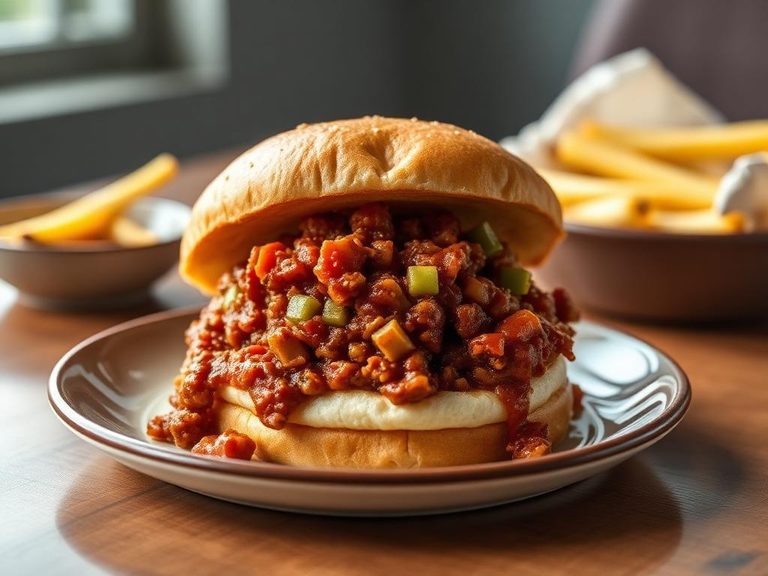
Barbecue pork sandwich, on white bun
Common food

Photo: Wikipedia
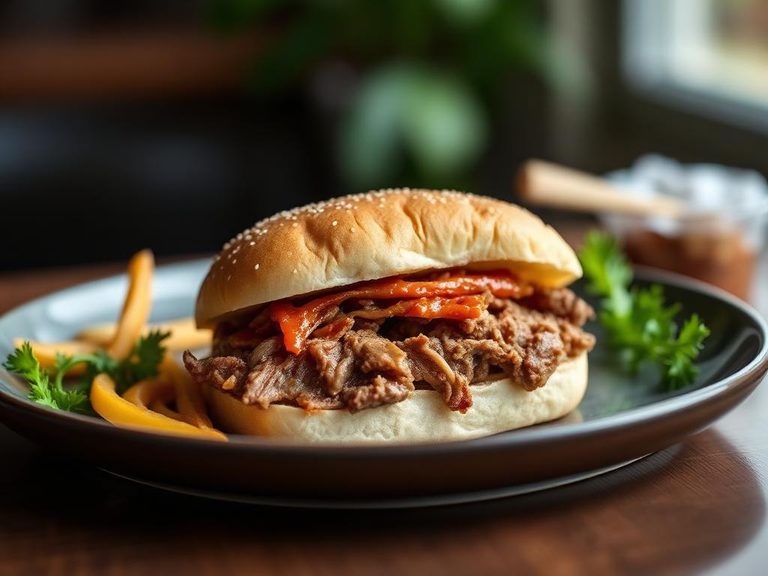
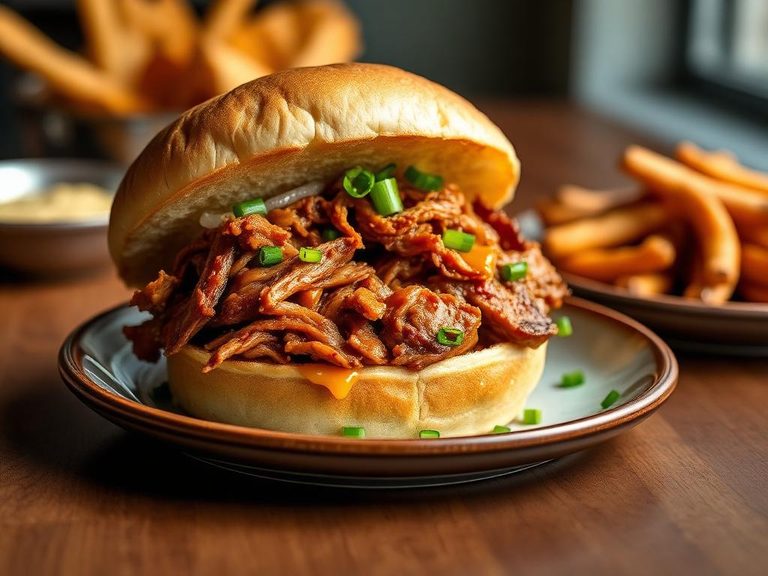
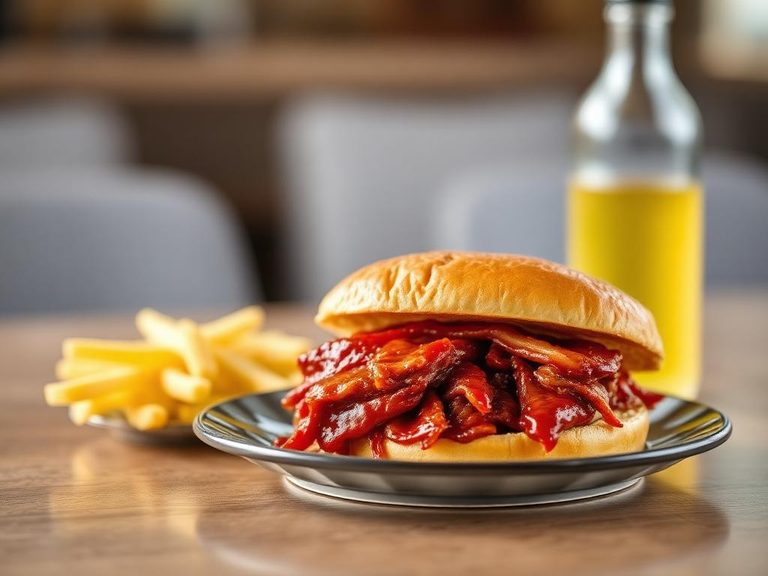
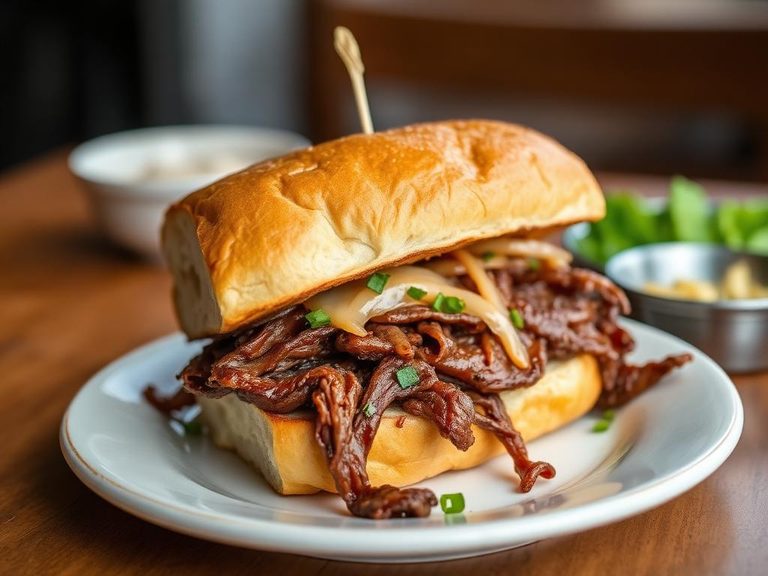
A classic barbecue pork sandwich features tender, shredded or sliced pork shoulder slow-smoked or simmered in a tangy, sweet, and savory barbecue sauce, piled high on a soft, slightly sweet white bun. The texture is a delightful contrast: the pillowy, yielding bread soaks up the rich, sticky sauce while the meat provides a tender, fibrous bite. Nutritionally, it's a protein-packed centerpiece, but the refined white bun and sugary sauce contribute to its higher carbohydrate and sugar content.
Calorie split: 25% protein · 42% carbs · 33% fat
↓ Full nutrition💚 Why it's loved
People adore the harmonious balance of smoky, sweet, and tangy flavors from the barbecue sauce melding with the rich, savory pork. It's a beloved comfort food, offering a hearty, satisfying, and nostalgic eating experience that's deeply tied to regional American culinary traditions.
⚠️ Watch-outs & how to enjoy it better
The combination of a refined white bun and a sugary sauce can lead to a rapid blood-sugar spike, which may be a concern for individuals managing diabetes or insulin sensitivity. The meal can also be high in sodium from the sauce and cured pork, and the white bun is a common source of gluten. To counteract, pair it with a side of non-starchy vegetables like coleslaw or pickles to add fiber and slow digestion, choose a whole-grain bun if available, and be mindful of portion size.
Key benefits
- Excellent source of high-quality protein for muscle maintenance.
- Provides essential minerals like zinc and selenium from the pork.
- The white bun offers quick, easily digestible energy.
- A satisfying, calorie-dense meal that promotes satiety.
- A culturally significant comfort food in many regions.
🍽️ Popular dishes
🌍 Where it's eaten
💡 Did you know?
The white hamburger bun was popularized in the 1920s and 30s partly because its soft, uniform texture was seen as more hygienic and modern than the crustier rolls of the past, making it the perfect vehicle for messy barbecue.
Full nutrition (USDA data · scales with serving)
| Water | 49.0 g |
| Energy | 243 kcal |
| Protein | 15.0 g |
| Total lipid (fat) | 8.8 g |
| Carbohydrate, by difference | 24.9 g |
| Fiber, total dietary | 0.80 g |
| Total Sugars | 9.1 g |
| Calcium, Ca | 65.0 mg |
| Iron, Fe | 1.9 mg |
| Magnesium, Mg | 21.0 mg |
| Phosphorus, P | 141 mg |
| Potassium, K | 240 mg |
| Sodium, Na | 567 mg |
| Zinc, Zn | 2.1 mg |
| Copper, Cu | 0.11 mg |
| Selenium, Se | 25.9 ug |
| Vitamin C, total ascorbic acid | 0.60 mg |
| Thiamin | 0.40 mg |
| Riboflavin | 0.27 mg |
| Niacin | 3.6 mg |
| Vitamin B-6 | 0.22 mg |
| Folate, total | 33.0 ug |
| Folic acid | 18.0 ug |
| Folate, food | 15.0 ug |
| Folate, DFE | 45.0 ug |
| Choline, total | 53.9 mg |
| Vitamin B-12 | 0.45 ug |
| Vitamin B-12, added | 0.00 ug |
| Vitamin A, RAE | 4.0 ug |
| Retinol | 1.0 ug |
| Carotene, beta | 27.0 ug |
| Carotene, alpha | 0.00 ug |
| Cryptoxanthin, beta | 0.00 ug |
| Lycopene | 910 ug |
| Lutein + zeaxanthin | 20.0 ug |
| Vitamin E (alpha-tocopherol) | 0.34 mg |
| Vitamin E, added | 0.00 mg |
| Vitamin D (D2 + D3) | 0.50 ug |
| Vitamin K (phylloquinone) | 2.0 ug |
| Alcohol, ethyl | 0.00 g |
| Caffeine | 0.00 mg |
| Theobromine | 0.00 mg |
Fat & fatty acid profile (per 100g)
| Fatty acids, total saturated | 2.9 g |
| SFA 4:0 | 0.00 g |
| SFA 6:0 | 0.00 g |
| SFA 8:0 | 0.00 g |
| SFA 10:0 | 0.01 g |
| SFA 12:0 | 0.01 g |
| SFA 14:0 | 0.10 g |
| SFA 16:0 | 1.8 g |
| SFA 18:0 | 0.96 g |
| Fatty acids, total monounsaturated | 3.5 g |
| MUFA 16:1 | 0.17 g |
| MUFA 18:1 | 3.3 g |
| MUFA 20:1 | 0.06 g |
| MUFA 22:1 | 0.01 g |
| Fatty acids, total polyunsaturated | 1.7 g |
| PUFA 18:2 | 1.5 g |
| PUFA 18:3 | 0.11 g |
| PUFA 18:4 | 0.00 g |
| PUFA 20:4 | 0.04 g |
| PUFA 20:5 n-3 (EPA) | 0.00 g |
| PUFA 22:5 n-3 (DPA) | 0.00 g |
| PUFA 22:6 n-3 (DHA) | 0.00 g |
| Cholesterol | 43.0 mg |
Amino acid profile (per 100g)
Estimated from Snacks, pork skins, barbecue-flavor — USDA does not publish this profile for Barbecue pork sandwich.
| Tryptophan | 0.13 g |
| Threonine | 1.8 g |
| Isoleucine | 1.4 g |
| Leucine | 3.2 g |
| Lysine | 2.7 g |
| Methionine | 0.48 g |
| Cystine | 0.51 g |
| Phenylalanine | 1.9 g |
| Tyrosine | 1.2 g |
| Valine | 2.3 g |
| Arginine | 4.5 g |
| Histidine | 0.72 g |
| Alanine | 5.5 g |
| Aspartic acid | 4.3 g |
| Glutamic acid | 7.3 g |
| Glycine | 11.0 g |
| Proline | 6.8 g |
| Serine | 2.5 g |
FAQ
Is a barbecue pork sandwich a good source of protein?
Yes, it is an excellent source of protein, with a typical serving providing around 20-30 grams, which is crucial for building and repairing tissues.
Why is the white bun used instead of a whole grain one?
Traditionally, the soft, neutral-flavored white bun was chosen to complement, not compete with, the bold flavors of the barbecue pork and sauce, and to easily absorb the juices without falling apart.
How can I make it a bit healthier?
You can opt for a whole-grain bun for more fiber, choose a vinegar-based (rather than sugary) sauce, load up on vegetable sides like pickles or slaw, and consider a half-sandwich portion.
Nutrient density (calculated · NRF9.3)
Nutrient Rich Foods index: beneficial nutrients (protein, fiber, vitamins, minerals) minus saturated fat, added sugar & sodium, per 100 kcal.
NRF9.3 index — Fulgoni, Keast & Drewnowski, 2009. Computed from USDA nutrients.
Weight-loss friendliness (composite index)
Energy density 2.43 kcal/g · 25% calories from protein · 0.8 g fiber · 9.1 g sugar per 100 g.
Composite of energy density (Rolls et al., 1999), protein & fiber satiety, minus sugar. A calculated heuristic — ranks satiety-per-calorie, not a clinical measure.
Dietary load (calculated from USDA values)
Potential renal acid load. Positive = acid-forming, negative = alkaline-forming.
Sodium-to-potassium ratio: 2.36 (lower is better — aim for ≤ 1)
Sodium:potassium per WHO potassium guidance. Computed from USDA nutrients.