

Bacon, NS as to type of meat, reduced sodium, cooked
Common food

Photo: Wikipedia
This is bacon that has been processed with less salt than conventional varieties, then cooked until crisp and savory. Its texture ranges from shatteringly brittle to chewy and meaty, depending on how long it's rendered. Despite the 'reduced sodium' label, it remains a calorie-dense, high-fat food with a substantial protein punch.
Calorie split: 21% protein · 8% carbs · 71% fat
↓ Full nutrition💚 Why it's loved
People love it for its intensely savory, smoky umami flavor and satisfying crunch that elevates any dish it touches. It's a cultural staple, often serving as the cornerstone of a classic breakfast or a savory garnish for salads and soups.
⚠️ Watch-outs & how to enjoy it better
The primary downside is its high saturated fat and calorie density, which can be problematic for cardiovascular health if consumed excessively. To mitigate this, practice strict portion control (e.g., 2-3 slices) and pair it with high-fiber foods like vegetables or whole grains to slow fat absorption and add volume.
Key benefits
- Significantly lower sodium content than standard bacon
- Good source of complete protein per serving
- Provides B vitamins like B12 and niacin
- Contains minerals like selenium and phosphorus
- High satiety factor from fat and protein
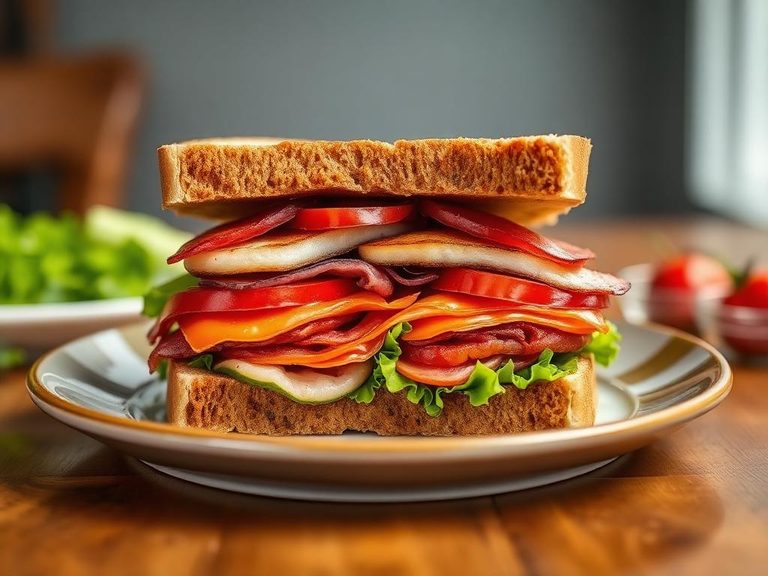
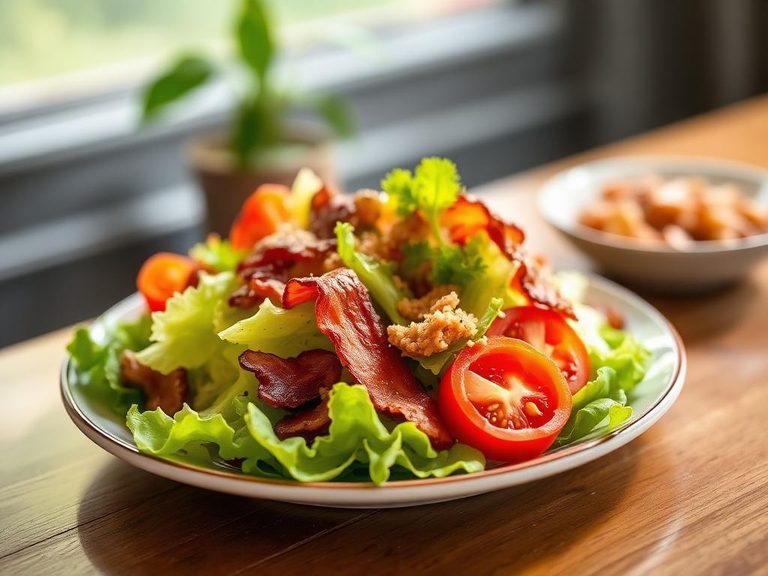
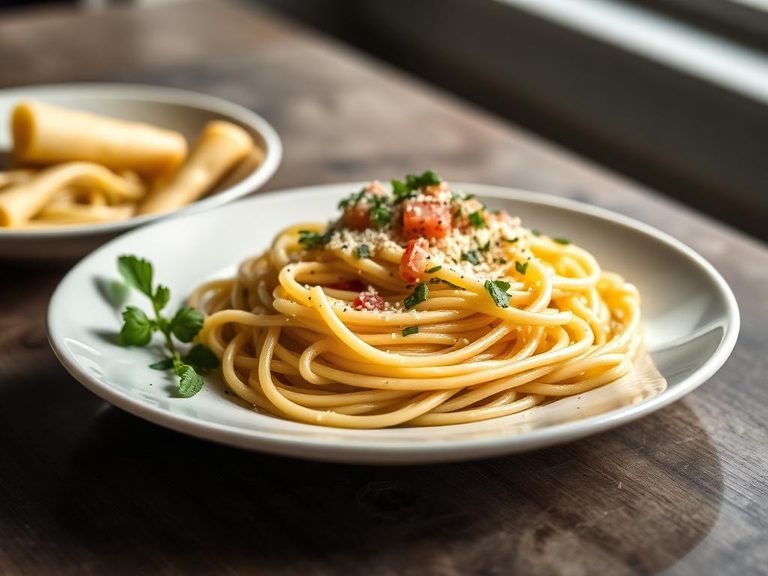
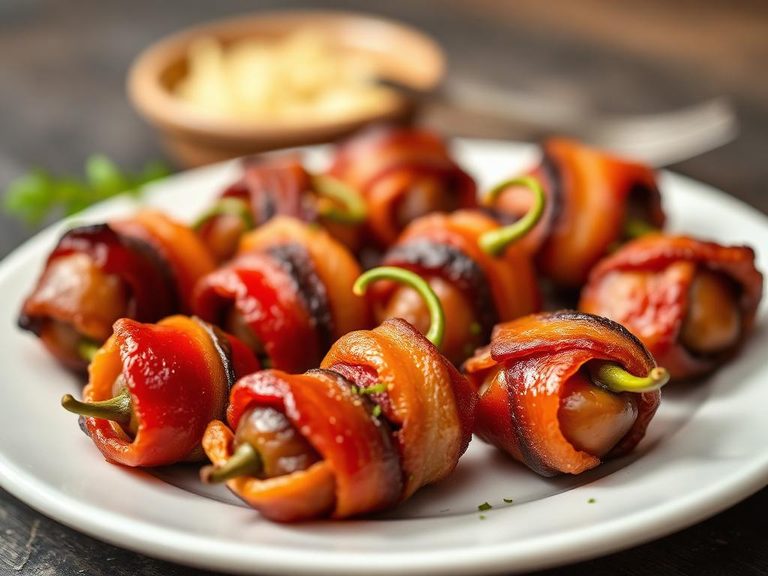
🍽️ Popular dishes

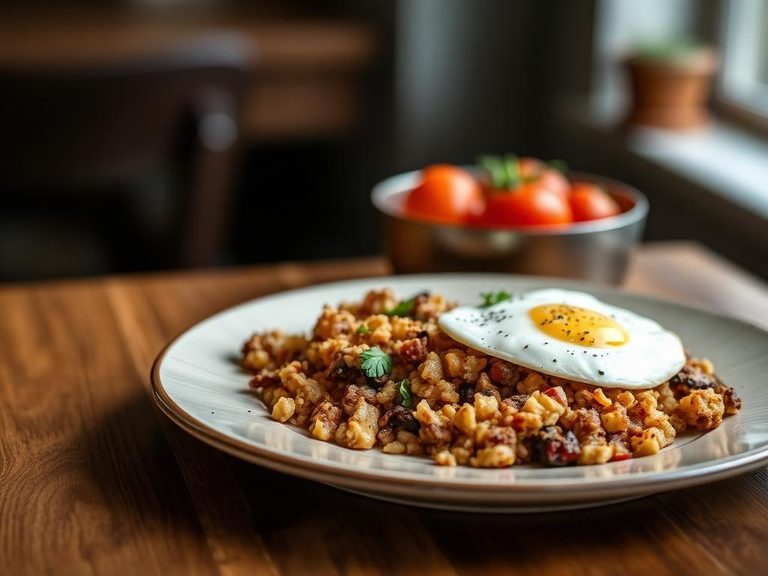
🌍 Where it's eaten
💡 Did you know?
The term 'bacon' comes from the Germanic 'bakko,' meaning 'back,' but it originally referred to the pork belly in any form, not just the cured slices we know today.
Full nutrition (USDA data · scales with serving)
| Water | 58.9 g |
| Energy | 253 kcal |
| Protein | 13.3 g |
| Total lipid (fat) | 20.0 g |
| Carbohydrate, by difference | 4.8 g |
| Fiber, total dietary | 0.00 g |
| Total Sugars | 0.00 g |
| Calcium, Ca | 10.0 mg |
| Iron, Fe | 0.72 mg |
| Magnesium, Mg | 19.0 mg |
| Phosphorus, P | 145 mg |
| Potassium, K | 156 mg |
| Sodium, Na | 900 mg |
| Zinc, Zn | 1.6 mg |
| Copper, Cu | 0.06 mg |
| Selenium, Se | 19.4 ug |
| Vitamin C, total ascorbic acid | 24.0 mg |
| Thiamin | 0.03 mg |
| Riboflavin | 0.18 mg |
| Niacin | 6.2 mg |
| Vitamin B-6 | 0.40 mg |
| Folate, total | 6.0 ug |
| Folic acid | 0.00 ug |
| Folate, food | 6.0 ug |
| Folate, DFE | 6.0 ug |
| Choline, total | 56.9 mg |
| Vitamin B-12 | 0.66 ug |
| Vitamin B-12, added | 0.00 ug |
| Vitamin A, RAE | 8.0 ug |
| Retinol | 8.0 ug |
| Carotene, beta | 0.00 ug |
| Carotene, alpha | 0.00 ug |
| Cryptoxanthin, beta | 0.00 ug |
| Lycopene | 0.00 ug |
| Lutein + zeaxanthin | 0.00 ug |
| Vitamin E (alpha-tocopherol) | 2.7 mg |
| Vitamin E, added | 0.00 mg |
| Vitamin D (D2 + D3) | 0.20 ug |
| Vitamin K (phylloquinone) | 10.8 ug |
| Alcohol, ethyl | 0.00 g |
| Caffeine | 0.00 mg |
| Theobromine | 0.00 mg |
Fat & fatty acid profile (per 100g)
| Fatty acids, total saturated | 6.7 g |
| SFA 4:0 | 0.00 g |
| SFA 6:0 | 0.00 g |
| SFA 8:0 | 0.00 g |
| SFA 10:0 | 0.01 g |
| SFA 12:0 | 0.04 g |
| SFA 14:0 | 0.13 g |
| SFA 16:0 | 4.2 g |
| SFA 18:0 | 1.8 g |
| Fatty acids, total monounsaturated | 8.6 g |
| MUFA 16:1 | 0.15 g |
| MUFA 18:1 | 8.2 g |
| MUFA 20:1 | 0.17 g |
| MUFA 22:1 | 0.00 g |
| Fatty acids, total polyunsaturated | 4.3 g |
| PUFA 18:2 | 3.1 g |
| PUFA 18:3 | 1.1 g |
| PUFA 18:4 | 0.00 g |
| PUFA 20:4 | 0.04 g |
| PUFA 20:5 n-3 (EPA) | 0.00 g |
| PUFA 22:5 n-3 (DPA) | 0.00 g |
| PUFA 22:6 n-3 (DHA) | 0.00 g |
| Cholesterol | 100 mg |
Amino acid profile (per 100g)
Estimated from Bacon, turkey, low sodium — USDA does not publish this profile for Bacon.
| Tryptophan | 0.19 g |
| Threonine | 0.65 g |
| Isoleucine | 0.52 g |
| Leucine | 1.3 g |
| Lysine | 1.5 g |
| Methionine | 0.47 g |
| Cystine | 0.17 g |
| Phenylalanine | 0.59 g |
| Tyrosine | 0.53 g |
| Valine | 0.59 g |
| Arginine | 1.1 g |
| Histidine | 0.49 g |
| Alanine | 1.0 g |
| Aspartic acid | 1.5 g |
| Glutamic acid | 2.5 g |
| Glycine | 0.93 g |
| Proline | 1.1 g |
| Serine | 0.72 g |
FAQ
Is reduced sodium bacon actually healthier?
It's better for blood pressure and heart health due to less salt, but it's still high in saturated fat and calories, so moderation is key.
How does the texture differ from regular bacon?
Reduced sodium bacon can sometimes be slightly less crisp and may have a milder flavor, but when cooked properly, it achieves a similar satisfying crunch.
Can I use it as a substitute in any recipe?
Yes, it's a direct 1:1 substitute for regular bacon in most dishes, though you may want to adjust added salt in the recipe.
What's the best way to cook it?
Baking on a sheet pan at 400°F (200°C) for 15-20 minutes yields the most even crispness and less mess than pan-frying.
Nutrient density (calculated · NRF9.3)
Nutrient Rich Foods index: beneficial nutrients (protein, fiber, vitamins, minerals) minus saturated fat, added sugar & sodium, per 100 kcal.
NRF9.3 index — Fulgoni, Keast & Drewnowski, 2009. Computed from USDA nutrients.
Weight-loss friendliness (composite index)
Energy density 2.53 kcal/g · 21% calories from protein · 0.0 g fiber · 0.0 g sugar per 100 g.
Composite of energy density (Rolls et al., 1999), protein & fiber satiety, minus sugar. A calculated heuristic — ranks satiety-per-calorie, not a clinical measure.
Dietary load (calculated from USDA values)
Potential renal acid load. Positive = acid-forming, negative = alkaline-forming.
Sodium-to-potassium ratio: 5.77 (lower is better — aim for ≤ 1)
Sodium:potassium per WHO potassium guidance. Computed from USDA nutrients.